7 Benefits of Having Strong Glutes: Functional Mechanics, Joint Stability, and Home Gym Staging
Understanding the Posterior Engine: Why Strong Glutes Are Essential
The gluteal complex consists of three primary muscles: the gluteus maximus, gluteus medius, and gluteus minimus. Together, these muscles form the functional center of the posterior chain, driving hip extension, abduction, and rotation. When considering why are glutes important for overall movement, it helps to view them as the primary kinetic bridge connecting the torso to the lower extremities.
A well-conditioned glute complex provides the baseline force necessary for upright posture, locomotion, and athletic output. When glute strength is neglected, surrounding structures such as the lumbar spine, quadriceps, and hamstrings frequently take on excess mechanical stress to compensate for incomplete hip mechanics. Understanding what do glutes help with allows lifters and fitness enthusiasts to build balanced training programs that support sustainable joint mechanics.
7 Foundational Benefits of Strong Glutes and Hamstring Synergy
Developing dedicated glute strength provides direct biomechanical advantages that extend from daily physical tasks to demanding barbell lifts. Below are seven core areas where strong glutes influence movement quality and joint support.
1. Pelvic Alignment and Lumbar Load Distribution
The gluteus maximus acts as a powerful posterior rotator of the pelvis. When paired with active abdominal musculature, it counteracts the forward pull of tight hip flexors, helping to prevent an exaggerated anterior pelvic tilt. Maintaining balanced pelvic positioning distributes compressive forces evenly across the lumbar vertebrae, which represents a primary answer to what do strong glutes help with during heavy loading or prolonged sitting.
2. Lower Extremity Alignment and Knee Joint Tracking
The gluteus medius and minimus stabilize the pelvis in the frontal plane and control femoral rotation. When these abductors and external rotators are strong, they prevent the femur from collapsing inward during dynamic movements like squats, lunges, and landings. This proper tracking reduces torsional torque across the knee joint and helps maintain neutral ankle-knee-hip alignment.
3. Explosive Hip Extension and Athletic Power
As the largest muscle in the human body, the gluteus maximus is the primary engine behind rapid hip extension. Whether sprinting, jumping, or executing an Olympic lift, forceful hip extension creates the forward and upward propulsion required for athletic performance. Maximizing glute workout benefits begins with targeting this explosive hinge mechanics under controlled resistance.
4. Posterior Chain Balance and Hamstring Relief
The hamstrings and glutes work synergistically to extend the hips. When the glutes underperform, the hamstrings often experience compensatory strain as they attempt to carry the primary burden of hip extension. Balancing these posterior chain muscle groups ensures that force is distributed proportionally. Reviewing a strong hamstrings glutes guide can help clarify how these complementary muscle groups interact during hinge variations.
5. Multi-Planar Hip Stability and Balance
Human movement occurs across sagittal, frontal, and transverse planes. Strong lateral hip stabilizers maintain level hips during single-leg support phases, such as walking or running. This multi-planar stability prevents compensatory pelvic drop and improves balance across uneven surfaces or dynamic athletic transitions.
6. Postural Stamina for Prolonged Standing and Walking
Muscular endurance within the gluteal group supports the pelvis during prolonged upright activity. When glutes fatigue quickly, the body often shifts into passive lumbar extension or resting on the hip capsule, creating localized fatigue. Glute exercise benefits include improved muscular stamina that keeps the spine and pelvis supported throughout daily activity.
7. Foundational Movement Efficiency in Daily Tasks
Beyond the weight room, strong glutes make foundational daily movements more efficient. Rising from a low chair, climbing stairs, and lifting heavy household objects from the ground rely heavily on hip extension rather than passive lumbar flexion. Developing strong glutes benefits everyday movement by preserving energy and utilizing larger, fatigue-resistant muscle groups.
Core Glute Exercises: Movement Patterns and Biomechanical Focus
Targeting the gluteal complex requires a mixture of hip extension, abduction, and rotational movements. Structuring a balanced routine typically incorporates the following movement archetypes:
- Horizontal Hip Extension: Barbell hip thrusts and glute bridges place peak tension on the gluteus maximus in a fully shortened position, minimizing hamstring dominance.
- Vertical and Angular Hinges: Romanian deadlifts and conventional pulls recruit the glutes through deep hip flexion, emphasizing tension in the lengthened range.
- Single-Leg Patterns: Bulgarian split squats, reverse lunges, and step-ups challenge pelvic stability and recruit the gluteus medius alongside the maximus.
- Lateral and Rotational Work: Banded lateral walks, cable abductions, and seated hip abductions isolate the smaller stabilizing muscles.
For individuals integrating conditioning intervals with strength movements, following a structured workout glute guide provides an effective template for combining dynamic conditioning with targeted posterior work.
Home Gym Floor Staging and Equipment Placement for Glute Training
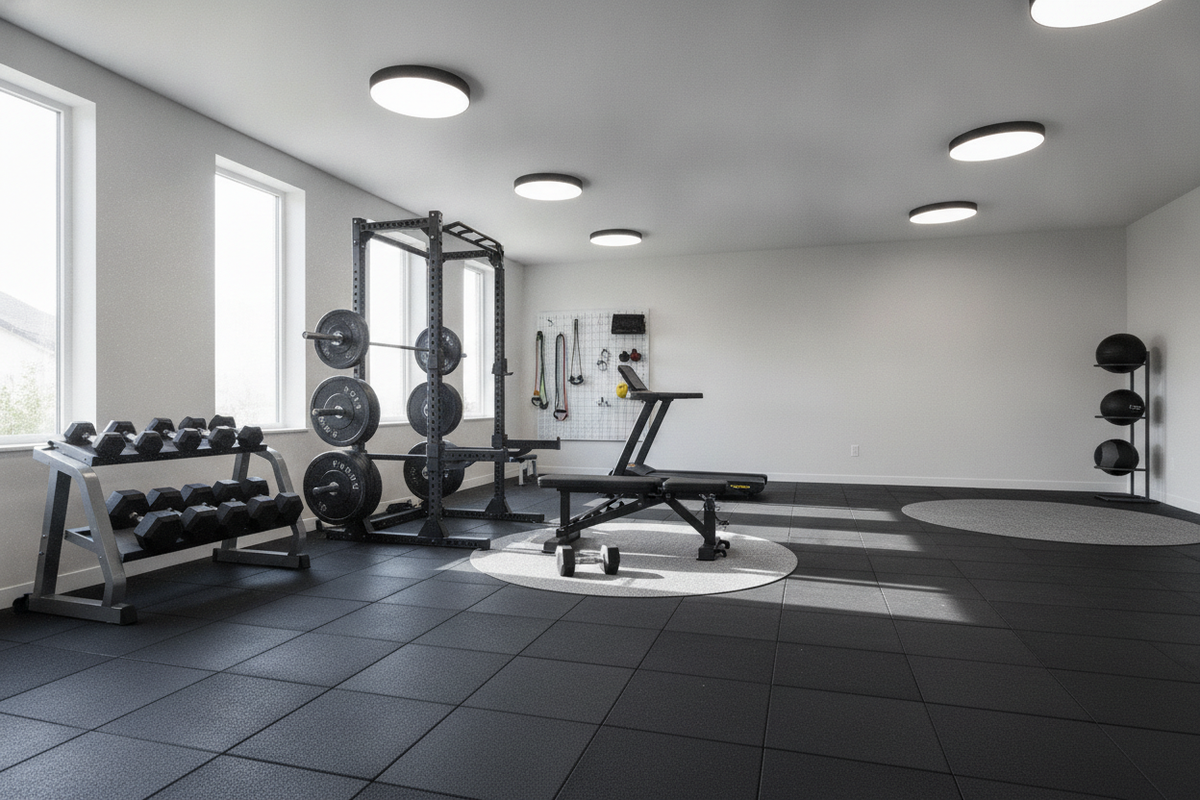
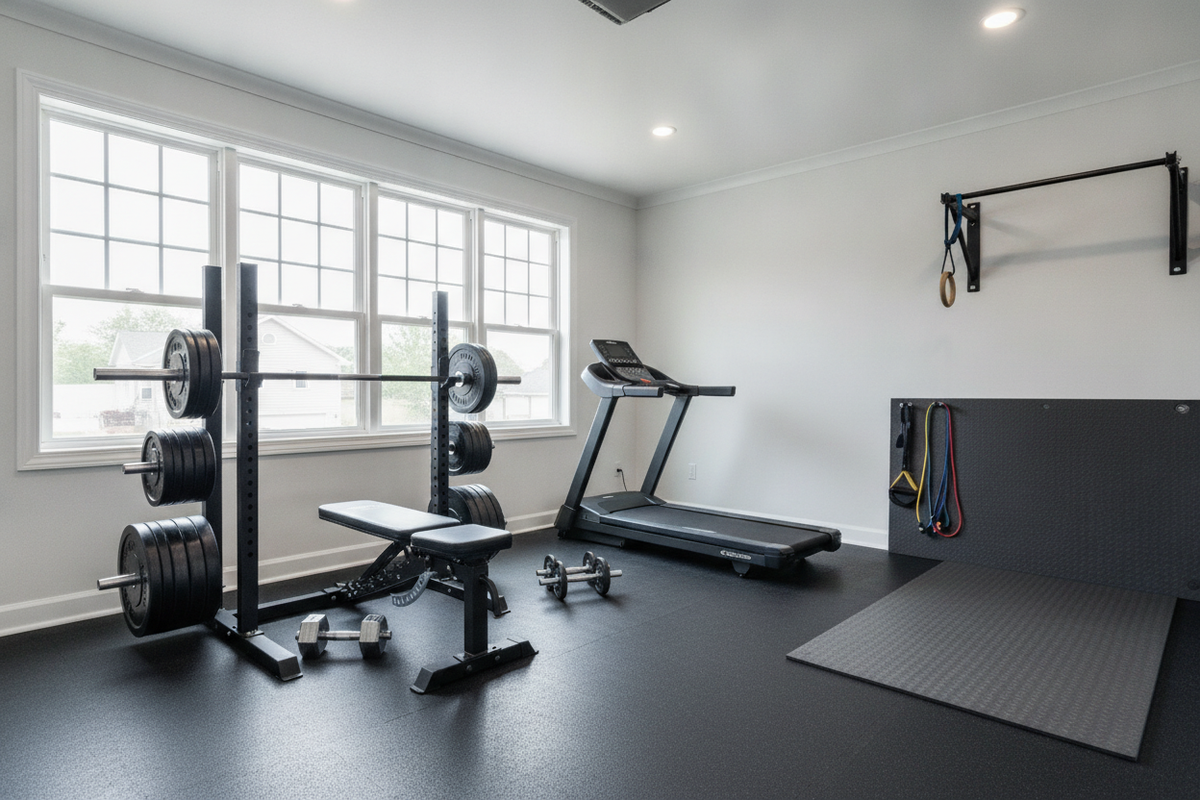
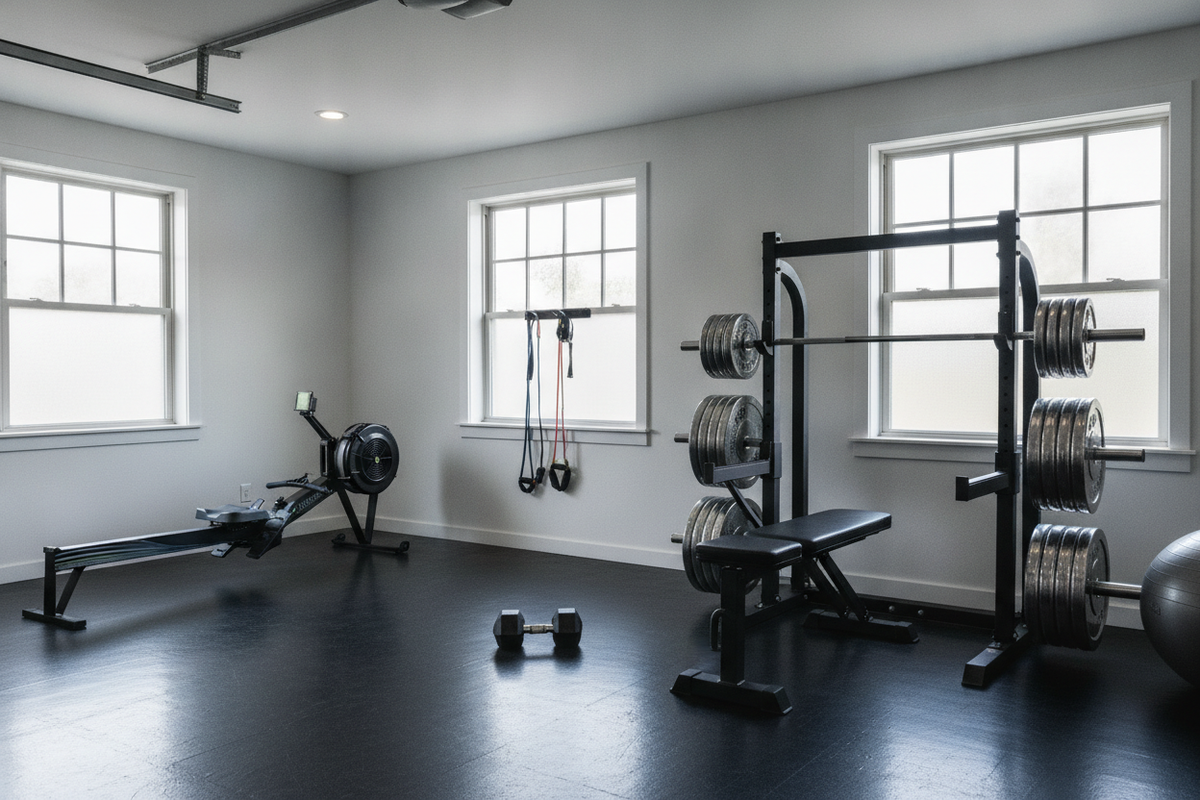
Executing heavy glute movements at home requires a deliberate floor setup to protect equipment, support joint comfort, and maintain traction. Movements like heavy barbell hip thrusts and deadlifts apply concentrated downward and lateral forces against the floor surface.
Bench Anchoring and Non-Slip Traction
During barbell hip thrusts, the upper back drives backward into an exercise bench, which can cause unanchored benches to slide across smooth flooring. Placing a dedicated exercise workout product beneath the bench and foot position creates the necessary surface friction to keep equipment locked in place. Solid foot traction also allows lifters to drive through the heels without slipping forward during peak contraction.
Subfloor Protection and Impact Dissipation
Deadlifts and heavy hinge variations place repetitive compressive stress on residential subfloors. Selecting adequate gym flooring from an established exercise collection helps distribute point loads across a broader surface area. High-density composite foam or rubber mats shield concrete or hardwood from direct impact and dampen acoustic vibrations during barbell contact.
Cushioning for Floor-Based Stability Work
Floor-based glute bridges, kneeling kickbacks, and side planks require adequate padding to protect sensitive bony landmarks, such as the knees, elbows, and sacrum. A stable, non-compressible mat provides necessary joint comfort without creating an overly soft, unstable foundation that compromises balance.