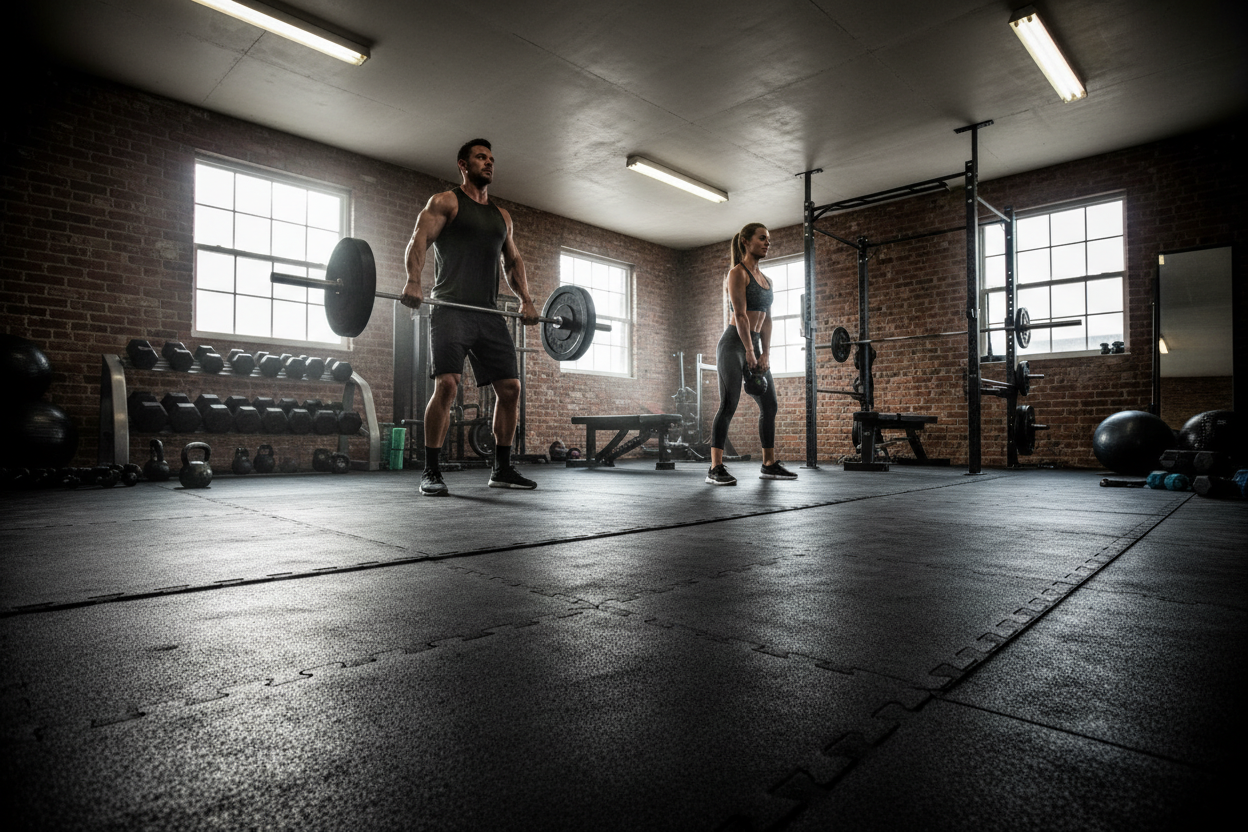
6x4 Gym Mats Explained: What to Know Before You Buy
If you have ever dropped a loaded barbell on a bare concrete floor, you know the instant panic that follows. Not only are you risking thousands of dollars in equipment damage, but the noise alone is enough to wake the entire neighborhood. This is where investing in quality 6x4 gym mats becomes non-negotiable for serious home lifters.
Finding the right flooring is often the most overlooked step in building a home gym. It is the literal foundation of your training space. In this guide, we will cover exactly why this specific footprint is a favorite among garage gym owners, how to choose the right thickness, and what to expect when you finally lay your new mats down.
Key Takeaways
- Versatility: A 6x4 footprint fits perfectly under most standard power racks and lifting platforms without wasting floor space.
- Thickness: Opt for at least 3/8-inch thick rubber for general strength training, and 3/4-inch for heavy Olympic lifting.
- Material: High-density vulcanized rubber is vastly superior to EVA foam for durability, grip, and equipment protection.
- Cost-Efficiency: Buying a dedicated exercise mat 6 x 4 is often cheaper and provides a more seamless surface than piecing together interlocking puzzle tiles.
Why the 6x4 Footprint Hits the Sweet Spot
When mapping out a home gym, space is your most valuable currency. You need enough room to train safely without letting bulky equipment eat up your entire garage or spare bedroom.
Perfect for Standard Power Racks
Most residential power racks have a footprint of roughly 4x4 or 5x4 feet. Sliding a 6x4 mat underneath provides a stable, unified surface that extends just enough beyond the rack's base. This helps protect your floor from dropped plates during rack pulls or failed squats, while keeping the rack firmly anchored.
The Ultimate Deadlift Station
An Olympic barbell is 7.2 feet long, meaning the weight plates will land perfectly within the 6-foot width of the mat. This gives you a dedicated, protective deadlift zone without the expense of covering your entire room in heavy-duty rubber.
Choosing the Right Material and Thickness
Not all flooring is created equal. The material you choose dictates how your gym smells, feels, and holds up over years of heavy abuse.
High-Density Rubber vs. EVA Foam
While foam tiles are cheap and lightweight, they compress under heavy loads, creating an unstable and dangerous surface for squats and deadlifts. A heavy-duty rubber exercise mat 6 x 4 will not compress, offering the solid, grippy foundation required for heavy strength training and explosive movements.
How Thick Should Your Mat Be?
For most home gyms, a 3/8-inch (approx. 10mm) thick rubber mat provides ample protection for dumbbells, kettlebells, and standard barbell work. However, if you are regularly dropping heavy deadlifts or performing Olympic lifts from overhead, you will want to step up to a 1/2-inch or 3/4-inch mat to prevent your concrete subfloor from cracking.
From Our Gym: Honest Take
We have tested dozens of flooring solutions in our facility, from cheap interlocking tiles to premium rolled rubber. When we set up our compact garage testing bay last year, we opted for two 3/4-inch thick 6x4 gym mats laid side-by-side.
The grip is phenomenal. Even during sweaty, high-rep kettlebell swings, my feet stayed completely planted. The heavy weight of the mats (often over 80 lbs each) means they absolutely do not shift or slide, even without using double-sided tape.
The caveat? The smell. Fresh vulcanized rubber has a strong, distinct odor. When we first unrolled our mats, it took about two weeks of leaving the garage door open and scrubbing the rubber with a mild Pine-Sol solution before the off-gassing faded to a manageable level. Be prepared to let them air out if you are installing them in a basement or an enclosed spare room.
Frequently Asked Questions
Are 6x4 gym mats big enough for deadlifting?
Yes. A standard Olympic barbell is just over 7 feet long, and the distance between the inner collars (where the weight plates sit) is about 4.3 feet. A 6-foot wide mat gives the plates plenty of room to land securely on the rubber without rolling off the edges.
Can I put a 6x4 exercise mat over carpet?
You can, but it is not ideal for heavy lifting. Even thick rubber mats will flex if the carpet underneath is plush, which creates an unstable surface that can compromise your joints during squats. If you must put it over carpet, laying down a rigid piece of 3/4-inch plywood under the mat is highly recommended.
How do I clean and maintain rubber gym mats?
Maintenance is incredibly simple. Sweep or vacuum up chalk and dust regularly. For a deeper clean, use a damp mop with warm water and a few drops of mild dish soap or a neutral pH floor cleaner. Avoid harsh chemicals like bleach, which can break down the rubber over time.