Buying a Rowing Machine Guide: The Definitive Handbook (2024)
You have decided to invest in your cardio health, but the market is flooded with options ranging from flimsy budget models to high-end studio gear. It is easy to get overwhelmed by the jargon of drag factors, dual-resistance, and rail lengths. This buying a rowing machine guide cuts through the marketing noise to focus on the mechanics that actually matter for your workout.
Key Takeaways: Quick Summary
- Resistance Type Matters Most: Choose Air for infinite resistance (the athlete standard), Magnetic for silence, or Water for aesthetics and feel.
- Check the Rail Length: If you are over 6'0", ensure the inseam capacity is at least 38 inches to avoid hitting the stops.
- Monitor Accuracy: Cheap monitors lie. If you plan to compete or track progress seriously, look for standardized metrics (like the Concept2 PM5).
- Connection Points: Look for a nickel-plated chain or a high-strength nylon strap; avoid cheap bungee cords that lose elasticity.
Understanding Resistance: The Engine of the Machine
When figuring out how to buy rowing machine equipment, the resistance mechanism is your first and most critical decision. This dictates the "feel" of the stroke and the noise level in your home.
Air Resistance
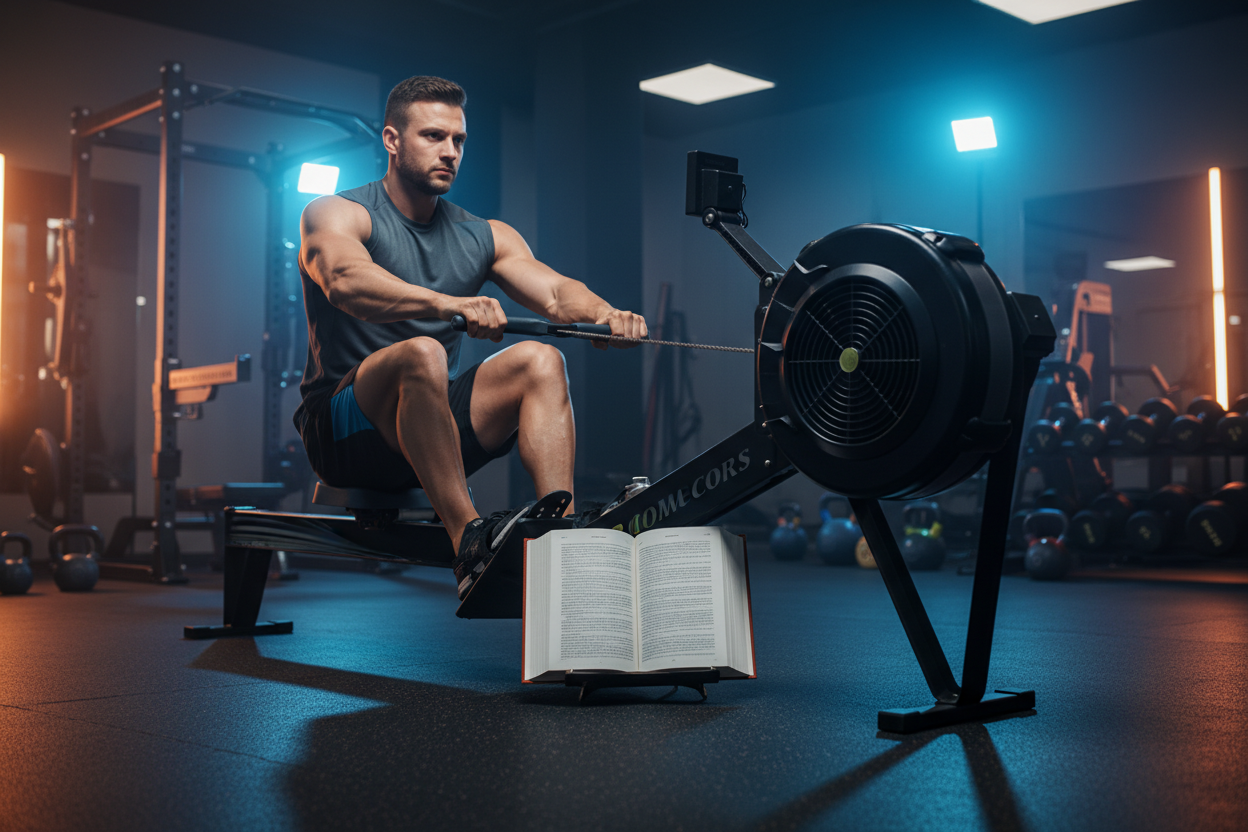
This is the gold standard found in CrossFit boxes and Olympic training centers. As you pull harder, the fan spins faster, creating more wind resistance. It offers a linear response—the harder you work, the harder it gets. The downside? It generates noise. If you row early while the family sleeps, this might be an issue.
Magnetic Resistance
If silence is your priority, this is the route to take. Magnets move closer to the flywheel to create drag without friction. The pull is smooth and consistent, but often lacks the dynamic "punch" of air rowers. Cheaper magnetic models can feel "mushy" at the catch (the start of the stroke).
Water Resistance
These machines use paddles suspended in a tank of water. They provide the most realistic on-water simulation. The resistance increases naturally with speed, and the sound is a rhythmic swoosh rather than a mechanical whir. However, maintenance involves water purification tablets to prevent algae buildup.
Build Quality: What Makes a Good Rowing Machine?
Durability is what separates a $300 clothes rack from a $900 training tool. When analyzing what makes a good rowing machine, look at the frame rigidity and the footplates.
A machine with a single aluminum monorail is standard, but check the weight capacity. A solid machine should support at least 300-500 lbs. If the machine wobbles or lifts off the ground during a sprint, the frame geometry is poor. Additionally, look for adjustable footplates. If your feet are placed too high or too close together, it compromises your hip compression, leading to lower back pain.
The Monitor: More Than Just Numbers
Many budget rowers slap a basic LCD on the front that tracks "calories" based on a generic algorithm. These are often wildly inaccurate.
If you want to compare your times with others or join online challenges, you need a monitor that measures power output (watts) and true distance. Bluetooth connectivity is also essential in modern rowers, allowing you to sync with apps like Zwift, EXR, or a heart rate monitor without clumsy dongles.
Space and Storage Logistics
How to choose a good rowing machine also depends on your floor plan. Rowers have a long footprint, often exceeding 8 feet.
Most air rowers separate into two pieces for storage. Water rowers and many magnetic models are designed to be stored upright on their end. Before buying, measure your dedicated space and add two feet of clearance behind the machine so you aren't cramping your layback at the finish of the stroke.
My Training Log: Real Talk
I want to share a specific detail from my years of rowing that specs won't tell you. A few years ago, I bought a mid-range magnetic rower to save money, thinking it would be "good enough" compared to the Concept2 I used at the gym.
The first thing I noticed wasn't the resistance—it was the footpads. They were rigid plastic with the pivot point too high up the foot. Every time I came forward into the catch (knees bent), the plastic dug into my Achilles tendon. Ten minutes in, I wasn't thinking about my split time; I was thinking about the chafing on my heels.
Furthermore, there was a "dead spot" at the very start of the pull where the strap moved an inch before the flywheel engaged. That tiny lag ruined the rhythm. It felt like tripping on a sidewalk crack every three seconds. I sold it three months later and bought the industry standard. Sometimes, the "deal" ends up costing you double.
Conclusion
Buying a rower is an investment in your longevity. Don't get distracted by flashy touchscreens if the underlying mechanics are weak. Focus on the resistance type that fits your lifestyle, ensure the rail fits your height, and prioritize a frame that won't wobble under intensity. Buy the right tool once, and it will outlast your toughest workouts.
Frequently Asked Questions
How much should I spend on a quality rowing machine?
For a durable machine that will last a decade, expect to spend between $900 and $1,200. While you can find budget options under $400, they often suffer from durability issues and inaccurate data tracking.
Is air or magnetic resistance better for beginners?
Air resistance is generally better for beginners because it naturally adjusts to your effort level—you don't have to fiddle with knobs or settings mid-workout. However, if noise is a major constraint in your apartment, magnetic is the better choice.
How much space do I actually need for a rower?
Plan for a footprint of roughly 9 feet by 4 feet. While the machine itself is narrow, you need elbow room and clearance behind the rail for your torso to lean back fully without hitting a wall.