Cable for Weight Machine: Stop Buying the Wrong Replacements
Nothing kills a heavy lat pulldown set faster than the terrifying sound of a fraying wire. Whether you are outfitting a basement setup or maintaining a premium garage gym, finding the right cable for weight machine systems is non-negotiable for both safety and performance.
Many lifters make the mistake of buying cheap hardware store wire when their original equipment fails, only to deal with jerky movements, stripped pulleys, or worse—a mid-rep snap. This guide will walk you through exactly what to look for when replacing your exercise equipment cables so you can get back to training with confidence and keep your workouts running smoothly.
Key Takeaways
- Material Matters: Always choose galvanized or stainless steel core gym machine wire for maximum tensile strength and safety.
- Coating is Crucial: Opt for nylon-coated weight cables over PVC; nylon glides smoother and resists stripping under heavy loads.
- Measure Twice: A fitness machine cable must be measured from end to end, including the thimbles and eyelets, to ensure proper tension.
- Routine Checks: Inspecting your gym equipment cable monthly prevents catastrophic failures and protects your expensive pulleys.
The Anatomy of High-Quality Fitness Cables
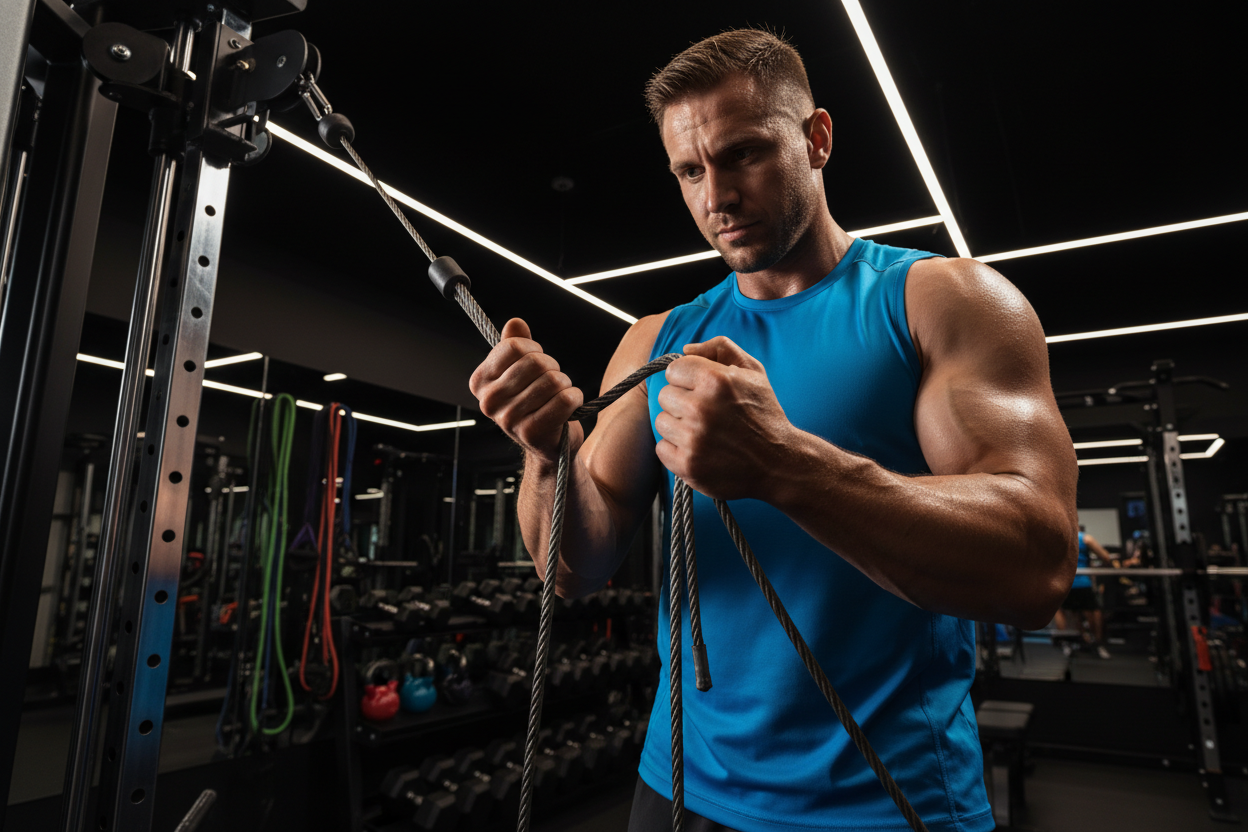
Not all cables for exercise equipment are created equal. When evaluating a replacement weight machine cable, you need to look at both the core material and the outer jacket.
Core Strength and Flexibility
The core of any reliable cable for gym use is typically made of aircraft-grade steel. You will usually see a 7x19 strand core construction, meaning there are 7 bundles of 19 individual wires. This specific weave provides the perfect balance of high tensile strength (often rated for over 2,000 lbs) and the flexibility needed to wrap tightly around small pulleys without kinking.
Nylon vs. PVC Coatings
The jacket protecting your gym machine cable is just as important as the steel inside. Cheap replacement cables often use a PVC coating. While inexpensive, PVC is soft, creates friction, and tears easily. High-end fitness equipment cables use a mil-spec nylon coating. Nylon is harder, significantly smoother, and will not peel when grinding through heavy, high-volume sets.
How to Measure and Replace Your Gym Cable
Ordering the wrong length is the most common mistake when buying a cable for gym equipment. If it is too short, the weight stack hovers; if it is too long, you lose tension at the bottom of your rep, ruining your time under tension.
Getting the Perfect Fit
To get the right measurements for your exercise machine cables, remove the old cable entirely. Lay it perfectly straight on the floor and measure from the absolute end of one terminal (like the ball stopper or eyelet) to the end of the other. Also, note the thickness. Most standard home gym setups use a 1/8-inch core with a 3/16-inch outer diameter coating, while commercial machine cables might step up to a 1/4-inch total thickness for heavy-duty applications.
Maintenance: Extending the Life of Your Cables
Even the best cables for fitness machines wear down over time. To maximize their lifespan, keep your pulleys clean and free of dust, which can act like sandpaper against the nylon coating. Occasionally wiping down your fitness cables with a dry cloth and a silicone-based lubricant can keep them gliding silently and prevent the coating from drying out and cracking in unregulated garage environments.
From Our Gym: Honest Take
Last winter, I ignored a slight kink in the weight machine cord of our primary functional trainer. I figured it had a few more months of life. Mid-way through a heavy tricep pushdown, the cable snapped. Thankfully, no one was hurt, but the resulting recoil cracked a plastic pulley wheel, turning a simple cable replacement into a frustrating repair job.
When I rebuilt the machine, I upgraded all the weightlifting cables to a US-made, nylon-coated 7x19 aircraft wire. The difference was night and day. The friction was noticeably reduced, making the weight stack feel incredibly smooth, almost matching our high-end commercial gym setup. My advice? Do not cheap out on a weight lifting cable. If you see fraying, peeling, or a permanent kink, replace it immediately.
Frequently Asked Questions
Is a hardware store wire safe to use as a weight bench cable?
No. Standard hardware store wire rope is typically coated in cheap PVC or lacks the flexible 7x19 strand construction required for fitness pulleys. Using it can damage your equipment and poses a serious safety risk under heavy loads.
How long should a weight machine cable last?
In a standard home gym environment with regular use (3-5 times a week), high-quality exercise machine cables should last 3 to 5 years. However, this depends heavily on the quality of the pulleys and whether the machine is kept in a climate-controlled space.
How do I know when it is time to replace my fitness cables?
Look for visible fraying of the steel core, sections where the nylon or PVC coating has split or peeled off, or permanent kinks in the line. If the movement feels gritty or bumpy during a rep, your gym cable is likely compromised and needs swapping.