1 Inch Thick Exercise Mat Guide for Home Gyms
Why Choose a 1 Inch Thick Exercise Mat?
Setting up a practical workout space at home requires balancing floor protection, comfort, and stability. While standard mats work well for basic mobility, a 1 inch thick exercise mat provides a substantial barrier against unforgiving hard floors like concrete, tile, or hardwood.
Extra Thick Cushioning for Sensitive Joints
Standard flooring options often fall short when your routine involves kneeling, seated core work, or rolling movements. A thicker mat distributes contact pressure over a wider surface area. For individuals with sensitive joints or those recovering from minor aches, this depth prevents knees, elbows, and tailbones from digging into firm ground. Unlike thin alternatives that compress immediately under localized pressure, a cushioned mat maintains adequate separation between your body and the subfloor.
Subfloor Protection Against Drops and Pressure
Beyond personal comfort, heavy workout gear can cause irreversible dents, scrapes, or cracks across residential surfaces. Dropped hand weights, kettlebell sets, and heavy benches generate concentrated force. Placing a wide workout mat and gym flooring over your base floor absorbs kinetic force before it transfers into the underlying structure, helping protect flooring throughout daily training.
Material Guide: High Density Foam vs. Vulcanized Rubber
Not all thick mats behave the same way. The two primary materials used for this depth are high density foam and solid rubber, each suited to different fitness activities.
High Density Foam for Floor Work and Bodyweight Training
Closed cell foam and dense composite foams provide maximum softness with minimal total weight. These foam mats excel during floor exercises, abdominal circuits, and pilates mat routines where you spend considerable time lying down or kneeling. High density foam creates a comfortable mat that absorbs shock smoothly. However, soft foam compresses deeply under heavy exercise equipment or concentrated point loads, which means it may feel squishy during heavy standing lifts.
Heavy Duty Rubber Mats for Free Weights and Equipment
When stability under load is the top priority, heavy duty rubber mats offer a firmer alternative. Solid vulcanized rubber provides minimal give, creating a flat surface that anchors heavy lifting shoes and prevents bench legs from sinking. While rubber provides less plush cushioning for bare feet during floor work, it delivers exceptional resistance against scuffs, tears, and point compression from metal plates and dumbbells.
Matching Mat Thickness to Your Workout Style
Selecting the right surface comes down to how your body interacts with the ground during your regular routine.
Pilates, Core, and Ground-Based Stretching
Floor-heavy disciplines like restorative stretching, core training, and pilates demand sustained pressure on bony prominences. An extra thick yoga or pilates mat shields your spine during roll-downs and protects your hips during side-lying series. For extended stretching sessions, selecting a full size yoga and exercise mat gives you ample room to move across poses without sliding onto cold floors.
High-Impact Jumping, HIIT, and Standing Stability
For intense workouts involving plyometrics, jumping jacks, or jump rope intervals, excessive cushion can compromise ankle alignment. If a mat is too soft, your feet sink, making rapid lateral movements unstable. A high density exercise mat with a textured, non slip surface strikes the proper balance: it absorbs joint impact upon landing while maintaining enough firmness for a solid grip and steady push-off.
Weight Benches and Strength Equipment Placement
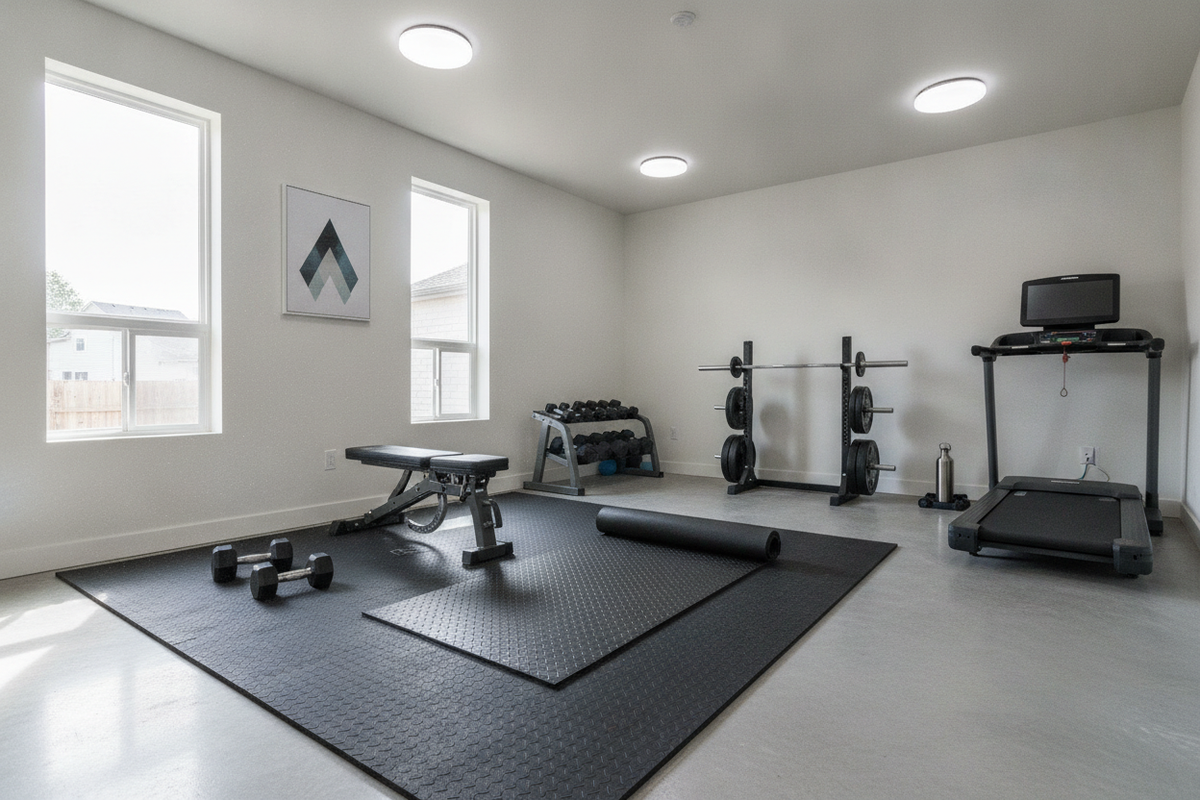
Positioning heavy benches, power racks, or rowing machines on standard flooring risks gouging the subfloor. A resilient 1 inch gym mat can distribute the footprint of your exercise equipment safely. For routines focused on progressive lifting, reviewing a home workout routine and floor setup guide can help you align bench positions and free weight clearance zones efficiently.
Sizing and Layout for Home Gym Spaces
Choosing the right footprint ensures your workout space remains tidy, safe, and functional without creating tripping hazards.
Individual Workout Spots vs. Seamless Room Coverage
If your training area serves multiple household purposes, a standalone roll-up mat offers convenient portability. You can roll it out for mobility exercises and tuck it away when finished. Conversely, if you have a dedicated garage or basement fitness zone, investing in large exercise mats for home gyms or interlocking gym mats provides broad coverage, eliminating gaps where sweat, chalk, and dirt can settle.
Preventing Mat Shifting and Edge Curling
Thick mats can occasionally creep or slide across smooth subfloors during dynamic routines. To keep your home gym workout mat stable:
- Ensure the underlying floor is completely free of dust and grit before laying the mat down.
- Look for mats with textured underside patterning that grips concrete or wood.
- Allow rolled mats to acclimate at room temperature with weighted corners until they rest completely flat.
- Connect interlocking tiles tightly to avoid separated seams during lateral lunges.
Care, Cleaning, and Longevity Tips
Keeping your fitness surface clean extends its usable life and keeps your workout area hygienic.
Daily Sweat Management and Material Cleansers
Sweat and body oils accumulate quickly on closed cell foam and textured rubber. Wipe the surface down after intense workouts using warm water and mild dish soap or a dedicated fitness mat spray. Avoid harsh bleach, petroleum-based solvents, or abrasive scrub brushes, as these can degrade foam coatings and break down rubber binders over time.
Storage Solutions for Roll-Up and Interlocking Mats
When not in continuous use, store foam mats loosely rolled with the training surface facing outward to prevent permanent creasing. Avoid storing mats in direct sunlight or unconditioned spaces exposed to extreme heat fluctuations, as sustained ultraviolet light and heat can cause materials to dry out or become brittle.