Shoulder Press Machine Weight Without Plates Explained
Shoulder Press Machine Weight Without Plates Explained
When approaching an unloaded plate-loaded overhead press station, lifters frequently wonder about the baseline resistance before sliding plates onto the horns. The physical weight of the entire structural steel frame has almost no relationship to the resistance experienced at the handles. Instead, what you push against during an unloaded repetition represents the effective lever resistance created by the moving arms, plate pegs, and handles relative to their pivot axis.
Understanding this baseline resistance is critical for anyone who tracks their training volume. If you move from a traditional barbell to a dedicated machine press, assuming the starting resistance is zero can skew your training log. In broad equipment design, this challenge mirrors what lifters encounter across other plate-loaded equipment; exploring a carriage machine weight guide highlights how mechanical leverage alters starting resistance across different movements. With overhead pressing, the starting feel typically ranges from very light on counterbalanced units to a moderate baseline on heavy, uncounterbalanced independent arms.
How Lever Arms and Pivot Angles Shape Starting Resistance
The resistance of an unloaded plate-loaded shoulder press depends primarily on the location of the main pivot assembly and the length of the lever arms. In physics and equipment fabrication, the moment arm determines how much rotational torque is required to push the handles upward. When the machine arms rest at the bottom stop, the distance between the pivot bearing and the handle grip creates the felt resistance you encounter during the first rep.
Manufacturers generally design overhead pressing stations using one of two primary mechanical layouts:
- Counterbalanced Lever Systems: Some commercial designs incorporate counterweights extending behind the main pivot axis. These counterweights offset the physical mass of the forward press arms, creating a nearly weightless starting resistance that allows trainees of varying strength levels to warm up smoothly.
- Direct Lever Systems: Stations without rear counterweights force the lifter to push the unassisted weight of the steel tubing, grip handles, and plate-loading horns. On these units, starting resistance is noticeably heavier, requiring deliberate upward drive from the very first rep.
Joint alignment also plays a role in how this weight feels. Converging lever arms swing slightly inward along a natural arc that matches the pressing motion of the shoulders, which can make the load feel smoother compared to older, fixed-path straight vertical tracks. Lifters interested in detailed equipment designs can review our plate loaded shoulder guide to understand how different pivot positions interact with upper-body mechanics.
Plate Loaded Shoulder Press vs Barbell Overhead Press
Lifting on a dedicated machine shoulder press offers a fundamentally different experience than pressing free weights overhead. With a barbell or pair of dumbbells, you must stabilize the load across three dimensions, keeping your core braced and maintaining balance throughout the entire range of motion. A plate-loaded machine constrains movement to a predetermined arc, minimizing stress on secondary stabilizer muscles and allowing direct focus on deltoid recruitment.
Because machines eliminate the balance component, lifters can often handle higher plate loads with controlled reps and better form. However, attempting to directly compare numbers between a barbell overhead press and a plate-loaded station is rarely straightforward. A standard barbell presents a consistent, known mass from lockout down to the collarbone. In contrast, the leverage curve on a machine arm changes as the lever rotates around its pivot, often becoming mechanically easier or harder near full lockout.
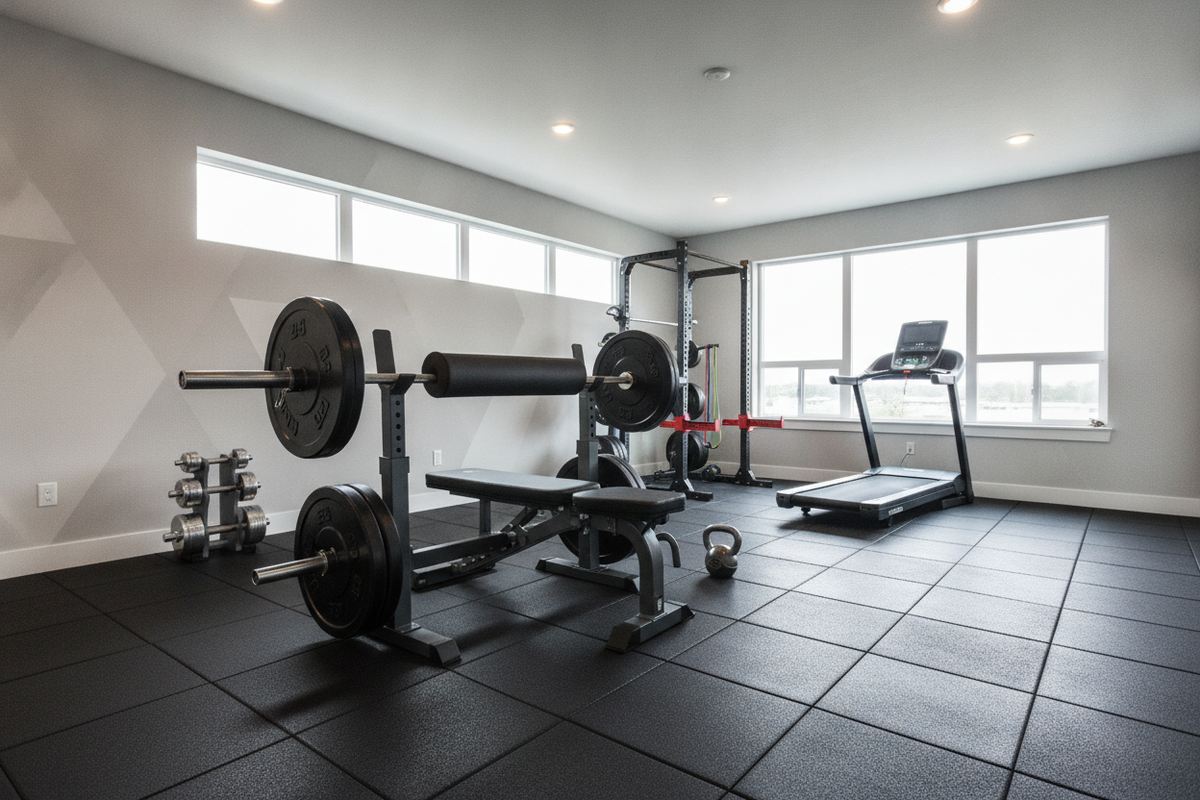
For lifters building out a comprehensive home facility or personal training studio, pairing dedicated leverage stations with versatile free-weight setups ensures balanced training. Supplementing a press machine with a complete rack and barbell weight plate set provides the flexibility to combine strict free-weight pressing with isolated machine work for comprehensive strength gains and muscle growth.
Machine Placement and Floor Protection for Overhead Press Units
Plate-loaded leverage machines concentrate significant downward force across small surface contact points. An overhead press machine loaded with heavy plates generates substantial point-load pressure on its feet, especially during forceful concentric drives. Placing heavy equipment directly onto unprotected concrete or finished floors can lead to scuffing, vibration transfer, and surface cracking over time.
Installing high-density rubber gym flooring under overhead pressing units offers several practical advantages:
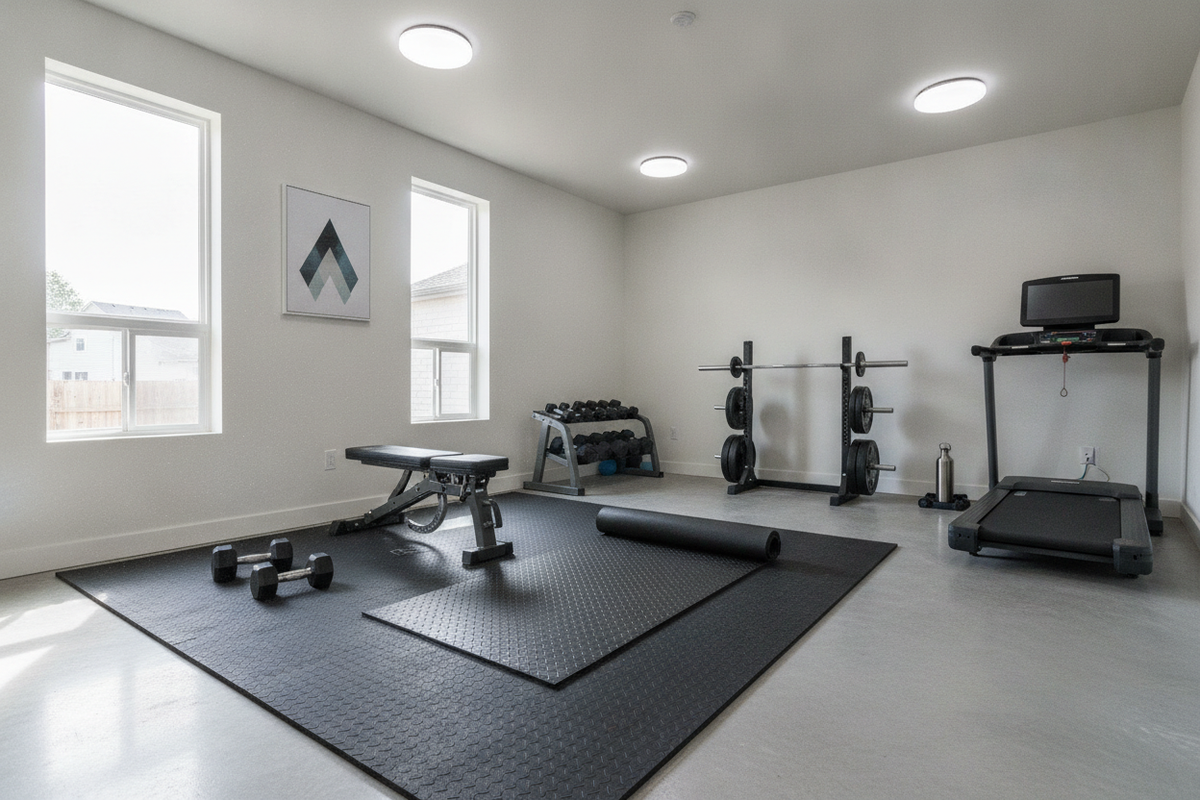
- Surface Protection: Thick rubber flooring distributes downward pressure across a broader surface area, preserving the structural subfloor beneath heavy equipment frames.
- Frame Stability: Rubber matting prevents heavy steel frames from shifting or sliding across smooth floors during intense pressing sets.
- Noise Dampening: Resilient mats absorb the acoustic reverberations caused by lever arms returning to their bottom resting stops.
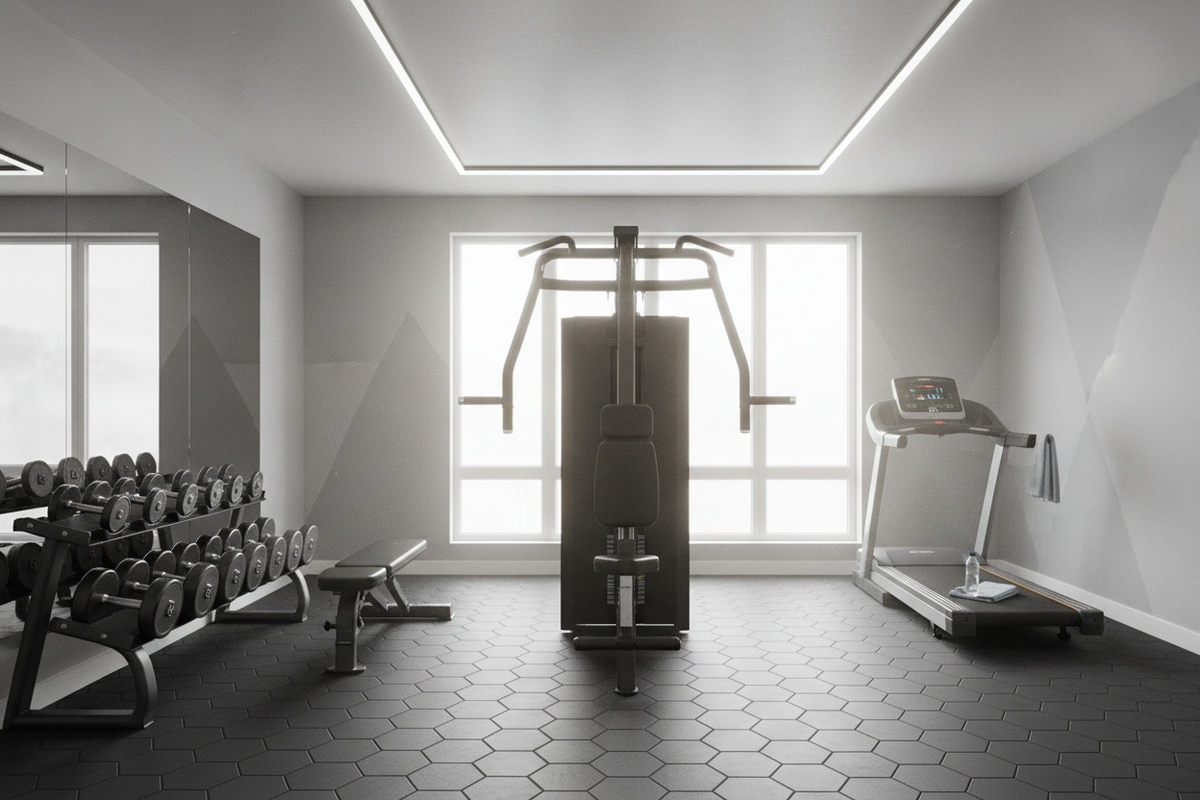
When mapping out your training space, it is useful to position upper-body pressing units in practical proximity to complementary stations. Home gym owners frequently balance their overhead equipment against lower-body investments, such as a plate-loaded leg extension machine package, ensuring orderly traffic flow and convenient plate sharing. Browsing a dedicated leg machine collection can help you plan your floor footprint efficiently so plate storage trees remain accessible to both upper- and lower-body stations.
Frequently Asked Questions About Shoulder Press Starting Weight
How do you track starting weight if the machine has no label?
If the manufacturer has not attached a placard specifying the starting resistance, the most practical approach is to record the plates added to the horns rather than trying to guess the exact carriage weight. As long as you consistently log your sets using the same machine, progressive overload remains accurate and measurable. Advanced lifters seeking an estimate sometimes use an analog luggage scale attached to the handle to gauge the force required to initiate movement from the bottom stop.
Does seat height alter the starting resistance?
Seat adjustment does not change the physical weight of the lever arm, but it alters your starting leverage and shoulder angle. Setting the seat lower places your shoulders into deeper passive flexion, requiring you to initiate the press from a mechanically disadvantaged position. Setting the seat higher allows you to press from a more advantageous mid-range position, which often makes the initial push feel significantly lighter.
How do worn bearings affect felt resistance?
The smoothness of the pivot bearings directly influences how resistance feels throughout the rep range. Sealed ball bearings that are dirty, dry, or worn create rotational friction that adds uneven dragging resistance to the lever arm. Periodically cleaning around pivot shafts and ensuring bearings rotate without grit preserves the smooth, predictable resistance intended by the machine designer.