You're Cramming Too Much Gym Equipment in Home Spaces
I remember the day I realized my garage was a literal death trap. I had just finished bolting down a shiny new power rack, only to realize I couldn't actually slide a 45-pound plate onto the barbell without hitting my water heater. Setting up gym equipment in home environments is a game of spatial geometry that most people lose before they even unbox their first order. We get seduced by the 'compact' labels and the glossy photos of 1,000-square-foot commercial spaces, but your spare bedroom doesn't have that kind of mercy.
If you're tired of stubbing your toe on a rogue dumbbell or having to perform a tactical slide just to reach your pull-up bar, you aren't alone. Most gym equipment at home is bought for the specs, not the actual livable space. I've spent a decade testing gear in tight quarters, and I've learned that the footprint listed on the box is almost always a lie of omission.
- The 10-Foot Rule: Your 7-foot barbell actually needs 10 feet of horizontal width to be functional and safe.
- Dynamic Footprint: A machine's size changes when you're actually using it; account for limb extension and plate loading arcs.
- Verticality is King: If it doesn't go on the wall, it's taking up your floor—and your floor is your most precious asset.
- Multi-functional Gear: One high-quality cable tower beats three single-use machines every single time in a small space.
The Tape Measure Lie: Why Spec Sheets Fool You
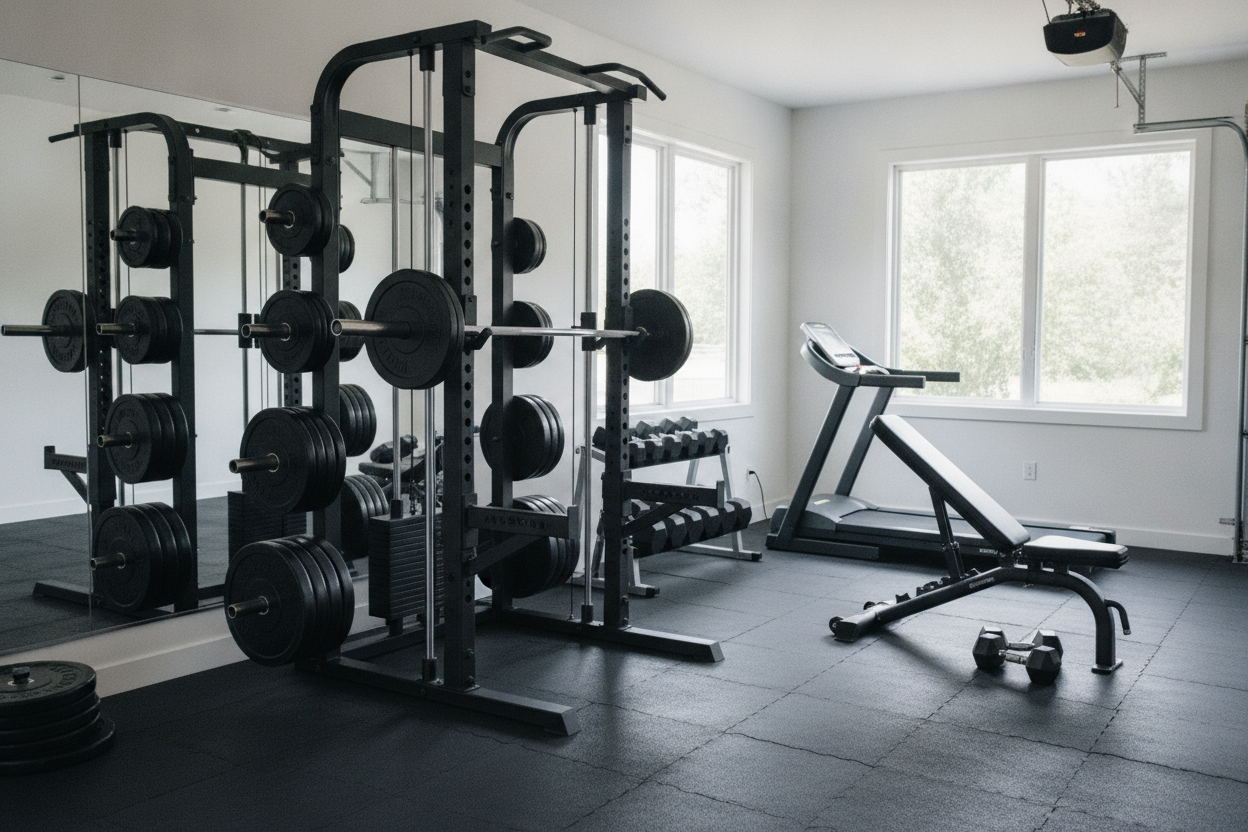
When you're browsing for home gymnasium equipment, you're looking at the 'static footprint.' This is the measurement of the machine's base when it's sitting idle. For a standard power rack, that might be 48 inches wide by 50 inches deep. It sounds manageable, right? But the moment you step inside that rack to squat, you realize the manufacturer didn't account for your elbows, your spotter, or the massive plates you're trying to slide onto the sleeves.
I call this the 'dynamic footprint.' It's the space you actually occupy while moving. If you're doing lunges, a 3-foot-long bench suddenly requires 8 feet of linear space. If you're doing lateral raises with dumbbells, your 2-foot-wide body now needs 6 feet of clearance. Most people fail to map out the 'working zone' around their home gyms equipment, leading to a space that feels more like a storage unit than a place to train.
Before you buy, grab some blue painter's tape. Mark out the machine's base, then mark an additional 24 inches of 'human space' on every side. If those tape lines overlap with your furnace or your car's bumper, you don't have room for that machine. This is especially true for equipment gym home setups where you're fighting for every square inch. Don't trust the website; trust the tape measure and your own wingspan.
The 'Barbell Buffer' You Probably Forgot About
The math of a barbell is brutal. A standard Olympic bar is roughly 7 feet long (86 inches). If you put that bar in a room that is 8 feet wide, you have exactly 5 inches of clearance on either side. Try sliding a 45-pound iron plate onto that bar without punching a hole in your drywall or scraping your knuckles. It's impossible. You need a 'buffer zone' for loading and unloading.
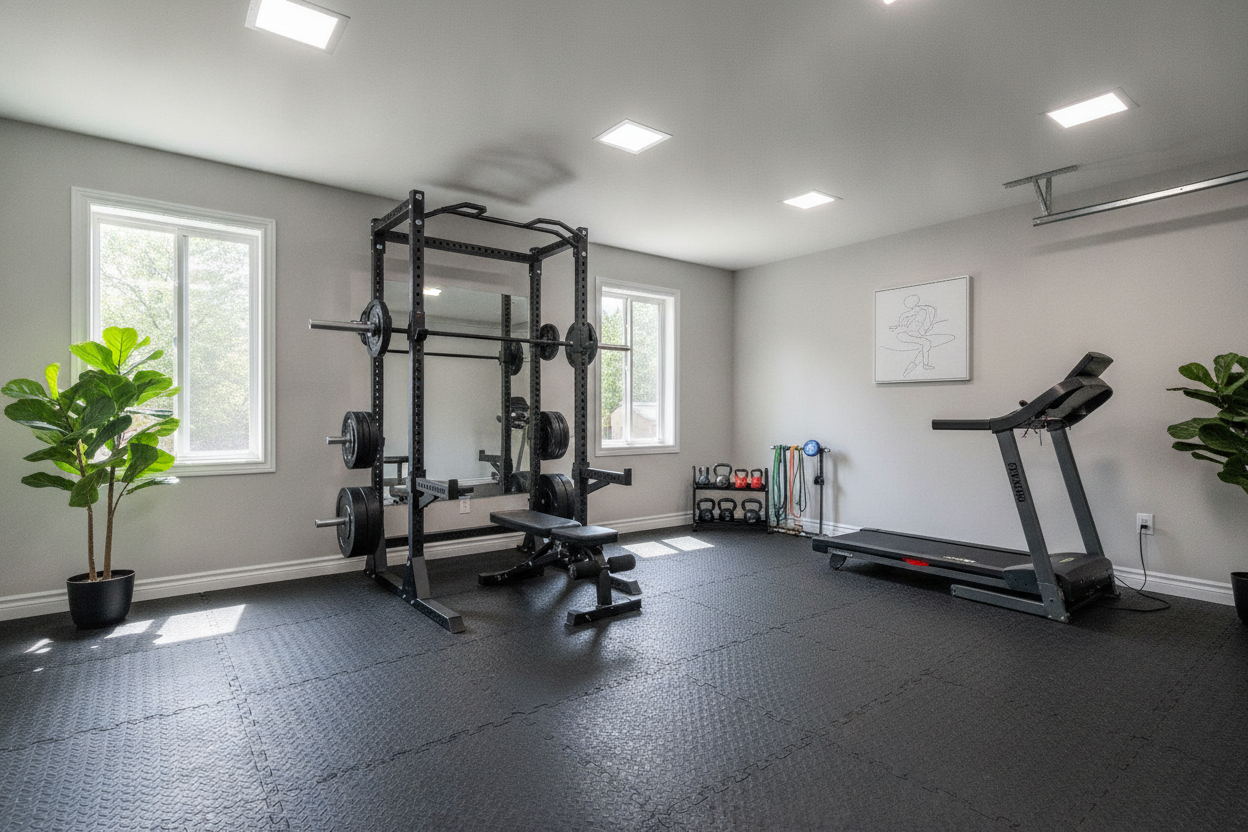
To safely load a bar, you need at least 18 to 24 inches of clearance on both ends. This means your 7-foot bar needs a 10-foot or 11-foot wide room. If you're tight on space, you might be tempted to buy a 'shorty' bar, but those often have shorter sleeves, meaning you can't load as much weight. It’s a trade-off that can stall your progress if you're chasing a heavy deadlift. I always recommend centering your rack in the widest part of the room, even if it messes up your layout.
Protecting your floor is the next hurdle. When you're wrestling with heavy plates in a tight spot, you’re going to drop one. It’s not a matter of if, but when. I suggest mapping out your loading zones and laying down thick gym flooring mats. These provide a designated perimeter that tells you exactly where the 'danger zone' ends. It also saves your subfloor from the inevitable impact of a misloaded 45. Trust me, your foundation and your sanity will thank you.
How to Organize Gym Supplies for Home Without Going Crazy
It's rarely the big stuff that makes a gym feel messy; it's the small gym supplies for home use that accumulate like junk mail. Resistance bands, collars, fractional plates, and lifting belts have a way of migrating across the floor. If you're throwing these items into plastic bins, you're doing it wrong. Bins are where gear goes to die—you'll never find the matching band when you're mid-circuit.
Wall space is your best friend. I'm a huge advocate for wall-mounted pegboards or dedicated gear strips. Hanging your gym equipments for home workout sessions keeps the floor clear and keeps your head in the game. When everything has a hook, you spend less time hunting for a 2.5-lb plate and more time actually lifting. It also forces you to be honest about what home gym stuff you actually use. If it hasn't come off the hook in six months, sell it.
If you're dealing with a garage setup, consider magnetic hooks for your rack. They’re cheap, they hold a surprising amount of weight, and they keep your most-used items—like your timer or your favorite collars—right at eye level. Organizing your gym equipment for home workout efficiency isn't just about neatness; it's about maintaining the 'flow' of your session.
The Only Time 'Compact' Workout Equipment for Home Gym Spaces Works
The market is flooded with 'space-saving' gear, but a lot of it is garbage. Folding racks are the one major exception. A high-quality wall-mounted folding rack can shrink from a 24-inch depth to just 4 inches in seconds. This is the gold standard for anyone who still needs to park a car in their gym space. However, the downside is the setup time. If it takes you 10 minutes to unfold your gym, you’re 10 minutes more likely to skip your workout.
Adjustable dumbbells are another win for top home workout equipment. A single pair of high-end adjustables can replace a 15-pair rack of fixed dumbbells. But be warned: the 'clunkiness' of some adjustable models can interfere with certain movements like cleans or overhead presses. You have to weigh the space savings against the potential frustration of a 16-inch-long dumbbell hitting your shoulders during a press.
When you're looking for workout equipment for home gym spaces, look for gear that serves at least three purposes. An adjustable bench that can do flat, incline, and decline is worth three times as much as a flat bench. A rack with a built-in pull-up bar and landmine attachment is a space-saver, even if it has a larger footprint than a standalone squat stand. Don't buy 'small' gear; buy 'smart' gear.
Stop Buying Single-Use Machines for Tight Rooms
The biggest space-killer in any home gym is the single-use machine. I see it all the time: a massive, 80-inch-long treadmill or a dedicated leg press taking up 40% of a bedroom. Unless you are a competitive marathoner, these are usually a waste of space. Most people use a treadmill for three weeks before it becomes the world's most expensive laundry rack. For cardio, a high-quality jump rope or a compact indoor cycle has a much better 'sweat-to-square-foot' ratio.
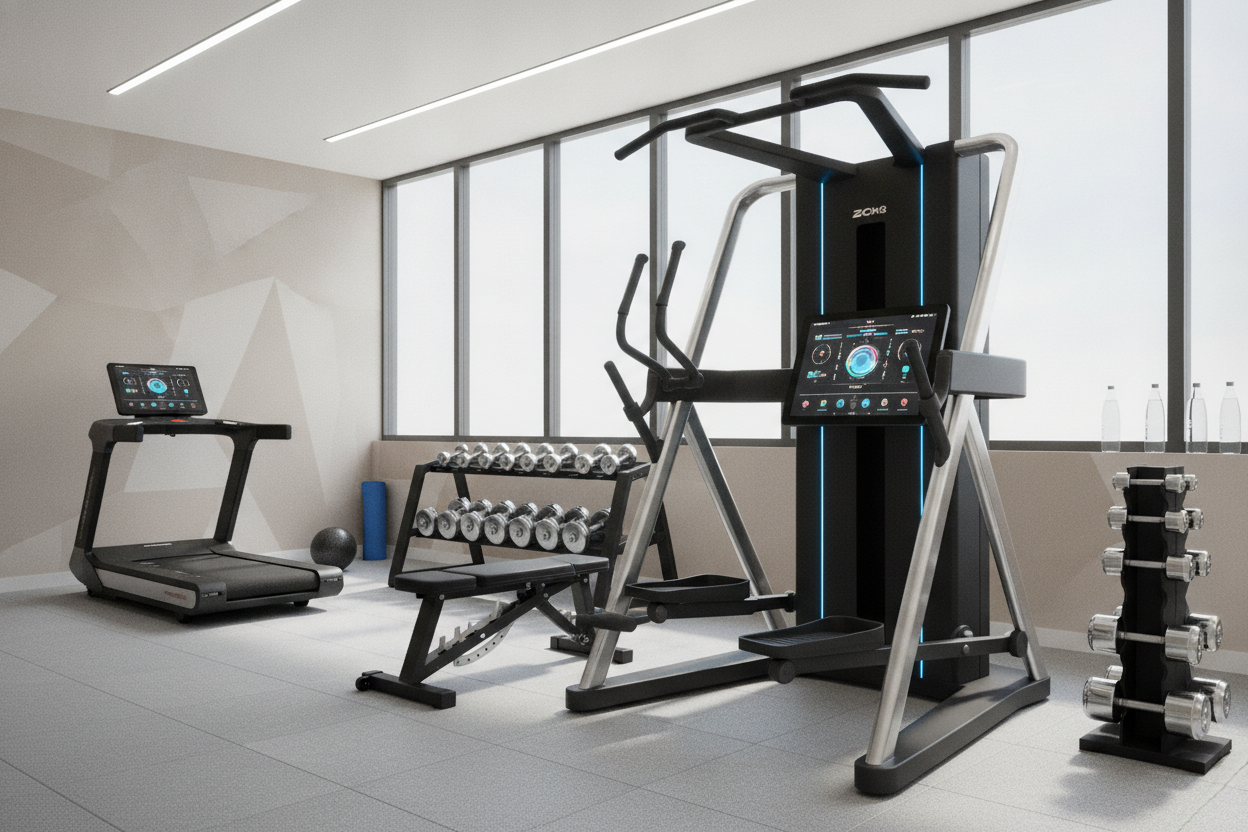
Instead of a leg press, look at a functional trainer or a cable tower. Cables allow for hundreds of movements—lat pulldowns, rows, tricep extensions, and even cable squats—in a footprint that is often less than 3x3 feet. You can often find great home gym equipment deals on these multi-functional units if you're patient. They offer more variety for the same amount of floor space, which is the ultimate goal when choosing gym equipment for homes.
Remember, the goal isn't to replicate a commercial gym; it's to create a high-functioning training environment. Every piece of gear should earn its spot. If a machine only does one thing, it better do that one thing better than any barbell or dumbbell alternative. Usually, it doesn't.
My Biggest Space Planning Mistake
Early in my lifting career, I found an old commercial hack squat machine for $100 on Craigslist. I was stoked. I hauled that 400-pound beast into my basement gym, which was already cramped. I didn't measure. Once it was in, I couldn't fully extend my legs without my toes hitting the low ceiling, and I had to crawl over the frame just to get to my squat rack. It made me hate being in my gym. I ended up giving it away for free just to get my floor space back. Lesson learned: a 'deal' isn't a deal if it ruins your training flow.
FAQ
How much space do I really need for a power rack?
Plan for an 8' x 8' area at minimum. While the rack itself is smaller, you need room for the 7-foot barbell, plate storage, and space for you to move around the bar safely without hitting walls.
Are folding treadmills worth it for small spaces?
Only if you actually fold them. Most people leave them down 24/7. If you're short on space, consider a non-motorized treadmill or a high-intensity interval tool like a kettlebell, which takes up zero floor space when stored.
What is the best gym equipment for at home if I only have a corner?
A set of adjustable dumbbells and an adjustable bench. This combo allows for nearly every major lift and can be tucked away easily. Pair it with a few resistance bands, and you have a complete system in under 20 square feet.