Your Search for the Best Exercise Equipments Is Costing You Gains
I’ve been there—it’s 1 AM, and you’re twelve tabs deep into a forum debate about whether a 2.0mm or 2.5mm steel upright is better for a home rack. You want the best exercise equipments to build a physique that actually looks like you lift, but you’re stuck in the 'buy once, cry once' loop. You’re comparing pulley ratios and laser-cut numbering when you should be sleeping so you can actually train the next morning.
The truth? Most of that gear is just expensive clutter. I’ve spent thousands on niche attachments I used exactly twice before they started gathering dust and spiders in the corner of my garage. If you’re not careful, your home gym becomes a museum of wasted potential rather than a place of work.
- Avoid 'niche' gadgets; they lose their novelty in three weeks.
- Prioritize a solid barbell and a rack over complex cable machines.
- Don't skimp on flooring; your concrete slab and your joints will thank you.
- The best gear is the stuff you don't have to spend 20 minutes setting up.
The Trap of the Perfect Home Gym Setup
Beginners often think they need a commercial-grade setup before they can even start a program. They wait until they can afford a $3,000 functional trainer or a full set of urethane dumbbells that look pretty on a rack. This is a massive mistake. While you’re waiting for the 'perfect' gear, you’re missing out on months of progressive overload and habit building. I’ve seen guys get stronger with a rusty bar and some mismatched iron plates than the guys with a custom-painted Rogue setup who are too afraid to scratch the finish.
Analysis paralysis is the ultimate gains-killer. You see a list of the top 50 items every home gym 'needs' and you realize you only have the budget for three. Instead of buying those three and getting to work, you freeze. You keep researching, hoping to find a shortcut or a cheaper version of a high-end machine. Real training doesn't require a perfect environment. It requires enough resistance to force an adaptation. If you have enough room to swing a cat, you have enough room to get started today.
Why Your Best Exercise Tool Is the One You Actually Use
We all love shiny things, but the best exercise tool is the one that doesn't require a manual to adjust. If you have to spend ten minutes swapping pulleys, moving pins, and re-routing cables just to move from chest presses to rows, you’re going to skip rows eventually. The friction of setup is the enemy of consistency. This is why I always gravitate back to the basics. A barbell doesn't have a software update. A dumbbell doesn't need a subscription to work.
Free weights are king for a reason. They don't break, they don't need oiling, and they force your stabilizer muscles to actually do some work. A simple pair of adjustable dumbbells or a solid barbell will always outlive a 'smart' gym with a built-in screen that will be obsolete in three years. When you're tired after a long day of work, you want to walk into your gym space and start lifting, not troubleshoot a Bluetooth connection or adjust a complex cam system. Simplicity is a feature, not a lack of technology.
Foundation First: Don't Buy Iron Before You Buy Rubber
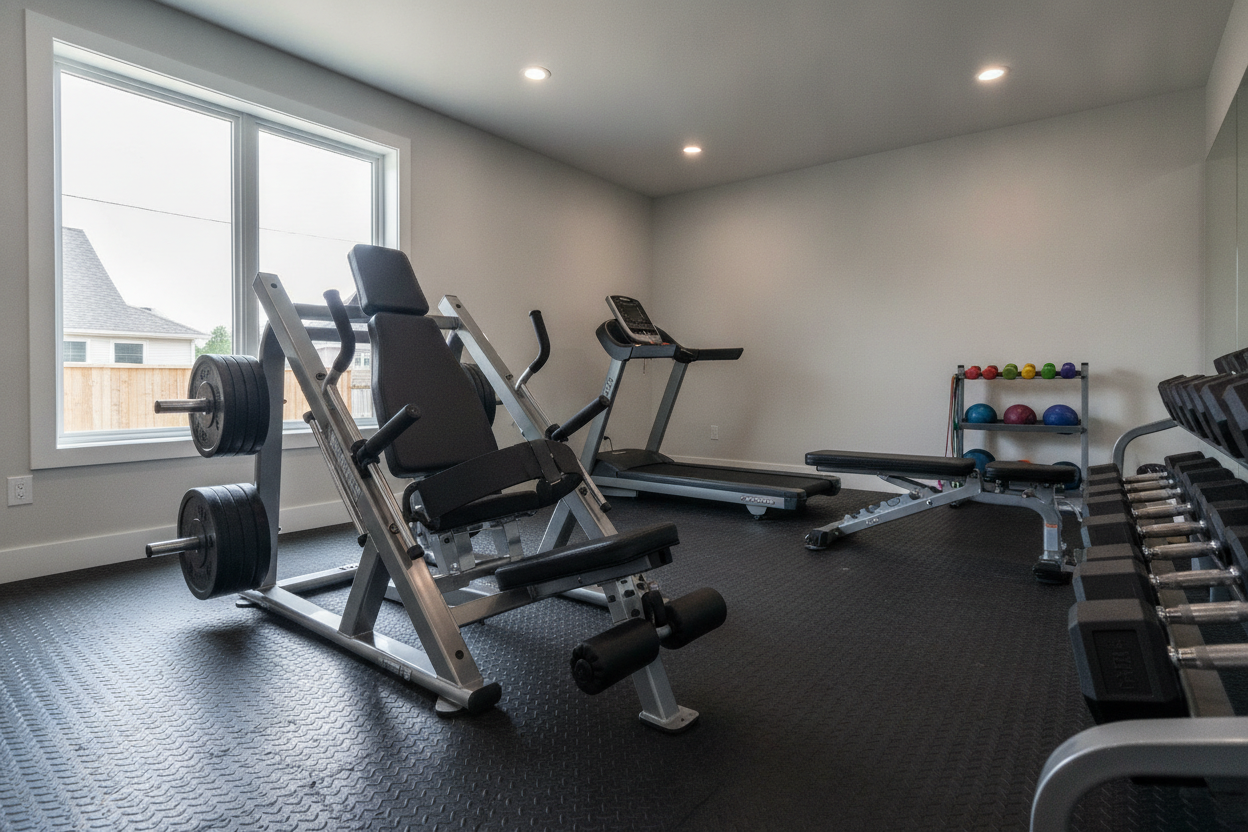
I made the mistake of deadlifting 405 on bare concrete once. The sound was horrifying—a sharp, bone-rattling crack that echoed through the whole house. The tiny fissure that appeared in my garage floor still haunts me every time I sweep the gym. You need a buffer between your heavy iron and your property. Most people think they can get away with those cheap puzzle-piece foam mats from the big-box stores, but those are for playrooms, not power cleans. They compress under load and shift around when you’re trying to lunge, which is a recipe for a rolled ankle.
You need something high-density that can actually disperse the force of a dropped weight. A heavy-duty large exercise mat 6x4 is the minimum viable product here. It protects the slab, dampens the noise so your neighbors don't hate you at 6 AM, and gives you a grippy surface for heavy squats. I’ve found that 6x4 is the sweet spot because it fits perfectly under a standard power rack while leaving enough room for you to step back and find your stance without your heels hanging off the edge. If you're building a gym on a budget, buy the floor before you buy the fancy bar.
The 3 Pieces of Gear Actually Worth Your Hard-Earned Cash
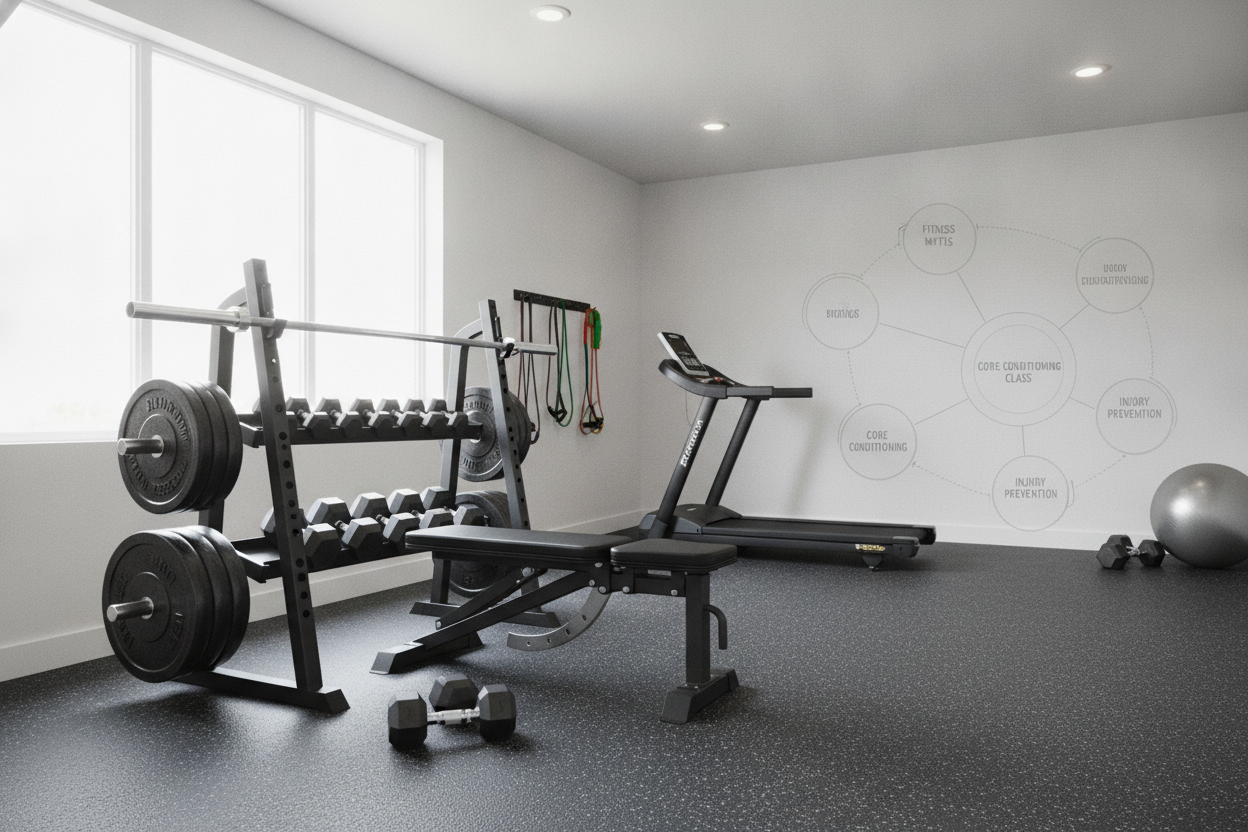
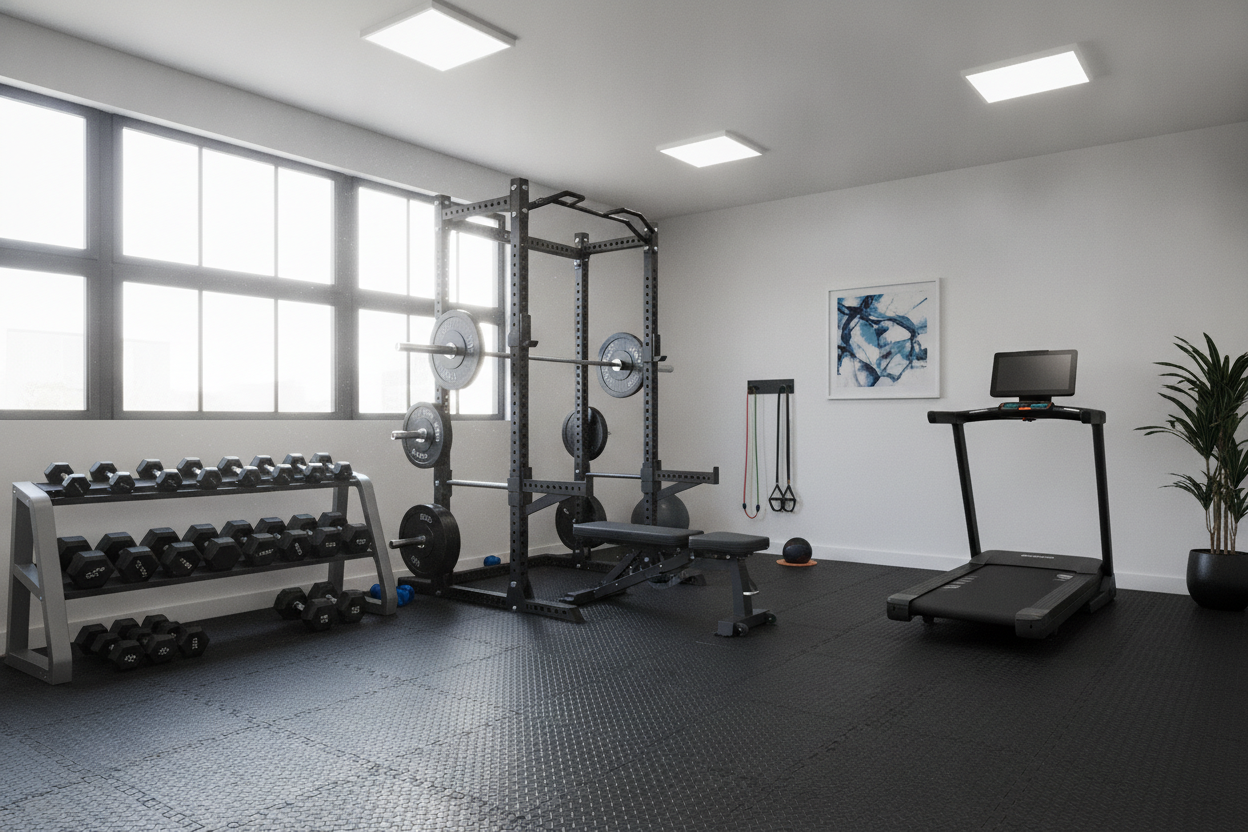
If I had to start over with a $1,500 budget and a blank garage, I’d buy exactly three things. First, a power rack with a pull-up bar. It’s your safety net. You can’t go to failure on a bench press if you’re training alone without safety pins. Look for 11-gauge steel and 5/8-inch or 1-inch holes so you can add attachments later. Second, a 20kg Olympic barbell. Not a cheap $50 bar from a sporting goods store—get something with a decent knurl that won't tear your hands apart but won't slip when they get sweaty.
Third, and most overlooked, is the best large exercise mat you can afford. This isn't just for yoga or stretching. It’s the literal base of your entire training program. It keeps your rack from sliding when you re-rack a heavy set and provides the necessary friction for your feet during a heavy bench press. Once you have these three—the rack, the bar, and the flooring—you can do 95% of every effective strength program ever written. Everything else, from the GHDs to the specialized buffalo bars, is just icing on the cake. Master the big three before you worry about the trimmings.
How to Spot Gimmicks Hidden in Online Reviews
Be wary of reviews that focus on 'how many exercises' a machine can do. If a piece of equipment claims to be 50 machines in one, it probably does all 50 of them poorly. These are usually the first things to end up as clothes racks. When you're reading reviews, look for specs rather than marketing adjectives. If a reviewer doesn't mention the steel gauge, the bearing type in the barbell, or the density of the rubber flooring, they probably haven't actually used the gear for a heavy session.
When you’re trying to choose the best exercise mat for home fitness, check the weight of the product in the shipping details. If a mat is light enough to carry with one finger, it’s not going to stay put when you’re doing mountain climbers or heavy kettlebell swings. Real gear has heft. If the manufacturer is hiding the weight or using vague terms like 'high-tech polymer' instead of 'recycled crumb rubber' or 'high-density PVC,' keep scrolling. You want gear that was designed by lifters, not by a marketing department looking to maximize shipping margins.
Time to Stop Browsing and Start Lifting
You don't need a 1,000-square-foot commercial space or a six-figure bank account to get elite results. You need a floor that can take a beating, a bar that won't bend, and the discipline to use what you have. The most expensive piece of equipment is the one that sits unused. Stop refreshing the 'new arrivals' page and go hit a set of heavy squats with whatever you have right now. The gains are in the effort, not the receipt.
My Biggest Gear Mistake
I once bought a 'total body' cable system off a late-night infomercial because I thought it would replace my dumbbells. It looked great in the edited video. In reality, the resistance felt 'mushy,' the cables frayed within six months of moderate use, and the seat was so narrow it felt like sitting on a balance beam. I ended up selling it for $20 on a local marketplace just to get the floor space back. I replaced it with a single heavy kettlebell and got better results in a month than I did in half a year on that plastic contraption.
FAQ
Is 11-gauge steel really necessary for a rack?
If you're planning on squatting over 400 lbs or you want gear that your grandkids can use, yes. 14-gauge is fine for light accessory work, but 11-gauge feels like a tank and won't wobble when you're re-racking a heavy set. It’s about stability and peace of mind.
What's the very first thing I should buy?
Flooring. You can't train effectively if you're worried about cracking your garage slab or slipping on dusty concrete. Get a high-density mat first, then build the rest of the gym on top of it.
Are adjustable dumbbells better than a barbell?
They are great for saving space, but they aren't a replacement for a barbell when it comes to heavy compound movements like squats and deadlifts. If you have the room, start with the barbell and add adjustables later for accessory work.