Your Primary Exercise: Anchoring Your Home Gym Routine
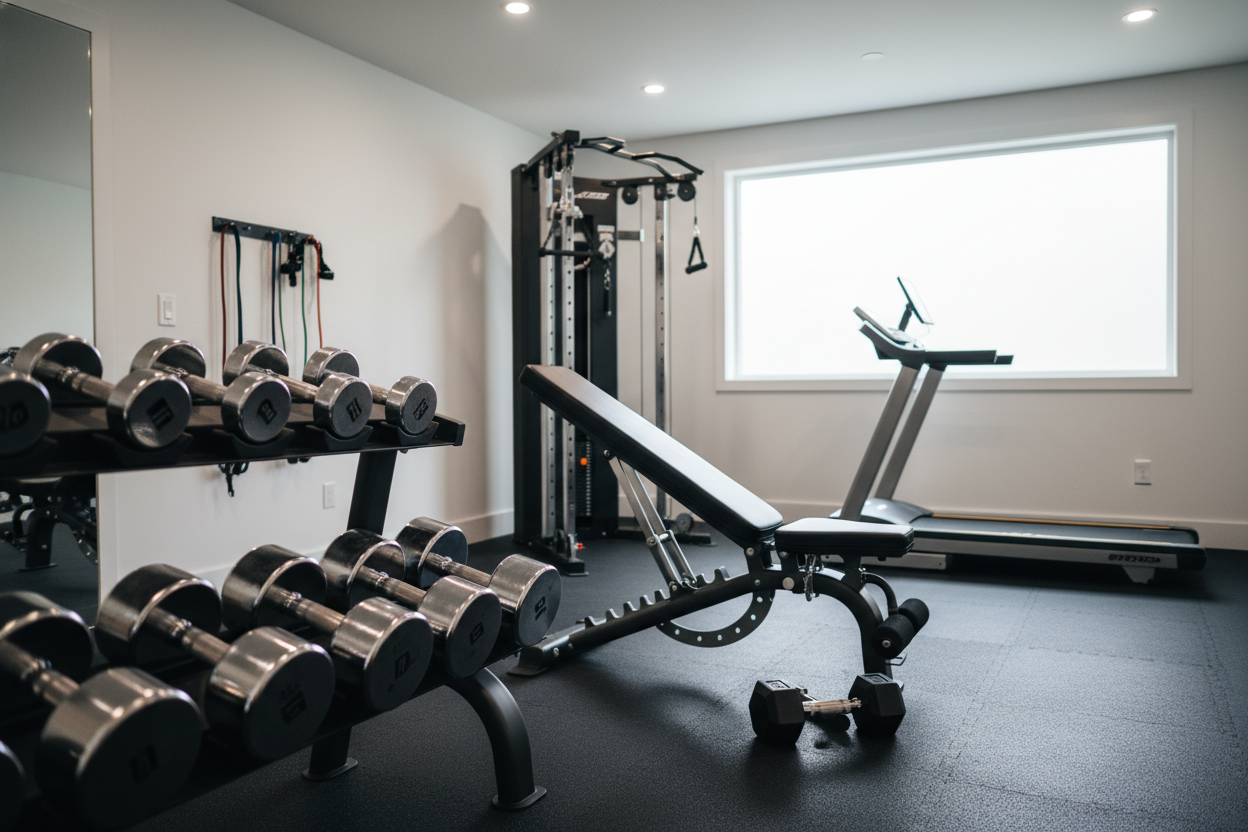
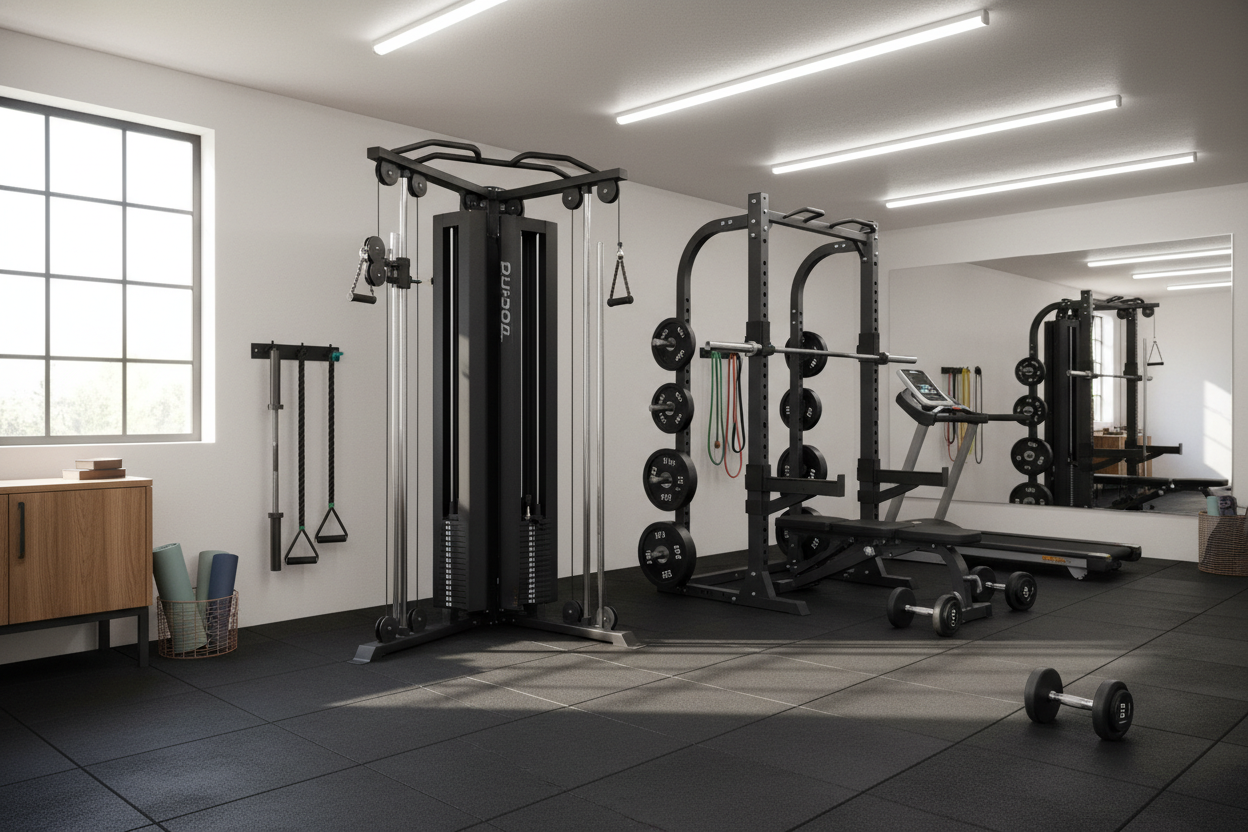
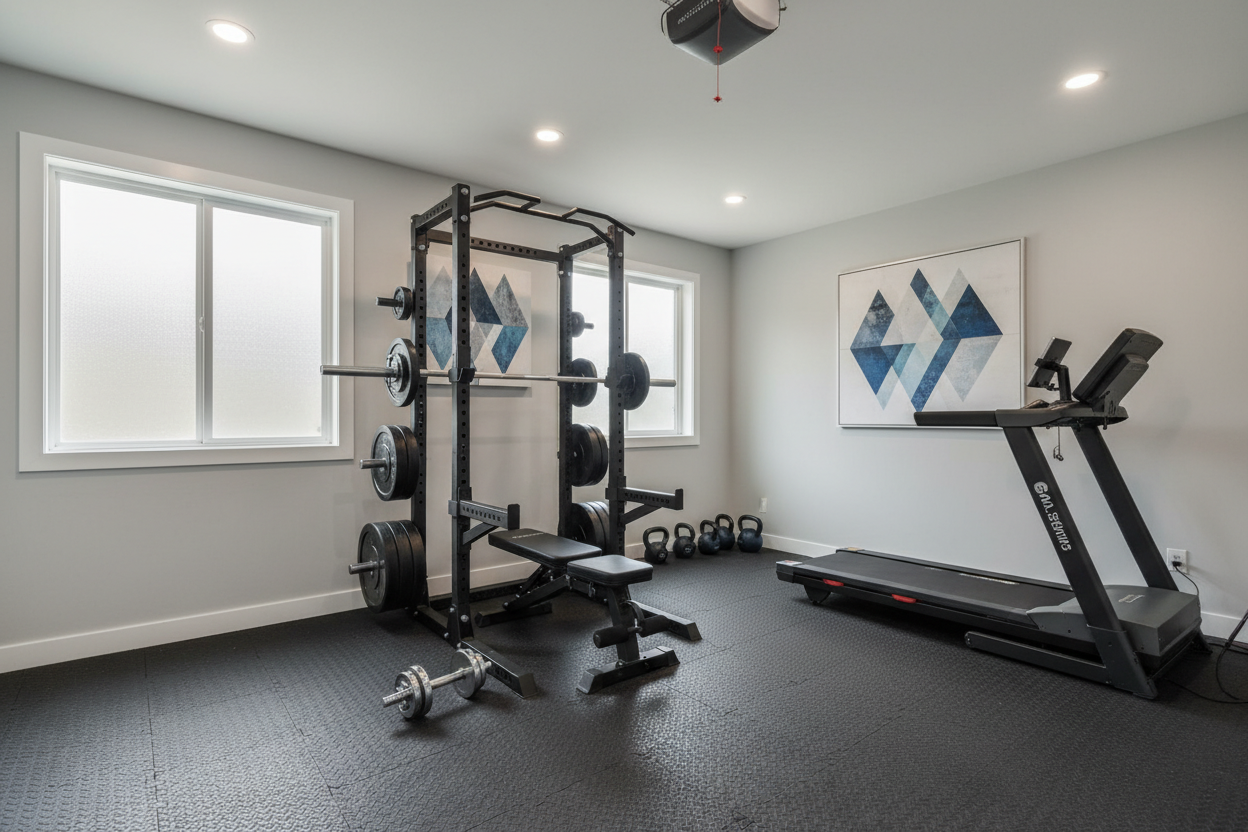
I remember staring at my garage gym setup—a basic half-rack, a flat bench, and 300 pounds of iron shoved into a 10x10 foot space—trying to figure out how to cram my old eight-movement commercial gym leg day into a 45-minute window. It was a disaster. I spent more time stripping plates and adjusting J-hooks than I did actually lifting. My heart rate would plummet while I dragged equipment across the rubber mats, and by the end of the session, I felt exhausted but entirely under-stimulated. That is when I realized home workouts require a completely different approach. If you want to see real strength gains in a limited space, you have to anchor your session around one primary exercise.
Quick Takeaways
- Focus 70 percent of your workout time and physical energy on a single heavy compound movement.
- Reduce equipment setup time to keep your central nervous system focused and prevent mental friction.
- Choose your main lift based on the heaviest, safest movement your current gear allows.
- Treat all other movements as optional accessories that support your main strength goal.
The Trap of the Junk Volume Home Workout
When clients first come to me to design their garage or spare bedroom setups, they usually bring their old bodybuilding routines with them. They want to do barbell squats, followed by the leg press, leg extensions, hamstring curls, and seated calf raises. Trying to replicate that volume at home is the fastest way to stall your progress and burn yourself out.
In a commercial gym, moving from the squat rack to a selectorized machine takes ten seconds. You pull a pin, adjust the weight stack, and sit down. In a 6x6 foot spare bedroom, transitioning from a heavy barbell lift to a dumbbell or band setup means stripping heavy plates, moving the barbell out of the way, dragging a 60-pound adjustable bench into place, and dialing in new weights. This introduces massive physical and mental friction into your routine.
By the time you reach your fourth or fifth exercise, you aren't failing because your muscles are maximally stimulated. You are failing because you are tired of moving equipment around. This creates what trainers call 'junk volume'—reps that fatigue your body without actually triggering a strength adaptation. You end up sweating a lot, but your numbers on the bar never actually go up.
When you eliminate the junk volume and strip your workout down to its studs, you realize that you only need a handful of high-quality sets to force your muscles to grow. Doing fewer exercises means less time playing interior designer with your gym equipment and more time actually moving heavy weight.
What Actually Defines a Primary Exercise?
In the context of a home gym, a primary exercise is the heaviest, most neurologically demanding compound movement of your training day. It is the anchor. It is the lift that dictates the success or failure of your entire session. You do it first, you give it your best energy, and you rest the longest between its sets.
If you are training legs, your anchor is your heavy squat or deadlift variation. For a push day, it is your overhead press or flat bench. For a pull day, it is a heavy barbell row or weighted pull-up. These movements require multiple muscle groups to work in unison. They demand the most thorough warm-up sets, the highest degree of technical focus, and the longest rest periods to allow your central nervous system to recover.
When you commit to this style of training, you accept a fundamental truth of strength programming: this single movement will drive 80 percent of your results for the day. Think about the physical toll of a heavy deadlift versus a dumbbell bicep curl. The deadlift taxes your hamstrings, glutes, core, lats, and grip. It forces your heart to pump harder and signals your endocrine system to release muscle-building hormones. The bicep curl just isolates a small muscle group in your arm.
Because the anchor lift is so demanding, it requires mental preparation. You have to approach the bar or the heavy dumbbells with intention. You cannot casually scroll through your phone while executing a set of heavy front squats. You give this movement your absolute best physical and mental energy. Everything else you do afterward is just secondary.
Selecting Movements Based on Your Equipment
Your anchor movement depends entirely on the gear you have available. You do not need a massive setup to find a challenging primary exercise. If you have a full power rack with safety pins and a 300-pound Olympic weight set, your choices are traditional and highly effective: barbell back squats, conventional deadlifts, and heavy bench presses. The rack provides the safety necessary to push yourself close to failure.
But what if you are working with a pair of 5-to-52.5-pound adjustable dumbbells in a cramped apartment? Your anchor movement shifts. Instead of a barbell back squat, your main lift becomes a heavy dumbbell Bulgarian split squat. This unilateral movement is incredibly demanding on the central nervous system, requires minimal floor space, and maximizes the load on a single leg, making 50 pounds feel like 150.
Even if you only have heavy loop resistance bands, you can establish an anchor. A heavily banded push-up or a thick-banded Romanian deadlift can provide enough tension to force adaptation. The key is treating that banded movement with the exact same respect, focus, and intensity as you would a heavy barbell lift.
How to Structure a Session Around Your Main Lift
Let's break down exactly how a 45-minute home workout should look when you use this single-anchor method. The secret to this timeline is that 70 percent of your effort goes strictly into preparing for and executing that one lift. It requires discipline to not rush through it.
Minutes 0 to 5 are for your general warm-up. This means getting your core body temperature up and mobilizing the joints you are about to use. Minutes 5 to 10 are for movement-specific prep. If your anchor is the bench press, you are doing light push-ups and empty bar repetitions to groove the movement pattern.
Minutes 10 to 30 are dedicated entirely to your anchor movement. You will perform 2 to 3 progressively heavier warm-up sets, followed by 3 to 5 heavy working sets. Here is the crucial part: you must take full 2-to-3-minute rest periods between these working sets. Do not rush. Your central nervous system needs that time to clear out fatigue so you can lift heavy again.
This might feel like you aren't doing enough, but it is the absolute secret to making minimalist exercise work at home. You are trading a high quantity of mediocre, rushed exercises for a low quantity of exceptionally high-quality sets. You are choosing depth over breadth.
Finally, minutes 30 to 45 are for your accessory work. Because the heavy lifting is done, you can move through these remaining exercises in a fast-paced circuit. This saves time, builds work capacity, and gives you a great muscular pump to finish the session without requiring heavy, cumbersome equipment.
Accessory Work vs. The Primary Movement
Once your anchor lift is complete, your central nervous system will be heavily fatigued. This is exactly why you must shift your approach for the remaining 15 minutes of your workout. Your accessory exercises are there to support the main lift, fix muscular imbalances, and add a little extra volume safely.
Accessory exercises should always be mechanically simpler than your main lift. They should require less setup and carry a much lower risk of injury when you are tired. If your main lift was a heavy barbell overhead press, your accessories might be seated dumbbell lateral raises and standing band pull-aparts. You do not want to follow a heavy overhead press with another complex, heavy movement like a barbell push press. Your stabilizing muscles are already shot.
This final block of time is also the perfect opportunity to implement a hard core exercise routine. Core work should always follow, not precede, your heavy compound lifts. If you fatigue your abdominals and obliques with heavy planks or leg raises before you attempt a heavy squat, you compromise the stability of your spine during the most dangerous part of your workout. Keep the core work for the very end.
Tracking Progress When Equipment is Limited
One of the biggest complaints I hear from clients training at home is that they quickly 'max out' their equipment. If you only have up to 50-pound dumbbells, how do you keep getting stronger once you can goblet squat them for 12 easy reps? This is where having a single anchor lift shines.
By focusing your progression metrics solely on your main lift, you open up new ways to apply progressive overload without buying more iron. You do not always need heavier weights to make an exercise harder. You can manipulate time under tension.
Try slowing down the eccentric (lowering) phase of your squat to a strict four-second count. Add a full two-second, dead-stop pause at the bottom of the movement. Decrease your rest periods from three minutes to exactly 90 seconds. Because you are only rigorously tracking this one anchor movement, it becomes incredibly easy to monitor these micro-progressions in a basic notebook. When you master the tempo, the pauses, and the rest periods, you will have built serious strength using the exact same equipment.
My Experience Anchoring Workouts
I tested this exact protocol during a six-month phase where I only had access to a flat utility bench and a set of 90-pound adjustable dumbbells in a tiny apartment. My anchor for leg day was the dumbbell walking lunge. I would spend 20 minutes just warming up and doing 4 brutal working sets of lunges.
The honest downside? It gets mentally monotonous. Doing the exact same heavy movement as your focal point every single Monday requires discipline. You don't get the novelty of hopping on a new, shiny machine to keep yourself entertained. But the upside was undeniable: my single-leg strength skyrocketed, my knees felt bulletproof, and my workouts rarely took longer than 40 minutes because I wasn't wasting time changing equipment.
Frequently Asked Questions
Can I have two primary exercises in one workout?
You can, but it is not optimal for a tight home gym schedule. Two heavy compound lifts demand long warm-ups and extended rest periods, easily pushing your workout past the hour mark. It also increases the risk of form breakdown on the second lift due to central nervous system fatigue.
How often should I change my main lift?
Stick with the same anchor movement for at least four to six weeks. This gives your neuromuscular system time to adapt to the specific motor pattern and allows you to actually track meaningful strength progress over time.
Do I need to go to failure on the main lift?
No. In fact, you should leave one or two reps in the tank on your heaviest sets. Training to absolute failure on heavy compound lifts without a spotter at home is an unnecessary risk. You can stimulate plenty of muscle growth by training close to failure while maintaining perfect technique.