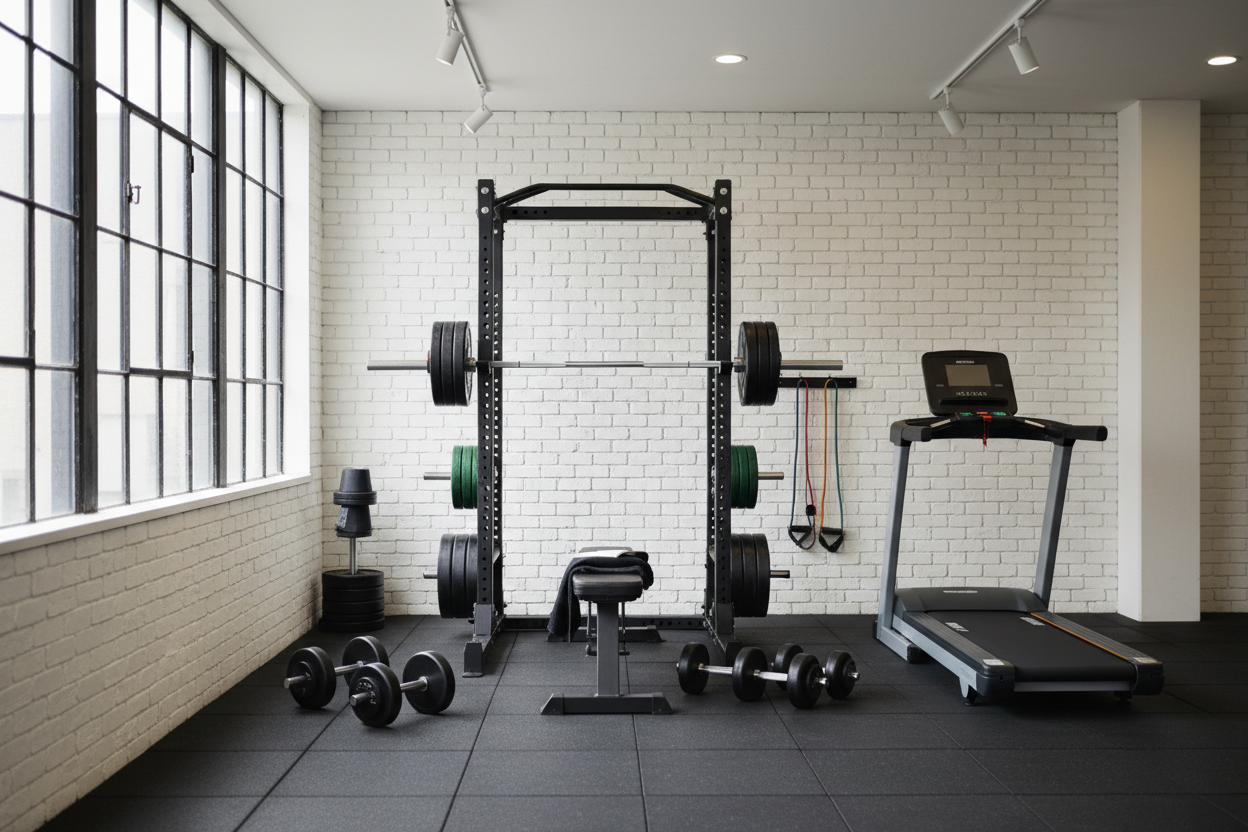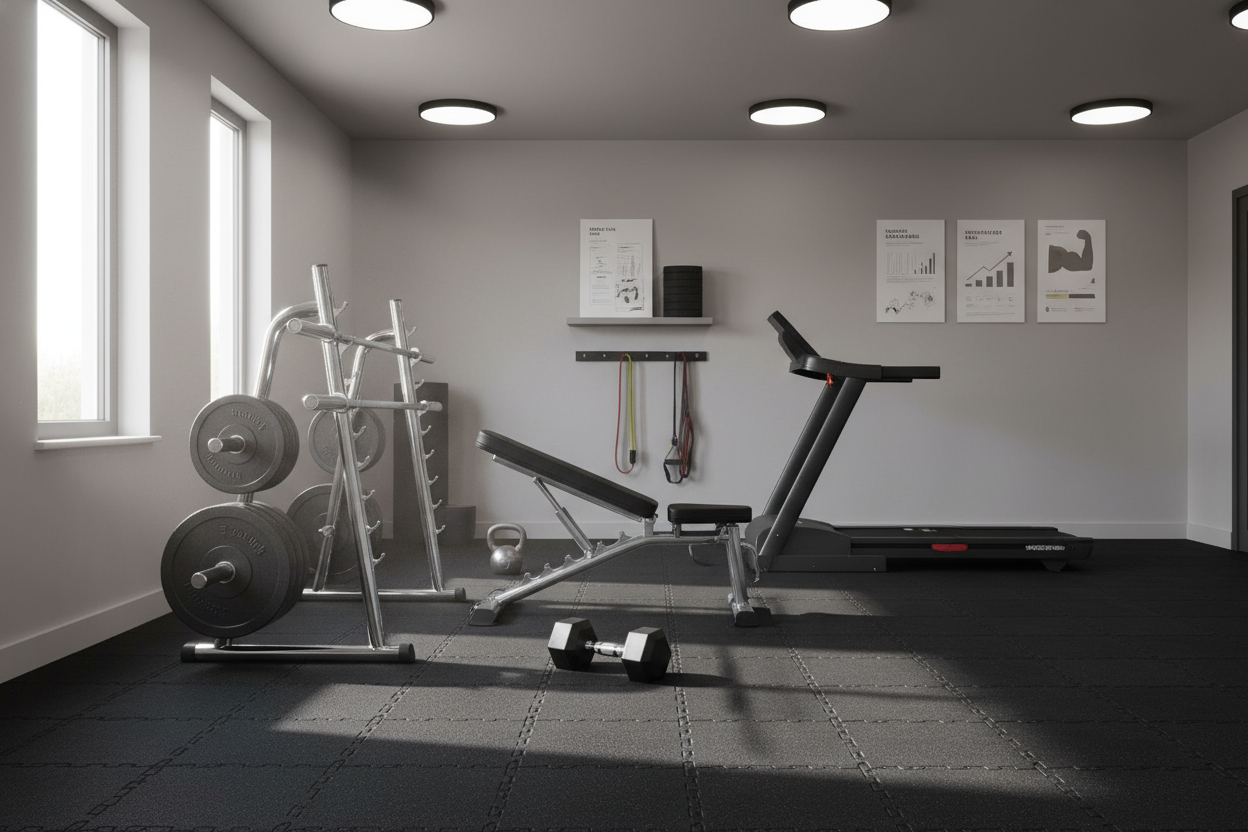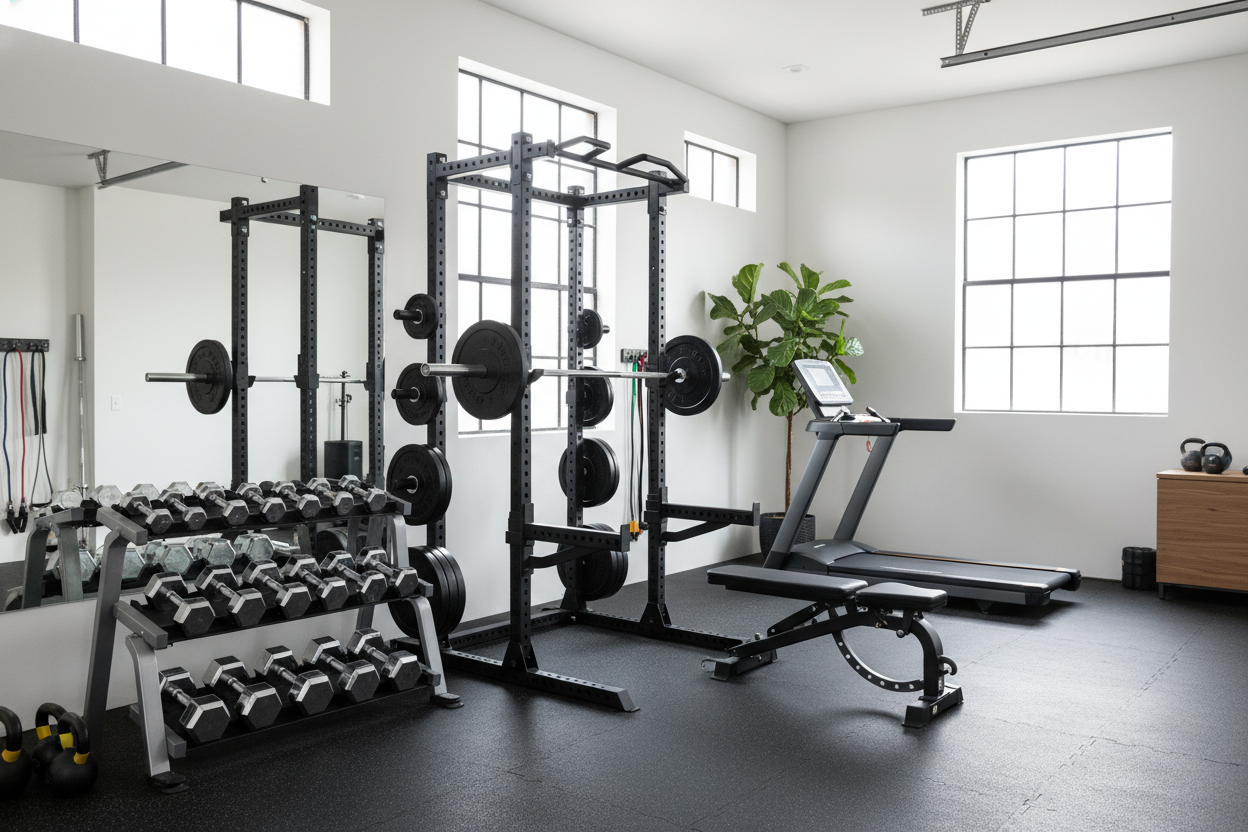
Your New Equipment for Weight Training is Just an Expensive Coat Rack
I remember staring at a $400 ab-glider I bought during a late-night scrolling session. It promised six-pack results with 'zero effort.' Three weeks later, it was a glorified rack for my sweaty hoodies and dog leashes. If you are currently hunting for equipment for weight training, do not let a slick Instagram ad trick you into buying a single-use paperweight. Most home gyms fail not because of a lack of motivation, but because the gear is too specific to be useful.
Quick Takeaways
- Prioritize a power rack and barbell over any isolation machine.
- Avoid 'as seen on TV' gadgets; they lack the durability for heavy sets.
- Look for 11-gauge or 14-gauge steel for safety and stability.
- Versatility is the only way to maximize a small garage footprint.
The Trap of the Single-Use Fitness Gadget
We have all been there. You see a piece of strength training exercise equipment that promises to blast your inner obliques or isolate your teardrop quads. The marketing makes it look essential. But here is the reality: in a home setting, space is your most valuable currency. When you buy highly specific strength exercises equipment, you are committing three square feet of your floor to a movement you might do once a week for three sets. That is a terrible return on investment.
Psychologically, these gadgets provide a false sense of progress. You feel like you are 'building a gym' by adding more items, but you are actually just cluttering your environment. Most of this stuff is built with thin, 1-inch tubing and plastic bushings that start squeaking after a month. Real muscle training happens with compound movements, not by sitting in a chair that only moves in one direction. If a piece of gear only does one thing, it better be the only thing you care about, or it is going to end up on Facebook Marketplace by Christmas.
Versatility Over Vanity: What Actually Works
The best muscle training equipment is the stuff that makes you sweat just by looking at it. I am talking about gear that allows for dozens of movements. A solid barbell can be used for squats, presses, rows, cleans, and deadlifts. A single pair of adjustable dumbbells can replace an entire wall of fixed weights. This is the difference between buying gym equipment for weight training and just buying 'stuff.'
When you are mapping out your strength and weight training equipment needs, focus on the ROI of the movement. Can you do five different exercises on it? If not, skip it for now. Free weights force your stabilizer muscles to fire in a way that fixed-path devices never will. You want gear that grows with you. A 45-lb bar is a 45-lb bar whether you are a novice or a pro, but that 'easy-toner' elastic band machine has a very low ceiling for progress.
Don't Cheap Out on the Foundation
Your bench and your rack are the two most critical pieces of gym equipment and weights you will ever own. I have seen guys spend $2,000 on a fancy cable crossover machine and then try to bench 300 lbs on a $99 wobbly bench they found at a big-box store. That is a recipe for a trip to the ER. When you are under heavy exercise equipment weight, you need to trust the welds.
You should invest in a solid adjustable weight bench that doesn't rock when you sit down. Look for a weight capacity of at least 600 lbs—remember, that includes your body weight plus the bar. If you are starting from zero, looking at weight set and bench combos is a smart move to ensure everything is compatible and rated for the same loads. A rack with 2x3 or 3x3 inch steel uprights is the gold standard. It shouldn't shimmy when you rack a heavy squat.
How to Spot Gimmicky Resistance Gear
Marketing departments are geniuses at making mediocre resistance training gym equipment look like a scientific breakthrough. They use words like 'biometric' and 'fluid resistance' to hide the fact that the machine is made of cheap pulleys and nylon strings. If you see a piece of resistance training exercise equipment that folds up to fit under a bed, it is probably not sturdy enough for serious strength gains. Real weight training exercise equipment is heavy, bulky, and usually made of iron and steel.
Before you buy, look at the weight capacity and the materials. Is it powder-coated steel or spray-painted aluminum? Are the pulleys plastic or aluminum with ball bearings? There is a massive gap between 'home grade' and 'commercial grade,' but you can find a middle ground. I generally steer people toward higher-end weight lifting machines if they have a specific injury or need, but for 90% of us, exercise strength equipment should be simple. If it has more than three moving parts or requires a 'proprietary app' to function, it is a gimmick.
Building a Pro-Level Setup in a Two-Car Garage
You do not need a commercial lease to own professional weight training equipment. You just need to be smart about your footprint. Wall-mounted folding racks have changed the game for the two-car garage athlete. You can have a full-blown squat session and still park your truck inside when you are done. When browsing strength training equipment for sale, look for 'short' versions of racks if your ceilings are low, but never compromise on the gauge of the steel.
To truly maximize your space, I recommend mixing your heavy iron with equipment that uses your body weight, like a high-quality pull-up bar or a set of gymnastic rings hanging from the rafters. This allows you to get in high-volume accessory work without needing a dedicated machine for every muscle group. This approach to exercise weight lifting equipment keeps your gym functional and open, rather than feeling like a crowded storage unit. Buy once, cry once—get the heavy-duty stuff first.
My Experience: The Wobbly Rack Lesson
Early in my lifting days, I bought a 'budget' power tower because it was on sale for $120. It had a pull-up bar, a dip station, and some light hooks for a barbell. The first time I tried to do weighted dips, the whole unit tipped forward. I had to bail and ended up bruising my ego and my floor. It taught me that in the world of iron, you get exactly what you pay for. Now, I won't touch anything that isn't bolted down or weighing at least 150 lbs on its own. Stability is safety.
FAQ
Is a 1-inch or 2-inch hole barbell better?
Always go with 2-inch (Olympic) bars. The 1-inch 'standard' bars are flimsy, have lower weight capacities, and the plate selection is much worse. Most quality racks are designed for Olympic-sized equipment.
Can I build muscle with just dumbbells?
Absolutely. If you have a heavy enough set, you can hit every major muscle group. However, you will eventually hit a ceiling on leg day, which is where a barbell and rack become necessary.
How do I stop my equipment from rusting in a garage?
Look for zinc, chrome, or cerakote finishes on bars. For the rack, a good powder coat is essential. Keep a dehumidifier running if you live in a humid climate, and wipe down your sweat after every session.