Your Legs, Decoded: A Clear Guide to the Muscles That Move You
Have you ever wondered what's powering your walk, your run, or that jump for joy? The answer lies in the sophisticated network of tissues beneath your skin. Understanding the anatomy of leg muscles isn't just for medical students; it's a window into appreciating the incredible machinery of the human body. This guide will walk you through the major players, from their common names to their vital functions, giving you a clear picture of what makes your legs work.
So, how many muscles are in the leg? It depends on how you count, but a single human leg contains over two dozen individual muscles. These are often grouped into compartments based on their location and primary action. The main leg muscles are typically categorized by the region they occupy: the thigh, the lower leg, and the gluteal region, which acts as the powerful foundation for leg movement.
The Powerhouse of the Thigh
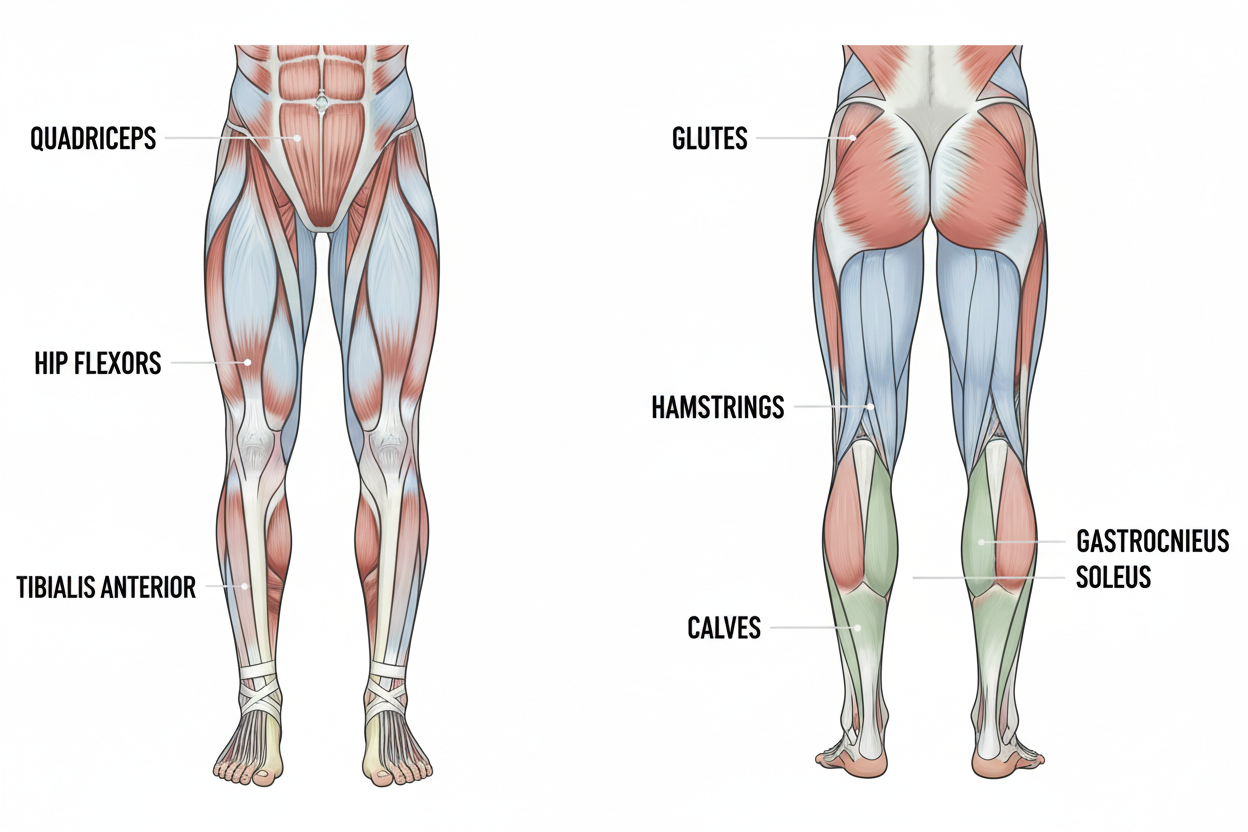
The thigh is home to some of the largest and strongest muscle groups in the human body. On the front, you'll find the quadriceps femoris, often just called the quads. This isn't one muscle but a group of four (hence "quad") that converge into a single tendon above the knee. Their primary job is to straighten, or extend, the knee. After a long hike, it's often these muscles that feel the burn. On the opposite side, the dorsal leg or posterior thigh is dominated by the hamstrings. This group of three muscles works opposite the quads, bending the knee and helping to extend the hip. The constant push-pull between your quads and hamstrings is fundamental to movements like walking and sprinting.
I remember when I first started strength training, I was fascinated by the distinct sensation of working different parts of my leg. A squat made the front of my thighs ache, while a deadlift targeted an entirely different area—the back. This personal experience mirrors the compartmentalized anatomy of leg muscles, where each group has a specialized role.
From Knee to Ankle: The Lower Leg's Complex Work
The lower part of leg muscle anatomy is where things get particularly intricate. The calf, on the back of the lower leg, is the most prominent feature. It's primarily made up of two muscles: the gastrocnemius, which gives the calf its rounded shape, and the soleus, which lies underneath. Together, they form the powerful Achilles tendon and are responsible for plantarflexion—pointing your toes downward, which propels you forward with each step. The opposite of calves, on the front of the shin, are the tibialis anterior and other muscles that perform dorsiflexion, pulling your toes up toward your shin to prevent you from scraping your feet on the ground.
Looking at a leg muscles diagram, you'll also see muscles running along the sides of the lower leg, which help with stability and finer movements of the foot. This complex arrangement allows for the subtle adjustments needed for balance on uneven terrain.
More Than Just Movement
The muscular system of the leg does far more than just move bones. These muscles are crucial for circulation, acting as a secondary pump to help venous blood return to the heart against gravity. They also generate heat and provide essential structural support for your entire frame. The leg muscle structure is a marvel of biological engineering, with long leg muscles like the sartorius—the body's longest—crossing from the hip to the inner knee, enabling the crossed-leg sitting position.
Whether you're an athlete looking to optimize performance, someone recovering from an injury, or simply curious about your own body, knowing the leg muscles names simple and their functions is empowering. It transforms the leg from a simple limb into a map of interconnected systems, each with a purpose. From the big muscle in leg like the quadriceps to the smaller stabilizers, every part plays a role in the symphony of motion.
Common Questions About Leg Muscles
What are the 3 main muscle groups in your legs?
The three primary groups are the quadriceps on the front of the thigh, the hamstrings on the back of the thigh, and the calf muscles (gastrocnemius and soleus) on the back of the lower leg. These are the major drivers of locomotion.
Where are the muscles in your legs located?
Leg muscles are found in layers throughout the thigh and lower leg. Major groups are in the front and back of the thigh, and the back (calf) and front (shin) of the lower leg. Deeper muscles lie beneath these, closer to the bones, for stability and finer control.
How can I identify a strained muscle versus normal soreness?
Normal muscle soreness is a diffuse ache that peaks a day or two after exercise and eases with movement. A muscle strain involves a sharper, more localized pain that occurs at a specific moment, often with swelling or bruising, and may limit your range of motion significantly.