Stronger Legs Without the Gym: A Simple Routine That Actually Works
Most people dread leg day because they associate it with trembling muscles, heavy barbells, and the inability to walk down stairs the next morning. But building lower body strength doesn't require a gym membership or intensity that leaves you gasping for air. In fact, for the vast majority of people simply wanting to move better and feel stronger, high-intensity interval training can actually be a deterrent. The truth is that consistency trumps intensity every time. You can build significant strength and stability using just your body weight and gravity, right in your living room.
I learned this lesson the hard way a few years ago. After a minor ankle sprain sidelined my running routine, I became incredibly sedentary. When I tried to jump back into my old regimen, everything hurt—my knees clicked, my hips felt tight, and my motivation tanked. I had to strip everything back to basics. I stopped looking for the "burn" and started looking for control. By focusing on slow, deliberate movements, I rebuilt my foundation without the joint pain that usually plagued me. It turns out that mastering simple mechanics yields better long-term results than forcing heavy lifts with poor form.
Why You Should Start Simple
The biggest misconception in fitness is that an exercise must be complicated to be effective. When you look for easy exercises for legs, you aren't looking for a shortcut; you are looking for sustainability. Complex compound movements often require a level of mobility that beginners or those returning from a hiatus simply don't have yet. Starting with basic movements allows you to strengthen the connective tissues—ligaments and tendons—before you start loading the muscles with extra weight.
Furthermore, simple leg movements improve your proprioception, which is just a fancy word for your body's awareness of where it is in space. This is crucial for balance, especially as we age. A solid routine of easy leg exercises executed with perfect form will do more for your functional fitness than a sloppy session on a leg press machine.
The Essential Bodyweight Routine
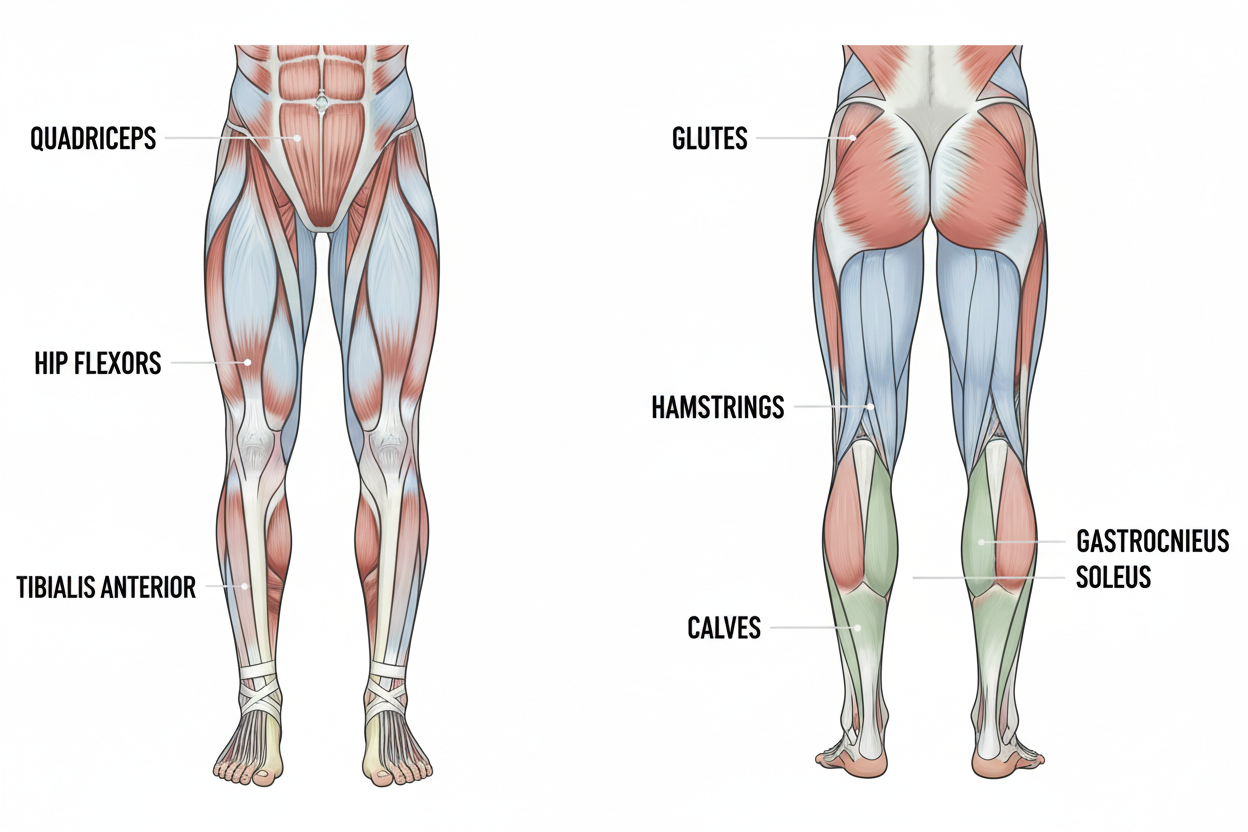
This routine focuses on the major muscle groups: the quadriceps (front of the thigh), hamstrings (back of the thigh), glutes, and calves. You don't need any equipment, though a sturdy chair might help for balance if you are just starting out.
1. The Chair Squat
The squat is the king of lower body movement, but it is also the most easily butchered. Using a chair acts as a safety net and teaches you to hinge at the hips rather than just bending your knees.
Stand in front of a sturdy chair with your feet shoulder-width apart. Keep your chest up and your core engaged. Slowly lower your hips back and down as if you are about to sit. Tap your glutes lightly against the seat—don't fully sit down and relax—and then drive through your heels to return to a standing position. This ensures you are engaging the right muscles without putting undue stress on your knees. Aim for 10 to 12 controlled repetitions.
2. Glute Bridges
If you spend a lot of time sitting at a desk, your hip flexors are likely tight and your glutes are probably inactive. This movement wakes up the posterior chain without straining the lower back. It is one of the most effective easy workouts for legs because it isolates the glutes while taking the knees largely out of the equation.
Lie on your back with your knees bent and feet flat on the floor, hip-width apart. Press your arms into the floor for stability. Squeeze your glutes to lift your hips toward the ceiling until your body forms a straight line from shoulders to knees. Pause at the top for two seconds, then lower slowly. This combats the negative effects of sitting and builds a strong foundation for walking and running.
3. Standing Calf Raises
We often neglect our calves, but they are the shock absorbers for every step we take. Weak calves can lead to plantar fasciitis and Achilles tendon issues. Fortunately, strengthening them is straightforward.
Stand near a wall or counter for balance. Place your feet hip-width apart. Rise up onto the balls of your feet as high as you can, giving your calves a hard squeeze at the top. Lower your heels back down slowly until they just barely touch the floor before rising again. To make this more challenging, you can do this on a step, allowing your heels to drop below the level of your toes for a deeper stretch.
4. Side Leg Raises
Forward and backward movements dominate our lives, but we rarely move side-to-side. This neglect leads to weak outer hips (abductors), which destabilizes the pelvis. Including lateral movements in your list of easy exercises for legs is vital for hip health.
Lie on your side with your legs stacked and straight. Support your head with your arm. Lift the top leg toward the ceiling, keeping the foot flexed and the toes pointing forward (not up). You should feel this in the side of your hip, not the front. Lower it with control. Do 12 reps on one side before switching to the other.
5. Stationary Lunges
Lunges challenge your balance and correct muscle imbalances between your left and right sides. If standard lunges hurt your knees, limit the range of motion.
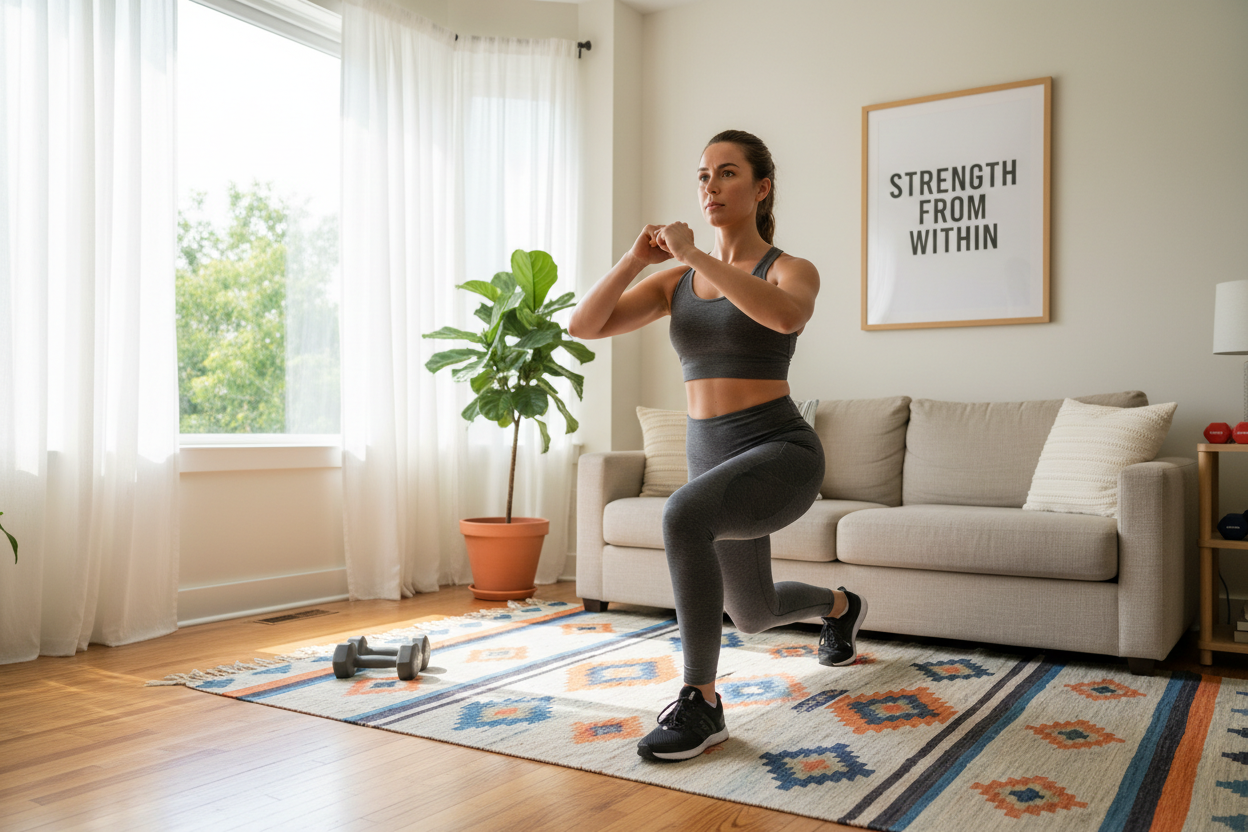
Take a large step back with your right foot. Keep your torso upright. Lower your back knee toward the floor, stopping before it touches. Both knees should aim for a 90-degree angle. Press through the front heel to stand back up, but keep your feet in the split stance position. Complete all reps on one leg before switching. This is often considered one of the best easy leg exercises for developing unilateral strength.
Putting It All Together
Knowing the moves is only half the battle; structure is what creates change. To turn these movements into a cohesive routine, perform them in a circuit. This means you do one set of each exercise back-to-back with little rest in between. Once you finish the lunges, rest for two minutes, then repeat the entire cycle. Aim for two to three total rounds.
This approach transforms a handful of movements into one of the most efficient easy workouts for legs available. It keeps your heart rate slightly elevated, providing a cardiovascular benefit while you strengthen your muscles. Try to do this routine two or three times a week, allowing a rest day in between sessions to let your muscles recover and grow.
Progress doesn't always mean adding weight. Once these rep counts feel too easy, slow down the tempo. Take three seconds to lower into your squat and three seconds to stand up. Increasing the time your muscles are under tension will make even the simplest movements feel incredibly challenging.
Frequently Asked Questions
How long will it take to see results from these exercises?
You will likely feel stronger and more stable within two to three weeks of consistent practice. Visible muscle definition typically takes longer, usually around 8 to 12 weeks, provided you are also maintaining a balanced diet and staying consistent with the routine.
Can I do this leg workout every day?
It is generally better to have rest days. Muscles grow and repair while you rest, not while you work out. Aim for 3 days a week with a day off in between to prevent overuse injuries and ensure you have enough energy for each session.
What should I do if my knees hurt during squats or lunges?
Stop immediately and check your form to ensure your knees aren't collapsing inward. You can modify the movement by reducing the range of motion (don't go down as deep) or performing the exercises in a pool where the water reduces the impact on your joints.