Your High-Rep Circuit Doesn't Define Muscle Strengthening Activities
I spent six months doing 100-rep bodyweight air squat challenges in my garage because some influencer told me 'volume is king.' By month six, my lungs were in great shape, but my legs looked like toothpicks and my squat max actually dropped. I was tired, sweaty, and completely failing to define muscle strengthening activities in a way that actually built tissue.
Most home gym owners fall into the same trap. You buy a set of 20-lb dumbbells, do a 45-minute circuit until you're gasping for air, and assume you're getting stronger. You aren't. You're just getting better at being tired. Real strength requires a specific mechanical stimulus that most 'fat loss' workouts completely ignore.
Quick Takeaways
- Sweat is a metric of cooling, not a metric of growth.
- True muscle strengthening requires crossing a 'mechanical threshold' where fibers are forced to adapt to heavy loads.
- If you can do more than 15-20 reps, you're likely training endurance, not strength.
- Reps in Reserve (RIR) is the most important metric for gauging your intensity at home.
- Foundation matters—slippery floors kill force production.
The Trap of the 'Tired' Workout
We've been conditioned to think that if we aren't a puddle on the floor, the workout didn't count. In reality, Sweat Isn't Strength: How We Define Muscle Strengthening involves understanding the difference between metabolic stress and mechanical tension. Burning lungs and a high heart rate are cardiovascular markers. They don't build a bigger chest or a stronger deadlift.
When you focus solely on 'feeling the burn,' you usually stop because your blood pH has dropped and your nervous system is screaming, not because your muscle fibers have been fully recruited. To get stronger, you need to stop chasing the 'tired' feeling and start chasing the 'heavy' feeling. If your 12th rep feels just as fast as your 1st, you’re just going through the motions.
How to Actually Define Muscle Strengthening Activities
If you want to know what is muscle strengthening exercise, you have to look at the mechanical threshold. This is the point where the external load is heavy enough to recruit high-threshold motor units. These are the muscle fibers with the most potential for growth and force production, but they're lazy—they only wake up when the load is significant.
For most of us, this means working with weights that are at least 60-85% of our one-rep max. In a garage gym setting, that usually looks like sets of 5 to 12 reps where the last few are a genuine struggle. If you're doing 30 reps with a light band, you're doing 'movement,' not 'strengthening.' Define your session by the tension you create, not the calories your watch says you burned.
Are You Hitting the Right Muscle Strengthening Intensity?
You don't need a PhD or a fancy velocity-tracking camera to measure muscle strengthening intensity. You just need to be honest with yourself about Reps in Reserve (RIR). RIR is simply how many more reps you could have done with good form before your muscles gave out. To trigger growth, you need to be living in the 1-3 RIR zone.
If you finish a set of overhead presses and feel like you could have done five more, that set was a warm-up. It didn't count toward your strengthening goals. I tell people to aim for a 'hard 8'—a weight where you hit 8 reps and know for a fact that a 10th rep would have resulted in a failed lift or ugly form. That is the intensity required to actually change your physiology.
Three Unforgiving Movements for Your Home Gym
Stop doing 'toning' exercises and start doing movements that demand total body tension. First: the heavy Goblet Squat. It forces upright posture and is one of the best ways to Build Knee Stability With Proper Quadriceps Muscle Strengthening. If you're holding a 50-lb or 70-lb dumbbell to your chest, your core and quads have no choice but to get stronger.
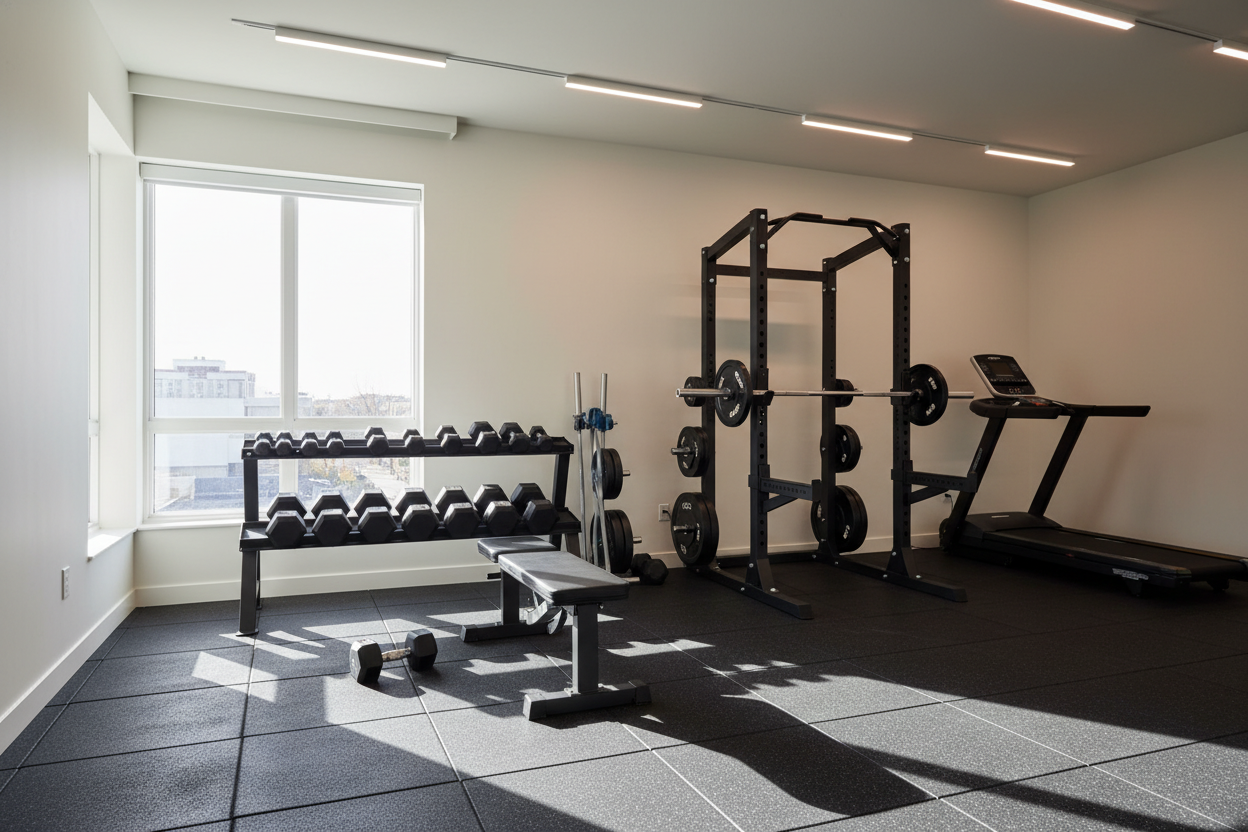
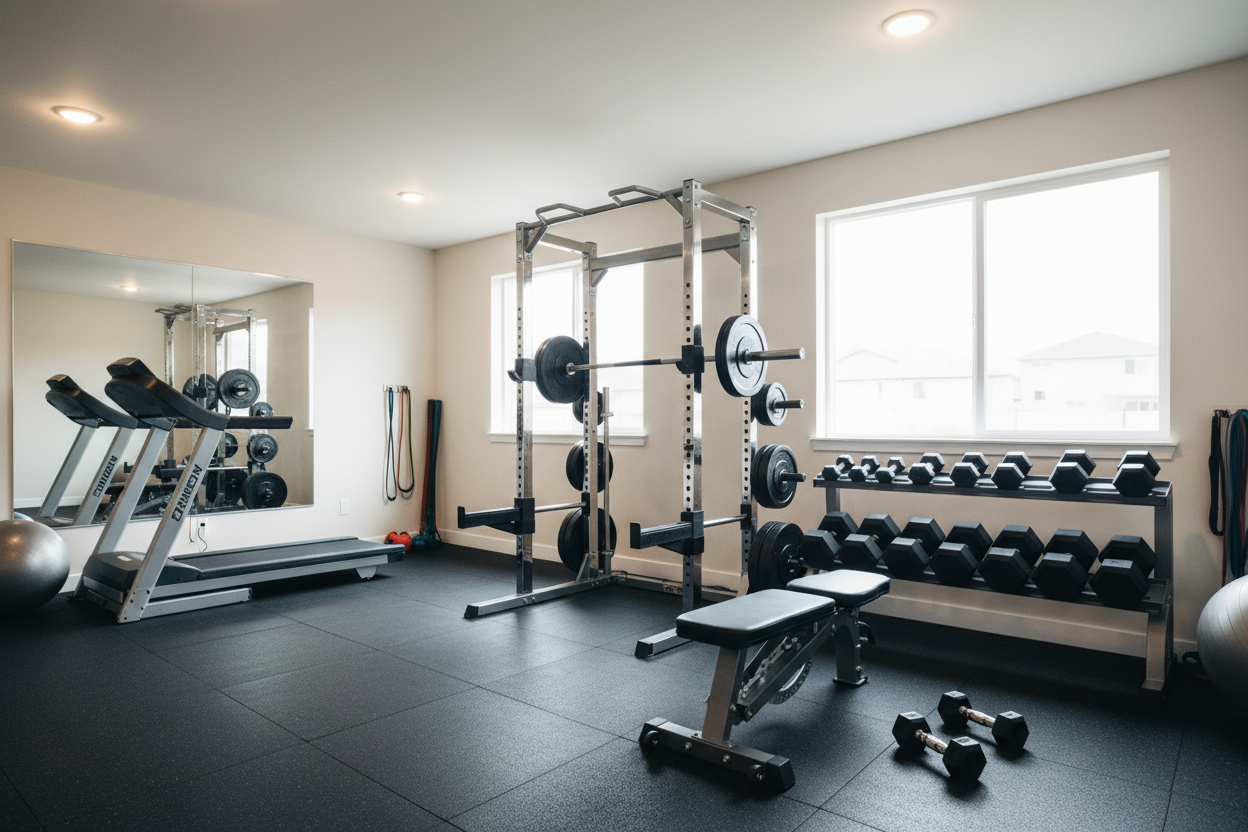
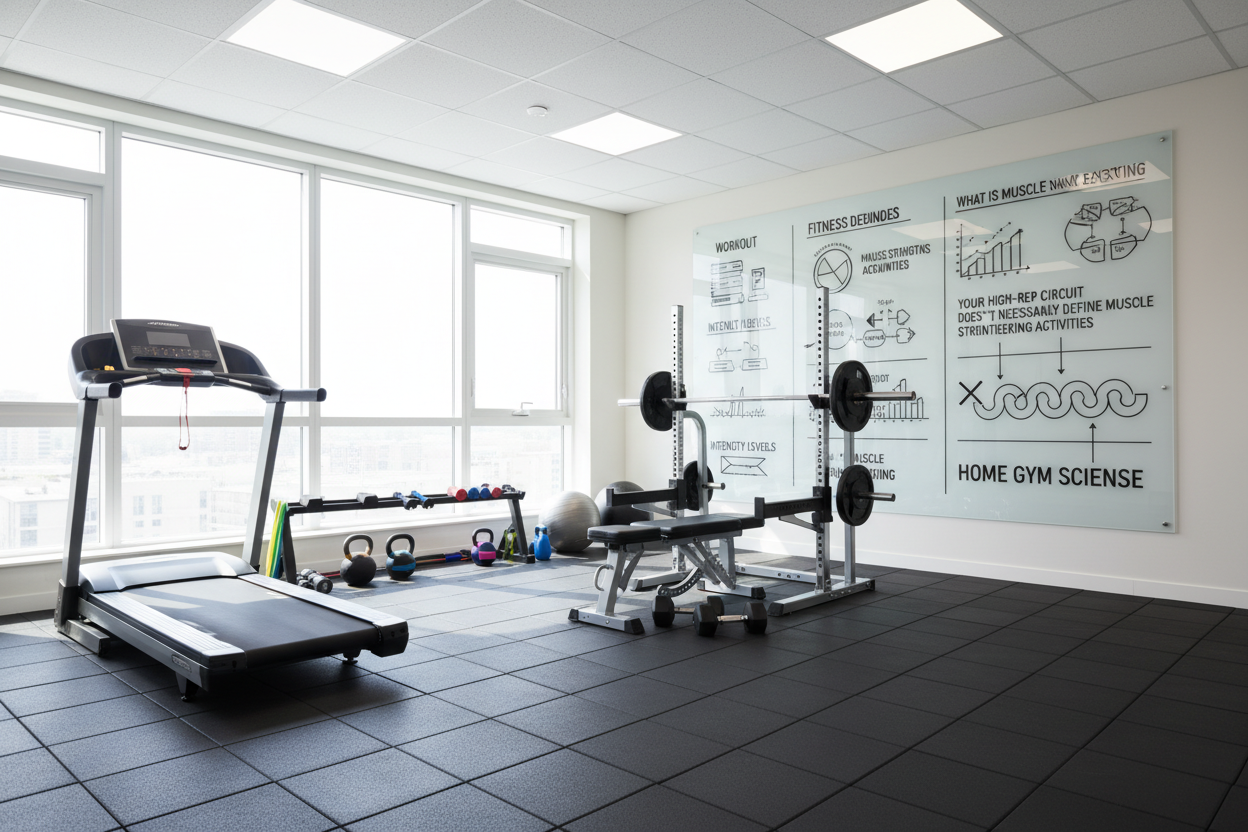
Second: the Strict Overhead Press. No leg drive, just raw shoulder power. Third: Weighted Pull-ups. These movements require a solid base. I’ve seen guys try to squat heavy on a cheap, slippery yoga mat or bare concrete, and their feet flare out because they can't find grip. A Large Exercise Mat 6X4 with a high-density, non-slip surface is essential here. If your feet are sliding, you're leaking force, and your intensity drops instantly.
Stop Wasting Time on 'Junk Volume'
Most home workouts are 20% effective work and 80% filler. We call this 'junk volume'—sets that make you tired but don't provide enough stimulus to cross the growth threshold. If you’re doing four different types of lateral raises but your bench press hasn't moved in six months, your priorities are skewed.
Audit your routine this week. Cut the fluff. Pick three big movements, hit them for 3 sets of 6-10 reps at a high intensity (1-2 RIR), and then go inside and eat. You'll spend less time in the garage and see more progress in the mirror. Quality of tension always beats quantity of movement.
My Experience: The 20lb Dumbbell Mistake
A few years back, I tried a 'functional' program that used nothing but 20-lb dumbbells for high reps. I thought I was 'defining muscle strengthening activities' by staying in constant motion. After three months, my joints hurt from the repetitive motion, and I had lost five pounds of lean mass. I went back to heavy 5x5 training on a stable mat, and my strength returned in three weeks. Don't trade load for 'activity.'
FAQ
How many days a week should I do muscle strengthening?
For most people, 3 to 4 days is the sweet spot. This allows for 48 hours of recovery between sessions, which is when the actual strengthening happens. Training the same muscle every day usually leads to injury, not faster growth.
Can I build muscle with just bodyweight?
Yes, but only if you make the movements hard enough to stay in that 5-20 rep range. Once you can do 30 pushups, you aren't building much strength anymore—you need to move to elevated pushups, weighted vests, or dips to keep the intensity high.
Is soreness a sign of a good strengthening workout?
Not necessarily. Soreness (DOMS) usually just means you did something new or performed a lot of eccentric (lowering) work. Some of my best strength gains happened when I wasn't sore at all, but I was consistently adding weight to the bar.