Your Gym Workout at Home: The Mechanical Drop Set Edge
I still remember standing in my cramped 10x10 spare bedroom three years ago, staring at a single pair of 30-pound hex dumbbells. I had outgrown them for squats and chest presses months prior, but buying a full rack of heavier weights simply wasn't in the budget. Hitting a plateau in your living room or garage is incredibly frustrating. You want a gym workout at home that actually forces muscle growth, but doing sets of 40 reps just to feel a burn is tedious and hard on the joints.
That is exactly when I started implementing mechanical drop sets with my remote clients. Instead of dropping the weight when you hit failure, you change your body's angle to improve your leverage. This allows you to keep pushing the muscle without needing a heavier dumbbell or barbell. It completely changed how I program home gym workouts.
Quick Takeaways
- Mechanical drop sets modify your body angle mid-set to make an exercise slightly easier, allowing you to push past initial failure.
- You can achieve maximum hypertrophy using only a single pair of light dumbbells or your own bodyweight.
- Transitions must be under five seconds to maintain metabolic stress on the target muscle.
- This method induces high central nervous system fatigue, so limit it to your last set of a given exercise.
Why You Need More Than Just Basic Reps
When you train in a commercial facility, progressive overload is simple. You just slide a heavier plate onto the bar or grab the next dumbbell on the rack. Fixed-weight home setups lack that luxury. Traditional straight sets of 8 to 12 reps often fall short for hypertrophy when you hit the upper limit of your available equipment. If your dumbbells max out at 50 pounds, a standard home gym exercise routine will eventually stop yielding results for larger muscle groups like the chest and quads.
To truly maximize your home gym setup, you have to manipulate variables other than load. Time under tension, tempo, and biomechanical advantage become your primary tools. Doing standard sets of home gym exercises with light weights only trains muscular endurance. We want to trigger muscle protein synthesis, which requires taking the muscle close to true mechanical failure.
What Are Mechanical Drop Sets?
A mechanical drop set is a technique where you perform an exercise until failure, then immediately switch to a variation of the same movement that puts you in a stronger leverage position. You are essentially dropping the difficulty rather than dropping the weight. This forces the muscle to keep working even after it is too exhausted to complete the original, harder movement.
For example, you might start with a strict, challenging movement and then shift your stance or grip to recruit secondary muscles to help finish the set. This approach is the backbone of any effective exercise plan for home gym environments. It creates massive metabolic stress and muscle fiber recruitment without requiring a 300-pound barbell. If you want the best home gym workout possible with minimal gear, mastering this concept is non-negotiable.
Designing Your Home Gym Exercise Plan
Structuring home gym routines around mechanical drop sets requires careful fatigue management. You cannot do this for every single set, or your central nervous system will crash. I typically program two straight sets of a movement, leaving one or two reps in reserve, and then apply the mechanical drop set protocol only on the third and final set.
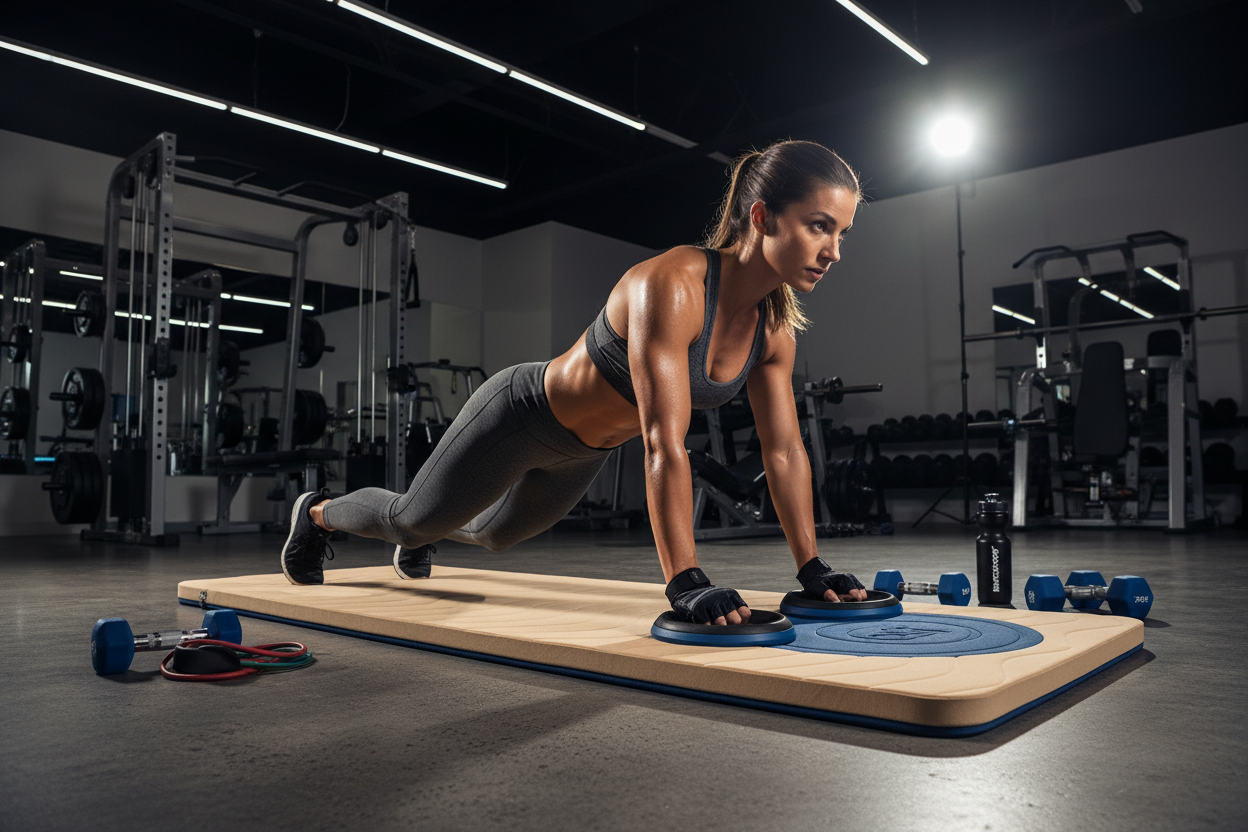
Before you start transitioning rapidly between floor exercises, you need a safe foundation. Sweaty hands and slick hardwood floors are a recipe for a shoulder injury. I always have my clients lay down a large exercise mat for home gym use. This gives you the grip necessary to quickly shift your feet and hands mid-set without losing your base of support. Once your space is prepped, warm up with five minutes of dynamic stretching to prep your joints for the high-volume work ahead.
Upper Body Push: The Push-Up Continuum
If you want a brutal chest and triceps burnout, the push-up continuum is my go-to workout routine for home gym setups. Start with your feet elevated on a couch or chair for decline push-ups. This places maximum load on your upper chest and front delts. Rep out until you physically cannot push yourself up.
Immediately drop your feet to the floor and begin doing standard flat push-ups. Your chest is already fatigued, so you might only get five or six reps. Once you hit failure there, stand up, place your hands on that same couch or chair, and perform incline push-ups. Because the incline angle gives you a massive mechanical advantage, you can squeeze out another six to eight reps. That single unbroken sequence is a complete home gym workout exercise in itself.
Lower Body Burn: The Squat Progression
Legs are notoriously hard to train at home once they get strong. To build a legitimate home gym bodybuilding program, try the squat progression. Grab your heaviest dumbbell or kettlebell and start with Bulgarian split squats. Keep your back foot elevated and rep out until your lead leg is completely fried.
Without resting, drop the weight, step back onto your 6X8Ft exercise mat, and transition into rapid-fire bodyweight alternating forward lunges. When those fail, widen your stance into a standard bodyweight air squat and rep to absolute failure. The mat provides the necessary joint cushioning for your knees during the lunges and keeps your feet planted during the final high-speed squats. Your quads will be on fire, rivaling any heavy leg press machine.
Balancing Free Weights and Bodyweight
You can easily integrate limited free weights into an at home gym workout. A pair of adjustable dumbbells ranging from 5 to 52.5 pounds is usually enough for most trainees if they use mechanical drop sets. For shoulders, you might start with seated strict dumbbell overhead presses. When you hit failure, stand up and use a slight push-press (using leg drive) to force out a few more reps. Finally, drop the weights and do partial range-of-motion lateral raises with a resistance band.
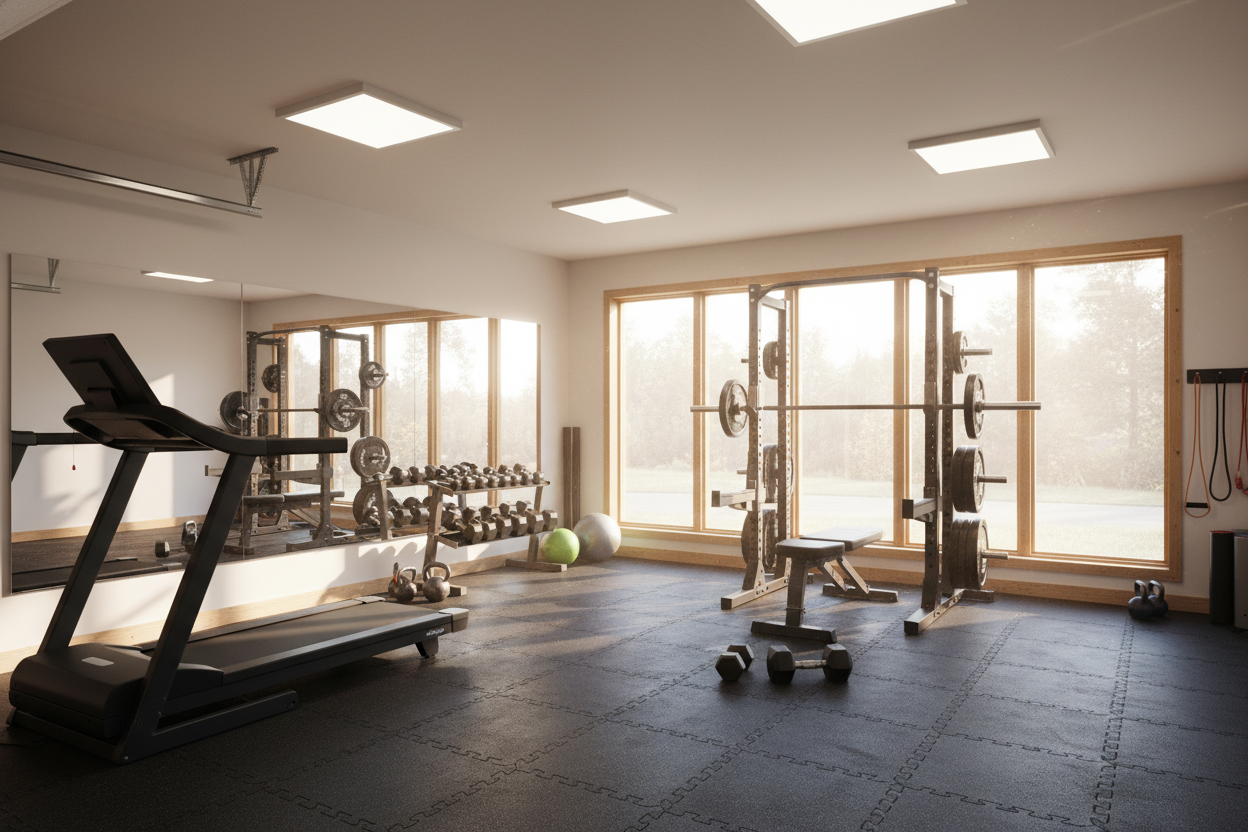
This hybrid approach builds a highly effective home gym workout program. You get the heavy tension from the free weights and the peak contraction from the bodyweight or band movements. Many people assume they need bulky at home workout machines to perform drop sets efficiently. By simply changing your stance or adding a little momentum at the end of a strict set, you replicate the exact same muscle-building stimulus in a 6x6 foot corner of your bedroom.
Recovery and Consistency in Your Home Space
Because mechanical drop sets push your muscles past their normal limits, recovery is critical. This style of home gym training creates significant micro-tears in the muscle tissue. Prioritize sleep and protein intake, and avoid doing drop sets for the same muscle group more than twice a week. Track your reps for each phase of the drop set so you can monitor your progress.
Sticking to your at home gym workout plan requires consistency. The beauty of this method is its efficiency. You can completely exhaust a muscle group in under 20 minutes. It removes the excuse of not having enough time or heavy enough weights, ensuring your workout plans for home gym success actually translate into visible results.
My Experience Testing Mechanical Drop Sets
Over the last few years, I have tested dozens of workout plans for home gym setups in my own 6x6 foot garage space. Using just a pair of 50-pound adjustable dumbbells and a high-density mat, I ran a six-week mechanical drop set protocol. The muscle pumps were identical to what I experienced using commercial gym equipment. However, I have to point out one honest downside: the cardiovascular demand is intense. Because you are linking three exercises back-to-back with zero rest, my lungs often gave out before my chest or quads did. You have to actively manage your breathing, or you will fail the set from being out of breath rather than from local muscle fatigue.
Frequently Asked Questions
How often should I use mechanical drop sets?
Limit them to the final set of a specific exercise. Doing them on every single set will cause excessive central nervous system fatigue and drastically extend your recovery time.
Do I need heavy weights for this home gym program?
No. That is the primary benefit of this technique. By moving from a mechanically disadvantaged position to an advantaged one, you can fully fatigue the muscle using light dumbbells, resistance bands, or just your bodyweight.
Can beginners try this home gym exercise routine?
Beginners should start with straight sets to build a foundation of proper form. Once you can execute the movements perfectly and feel comfortable pushing close to failure, you can introduce mechanical drop sets to your routine.