Your Gain Weight Workout Is Burning Too Many Calories
I remember being 145 pounds soaking wet, staring at a 3,500-calorie meal plan and wondering why my gain weight workout was only making me more tired, not thicker. I was doing everything the magazines told me: six days a week, twenty sets per body part, and enough 'finishers' to kill a horse. I was sweating through my shirts and getting leaner, which was the exact opposite of what I needed. If you are struggling to move the scale, chances are you aren't lazy; you're likely just working too hard on the wrong things.
Quick Takeaways
- High-volume 'bro-splits' burn too many calories for most hardgainers to overcome.
- Mechanical tension, not the 'pump' or 'burn,' is the primary driver of muscle growth.
- Prioritize four heavy compound movements to maximize hormonal response and growth.
- Rest at least three minutes between heavy sets to keep the session from becoming cardio.
- A 3-day full-body split is often superior to a 6-day split for packing on mass.
Why Your Current Routine is Keeping You Small
The biggest mistake I see in the garage gym community is the 'more is better' fallacy. You see a pro bodybuilder on YouTube doing thirty sets of chest and think that is the secret. For a natural lifter trying to pack on size, that much volume is a death sentence for your gains. You are essentially trapped in a cycle where you burn off your caloric surplus before your body can use it to repair tissue. If you are following a generic muscle gain workout plan PDF you found on a forum, it is probably loaded with junk volume.
Junk volume is any set that doesn't contribute to growth but adds to your recovery debt. When you do fifteen different variations of lateral raises and flyes, you are just incinerating energy. This is a common flaw in the typical gain weight program gym bros recommend. They focus on 'annihilating' the muscle. But if you are a hardgainer, your recovery capacity is a finite resource. Every extra set of cable crossovers is a withdrawal from your growth bank account that you can't afford to make.
The Cardinal Rule: Stimulate, Don't Annihilate
To grow, you need to understand the difference between mechanical tension and metabolic fatigue. Mechanical tension is the actual load placed on the muscle fibers. This is the 'growth signal.' Metabolic fatigue is that burning sensation you get from doing 20 reps with light weight. While the burn feels productive, it mostly just creates metabolic waste and burns calories. For someone struggling to gain weight, we want the signal without the massive caloric burn.
Your goal in the gym is to walk in, send the loudest possible growth signal to your central nervous system, and then get out. Every minute you spend past the 45-minute mark is likely just tapping into your glycogen stores and making it harder to stay in a surplus. Think of your workout as a light switch. Once the switch is flipped 'on' for growth, flicking it another fifty times doesn't make the light any brighter; it just wears out the switch. Focus on heavy, high-quality reps that force your body to adapt by getting bigger.
The Only Strength Training Exercises for Weight Gain You Need
You don't need fifty exercises. You need four or five that you can get brutally strong at. The foundation of any strength training exercises for weight gain should be the barbell squat. Nothing triggers a systemic growth response like putting a heavy bar on your back. It forces your entire body to stabilize and move, which is why it is the king of weight gain gym exercises. If you aren't squatting, you aren't trying to be big.
Next is the Romanian Deadlift (RDL). This targets the posterior chain—the hamstrings, glutes, and lower back. These are massive muscle groups that can handle heavy loads. For the upper body, the Barbell Row and the Incline Press are your best friends. I prefer the incline press over the flat bench because it builds that 'shelf' look in the upper chest and is generally easier on the shoulders. To do this right at home, you absolutely need a sturdy adjustable weight bench that won't wobble when you start pushing 200+ pounds. These exercises to gain weight and muscle provide the highest return on investment because they allow for the most progressive overload over time.
Building Your At-Home Mass Protocol
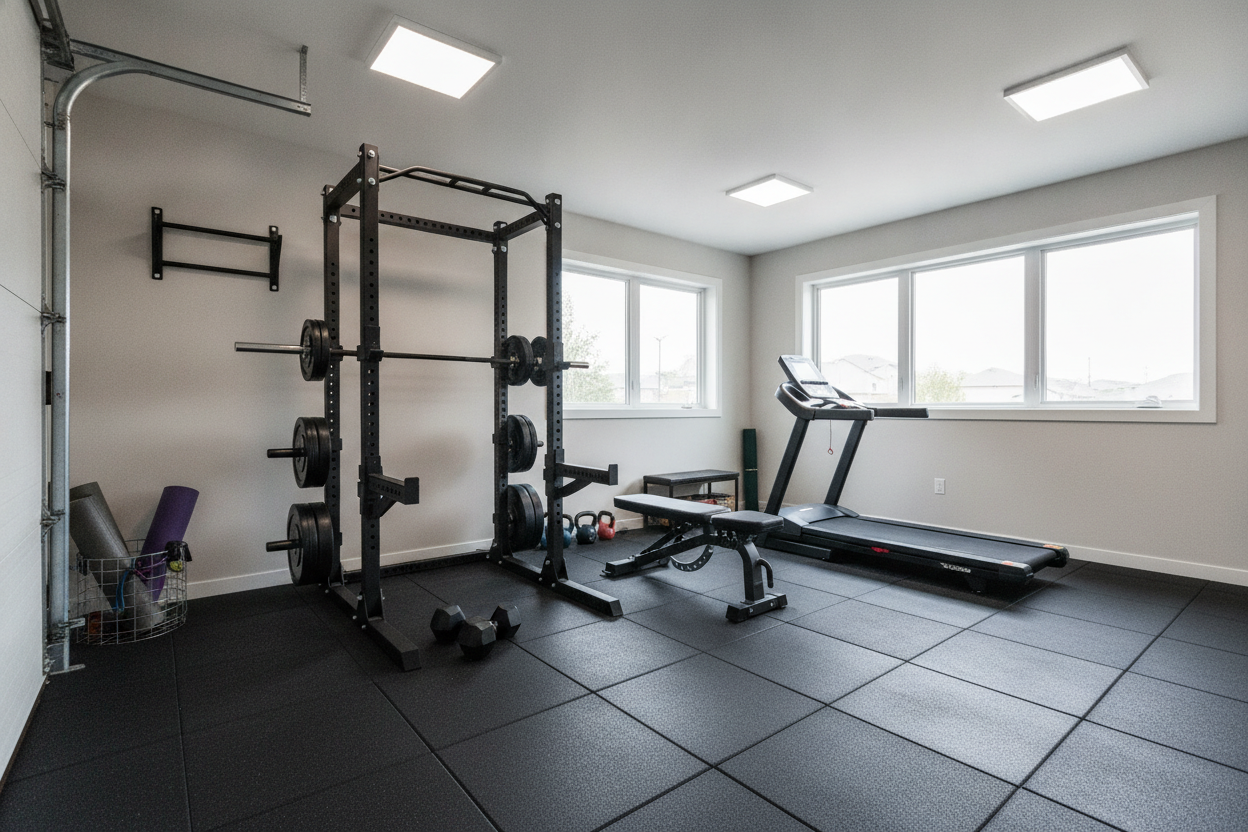
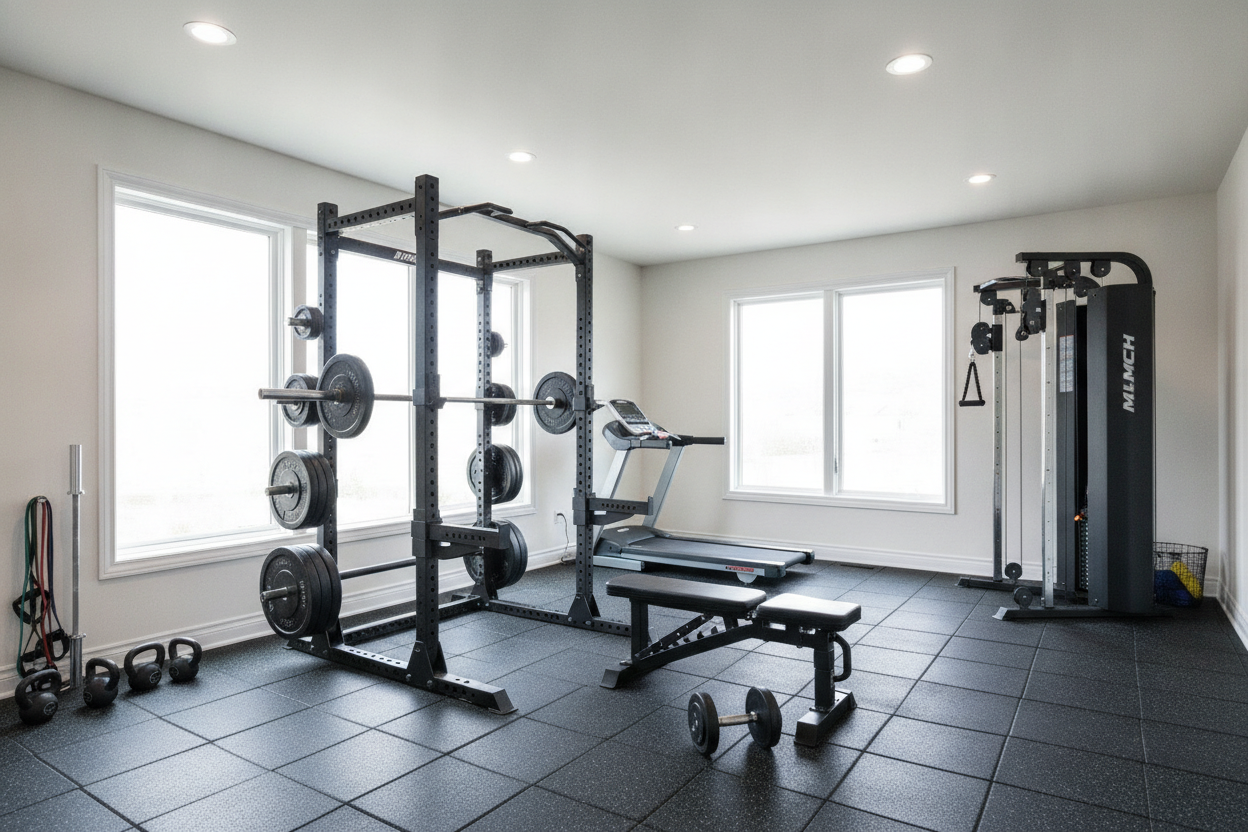
Setting up a garage gym for mass is simpler than people think. You don't need a dozen complex weight lifting machines that take up half your floor space and limit your range of motion. Machines have their place, but for building raw mass, free weights are superior because they require more stabilizer activation. A basic, high-quality weight set and bench is literally all you need to build a world-class physique in your garage.
When you use a barbell, your body has to work twice as hard to balance the load. This increased demand leads to more muscle fiber recruitment. In my own gym, I've found that a power rack, a solid bar, and a pile of iron plates beat any fancy cable crossover machine every day of the week. The simplicity also helps with the 'stimulate, don't annihilate' philosophy. If you only have a few pieces of gear, you are forced to focus on the heavy hitters instead of getting distracted by 'finishing' movements that just waste your time and energy.
Sets, Reps, and the 3-Minute Rest Rule
If you want to grow, you need to stop treating your lifting sessions like a CrossFit WOD. The 3-day full-body split is the gold standard for hardgainers. It allows you to hit every muscle group three times a week with high intensity while giving you four full days of rest to actually grow. I recommend a structure of 3 to 5 sets of 5 to 8 reps. This rep range is the 'sweet spot' for building both strength and size without the excessive caloric burn of high-rep sets.
The most important rule? Mandatory 3-minute rest periods. I see guys in the gym rushing through sets, huffing and puffing. If you are breathing like you just ran a mile, your cardiovascular system is the limiting factor, not your muscles. By resting three minutes, you allow your ATP stores to replenish so you can move the maximum amount of weight on your next set. This keeps the intensity high and the 'cardio effect' low, ensuring your gain weight workout stays focused on hypertrophy.
You Still Have to Eat (The Unsexy Truth)
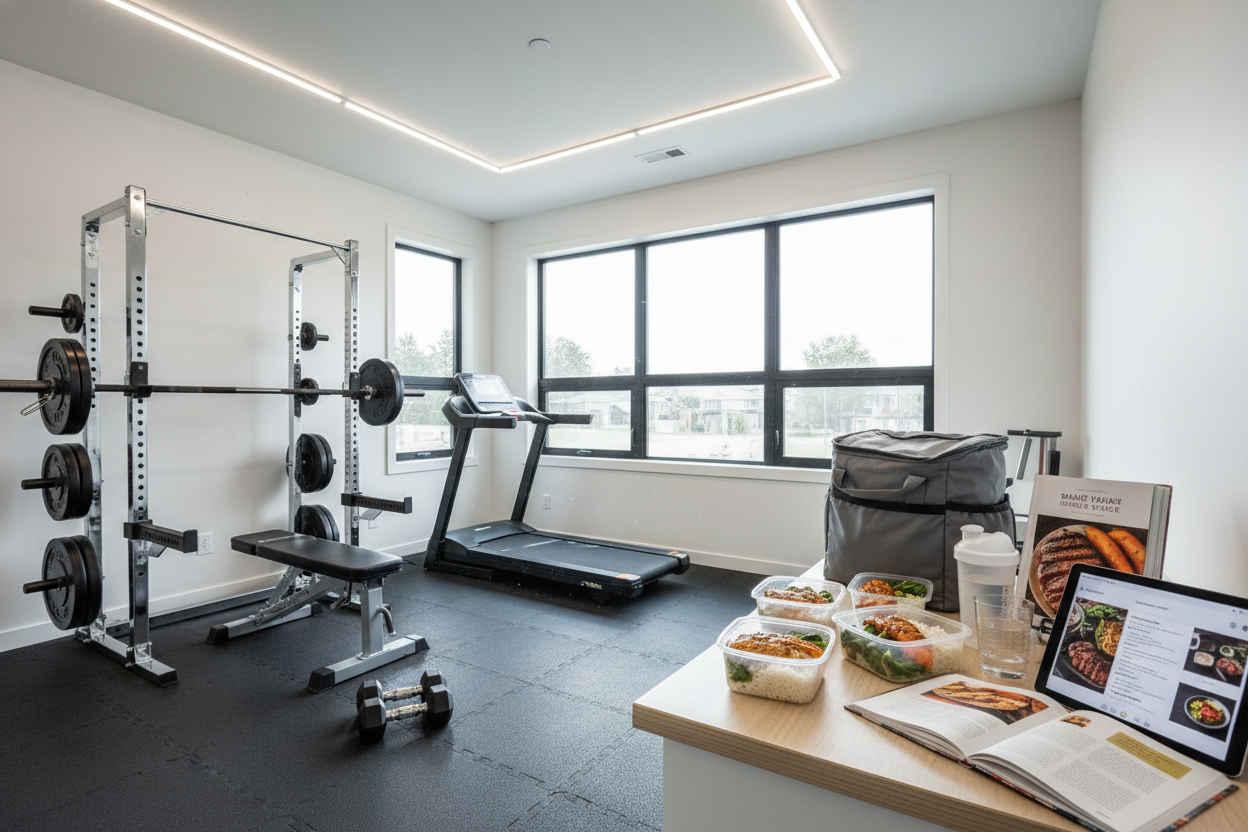
You can have the most perfect, low-volume, high-intensity routine in the world, but if you aren't eating more than you burn, you will stay the same size. The beauty of a low-volume approach is that it doesn't blunt your appetite. When I was doing high-volume splits, I was so exhausted that the thought of eating a massive steak made me nauseous. By training for 45 minutes three times a week, I found I was actually hungry enough to hit my macros.
Focus on calorie-dense foods. If you are full, add fats. A tablespoon of olive oil on your rice or a handful of walnuts can add 200 calories without making you feel stuffed. The goal is a consistent, modest surplus. You want to provide enough fuel for the growth signal you sent in the gym to actually manifest as new muscle tissue. Training gives your body a reason to grow; food gives it the materials to do so.
Personal Experience: My Hardgainer Wake-up Call
I wasted about two years of my life following a 6-day 'Pro' split. I was obsessed. I never missed a workout, but I also never gained a pound. I was 'hardgainer' personified. My mistake was thinking that my lack of results meant I needed to work harder. I added more sets, more drop-sets, and more days. I eventually hit a wall where my joints hurt, and I was losing strength. Out of pure frustration, I cut my volume in half and went down to three days a week. I thought I'd get fat or lose muscle. Instead, I gained 12 pounds in three months. I realized I finally gave my body a chance to recover. The biggest downside was my ego; I had to accept that 'less' was actually giving me 'more.'
Frequently Asked Questions
Can I do any cardio on a weight gain program?
Yes, but keep it low-impact and short. A 20-minute walk is great for recovery and digestion. Avoid long-distance running or high-intensity interval training, as these compete with your recovery and burn through the calories you need for muscle growth.
How do I know if I'm doing too much volume?
If your strength isn't increasing week-to-week on your main lifts (Squats, Bench, Rows), or if you feel chronically tired and have a poor appetite, you are likely doing too much junk volume. Scale back and focus on the heavy stuff.
Is a 3-day split enough to see results?
For 90% of natural lifters, yes. It allows you to hit every muscle frequently enough to keep protein synthesis elevated while providing 48 to 72 hours of rest between sessions, which is when the actual muscle building happens.