Your Fitness Plan Is Too Hard (Real Tips for Starting to Workout)
I have spent thousands of dollars on equipment that eventually became very expensive laundry racks. I remember staring at a commercial-grade leg press in my garage at 2 AM, wondering why I couldn’t just find the energy to do a single set of bodyweight squats. The problem wasn’t my gear; it was my approach. Most tips for starting to workout ignore the reality that your brain is wired to avoid friction. If you want to get into exercise, you have to stop treating your first week like a Navy SEAL selection course.
Quick Takeaways
- Soreness is a deterrent, not a badge of honor for beginners.
- Logistical friction (travel, setup, crowd) is the #1 reason people quit.
- A dedicated, permanent floor space is more important than a fancy rack.
- 15-minute sessions are the secret to building long-term consistency.
Why 'Going Hard' Is the Worst Way to Get Into Exercise
The biggest lie in the fitness industry is 'no pain, no gain.' For a veteran lifter, a little soreness is fine. For someone looking for tips to start exercising, extreme soreness is a disaster. If you wake up so stiff that you can’t sit on the toilet or reach for a coffee mug, your brain is going to categorize exercise as a threat. When you are figuring out how to get a workout routine started, your goal isn't muscle failure; it's a positive feedback loop.
How do you get started with physical fitness without hating the process? You start at 40% effort. If you feel like you could have done twice as much when you finish, you’ve actually won. You are building the habit of showing up, which is infinitely more valuable than a high-intensity session you’ll never repeat. An exercise routine that you actually enjoy—or at least don't dread—is the only one that will change your body in the long run.
The 'Frictionless' Setup: How to Start Working Out Slowly
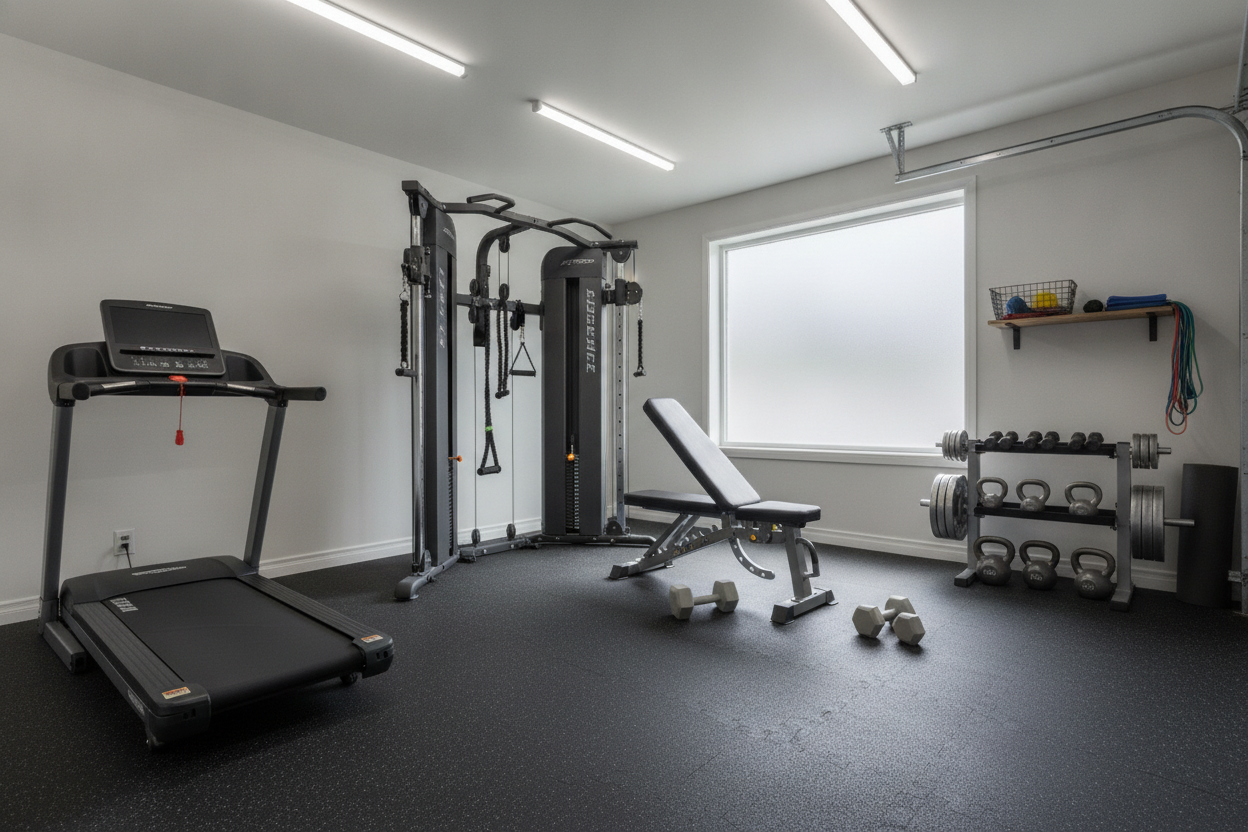
Logistics kill more fitness goals than a lack of willpower. If you have to pack a gym bag, drive twenty minutes, find a locker, and wait for a squat rack, you probably won’t do it on a Tuesday when you're tired. To how to start working out slowly, you need to bring the barrier to entry down to zero. This is why I’m a massive advocate for the home setup. It’s not about having a full commercial gym; it’s about having a space that is always ready for you.
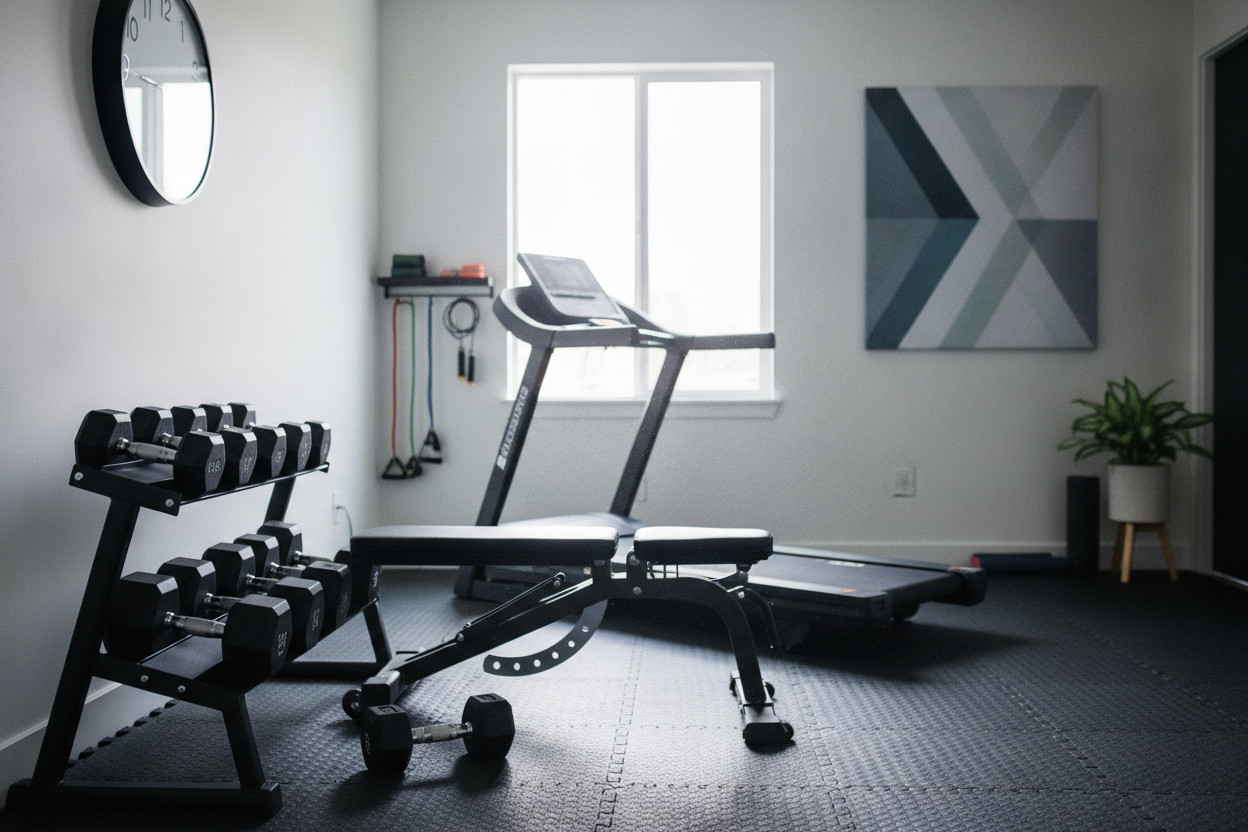
The first step is to claim your territory. I tell people to lay down gym flooring for home workout in a corner of your bedroom or garage and leave it there permanently. Don't roll it up. Don't hide it under the bed. When that mat is visible, it’s a constant visual cue. It eliminates the 'setup' phase of your workout, which is often where the excuses start to creep in. How to slowly start exercising becomes much easier when the gym is already 'open' the moment you step out of bed.
Claim Your Space (Why a Mat Is Your Best Friend)
A dedicated area changes the psychology of your home. If you’re wondering how to start a daily workout routine, it begins with a boundary. Standing on a large exercise mat for home gym tells your brain that it’s time to move. You don't need a 1,000-square-foot basement; you just need enough room to sprawl out without hitting the coffee table. A 6x8 ft space is usually the sweet spot for most bodyweight and dumbbell movements.
When you have a sizable, dedicated surface area, you stop feeling cramped. You can transition from a plank to a stretch without worrying about sliding on hardwood or getting carpet burn. It’s about creating an environment where how to start physical activity feels natural rather than a logistical chore. If the space is inviting, you're more likely to use it.
Choosing Equipment That Doesn't Intimidate You
Should i start exercising with a 45-lb Olympic barbell? Probably not. If you’ve never lifted, a barbell is a heavy, awkward piece of steel that requires a lot of technical knowledge. Instead, start a fitness program with gear that feels intuitive. You want to spend your energy moving, not watching 'how to how to do exercise' tutorials on YouTube for an hour while your motivation drains away.
I often suggest beginners start using a rowing machine because it’s low-impact and provides a full-body stimulus without requiring the technical grace of a powerlifter. It’s hard to mess up, and it’s a lot more engaging than a treadmill. If you prefer weights, grab a set of adjustable dumbbells. The goal is to choose equipment that has a low learning curve so you can focus on the movement, not the manual.
The 15-Minute Rule to Solidify Your New Habit
The most common mistake when starting a new exercise regime is trying to do an hour-long session on day one. You don't have the work capacity for that yet, and you definitely don't have the mental patience. Cap your workouts at 15 minutes. Set a timer, and when it dings, you stop—even if you feel great. This prevents the burnout that usually hits around week three when the initial excitement wears off.
Forget the complex fitness routine procedure you see in bodybuilding magazines. Move for 15 minutes, three days a week. That’s it. Once you’ve done that for a month, then you can talk about adding weight or time. This is the only way to build a sustainable exercise routine. If you can master the 15-minute habit, the rest of the progress will take care of itself.
My Biggest Beginner Mistake
When I first decided to build a home gym, I bought a cheap, bolt-together power tower from a big-box store. It was supposed to be for pull-ups and dips, but the thing wobbled so much I was terrified to use it. I ended up avoiding my workouts because I hated the equipment. I learned the hard way: if your gear feels unsafe or annoying to use, you won't use it. I eventually sold it for $20 and bought a solid, heavy-duty mat and a single kettlebell. I got more use out of that kettlebell in a week than I did the tower in six months.
FAQ
What is the best time of day to work out?
The time you’ll actually do it. For some, that’s 5 AM before the house wakes up. For me, it’s 5 PM to decompress. Don't worry about 'optimal' windows; just find a slot you can defend from interruptions.
Do I need expensive shoes to start?
No. If you're training at home on a high-quality mat, you can even train barefoot. Barefoot training is actually great for foot and ankle stability. Just make sure your surface is non-slip.
What if I miss a day?
The 'all or nothing' mindset is a progress killer. If you miss a day, just show up for your 15 minutes the next day. One missed session doesn't ruin a month of work unless you let it stop you from doing the next one.