Your First Month of 'Working Out Fitness' Should Be Stupidly Simple
I remember standing in a big-box gym five years ago, staring at a cable machine that looked like a prop from a sci-fi movie. I had three different apps open, all telling me different things about 'optimal' rest periods and protein windows. It was exhausting before I even picked up a 10-lb plate. Most people quit working out fitness programs not because the lifting is hard, but because the thinking is harder.
Quick Takeaways
- Ignore optimization; focus on showing up in your living room three times a week.
- You don't need a gym membership or a 300-lb barbell set to get started from zero.
- Clear a dedicated 6x8 ft space to remove the 'commute' excuse.
- Master the squat, the push-up, and the glute bridge before touching a machine.
The 'Information Overload' Trap Ruining Day One
If you search for 'fitness getting started' today, you'll be hit with an avalanche of biomechanics, fasted cardio debates, and supplement stacks. It’s paralyzing. The industry wants you to believe that if you aren't tracking your heart rate variability or timing your leucine intake, you're wasting your time. That is total nonsense. For a beginner, optimization is the absolute enemy of action.
When you are looking for the best way to start a workout routine, your only goal is to break a sweat without getting injured. You don't need to know the difference between a high-bar and low-bar squat yet. You just need to move. The 'perfect' program that you never start is worthless compared to a 'good enough' program you do in your pajamas. Stop scrolling for the perfect steps of working out and just clear some floor space.
Stop Trying to Memorize Every Muscle Group
You don't need a degree in kinesiology to understand the basics of working out. I see so many beginners spend weeks reading about the 'posterior chain' instead of just doing a few sets of air squats. Knowing the anatomy of working out you actually need is far simpler than the gurus make it sound. If you can push, pull, and stand up, you've covered the bases.
Focus on how the movement feels in your joints rather than naming every stabilizer muscle. When you're learning how to exercise, your brain is building 'motor patterns.' It’s like learning to drive; you don't need to know how the internal combustion engine works to pull out of the driveway. Get your body moving first; the technical vocabulary can come later when you're actually bored between sets at the gym.
Building a 'Zero-Friction' Starting Zone at Home
The biggest hurdle for working out where to start is usually the front door. If you have to pack a bag, drive 15 minutes, find parking, and navigate a crowded locker room, you've given your brain five chances to talk you out of it. This is why I always tell beginners that the best way to start working out for beginners is to do it ten feet from their bed.
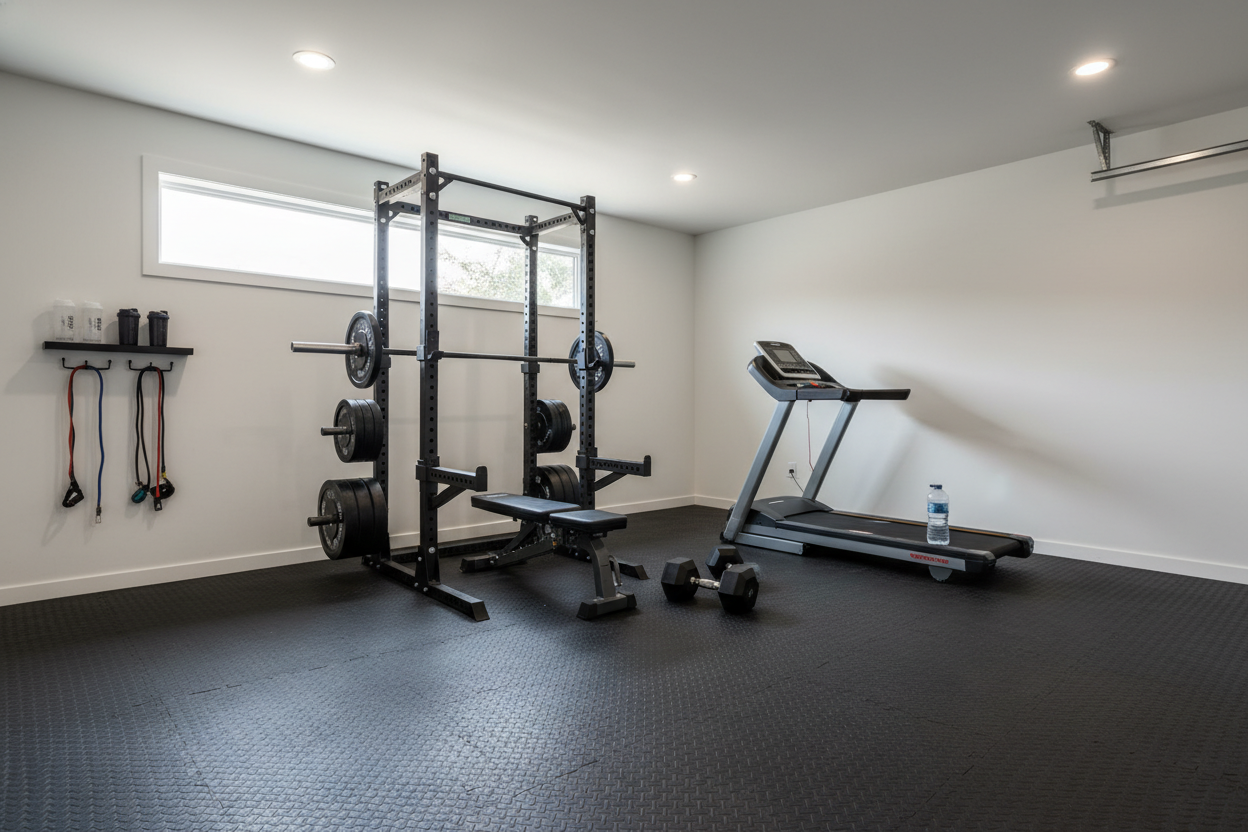
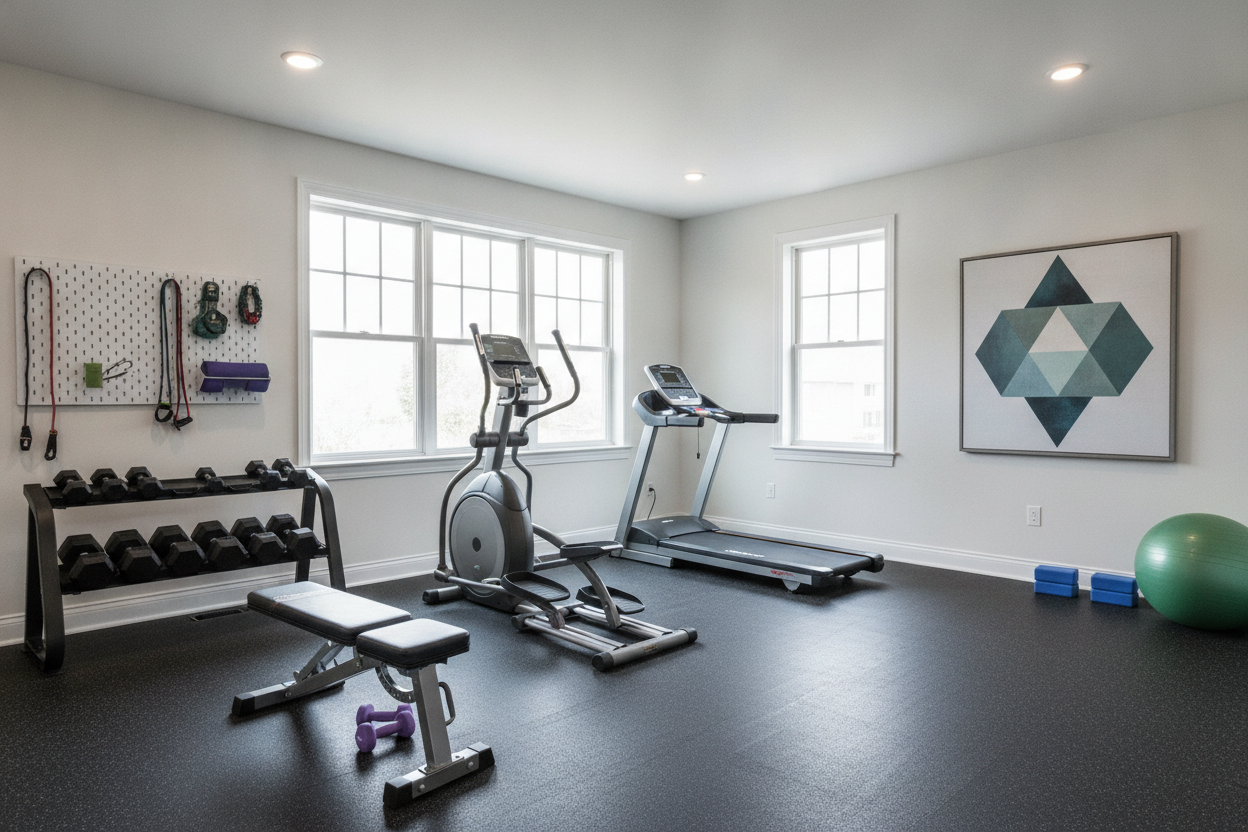
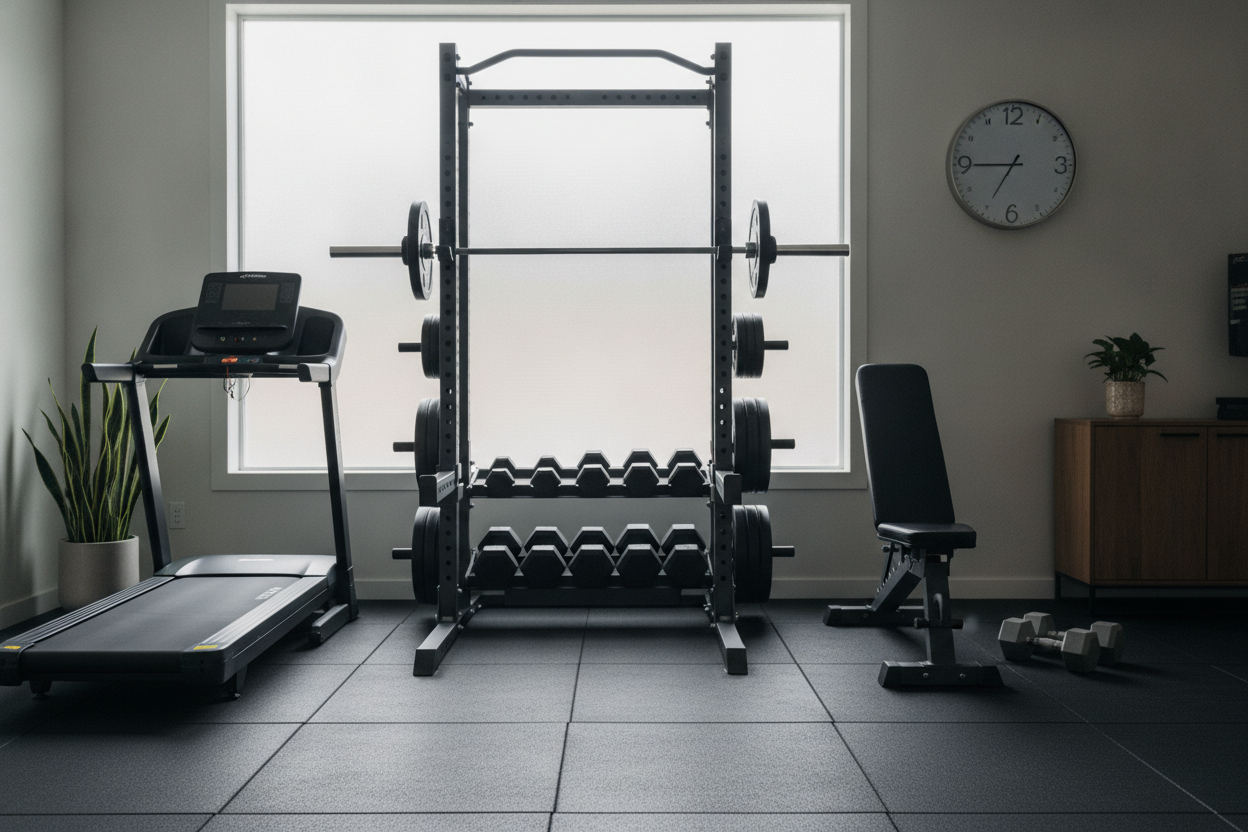
You don't need a $5,000 power rack. You need a patch of floor. I recommend clearing a permanent spot—about 6x8 feet—and laying down a large exercise mat for your home gym setup. Having that visual boundary is a psychological trigger. When you step on that mat, the 'getting started with fitness' phase ends and the 'training' phase begins. It removes the friction of 'setting up' every single time.
The 'Good Enough' 3-Move Starter Routine
If you're wondering how to know what workouts to do at the gym or at home, keep it to three moves. Seriously. Do these three things for three sets of ten, three times a week. First: The Air Squat. Sit back like there's a chair behind you. Second: The Push-Up (on your knees if you have to). Third: The Glute Bridge. Lie on your back and lift your hips.
This covers your legs, your chest/shoulders, and your core/glutes. That is a complete full-body stimulus for a novice. To make this even more effective, invest in some durable gym flooring for home workouts so you aren't slipping on hardwood or getting carpet burn during your planks. This setup is all you need for the first 30 days. No dumbbells, no bands, no complicated apps. Just you and the floor.
How to Know When You're Finally Ready for the Gym
I get asked 'how should you start working out' at a commercial facility all the time. My answer: Don't go until you've worked out at home for a month straight. The gym is a tool, not a requirement. You're ready to graduate when you've built the habit of showing up. If you can't commit to 20 minutes on your living room floor, a $100/month membership won't change your DNA.
Once you can do 20 clean push-ups and 30 steady squats, you've earned the right to start working out at the gym without feeling like a fish out of water. You'll have the movement confidence to walk up to a rack or a machine and know what your body is supposed to do. That confidence is the difference between someone who stays for a week and someone who stays for a decade.
My Experience: The 'Pro Gear' Mistake
When I first decided to get serious, I bought a 'pro-grade' adjustable bench and a set of iron plates. I spent $600 before I had even done a single consistent week of training. The bench was wobbly, the plates were greasy, and because I hadn't built the habit, the whole setup eventually became a very expensive laundry rack. I realized that the gear doesn't make the athlete. I eventually sold it all, bought a high-quality 7mm thick mat, and started over with just bodyweight moves. That's when the habit finally stuck. Don't buy the 'stuff' until you've done the work.
FAQ
What do I need to start working out from zero?
A 6x8 ft space, a decent mat to protect your joints, and a water bottle. Everything else—dumbbells, kettlebells, heart rate monitors—is optional until you've proven you can show up for 30 days.
How to start a workout routine at the gym if I’m intimidated?
Go during off-peak hours (usually 10 AM or 2 PM) and stick to the basics. Most people at the gym are too worried about their own reflection to notice what you're doing. Wear headphones and focus on your three basic moves.
What should I be doing at the gym as a total beginner?
Focus on compound movements. Use the leg press, the chest press machine, and the lat pulldown. Machines are great for beginners because they guide your path of motion, reducing the risk of 'ego lifting' injuries.