Your Diet Is Fine, But Your Exercise to Weight Gain Strategy Is Broken
I remember sitting on my floor three years ago, surrounded by empty mass gainer tubs and feeling like a bloated balloon. I was eating until I felt sick, but my bench press hadn't budged in months. I had the 'eat big to get big' part down, but my exercise to weight gain strategy was non-existent. I was just getting soft, not strong.
If you are a hardgainer, you’ve probably been told to just 'eat more.' It is bad advice. If you eat in a massive surplus without a specific, high-intensity stimulus, your body has no reason to build muscle. It will just store that energy as fat. To actually change your physique, you need to stop thinking about 'working out' and start thinking about training for hypertrophy.
Quick Takeaways
- Muscle is built through progressive overload, not just high calories.
- Compound movements like squats and deadlifts are non-negotiable for mass.
- Isolation exercises (curls, extensions) are secondary to big lifts.
- Consistency in your weight gain workout beats variety every time.
- Rest days are when the actual weight gain (muscle growth) happens.
Why 'Just Eat More' Will Only Make You Soft
The physiological reality of building mass is that your body is inherently lazy. It doesn't want to carry extra muscle because muscle is metabolically expensive. If you simply increase your calories without a rigorous training to gain weight, you are just providing the building blocks with no blueprint. You’ll end up with a 'dad bod' faster than you’ll end up with a 405-lb squat.
You might see people trying to gain weight in legs without exercise by slamming protein shakes and sitting on the couch. While the scale might go up, that weight isn't the dense muscle tissue you’re actually looking for. To gain weight by exercise, you have to create micro-tears in the muscle fibers that force the body to use those extra calories for repair. Without that stimulus, a caloric surplus is just a recipe for a larger waistline.
I’ve seen guys at my local gym do 'dirty bulks' where they eat 5,000 calories of fast food but only hit the weights twice a week. They get bigger, sure, but they lose their jawline and their athletic performance tanks. The goal of a weight increase workout should be quality mass. You want to look like you lift, not like you just discovered an all-you-can-eat buffet.
The Only Compound Lifts That Actually Pack on Mass
If your workout routine weight gain plan consists of three types of bicep curls and some cable flyes, you are wasting your time. When you want to trigger systemic growth, you have to move heavy weight through a large range of motion. This recruits the most motor units and causes the biggest hormonal response. We are talking about the 'Big Four': Squats, Deadlifts, Overhead Press, and Rows.
To truly gain weight for legs, you need to get under a barbell. Leg extensions are fine for a pump, but they won't build the tree-trunk thighs that heavy back squats will. I recommend a frequency of at least twice a week for lower body if you’re a hardgainer. You need that constant signal to grow. For the upper body, skip the fancy machines and get a reliable adjustable weight bench. You need a stable platform for heavy incline presses and rows. If the bench wobbles when you’re holding 80-lb dumbbells, you’re going to instinctively hold back, which kills your gains.
The best exercise weight gain happens in the 6-12 rep range. This is the 'sweet spot' for hypertrophy. You need enough weight to feel the strain by rep eight, but not so much that your form breaks down. If you can’t control the descent of the weight, it’s too heavy. If you aren't sweating and breathing hard by the end of a set of ten squats, you aren't working hard enough to force a weight gain gym exercise response.
Stop Overcomplicating Your Home Gym Setup
You do not need a $5,000 commercial-grade cable crossover machine to pack on size. In fact, most of the guys with the most impressive physiques I know train in garages with the bare essentials. When you're training to gain weight, stability and weight capacity are the only specs that matter. Cheap plastic weights and flimsy racks will only limit your progress once you start getting strong.
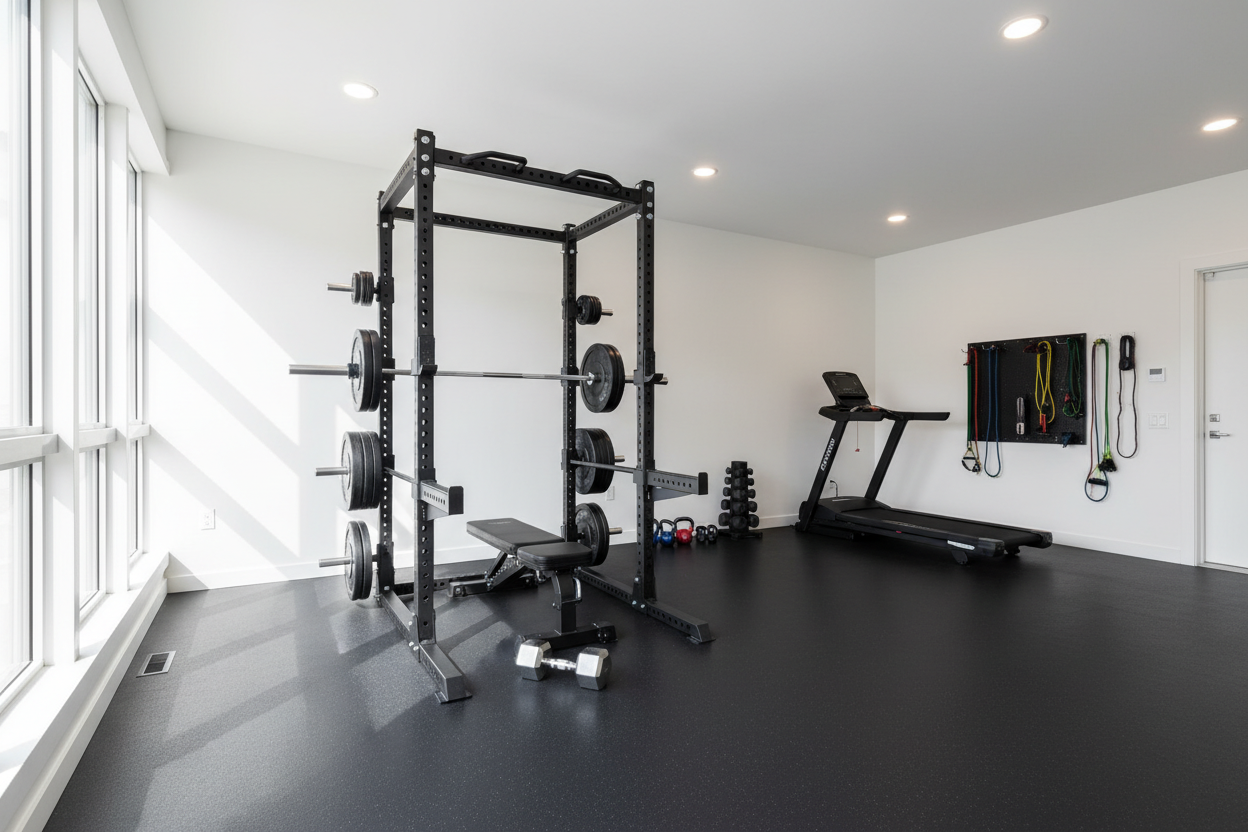
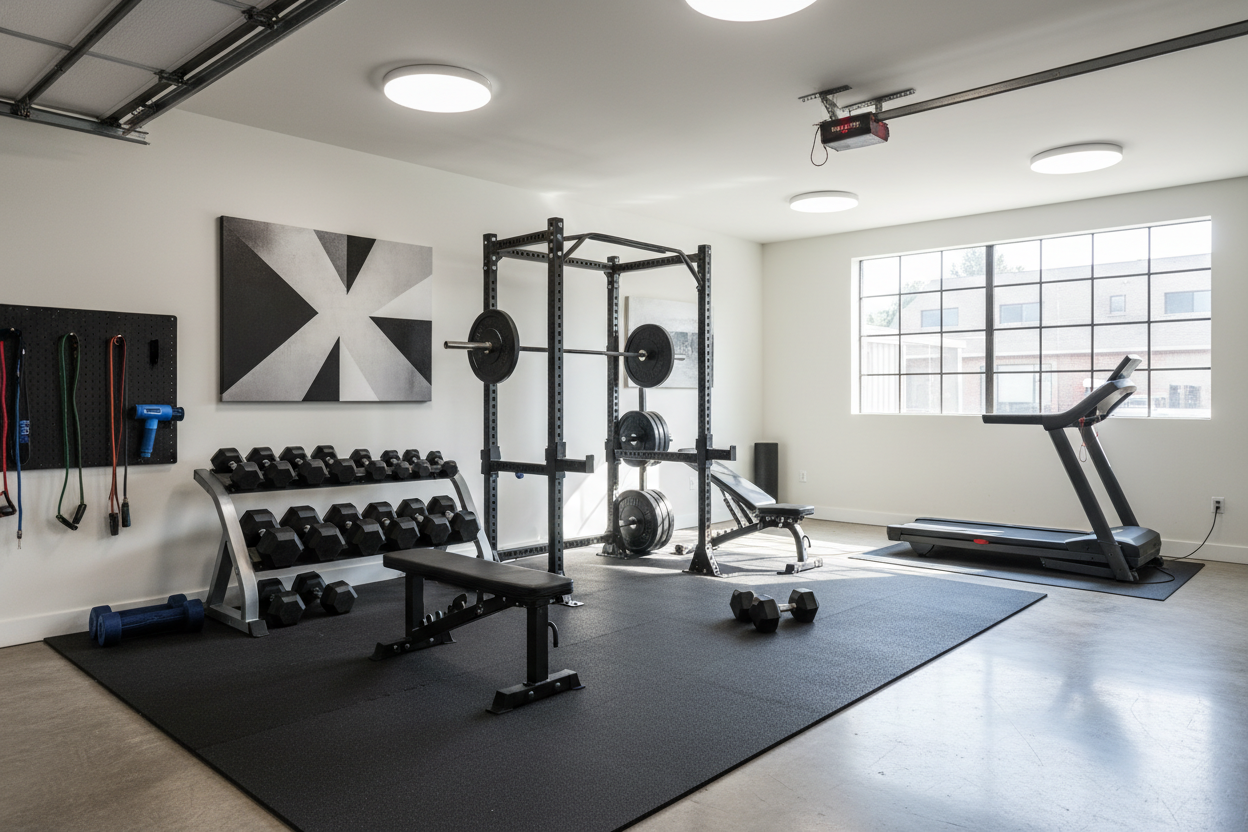
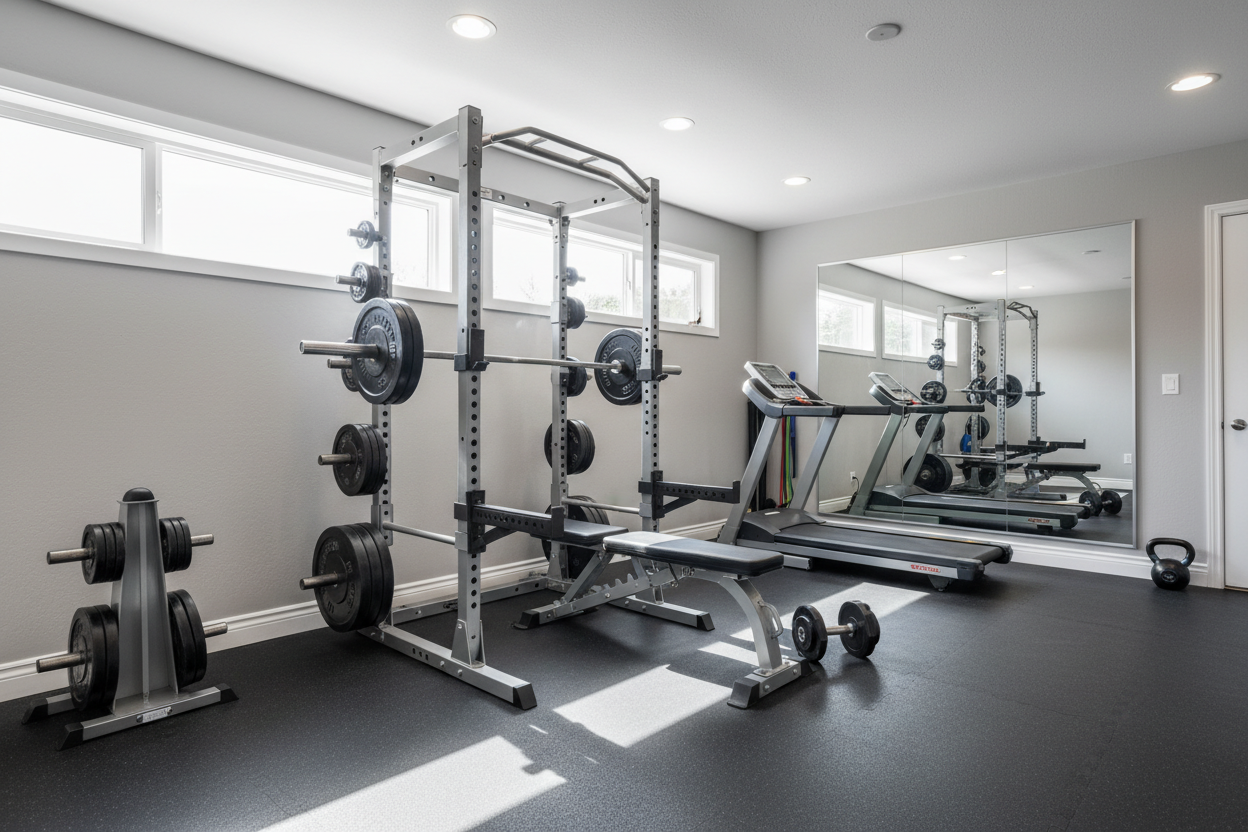
A basic weight set and bench is the foundation of every successful home-based muscle weight gain exercise program. Free weights require you to stabilize the load, which engages more muscle fibers than a machine ever could. If you have the budget and the 8x8 foot space, I always suggest a power rack weight bench package. Having a cage with safety spotter arms allows you to push yourself to failure on squats and bench presses without needing a partner. That extra 'push' on the last rep is often where the most growth happens.
I made the mistake early on of buying a 'multi-gym' with 15 different attachments. It was a nightmare to assemble, and the resistance felt 'mushy' because of the cheap pulleys. I eventually sold it for a fraction of the price and bought a solid rack and a barbell. My gains doubled in six months because I could finally lift heavy with confidence. Stick to iron and steel; they don't break, and they don't lie to you.
The Cardio Question: Do You Have to Stop Running?
There is a persistent myth in the weight gaining exercise at gym community that cardio 'eats' muscle. It doesn't—unless you’re running marathons while fasted. In fact, a little bit of low-intensity cardio can actually help your workout weight gain goals by improving blood flow and recovery. It helps clear out metabolic waste and keeps your heart healthy enough to handle high-volume leg days.
The key is keeping it 'low and slow.' A 20-minute walk or a light cycle is fine. What you want to avoid is high-intensity interval training (HIIT) that leaves you too drained to hit your compound lifts the next day. Your energy is a finite resource. If you spend it all on the treadmill, you won't have the 'juice' left for the heavy deadlifts that actually drive weight gain for gym enthusiasts.
Personal Experience: My 'Hardgainer' Mistake
For the first two years of my training, I was terrified of 'losing my abs.' I did a workout to gain weight, but I’d immediately go run three miles to 'stay lean.' I stayed exactly the same weight for 24 months. It wasn't until I embraced the fact that I needed to stop the excessive cardio and focus on moving heavier plates that my body finally changed. I went from 165 lbs to a solid 190 lbs by focusing on a 5x5 strength program and actually resting on my rest days. My biggest regret was not buying a power rack sooner—I spent too many years doing 'safe' weights because I didn't have a spotter.
FAQ
How many days a week should I exercise to increase weight gain?
For most people, 3 to 4 days of heavy lifting is the sweet spot. This allows for maximum intensity during the session and enough recovery time for the muscle tissue to actually grow.
What are the best exercises for weight gain at home?
Focus on the basics: Goblet squats, push-ups (weighted if possible), pull-ups, and dumbbell rows. If you have a barbell, stick to the big compound lifts.
Can females use this same exercise routine for weight gain?
Absolutely. The physiological process of muscle hypertrophy is the same. Heavy lifting won't make you 'bulky' overnight; it will create a toned, athletic physique and help increase bone density.