Your Delts Burn Out Because You Skip Shoulder Endurance Exercises
I remember the first time I realized my overhead press was a house of cards. I had just hit a 225-lb single—a lifetime goal—and felt like the king of my garage. Then, I dropped the weight to 135 for some volume work. By rep eight, my shoulders weren't just tired; they were shaking like a leaf in a hurricane. My prime movers had the juice, but my stabilizers had clocked out early. If you've ever felt that engine-stalling sensation mid-set, you're likely skipping shoulder endurance exercises.
- Endurance prevents technical breakdown during heavy sets.
- Time-under-tension builds thicker, more resilient tendons.
- Stability work fixes that annoying shaky feeling at lockout.
- You don't need heavy weights; a 15-lb kettlebell is often plenty.
Strength vs. Stamina: Why Your Delts Give Up Early
We all love the big numbers. There is a specific ego boost that comes from stacking 45s on a barbell and pressing it overhead. But your shoulder isn't just one big muscle; it's a complex web of small stabilizers, including the rotator cuff and the serratus anterior. These muscles are largely composed of slow-twitch fibers designed for posture and prolonged support. When you only train for one-rep maxes, you're essentially teaching your body to be a sprinter when it needs to be a marathon runner.
I've seen guys who can bench 405 but can't hold a 25-lb plate overhead for sixty seconds without their form collapsing. That lack of stamina is a liability. When those small stabilizers fatigue, your humerus starts rattling around in the socket, leading to impingement and that nagging shoulder pain we all try to ignore. If you want to see how this fits into a total body plan, check out our workout hub for programming that balances raw power with structural integrity.
Real shoulder stamina means your last rep looks exactly like your first. It means when you're deep into a 5x10 back-off set, your joints feel locked in rather than loose. Building this capacity requires a shift in mindset: you aren't training for the lift; you're training the muscles that protect the lift. It's about ensuring the foundation is as strong as the roof.
The Difference Between a Pump and a Real Shoulder Endurance Workout
Let's be clear: doing 50 lateral raises with 5-lb dumbbells until your skin feels tight isn't an endurance workout. That's just chasing a pump. While a pump is great for aesthetics, it doesn't necessarily improve the joint's ability to withstand prolonged stress. A legitimate shoulder endurance workout focuses on isometric holds, slow eccentric movements, and high time-under-tension protocols that force the stabilizers to stay active for minutes, not seconds.
I used to think that active meant moving. I was wrong. Some of the hardest work your shoulders will ever do involves staying perfectly still while an external force tries to move them. This is fundamentally different from high-heart-rate cardio shoulder exercises where the goal is often systemic fatigue. Endurance work is about neurological greasing the groove and metabolic conditioning of the specific muscle fibers that keep your arm in its socket.
When you program for endurance, you stop counting reps and start watching the clock. A set shouldn't end because you hit a specific number. It should end because you've reached 60 or 90 seconds of continuous tension. This forces the blood into the muscle and keeps it there, strengthening the connective tissue in a way that explosive movements simply can't match. It's boring, it burns, and it's exactly what your shoulders need.
4 High-Tension Movements That Teach Your Shoulders to Suffer
To build bulletproof stability, you have to move away from the standard barbell for a moment. These four movements have made the biggest difference in my own overhead stability and overall joint health.
First: Bottoms-Up Kettlebell Holds. Take a light kettlebell—I started with a 12kg bell—and hold it by the handle so the heavy part is pointing toward the ceiling. Now, just walk. The instability of the bell forces your rotator cuff to fire like crazy just to keep it from flopping over. Hold for 45 seconds per side. If you use a 50-lb bell here, you're missing the point and probably going to hit yourself in the face.
Second: The Overhead Waiter's Carry. Press a dumbbell or kettlebell overhead and lock your elbow. Keep your ribcage down and your core tight. Walking 40 yards like this is a revelation. It teaches your scapula how to stay glued to your ribcage under fatigue. I use a 35-lb bell for this; anything heavier and my form starts to leak, which defeats the purpose.
Third: The Crucifix Hold. Hold two light dumbbells—think 5 to 10 lbs—out to your sides like you're making a T shape with your palms facing down. Hold for as long as possible. Your lateral delts will feel like they're being hit with a blowtorch by the 45-second mark. This is pure isometric torture that builds incredible staying power.
Fourth: Face Pulls with a 3-Second Pause. Use a resistance band or a cable machine. Pull the rope toward your forehead, pulling the ends apart. Hold the peak contraction for three full seconds, squeezing your shoulder blades together. Do 20 reps. Most people rush these; the magic is in the pause where the rear delts and traps have to fight to maintain the position.
Setting Up Your Space for Extended Holds and Carries
If you're doing these exercises correctly, you're going to be walking around your gym with weights in awkward positions. This is not the time to be tripping over a stray plate or slipping on a smooth concrete floor. I learned this the hard way when I tried a heavy overhead carry in my socks on a sealed garage floor. My foot slid, the weight shifted, and I nearly ended up in the ER with a wrecked rotator cuff.
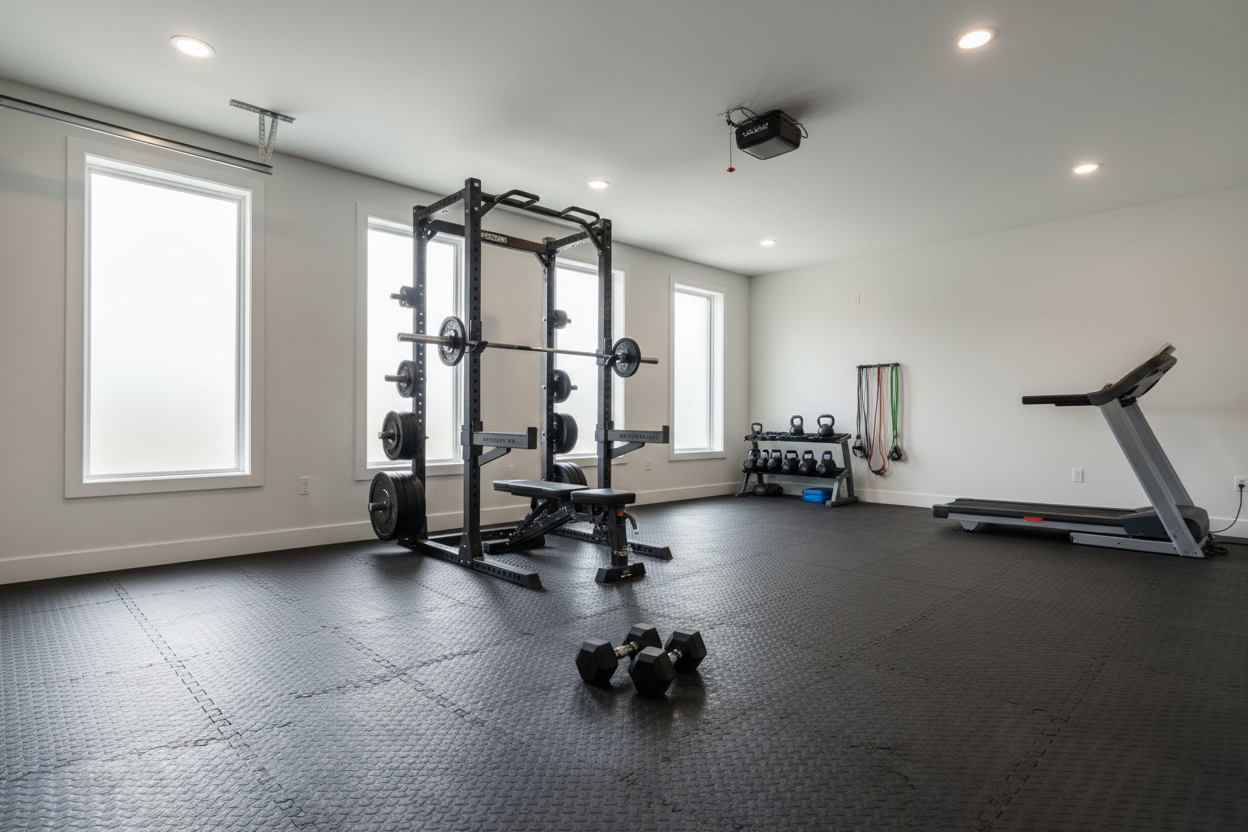
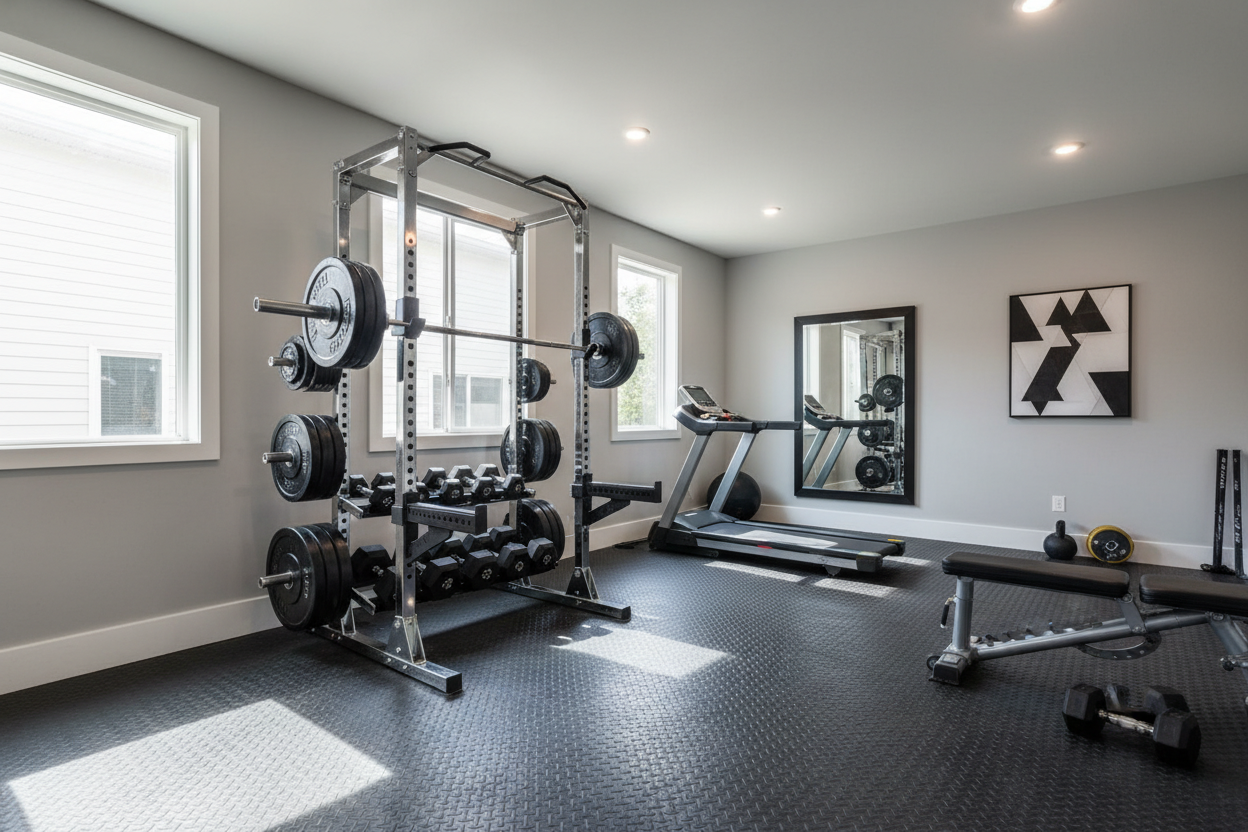
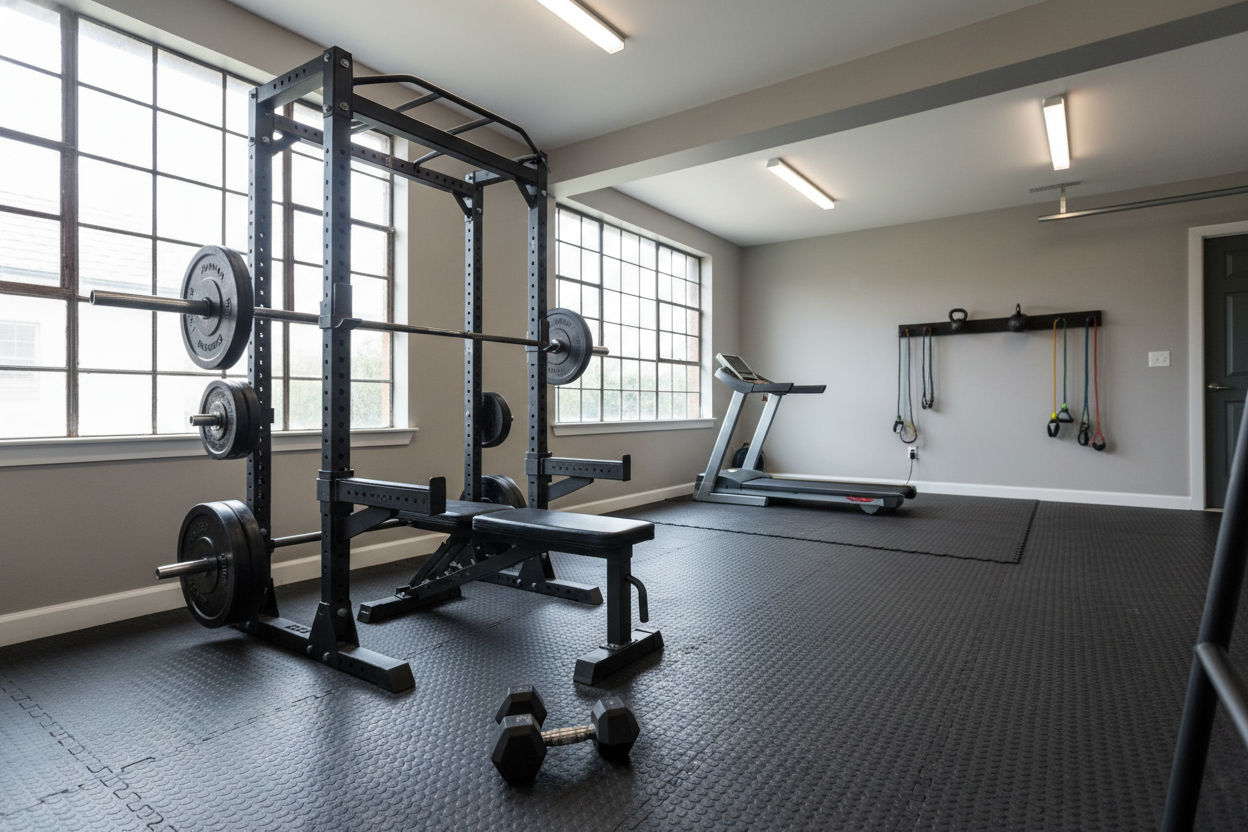
I highly recommend upgrading your floor to high-density rubber. Having a dedicated 6x8 ft space with proper gym flooring for home workout sessions is a necessity. It provides the grip you need when your shoulders are screaming and your focus is starting to waver. Plus, if you do have to bail and drop a kettlebell, the rubber will save your foundation and your gear from unnecessary damage.
Make sure your path is clear before you start your timer. If you're in a cramped garage, you might have to do figure eights or march in place. The key is constant tension and a stable base. Don't sacrifice your ankles to save your shoulders. A clear floor is a safe floor.
How to Program This Without Wrecking Your Heavy Days
The biggest mistake I see is people treating endurance work like a main lift. If you do 10 minutes of overhead carries before you try to max out your overhead press, your stabilizers will be gassed and your injury risk will skyrocket. These movements belong at the very end of your workout or on an active recovery day when you aren't doing heavy compound movements.
I personally like to add two of these movements to the end of my Push days. After my heavy bench and incline work, I'll finish with 3 sets of Bottoms-Up Kettlebell Holds and the Crucifix Hold. It's a finisher that actually serves a structural purpose. Keep the intensity around a 7 out of 10. You want to feel the burn, but you shouldn't be failing so hard that you're dropping weights on your head.
If you're training 4 days a week, pick two days for endurance. It takes about 10-15 minutes total. Within a month, you'll notice that your heavy sets feel more stable and the grind reps become much more manageable. You aren't just building bigger shoulders; you're building a more reliable machine that won't quit on you when the weights get heavy.
Personal Experience: My 45-lb Plate Mistake
A few years back, I thought I was too tough for light endurance work. I grabbed two 45-lb plates and tried to do an overhead carry for time. I made it about 30 seconds before my right shoulder made a sound like a dry branch snapping. I had zero stability at that weight under fatigue. I spent the next three months doing rehab with 2-lb bands. Now, I respect the light weights. A 15-lb kettlebell used correctly is more effective for endurance than a 45-lb plate used poorly.
FAQ
Can I do shoulder endurance work every day?
I wouldn't recommend it. Your stabilizers need recovery just like your larger muscle groups. Stick to 2-3 times a week at the end of your sessions to avoid overtraining the rotator cuff.
What weight should I start with?
Start much lighter than you think. For holds and carries, 15-25 lbs is usually the sweet spot for most home gym owners. If you can't hold the position for at least 45 seconds with perfect form, the weight is too heavy.
Will this help with my bench press?
Absolutely. A stable shoulder is a strong shoulder. If your stabilizers are rock solid, you'll have a much firmer platform to press from, which usually leads to a higher max and less joint discomfort over time.