Stop Lifting Quietly If You Want to Gain Muscles Faster
I remember my first heavy set of deadlifts in my garage. I was so worried about the 'thud' waking up my two-year-old that I basically performed a panicked, fast-motion reverse curl to set the bar down. It felt like trash, and my back hated me for it the next morning. If you are tiptoeing around your power rack like a thief in the night, you are never going to gain muscles faster.
Quick Takeaways
- The lowering (eccentric) phase is where the most muscle fiber damage and growth occur.
- Quiet lifting usually means you are skipping the most productive half of the rep.
- Standard concrete floors require high-density protection to handle true training intensity.
- A 4-second eccentric count is the gold standard for home gym hypertrophy.
The Silent Workout Trap (Why Quiet Reps Kill Growth)
Most home gym owners are 'gravity lifters.' They fight like hell to get the weight up, then let gravity do 90% of the work on the way down. Why? Because they are terrified of cracking their concrete foundation or annoying the neighbors. I have seen guys bench 225 lbs and then practically drop it on their chest to avoid the clank of the rack.
This 'quiet' training is a massive mistake. By rushing the descent, you are cutting your time under tension in half. You are essentially doing half-reps and wondering why your sleeves aren't getting any tighter. If you want to see real changes, you have to embrace the noise that comes with controlled, heavy negatives.
The Science of the Eccentric Phase
Hypertrophy isn't just about moving a barbell from point A to point B. It is about mechanical tension and micro-tears in the muscle tissue. Research consistently shows that the eccentric phase—the part where the muscle lengthens under load—causes significantly more muscle fiber disruption than the concentric (lifting) phase.
If you are looking for how to grow muscles faster naturally, the answer is controlling the weight until your muscles are screaming. When you fight the weight on the way down, you recruit high-threshold motor units that stay dormant during 'easy' reps. You are literally forcing your body to adapt to a higher level of stress.
Fix Your Floor, Fix Your Lifts
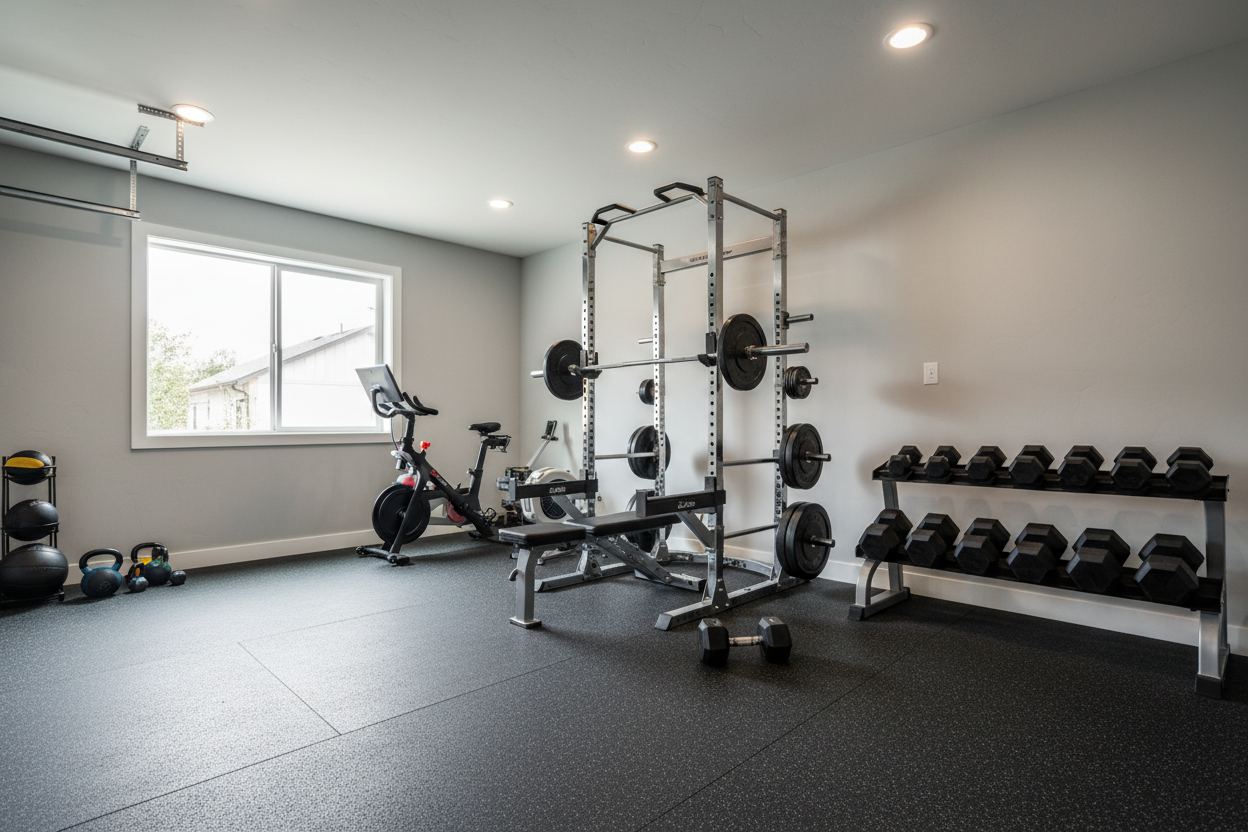
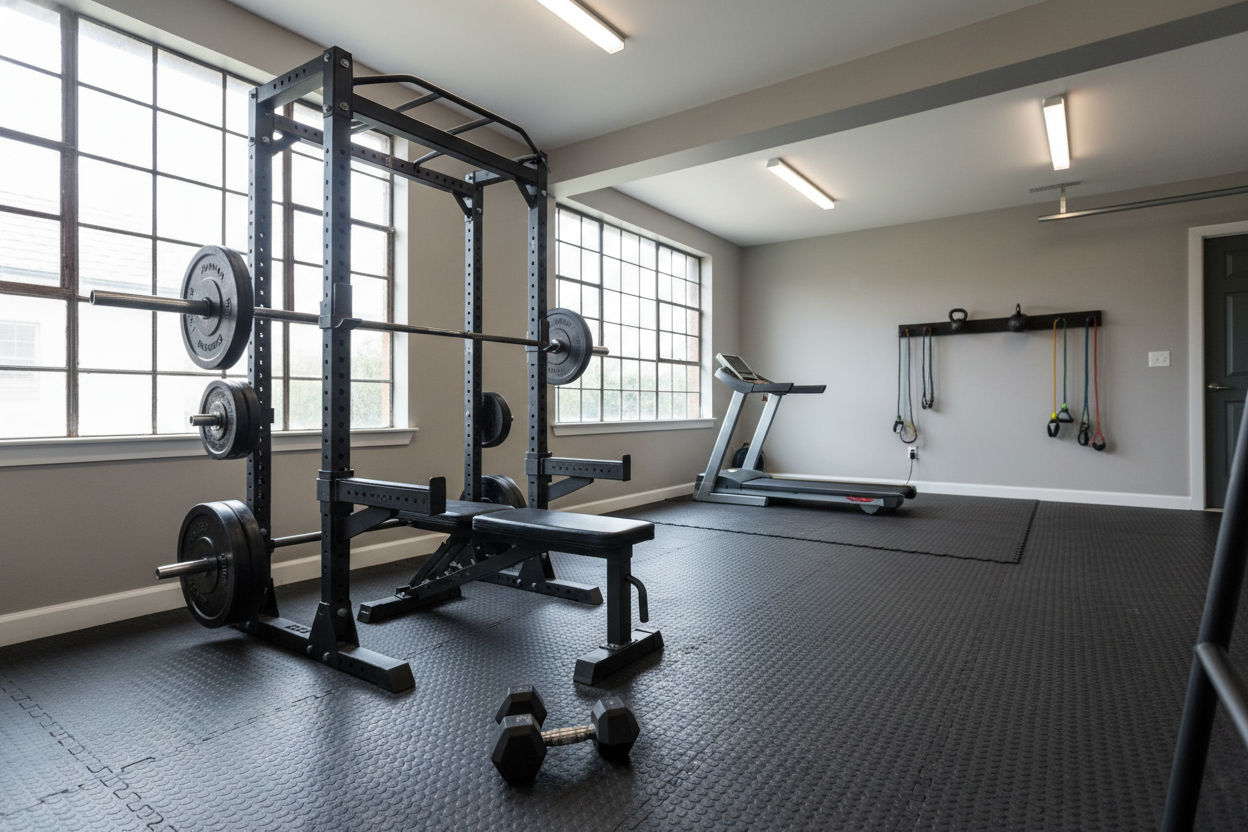
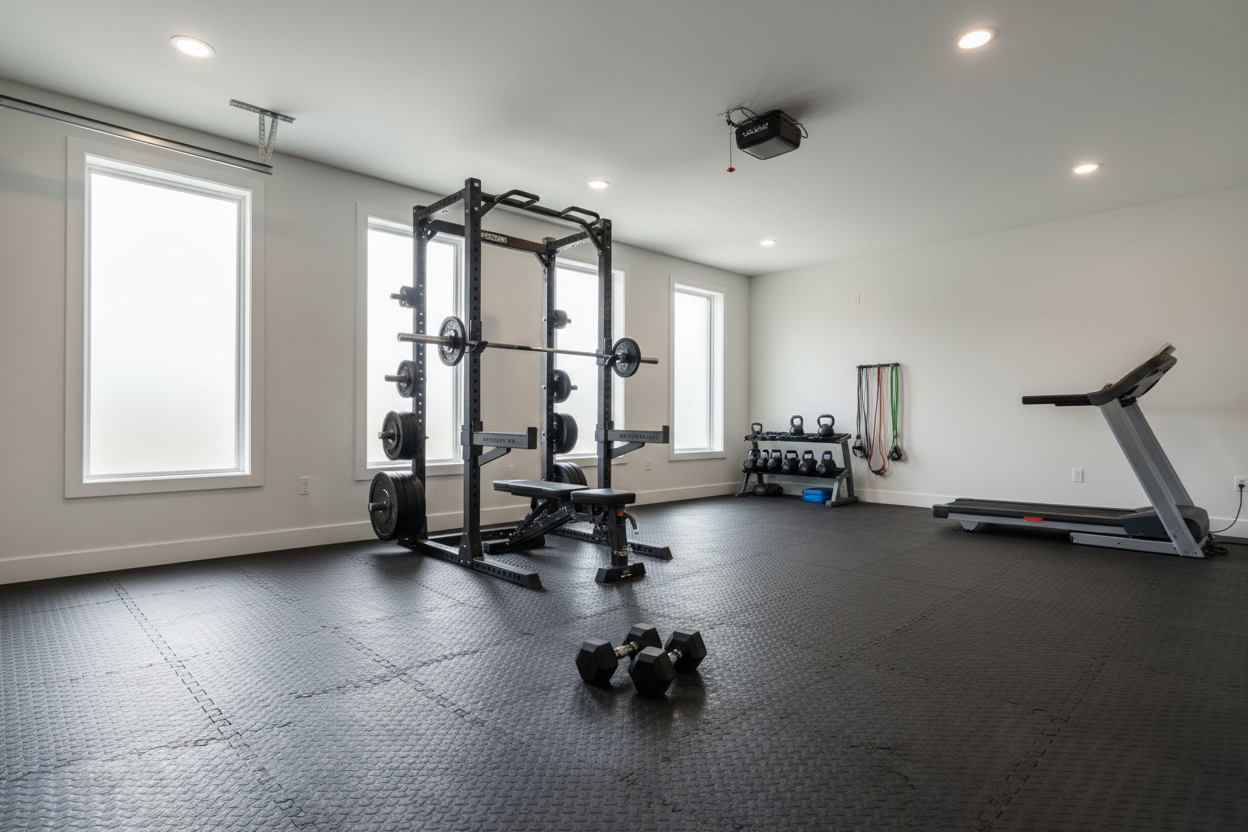
I started my journey with those cheap, puzzle-piece foam mats from a big-box store. They compressed to nothing under a 45-lb plate and offered zero vibration dampening. You need high-density rubber that actually absorbs energy so you can stop worrying about your slab. I recommend the Gxmmat new upgraded exercise mats because they provide a massive 7-foot wide landing zone that handles the shock of a heavy eccentric failure.
Having a 7x10 or 7x12 foot space of dedicated high-density flooring gives you the psychological 'green light' to push to failure. When you know the floor isn't going to shatter, you stop holding back. You can finally focus on the squeeze and the stretch rather than the sound of the plates.
Applying the 'Loud and Slow' Method to Legs
This is especially vital for the lower body. Think about Romanian Deadlifts (RDLs). If you just drop the bar after the hinge, you miss the entire hamstring stretch—the very thing that makes the exercise work. When people ask me how to grow my muscles faster in their quads and glutes, I tell them to stop dive-bombing their squats.
Controlling the descent during a heavy squat or RDL is the secret sauce for leg thickness. For a deeper dive into these mechanics, check out my guide on how to grow leg muscle at home. Once you have the flooring to support it, you can take these compound lifts to a level of intensity that simply isn't possible when you're trying to be quiet.
The 4-Second Rule for Home Hypertrophy
Here is your new protocol: 4 seconds down, 1 second up. It is going to humble you. You will probably have to drop your working weight by 20% to maintain form. Do it anyway. The 'ego' weight you were moving before wasn't doing half as much for your physique as these controlled reps will.
When you hit that 4th second at the bottom of a heavy press, and you finally rack the bar, the clanging of the steel is the sound of actual progress. Stop being a polite lifter. Your garage is a gym, not a library.
Personal Experience: The 6 AM Mistake
I once tried to 'stealth lift' a 405-lb deadlift at 6 AM to avoid waking my wife. I tried to catch the bar on my thighs to soften the landing. I ended up with bruises the size of dinner plates and a strained lower back that kept me out of the gym for two weeks. It was a stupid mistake. Now, I have thick mats, I lift with intent, and if the plates rattle, they rattle. My gains have tripled since I stopped caring about the decibels.
FAQ
Will my neighbors complain about the noise?
If you are lifting at 3 AM, probably. But during normal daylight hours, the sound of a controlled eccentric is no louder than a lawnmower. Most of the 'noise' people fear is actually just the plates clinking, which doesn't travel as far as you think.
Do I need a full lifting platform?
If you are pulling over 500 lbs or doing Olympic cleans, a plywood and rubber platform is a good idea. For everything else, a high-quality, high-density 7mm to 10mm mat is usually plenty to protect your concrete and your equipment.
Is slow lifting better for strength or just size?
For pure maximal strength (1-rep max), you need some explosive work. But for building muscle size—hypertrophy—the increased time under tension from a slow eccentric is objectively superior.