Your Car Won't Fit: The Truth About Gym Equipment Dimensions
I was that guy. I spent three weeks measuring my garage, sketching floor plans on napkins, and refreshing tracking numbers at midnight. I bought a beefy power rack because the gym equipment dimensions on the website said it was exactly 48 inches wide. My garage is 120 inches wide. Simple math, right? Wrong.
I forgot that a standard Olympic barbell is 7 feet long. I forgot that I needed to actually slide 45-pound plates onto that bar without punching a hole in the drywall. Most importantly, I forgot that I still needed to reach my lawn mower at the back of the garage.
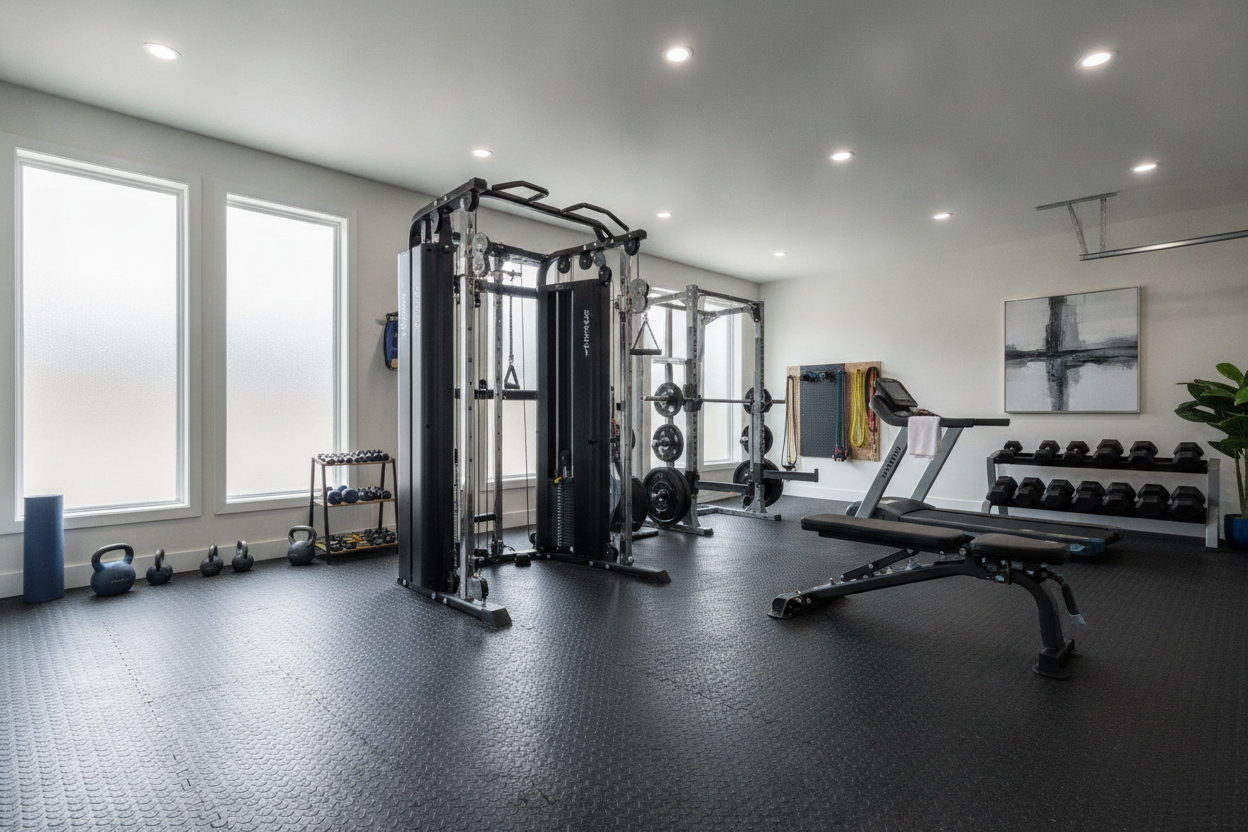
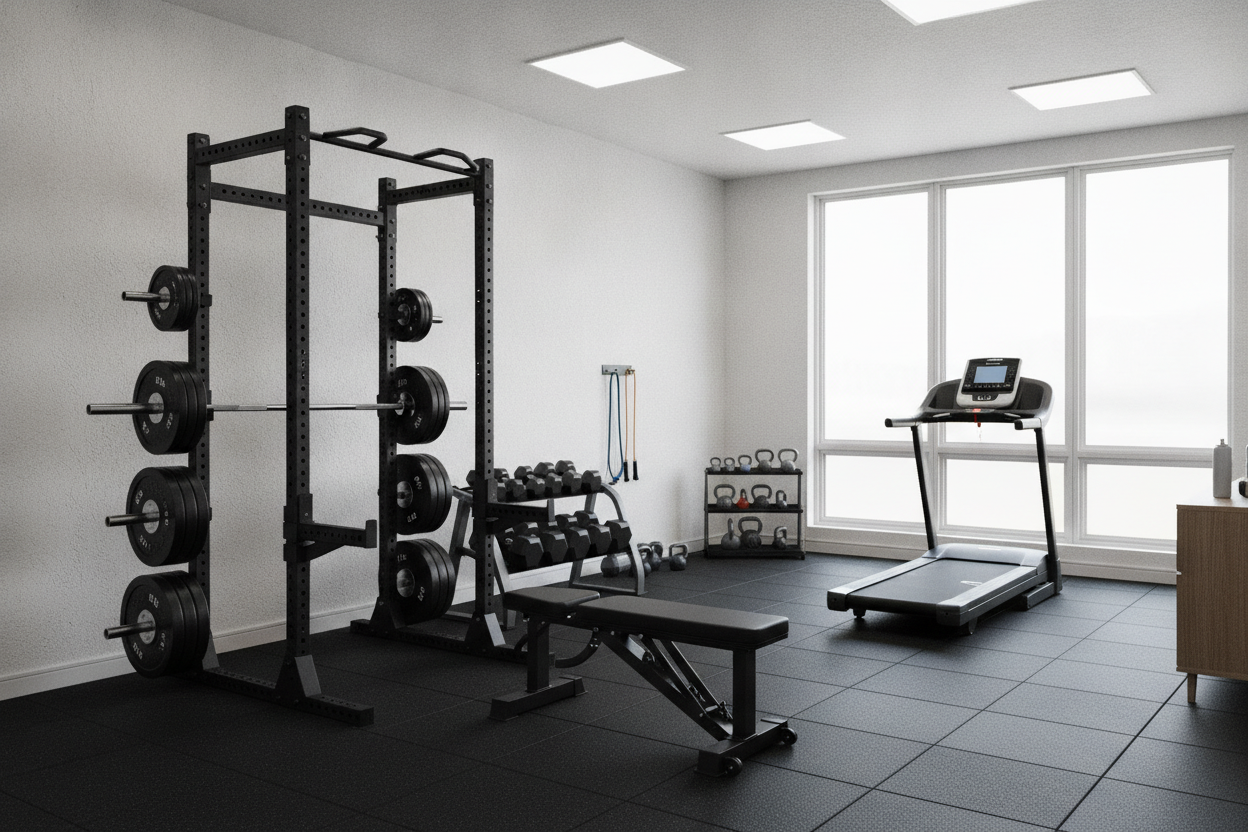
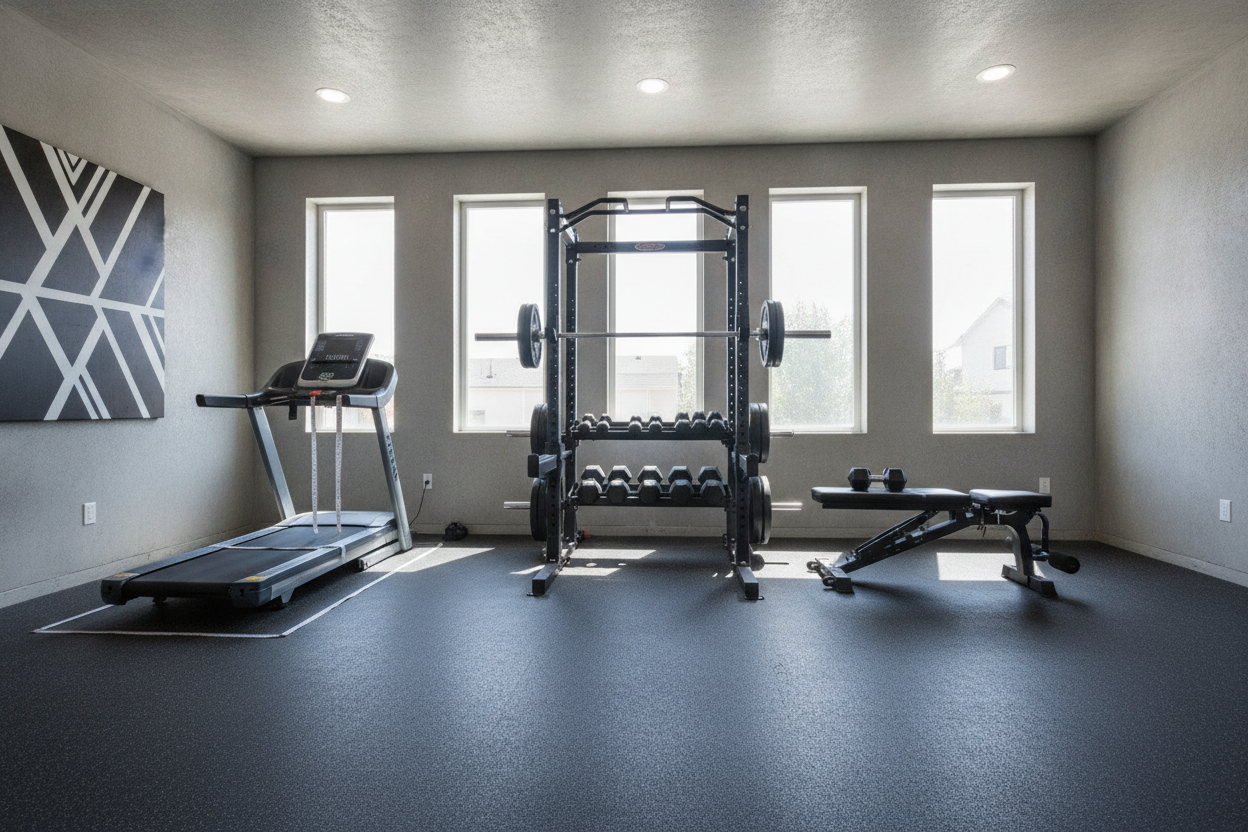
- Footprint vs. Working Space: A rack might be 4x4 feet, but you need an 8x10 foot 'zone' to actually use it.
- The Barbell Rule: Always plan for 7 feet of width, plus at least 12 inches of elbow room on each side for loading plates.
- Vertical Matters: Your ceiling height needs to account for your head during a pull-up, not just the top of the rack.
- Dynamic Movement: Benches get longer when you incline them; cables need room to travel.
The Day My Power Rack Trapped My Lawn Mower
When my rack finally arrived, I bolted it down exactly where the 'math' said it should go. It looked beautiful. Then Saturday rolled around. I realized that the uprights were positioned perfectly to block the only narrow path where I could squeeze my lawn mower out to the driveway.
I had to choose between a mowed lawn and a heavy squat session. I chose the squats, obviously, but my neighbors weren't thrilled. This is the reality of gym equipment sizes—they don't account for the 'flow' of your life. If you have to move three things just to start your first set, you’re going to stop working out within a month.
Why Online Spec Sheets Are Basically Lying to You
Manufacturers list the 'footprint' because it makes the equipment look compact and appealing. They aren't lying about the steel, but they are lying about the space you’ll actually occupy. When you see a 48-inch width, that’s just the distance between the outside of the uprights.
You aren't a ghost. You have a physical body that needs to stand behind the rack to spot a friend or step back to lunge. If you're looking at gym equipments measurements for a cable machine, remember that the weight stacks move and the handles often extend far beyond the base frame when in use.
The Infamous Barbell Overhang Problem
This is the biggest rookie mistake in the book. You buy a rack that fits in a tight corner, only to realize your 7-foot barbell is now wedged against the water heater. You need a minimum of 9 feet of lateral clearance to safely load and unload a bar. Anything less and you'll be doing a weird, horizontal shimmy every time you want to change weights.
How to Actually Map Out Your Floor Plan with Tape
Don't trust your eyes. Get a roll of blue painter's tape and mark the floor. Start by laying down the foundation for your lifting zone. I usually recommend starting with a 6x8ft exercise mat as your 'dead zone.' This is the space where the heavy lifting happens.
Tape out the rack inside that zone, then stand in it. Mimic a squat. Mimic a bench press. If your knuckles hit the wall while you're pretending to load a bar, you need to move the tape. This visual check is the only way to ensure your gym equipment dimensions work in the real world.
Hidden Clearances You Will Definitely Forget
Vertical clearance is the silent killer. If you have 8-foot ceilings and a 7.5-foot rack, you’re going to scalp yourself on the first pull-up. You need at least 12 to 15 inches of 'headroom' above the pull-up bar. If you're tall, make it 20.
Then there’s the bench. A flat bench is one thing, but when you kick it into a full incline, it often shifts backward or forward. If you're tight on space, check out this guide to weight machine types to see how different footprints—like plate-loaded versus selectorized stacks—impact your total gym equipments measurements.
Maximizing Tight Spaces (Without Settling for Flimsy Junk)
If you're working in a spare bedroom or a crowded basement, you have to be smart. Folding racks are great, but they still require a clear wall. Another trick is to create a dedicated 'auxiliary' zone. I use a compact 6x4ft exercise mat for my dumbbell work and stretching, which keeps the main 'rack zone' clear for the heavy iron.
Don't buy cheap, scaled-down gear just because it's small. Look for modular equipment that grows with you. If you're patient, you can find some killer home gym equipment deals on high-quality, short-stack racks or wall-mounted pulleys that save floor space without sacrificing the 300-lb weight capacity you need for real progress.
FAQ
How much space do I really need for a power rack?
Plan for an 8' x 10' area. While the rack itself is usually 4' x 4', the extra space allows for a 7-foot barbell, plate loading, and room to move around the equipment safely.
Will a 7-foot barbell fit in a 10-foot wide room?
Technically yes, but it will be tight. You'll have 1.5 feet on each side. That's enough to load plates, but you'll be constantly worried about hitting the walls. 12 feet is the 'comfort' minimum.
How high should my ceiling be for a home gym?
Aim for at least 8 feet. This allows for most standard racks and gives you enough clearance for pull-ups and overhead presses, depending on your height.