Your Cable Kickbacks Suck: Why the Push Back Leg Machine Works
I spent years fighting with ankle straps at my local commercial gym. The strap would rotate mid-set, the cable would rub against my calf, and I would spend more energy balancing on one foot than actually hitting my glutes. If you are tired of looking like a wobbling flamingo, the push back leg machine is the piece of gear you probably didn't know you needed.
Most people treat glute training as an afterthought, throwing in a few sets of bodyweight bridges or messy cable work. But if you want to actually add slabs of muscle to your backside, you need stability. Without it, your nervous system throttles your strength output to keep you from falling over.
Quick Takeaways
- Fixed chest support prevents the lower back from taking over the movement.
- Plate-loaded resistance allows for much heavier loading than standard cables.
- The fixed path of motion ensures you are hitting the glute-ham tie-in every single rep.
- Takes up more space than a cable tower but offers 10x the isolation.
The Problem With Your Current Kickback Setup
The standard cable kickback is a biomechanical mess for most people. When you stand on one leg and kick back, your pelvis naturally wants to tilt forward. Without a solid anchor point for your upper body, you end up arching your spine to get the weight moving. This lumbar hyperextension is why so many people complain of lower back tightness after a 'glute' workout.
Your brain is smart. If it feels like your spine is in a compromised position, it will not let you fully recruit your glute max. You end up using momentum and your erectors to swing a 20-pound stack, getting zero actual growth for your efforts. You need a way to lock your torso in place so the only thing moving is your hip joint.
What Actually Is a Push Back Leg Machine?
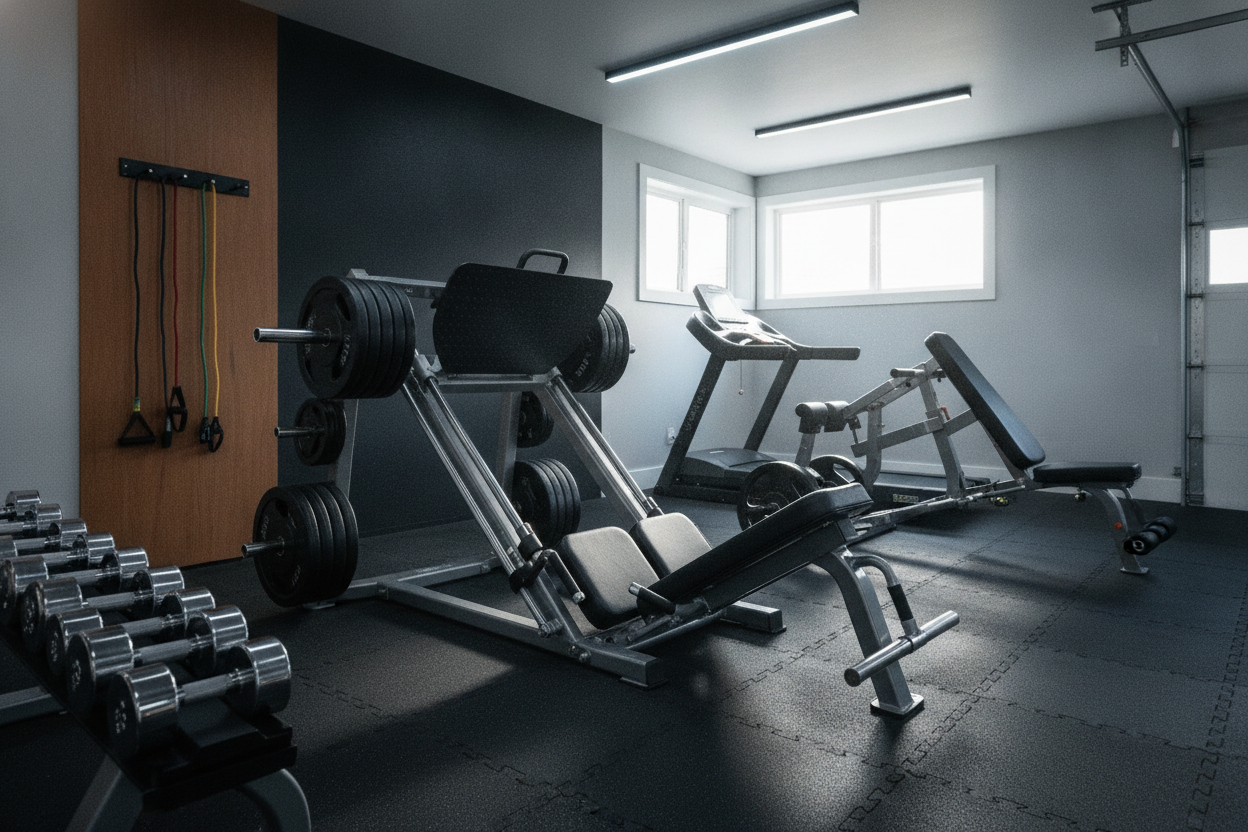
A dedicated glute kickback or push back unit is designed to solve the stability crisis. Usually, these come in two flavors: a standing pendulum version or a kneeling plate-loaded version. The defining feature is a heavy-duty chest pad and handles that allow you to brace your entire upper body.
Instead of a thin wire pulling your ankle, you are pushing against a solid footplate. This is often described as an Leg Machine that mimics the natural arc of a kickback but with the rigid integrity of a leg press. Because you are braced against a pad, you can focus 100% of your mental energy on the squeeze at the top of the rep rather than trying not to tip over.
Why This Machine Beats Cables and Bands
Bands are great for warm-ups, but they have a terrible resistance profile for building max strength—they are easiest at the bottom and hardest at the top, often snapping back too quickly. A plate-loaded push back machine allows for consistent mechanical tension throughout the entire range of motion. You can actually load this thing with 45-pound plates and move significant weight safely.
When you use a dedicated Leg Machine for your posterior chain, you are creating the kind of mechanical tension that forces adaptation. You can't get that from a 10-pound ankle weight. The chest pad acts as a literal shield for your spine, keeping your ribcage down and your core engaged without you having to overthink it.
Don't Confuse It With Other Pushing Machines
If you search for an exercise machine you push with legs, you will probably see a lot of 45-degree leg presses. While those are staples for quads, they don't offer the same hip extension focus as a kickback unit. A leg press is a bilateral movement where your back is against a seat; a push back machine is usually unilateral (one leg at a time) and has you facing the machine.
It is also quite different from The Truth About The Gym Machine Where You Spread Your Legs. While abductor machines hit the glute medius and minimus (the sides of your hips), the push back machine targets the gluteus maximus—the largest muscle in your body. If you want that 'shelf' look, you need the rearward pushing motion, not just the lateral spread.
Is It Worth the Floor Space in a Garage Gym?
This is the tough part. A dedicated push back unit usually has a footprint of about 4 by 5 feet. In a cramped one-car garage, that is a lot of real estate for a single-purpose machine. If you are a competitive bodybuilder or someone whose primary goal is glute development, it is a no-brainer. The results far outweigh the space trade-off.
However, if you are tight on space, you might look at a multi-use piece like the Gxmmat Leg Extension Curl Machine. While it won't give you that specific rearward kickback motion, it handles your quads and hams in a much smaller footprint. But let's be honest: if you have the room and you're tired of mediocre glute gains, the dedicated machine is the superior choice every time.
My Personal Experience
I tried to 'hack' a kickback machine for months using a low pulley and a bench to brace my chest. It was a disaster. The bench would slide, the cable would catch on the upholstery, and I never felt a real pump. When I finally dragged a real plate-loaded kickback unit into my gym, my glute strength jumped 30% in a month simply because I could finally balance. My only mistake was buying a cheap model first that had plastic bushings; they squeaked so loud my neighbors thought I was raising a family of territorial rats. Go for something with ball bearings.
FAQ
Is this better than a hip thrust?
It is different. Hip thrusts allow for the most weight, but the push back machine provides a different angle of peak tension and is much easier to set up. I use both.
Can I use this for my hamstrings?
You will get some hamstring involvement, especially at the start of the push, but it is primarily a glute-dominant movement. For pure hams, stick to curls.
Does it fit Olympic plates?
Almost all high-quality versions use 2-inch Olympic pegs. Avoid the ones with 1-inch pegs unless you only own standard plates from a vintage garage sale find.