Your Beginner Full Body Weight Workout: The 5-Pattern Guide
I remember standing in my client Sarah's tiny 400-square-foot apartment, dodging a coffee table and a ceiling fan just to show her a basic dumbbell row. She was completely overwhelmed by fitness magazines telling her she needed a 'chest day' and a 'leg day.' If you are just starting out, splitting your body into parts is the fastest way to get frustrated and quit. What you actually need is a beginner full body weight workout that focuses on how your body actually moves, rather than isolating individual muscles.
Instead of worrying about hitting every single tiny muscle, we are going to focus on the five fundamental movements your body was designed to perform. This approach builds functional strength, burns more calories, and keeps your training sessions under 45 minutes.
Quick Takeaways
- Stop thinking about isolated muscles (biceps, chest) and start thinking about movement patterns (push, pull, squat).
- A true beginner full body workout only requires mastering five basic patterns to build a complete foundation.
- You only need about a 6x6 foot clear space and a basic set of adjustable dumbbells to get started at home.
- Consistency beats complexity; training two to three times a week yields massive newbie gains.
Why You Should Train Patterns, Not Body Parts
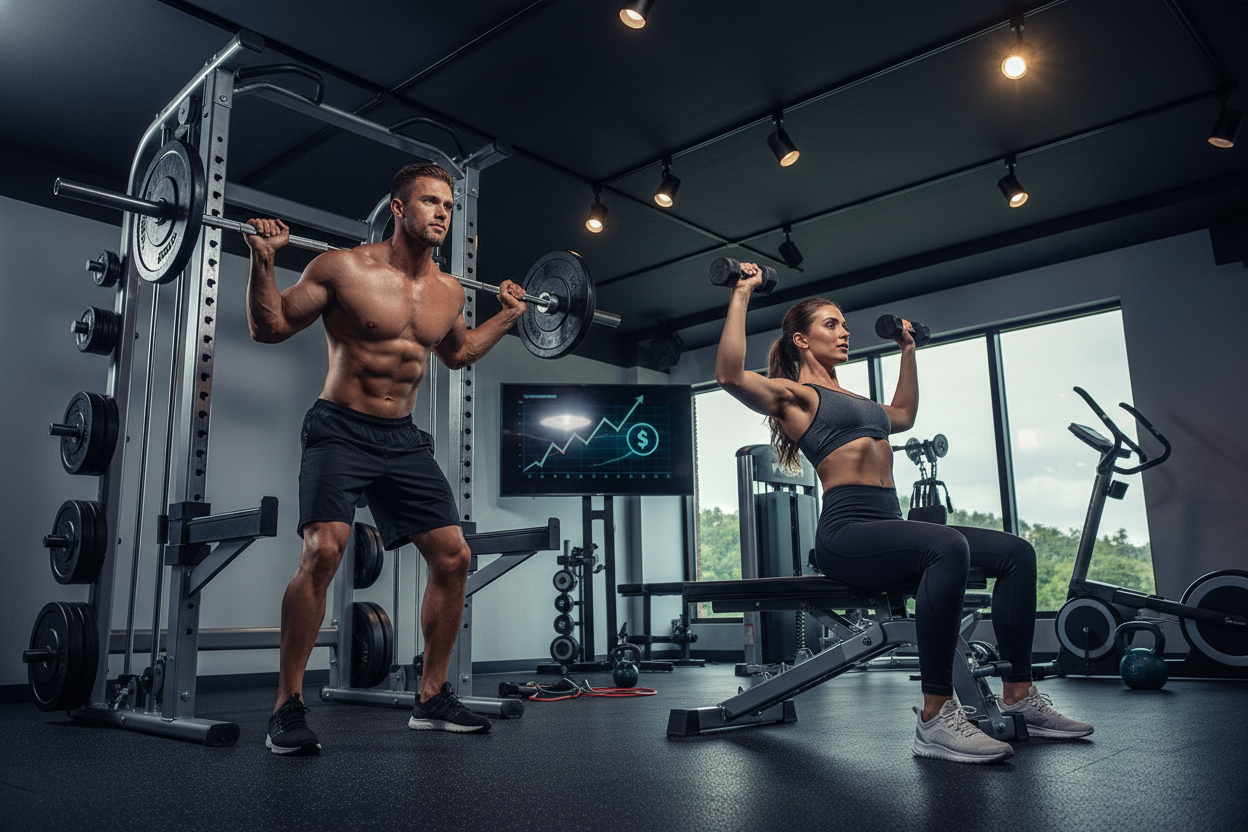
When you walk into a commercial gym, you see dozens of machines designed to isolate very specific muscles. Leg extensions for the quads, pec decks for the chest, and preacher curls for the biceps. As a trainer, I tell my novices to ignore all of that. When you are looking for a highly effective full body workout routine for beginners, treating your body as a disconnected set of parts is highly inefficient.
Your body is a single, integrated unit. When you pick up a heavy box from the floor, your hamstrings, glutes, core, and back all fire at once. That is why a beginner full body workout plan should revolve around movement patterns rather than muscle groups. The five fundamental human movements are the squat, the hinge, the push, the pull, and the loaded carry.
By hitting all five in a single session, you guarantee complete, balanced development without overcomplicating your exercise selection. You do not need to worry if you hit your 'lower lats' or 'inner chest.' If you pull and push, everything gets worked. This approach saves time, prevents muscle imbalances, and builds functional strength that actually translates to your daily life.
The Five Fundamental Movements Explained
Let us break down the five movements that will form the core of your beginner total body workout. First is the Squat. This is any movement where you bend at the knees and hips, lowering your center of gravity. Think of sitting down in a chair and standing back up. Squatting heavily targets the quads, glutes, and core.
Next is the Hinge. Unlike the squat, the hinge is driven by pushing your hips backward while keeping your shins relatively vertical. Deadlifts and glute bridges fall here. It targets the entire posterior chain—your hamstrings, glutes, and lower back. Then we have the Push. This covers moving a weight away from your torso, either horizontally (like a push-up or bench press) or vertically (like an overhead shoulder press). It develops the chest, shoulders, and triceps.
The Pull is the exact opposite. You are bringing a weight toward your torso, such as a dumbbell row or a pull-up. Pulling is crucial for posture, working the lats, rhomboids, and biceps. Finally, the Loaded Carry. It sounds too simple to be an exercise: pick up something heavy and walk with it. But farmer's walks build incredible core stability, grip strength, and cardiovascular endurance.
These five full-body exercises for beginners create a solid biomechanical foundation. If you want to understand the deeper physiological mechanics behind why this works so well, check out this science based guide for growth. Hitting all these patterns ensures your joints move through their full, natural ranges of motion.
Setting Up Your Home Training Space
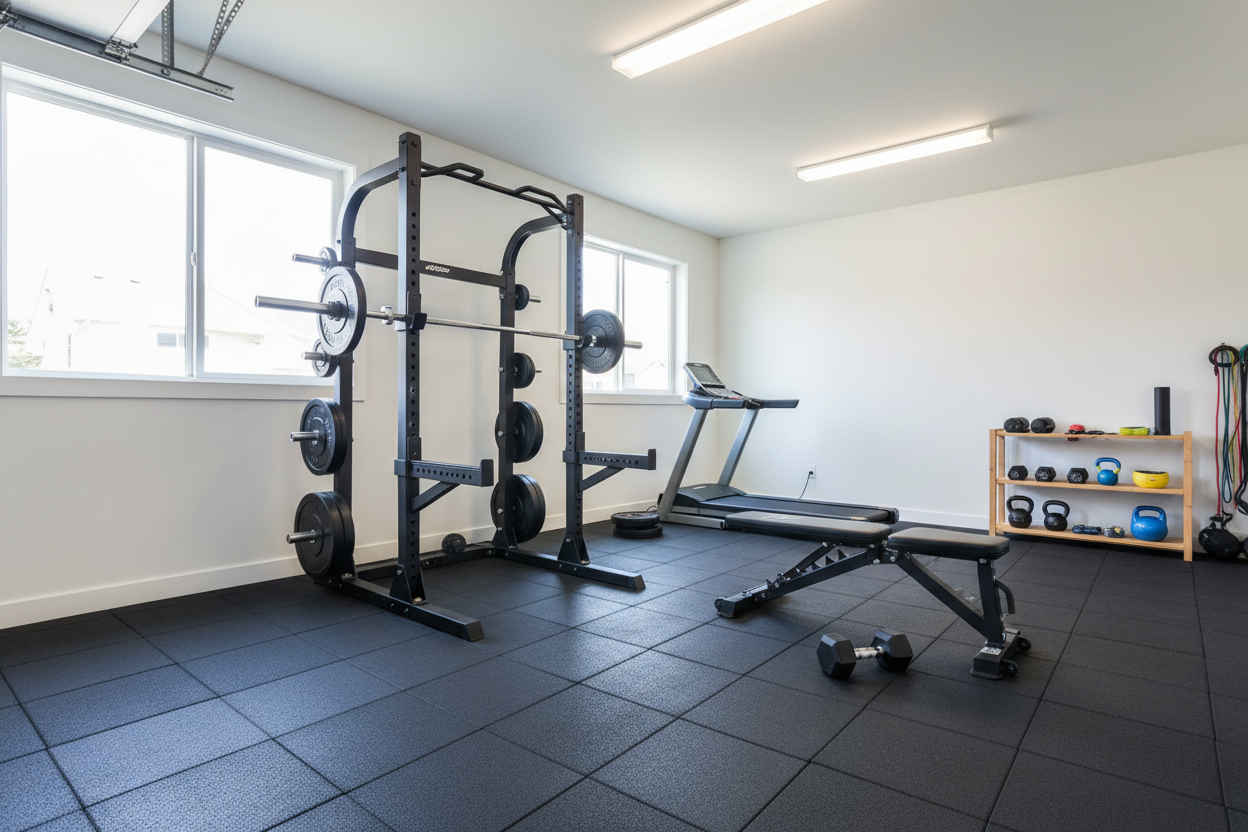
You do not need a massive garage filled with steel racks to execute the best full body workout for beginners. I have built highly effective home gyms in spaces as small as 6x6 feet. The absolute essentials are a pair of adjustable dumbbells—something in the 5 to 52.5 lb range is perfect—and a supportive floor.
When I tested various flooring setups, I realized hard-shell interlocking tiles often slide around on hardwood floors during dynamic movements. Instead, I always recommend throwing down a large 6x8ft exercise mat. It gives you a solid, slip-resistant foundation for floor exercises and standing lifts, while protecting your actual floors from dropped weights. It also dampens the noise, which is crucial if you have downstairs neighbors and like to train at 6 AM.
One honest downside to adjustable dumbbells is that they can be bulky and sometimes rattle during fast movements. However, for a home setup, the space-saving aspect far outweighs the minor noise. With just that mat and those weights, your living room is officially a gym.
Your Beginner Full Body Weight Workout Plan
Now let us put those movements into a practical, easy-to-follow full body weight training routine for beginners. You will perform this routine two to three non-consecutive days per week (for example: Monday, Wednesday, Friday). Start with a light 5-minute warm-up of jumping jacks and arm circles.
- 1. Goblet Squat (Squat Pattern): Hold a single dumbbell vertically against your chest. Keep your chest up and squat down until your thighs are parallel to the floor. Drive back up. Do 3 sets of 10 to 12 reps.
- 2. Dumbbell Romanian Deadlift (Hinge Pattern): Hold a dumbbell in each hand in front of your thighs. Push your hips back, keeping your legs mostly straight with just a soft bend in the knees. Lower the weights to mid-shin level, feeling a stretch in your hamstrings, then squeeze your glutes to stand back up. Perform 3 sets of 10 to 12 reps.
- 3. Dumbbell Floor Press (Push Pattern): Lie on your back on your mat with knees bent. Hold a dumbbell in each hand, elbows resting on the floor at a 45-degree angle from your ribs. Press the weights up over your chest, then slowly lower until your triceps touch the floor again. This is a very safe push variation for a full body workout plan for beginners. Do 3 sets of 8 to 10 reps.
- 4. Single-Arm Dumbbell Row (Pull Pattern): Stagger your stance, hinge forward, and rest your non-working hand on a sturdy chair or bench. Pull the dumbbell up to your hip, squeezing your shoulder blade. Lower it under control. Complete 3 sets of 10 reps per arm.
- 5. Farmer's Walk (Loaded Carry): Grab your heaviest dumbbells. Stand tall, pull your shoulders back, and walk across your room. If you only have 10 feet of space, just pace back and forth for 30 to 45 seconds. Do 3 sets.
This beginners full body workout takes about 35 minutes to complete. Rest 60 to 90 seconds between each set. Focus entirely on controlling the weight and mastering the form, rather than rushing through the reps.
Managing Expectations and Fat Loss Realities
One of the most common questions I get from new clients is how to lose belly fat or tone up their arms. I have to be the bearer of bad news: you cannot spot-reduce fat. Doing hundreds of crunches will not melt belly fat, just like doing endless bicep curls will not magically shrink your arms.
When you execute a whole body workout for beginners, you are building lean muscle mass across your entire frame. Muscle is metabolically active tissue. The more muscle you have, the more calories your body burns at rest. Over time, this shifts your overall body composition, making you look leaner and more defined. This is why a balanced body workout for beginners is vastly superior to endless hours on the treadmill.
Resistance training sends a signal to your body to retain muscle while dropping fat in a caloric deficit. If you want to dive deeper into how resistance routines affect calorie burn and metabolism, I highly recommend reading up on the realities of weight training for fat loss. Be patient. You will likely notice an increase in strength within the first two weeks, but visible changes to your body composition usually take six to eight weeks of consistent training.
Next Steps: Tracking and Progressing Your Routine
To get the most out of your full body workout program for beginners, you must track your workouts. Buy a cheap spiral notebook and write down the weights, sets, and reps you complete each session. The human body adapts quickly. If you use the same 10-pound dumbbells for three months, your progress will stall.
This concept is called progressive overload. Once you can easily complete the top end of the rep range (for example, 3 sets of 12 reps on squats) with perfect form, it is time to increase the weight by 2.5 to 5 pounds. If you do not have heavier weights, slow down the tempo of the exercise to increase the time under tension.
A solid full body workout routine beginner phase lasts about 12 to 16 weeks. Once you have built a strong foundation of strength and mastered these five basic movement patterns, you will be ready to introduce more complex variations. When that time comes, you can explore our workout hub for more advanced routines and split programs.
How often should a beginner do a full body workout?
For absolute beginners, two to three days a week is optimal. This provides enough stimulus to trigger muscle growth while allowing 48 hours of recovery between sessions. Never train the same muscle groups on back-to-back days.
How long should my workout last?
A highly effective full body workout for beginners can be completed in 35 to 45 minutes. If your workouts are dragging past an hour, you are likely resting too long between sets or doing too many unnecessary isolation exercises.
Do I need to take supplements to see results?
No. While protein powder can be a convenient way to hit your daily protein goals, supplements are entirely optional. Focus on eating whole foods, staying hydrated, and getting 7 to 8 hours of sleep per night first.