Your Before Workout Stretches Are Killing Your Power (Do This)
I have spent a decade in drafty garages, and the most common mistake I see is the 'dead hang.' You know the one. Someone grabs the pull-up bar and just hangs there, or they touch their toes and hold it until they are blue in the face. If you are doing these before workout stretches, you are basically telling your central nervous system to take a nap right before you ask it to PR your deadlift.
Quick Takeaways
- Static stretching (holding a pose) before lifting can reduce explosive power by up to 30%.
- Dynamic movement is non-negotiable to lubricate joints and wake up the nervous system.
- Never stretch a cold muscle; raise your core temperature first.
- Focus on the 'big three' mobility points: ankles, hips, and the thoracic spine.
The Big Lie About Stretching Before You Lift
For decades, we were told that holding a static stretch for 30 to 60 seconds was the only way to prevent injury. Science has since caught up, and it turns out that yanking on a muscle for a long duration before you hit the iron is a terrible idea. When you perform static stretches before exercise, you are essentially 'relaxing' the muscle-tendon unit. This reduces the stiffness needed for force production.
Think of your muscles like a rubber band. A tight, snappy rubber band can flick across the room with serious speed. A stretched-out, loose rubber band just flops to the floor. If you want to move heavy weight, you need that snap. Save the long holds for your post-session cooldown when you actually want to down-regulate your nervous system and kickstart recovery.
What Actually Happens When You Yank on Cold Muscles
A cold muscle is a brittle muscle. Trying to force stretches before working out without a proper blood flow is like trying to stretch a frozen steak—it does not want to give, and if you force it, you get micro-tears. This is why a general warm-up is the first step you should take before you start any heavy lifting session.
Raising your core temperature by just one or two degrees makes the collagen fibers in your connective tissue more compliant. This is the difference between a productive session and a pulled hamstring. You do not need twenty minutes on a treadmill; five minutes of light movement is enough to get the 'grease' moving in your joints.
My 3-Minute Dynamic Warm-Up (That Actually Works)
I do not have time for a 30-minute mobility flow, and neither do you. My pre workout stretch routine is built on efficiency. I focus on active movements that mimic the lifts I am about to perform. The goal is to move through a full range of motion without staying in one spot for more than a second or two.
This routine involves leg swings, arm circles, and the 'World's Greatest Stretch' (a deep lunge with a thoracic twist). It hits every major muscle group and gets the heart rate up. It is the best pre workout stretch approach because it prepares the body for the specific demands of high-intensity training.
Hip Sweeps and Ankle Mobilizations
If your squats feel like you are sitting onto a pile of broken glass, your ankles and hips are likely the culprits. Most of us spend all day sitting, which turns our hip flexors into tight knots. Before I load a bar, I perform effective hip mobility exercises like dynamic hip sweeps and 90/90 rotations.
Ankle mobilizations are equally vital. If your ankles are locked up, your knees will cave in and your lower back will round during deep squats. I like to do 'knee-to-wall' touches, driving the knee forward while keeping the heel glued to the floor. This ensures my joints are ready for the load before I even touch the barbell.
Thoracic Spine Rotations
A 'stuck' upper back is the enemy of the overhead press and the front squat. Most people have the thoracic mobility of a turtle shell. To fix this, I use quadruped T-spine rotations—getting on all fours and rotating one elbow toward the ceiling. This 'unglues' the ribs and allows for a much better shelf for the bar during a grueling full body workout.
Without this mobility, your body will steal range of motion from your lower back, which is a one-way ticket to a disc injury. Proper stretching before exercise means addressing these 'sticky' points so your big prime movers can do their jobs without compensation.
Tailoring Your Prep: Cardio vs. Weights
The stretches to do before exercise change depending on the goal. If you are prepping for a run, your pre cardio stretches should focus on the posterior chain and ankle tracking. Think high knees, butt kicks, and walking lunges. These prepare the legs for the repetitive impact of the pavement.
For lifting, the focus shifts to stability and bracing. While a stretch before cardio is about rhythm, a stretch for gym sessions is about creating space in the joints. You need your shoulders to be 'open' for a bench press but 'stable' for a heavy row. Always match your movement prep to the primary lift of the day.
The Gear That Makes Ground Work Bearable
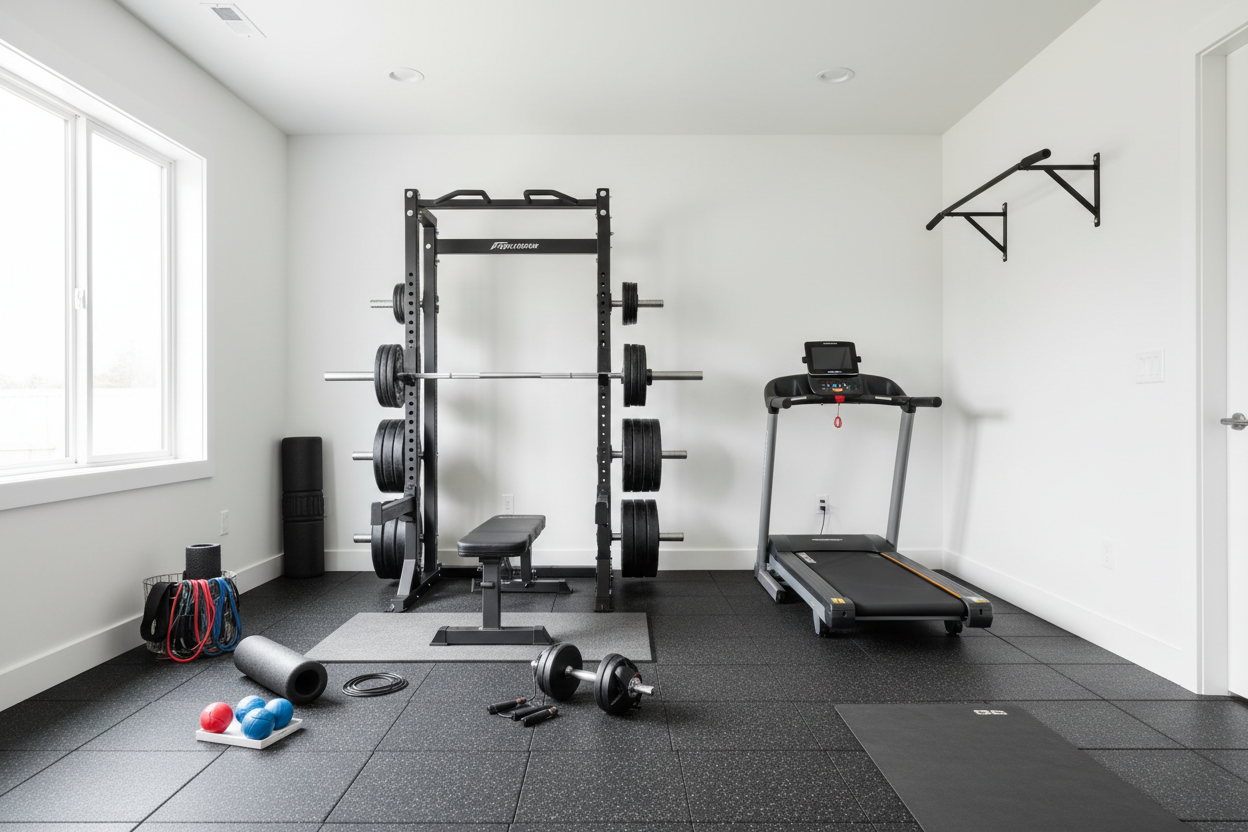
I used to try and do my dynamic routine on the bare concrete of my garage. It was a mistake. My knees were bruised, and my wrists hated the hard surface, so I started skipping the warm-up entirely. Investing in a high-density 6x8ft exercise mat changed that. Having a dedicated, cushioned space makes you actually want to do the work.
A good mat should be thick enough to protect your joints but firm enough that you do not sink into it. If you are doing a full body stretch before workout routines, you need a surface that stays put. Cheap yoga mats will slide around like a Slip 'N Slide; go for something with a bit of weight and a non-slip bottom.
Personal Experience: The Lesson of the Cold Garage
I remember one January morning, it was 20 degrees in my gym. I was in a rush, skipped my pre lifting stretches, and went straight for a 315-lb squat. I felt a 'zip' in my left hip that kept me from squatting heavy for three months. It was a humbling reminder that 'toughing it out' is usually just a synonym for being stupid. Now, I do not touch a weight until I have broken a light sweat and moved through my dynamic flow. That extra five minutes has saved me years of injury rehab.
FAQ
How long should a pre workout stretch routine last?
Keep it under 8 minutes. You are not trying to win a yoga competition; you are just trying to wake up your muscles. If you are spending 20 minutes on the floor, you are wasting energy that should be spent on the bar.
Is foam rolling better than stretching?
Foam rolling is great for temporary 'neurological' relief of tight spots, but it does not replace movement. Use the roller for 2 minutes on the worst spots, then get moving with dynamic stretches.
Can I stretch at home before the gym?
Absolutely. If your gym is a 10-minute drive away, you can do your mobility work in your living room. The blood flow will stay with you long enough to start your first warm-up set once you arrive.