Your 2lb Dumbbells Are Useless: Buying Real Weights for Seniors
I was scrolling through a big-box retailer's fitness section recently and honestly, I nearly threw my phone. Everything labeled as weights for seniors looked like a colorful dog toy. Marketers seem to think that once you hit 65, your bones turn to balsa wood and your only goal is to move your arms in circles while holding a 2lb plastic bone. It is patronizing, and frankly, it is bad advice. If you want to keep your independence, you need gear that actually challenges your biology.
Quick Takeaways
- Stop buying 2lb weights; they are basically paperweights for anyone looking to build bone density.
- Neoprene-coated hex dumbbells are the gold standard for grip and safety.
- A stable weight bench is more important for safety than the weights themselves.
- Progressive overload is the only way to prevent muscle loss (sarcopenia) as you age.
The Patronizing World of Senior Fitness Gear
Walk into any retail store and look for exercise weights for seniors. You will find a sea of pastel-colored, vinyl-coated weights that max out at 5 pounds. The messaging is clear: 'Don't hurt yourself.' But here is the reality I have seen in my own garage gym and with older clients: the greatest risk isn't lifting a 10-pound weight; it is the frailty that comes from never lifting anything heavier than a remote control. To maintain bone density and muscle mass, your body needs a reason to adapt. That reason is mechanical tension.
Graduating past the 'soup can' phase of resistance is mandatory. If you can do 20 repetitions with a weight and you aren't breathing hard or feeling a burn, you are essentially just doing calisthenics with a prop. Weights for elderly trainees should be heavy enough to make the last few reps of a set of ten feel difficult. This triggers the osteoblasts to build bone and the muscle fibers to thicken. Marketers want you to stay in the 'safe' zone of 2-pound weights because it is easy to sell, but real strength is built when you respect your body enough to give it a real load to carry.
The Truth About 5lb Hand Weights
I am not saying you should throw your 5lb weights in the trash. They have a specific utility. If you are performing rotator cuff rehab, lateral raises, or certain 5 lb weight exercises for seniors targeting the small muscles of the upper back, five pounds is plenty. However, for a senior weights workout to actually improve your life—like making it easier to get out of a chair or carry groceries—you have to move toward heavier implements for your lower body and 'push-pull' movements.
Even for strength training for women over 60, the goal should be progressive overload. This means once 5 pounds becomes easy, you move to 7.5, then 10. Women over 70 are often the most underserved by the fitness industry, told to stick to 'toning' with light weights for seniors. This is a mistake. Osteoporosis doesn't care about 'toning.' It cares about impact and load. Using hand weights for seniors should be the gateway to lifting real iron, not the final destination. If you stay stuck at 5 pounds forever, your progress will plateau within the first month, and you are just going through the motions.
Fixed Neoprene vs. Adjustable Dumbbells: What to Buy
When you are ready to buy, you have two main paths: fixed sets or adjustables. If you have arthritis or struggle with grip strength, I almost always recommend fixed neoprene-coated hex dumbbells. The neoprene has a slight 'squish' to it that feels better on sensitive joints than cold, hard steel. The hex shape is also a safety feature; it won't roll away across the floor when you set it down, which prevents tripping hazards in a small home gym. I've seen too many round chrome weights roll under someone's foot during a senior weights workout.
On the other hand, if you are tight on space, adjustable dumbbells like the Bowflex SelectTech or PowerBlocks are tempting. They can replace 15 sets of weights in the space of one. But here is the catch: they can be clunky. If you are doing a senior workout with weights, the sheer length of an adjustable dumbbell can make it awkward to do movements like bicep curls or overhead presses without the weights clanking together. Also, if you drop an adjustable dumbbell, the internal plastic gears can snap. For most seniors, I recommend a tiered rack of neoprene weights from 5 to 20 pounds. It is simpler, more durable, and you don't have to fiddle with dials or pins when you're tired.
The One Piece of Gear More Important Than Your Dumbbells
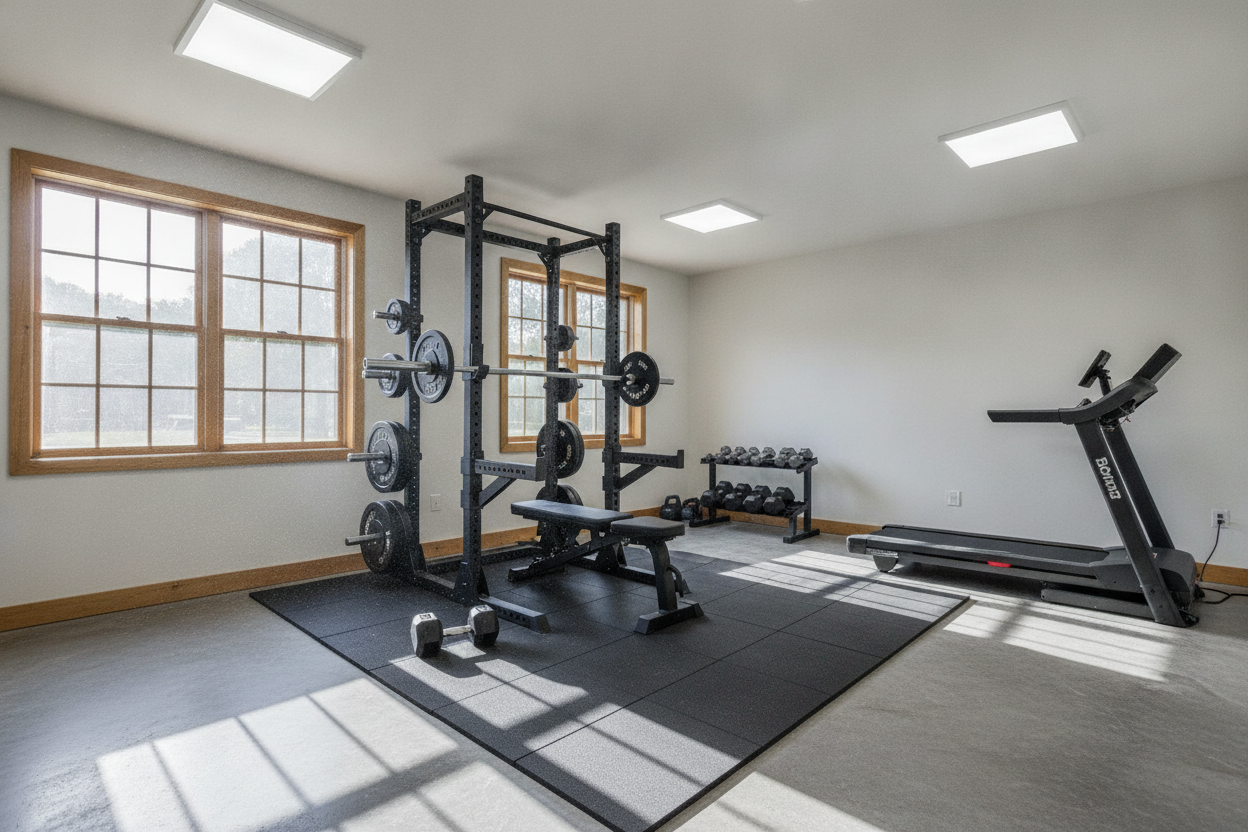
You can buy the best weights for seniors in the world, but if you are sitting on a wobbly kitchen chair or a soft sofa while using them, you are asking for an injury. A rock-solid weight bench is the foundation of a safe home setup. I have seen people try to do chest presses on a coffee table—don't be that person. A dedicated bench provides a wide, stable base of support that prevents you from losing your balance during a lift.
I often point people toward the Gxmmat adjustable weight bench because it offers the stability needed for a full senior weights workout without the 'gym-bro' footprint. You want a bench with a high weight capacity (at least 500 lbs combined user and weight) and a backrest that can move from flat to incline. This allows you to do seated rows and supported overhead presses, which protects your lower back. Having that firm surface behind your spine means you can focus 100% on the muscle you're working, rather than worrying about your balance.
Free Weights vs. Machines for Older Lifters
There is a big debate about whether seniors should use weight lifting machines or free weights. Machines are great because they dictate the path of motion for you. You don't have to worry about the weight falling to the side. However, that is also their biggest drawback. Life doesn't happen on a fixed track. When you trip on a rug, you need the stabilizer muscles in your core and ankles to fire instantly to keep you upright.
Free weights build those stabilizers. When you hold a pair of dumbbells, your body has to work to keep them steady. This translates directly to fall prevention. While machines have their place for isolating a specific muscle that might be weak, a home gym built around dumbbells and a bench is usually superior for functional longevity. It forces your brain and muscles to communicate better, improving coordination that machines just can't touch.
Personal Experience: My Dad's 10-lb Mistake
A few years ago, I bought my dad a set of those 'as seen on TV' adjustable weights. I thought I was being helpful by saving him space. Three weeks later, I found him using a pair of old 10-lb cast iron weights he’d found at a garage sale instead. Why? Because the adjustables were too long for him to sit comfortably and do a curl without hitting his thighs. He felt 'disconnected' from the weight. It taught me that for older lifters, the feel and ergonomics of the gear matter more than the tech specs. Now, he has a simple rack of neoprene hex weights, and he hasn't missed a session in two years.
FAQ
What is the best weight for a senior to start with?
Most seniors should start with a range. A 5lb pair for small movements (arms/shoulders) and a 10lb or 12lb pair for larger movements (squats/rows). If you can do 15 reps easily, it is too light.
Are kettlebells better than dumbbells for seniors?
Dumbbells are generally safer and easier to learn. Kettlebells require a bit more technical skill and 'snap' in the hips, which can be tough on the lower back if your form isn't perfect.
Is it safe to lift weights if I have arthritis?
Yes, and it is actually recommended. Strengthening the muscles around a joint takes the pressure off the joint itself. Just use neoprene-coated weights for a more comfortable grip and avoid 'death-gripping' the handles.