Stop Buying Dumbbells: A Real At Home Exercise Routine For Beginners
I’ve seen it a thousand times. You get a burst of motivation at 11 PM, hop on Amazon, and suddenly you’ve got $400 worth of adjustable dumbbells and a folding bench sitting in your cart. You think the gear is the secret sauce that will finally make the habit stick. It’s not. In fact, that pile of iron usually just becomes an expensive laundry rack three weeks later.
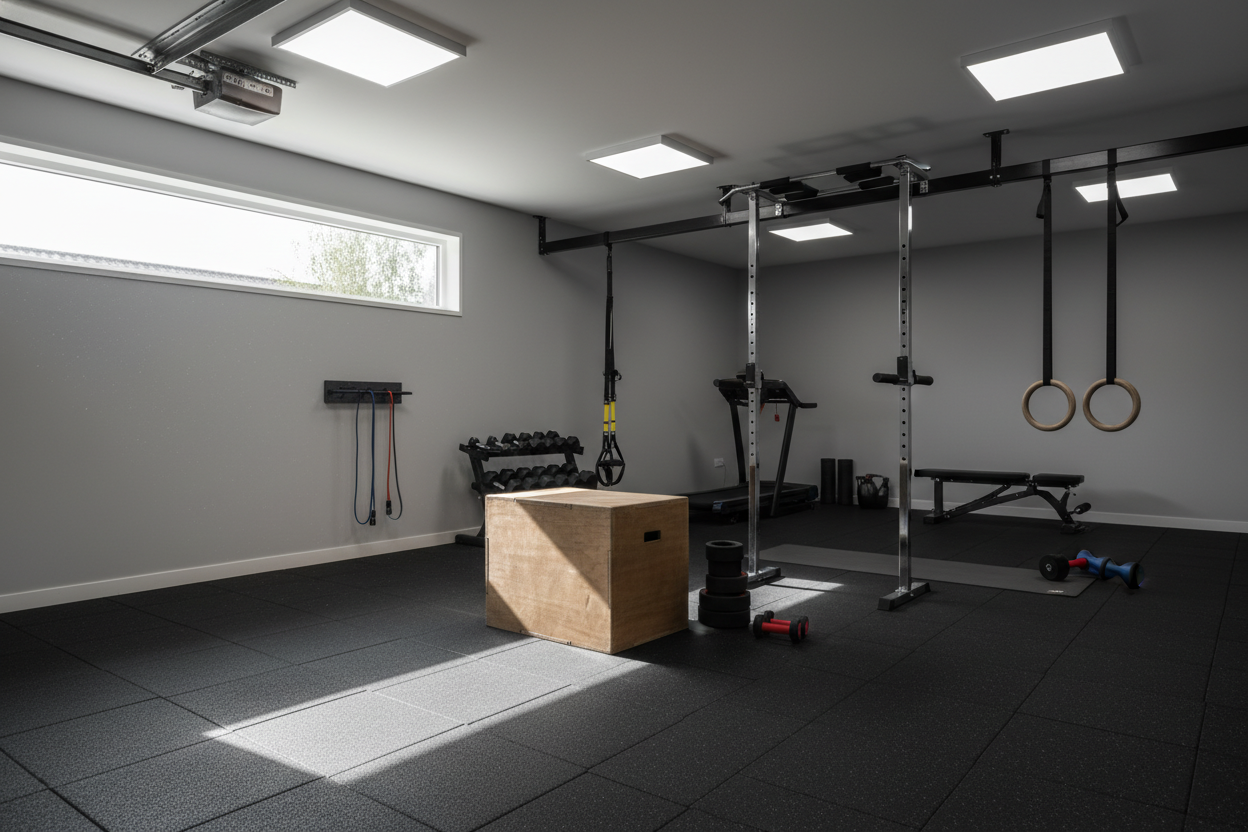
If you want a real at home exercise routine for beginners, you need to start with exactly zero pounds of iron. I’ve built out entire garage gyms with 11-gauge steel power racks and competition bumper plates, but I still tell my friends to master their own body weight first. Buying gear before you’ve earned it adds friction and guilt—two things that kill consistency faster than a bad knee.
- Gear doesn’t create habits; movement does.
- Master the squat and push-up mechanics before adding weight.
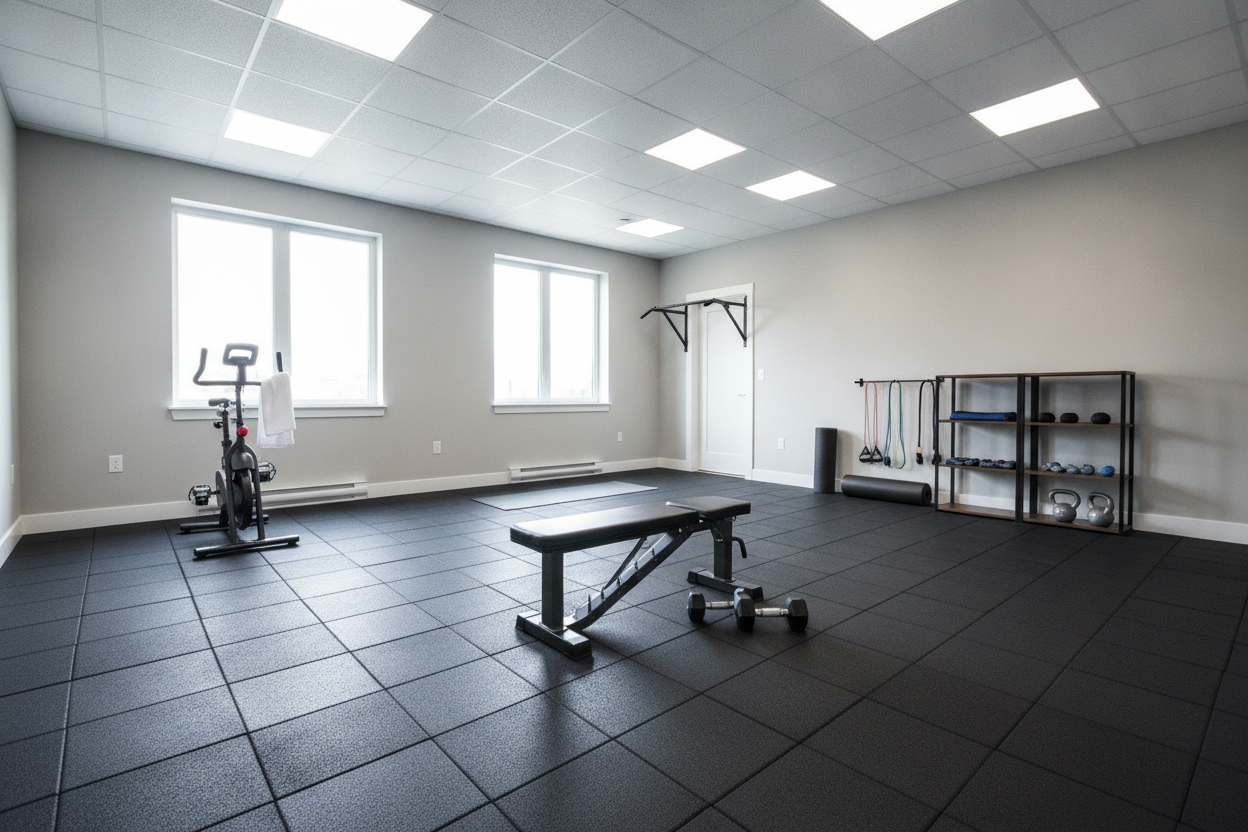
- Use a dedicated space to signal your brain it is time to work.
- Progress comes from slowing down, not just adding reps.
Why Your Amazon Shopping Cart Is Ruining Your Progress
We call it the 'equipment trap.' It’s that psychological trick where buying something feels like you’ve already done the work. You click 'Buy Now' on a set of 52.5-lb dumbbells and feel a rush of accomplishment. But when they arrive, you realize you don't actually know how to use them safely, or worse, you don't have the habit of showing up yet.
This gear adds friction. You have to clear a spot for the bench, adjust the pins, and find the right weight. For a home beginner workout routine, friction is the enemy. You want the path between your couch and your workout to be as short as possible. If you can’t get yourself to do a simple squat in your pajamas, a fancy chrome barbell isn't going to change that.
The 'Floor Only' Rule for Your First 30 Days
For the first month, your only piece of equipment should be the floor. This forces you to focus on how your joints move without the distraction of external loads. If you can't control your descent into a squat with just your body weight, adding a 20-pound kettlebell is just asking for a lower back tweak. This is about building a foundation of home exercise routines for beginners that actually lasts.
The only exception I make for gear in the beginning is a large exercise mat for home gym use. Having a defined 6x4 or 7x5 foot space tells your brain, 'This is the gym.' It protects your knees from hard floors and gives you enough grip so you aren't sliding around. Beyond that, keep the credit card in your wallet. You need to earn the iron by showing up for 30 days straight first.
The Bare-Bones At Home Exercise Routine For Beginners
Most beginners workout routine at home plans are way too complicated. You don't need 15 different variations of a bicep curl. You need to master the 5 patterns: squatting, pushing, hinging, pulling, and carrying. Since we are starting with no gear, we focus on the first three to build an engine that burns fat and builds functional strength.
This exercise regimen for beginners at home should be done three times a week. Don't worry about 'leg day' or 'arm day.' Your whole body needs to learn how to work together. We’re keeping it simple: three sets of each movement, resting 60 seconds between sets. If you can do this for four weeks, then we talk about buying some toys.
Lower Body: The Couch Squat
Most people are terrified of falling backward when they squat. This leads to 'knee-dominant' squats where your heels lift and your joints scream. Use your couch. Stand six inches in front of it, reach your hips back until your butt barely grazes the cushion, and drive back up. It’s a built-in safety net that lets you groove the pattern without fear. This is the cornerstone of any home fitness routine for beginners.
Upper Body: The Wall Push-Away
Stop doing pushups on your knees. It breaks the tension in your core and teaches your body to be 'soft' in the middle. Instead, do pushups against a wall or a sturdy kitchen counter. It keeps your body in a straight line from head to heels. As you get stronger, move your feet further back. This scales the difficulty perfectly while keeping your spine safe.
How to Progress When It Gets Too Easy
Eventually, 10 bodyweight squats will feel like nothing. Instead of grabbing a dumbbell, try mastering tempo. Take four seconds to lower yourself down, hold for two seconds at the bottom, and then explode up. I’ve seen guys who bench 315 lbs get humbled by slow-tempo bodyweight movements.
Slowing down the eccentric (lowering) phase increases time under tension. It builds muscle and strengthens tendons without the high impact of heavy weights. It’s the smartest way to make a home exercise routine for beginners significantly harder without spending a dime on shipping heavy plates to your door.
Where to Actually Train (Hint: Not on Slippery Carpet)
I once tried to do lunges on a bare hardwood floor in socks. I ended up doing a semi-accidental split and couldn't walk right for a week. Your environment matters. If you're training on carpet, it’s often too squishy for balance. If it’s hardwood, it’s a slip-and-slide once you start sweating. You need a surface with some 'bite.'
A dense 6x4ft yoga mat is usually the sweet spot. It’s big enough that you won't step off it during a lunge, and it’s thick enough to save your elbows during planks. It creates a 'zone' in your house. When you step on that mat, the phone goes away and the work starts. That mental shift is worth more than any fancy cable machine.
Personal Experience: My $500 Mistake
When I started my first garage gym in a tiny 10x10 shed, I bought a cheap set of adjustable dumbbells from a big-box store. They were clunky, the plastic handles felt like they’d snap, and the weight increments were too big. I used them twice. I realized I was better off doing Bulgarian split squats with my own body weight than trying to use bad gear. I wasted $500 because I thought the equipment would provide the discipline. It didn't. I had to go back to basics and earn the right to lift heavy.
FAQ
How many days a week should I do this?
Aim for three non-consecutive days. Monday, Wednesday, Friday is the classic for a reason. Your muscles need 48 hours to recover and grow, especially when you're just starting out.
Can I do this in a small apartment?
Absolutely. If you have enough space to lie down on the floor, you have enough space for this entire routine. That’s the beauty of bodyweight training—no footprint required.
When should I finally buy weights?
Once you can do 20 perfect, slow-tempo squats and 15 incline pushups with good form, you've earned your first set of kettlebells or dumbbells. By then, the habit is locked in.