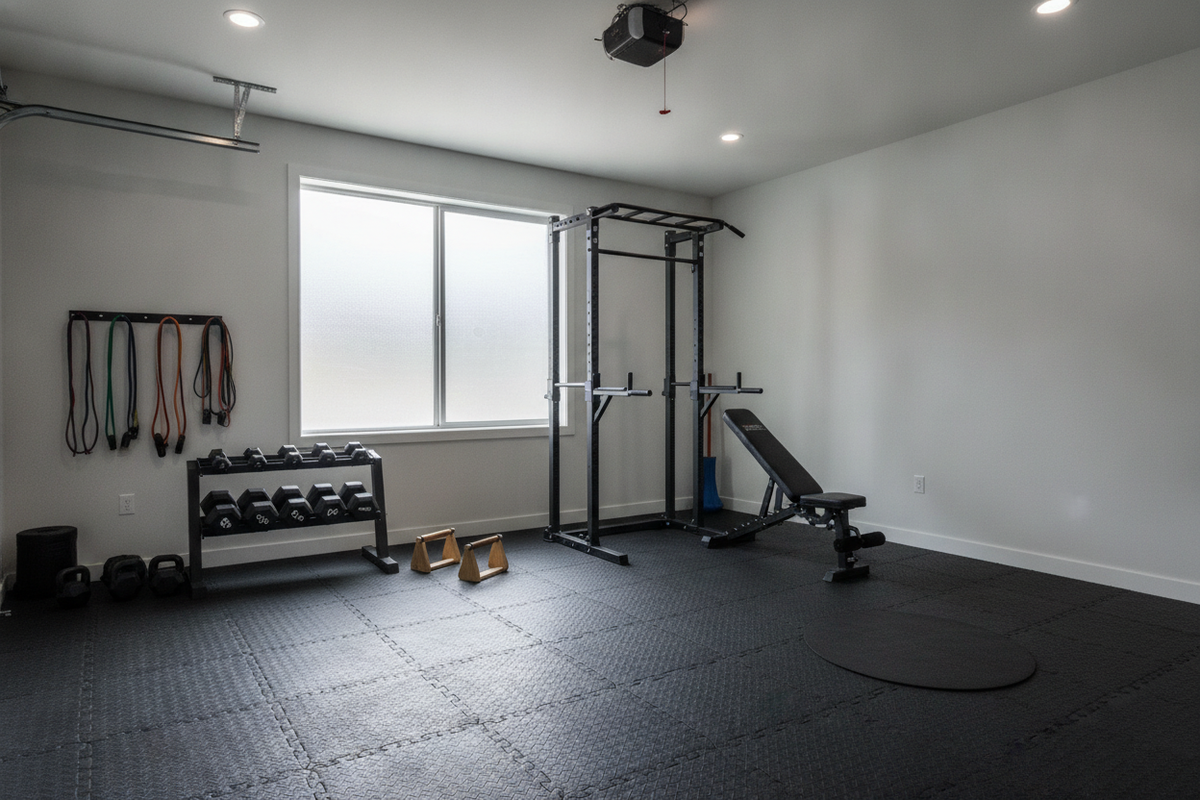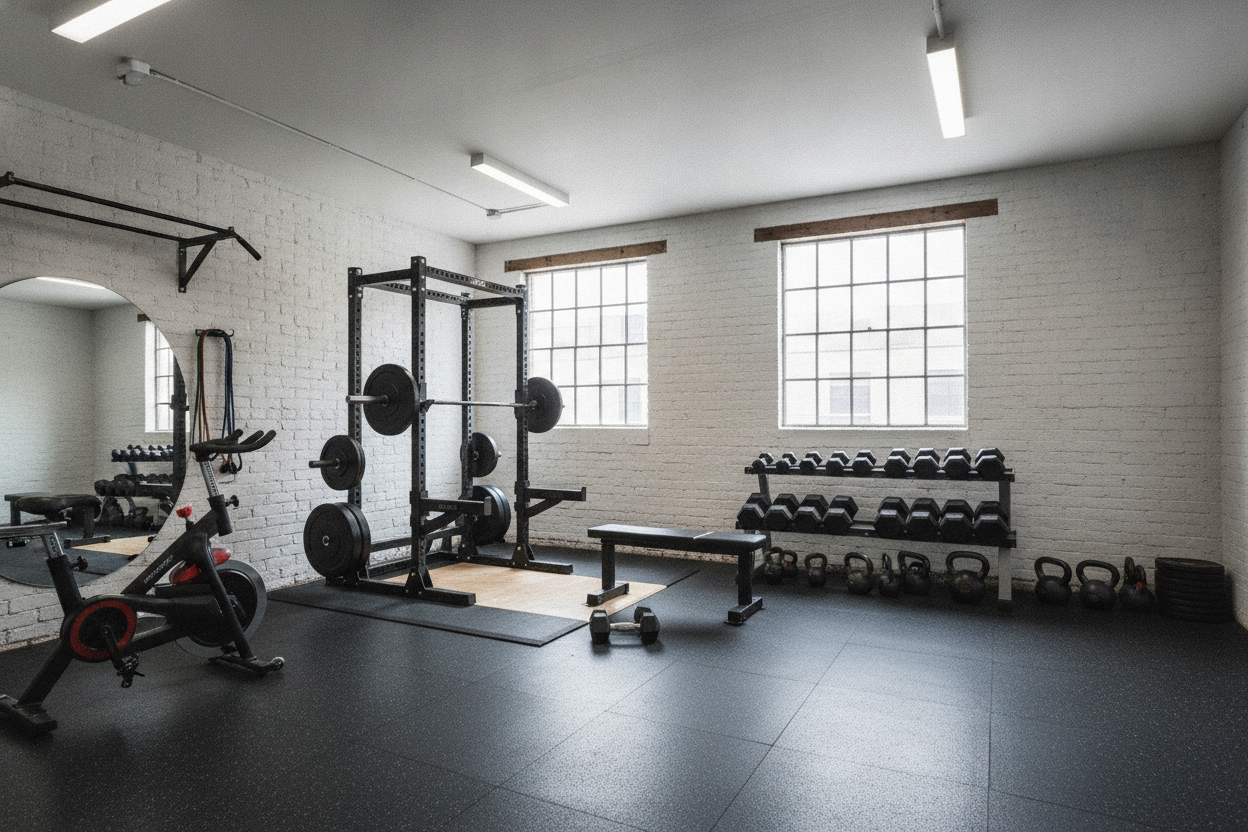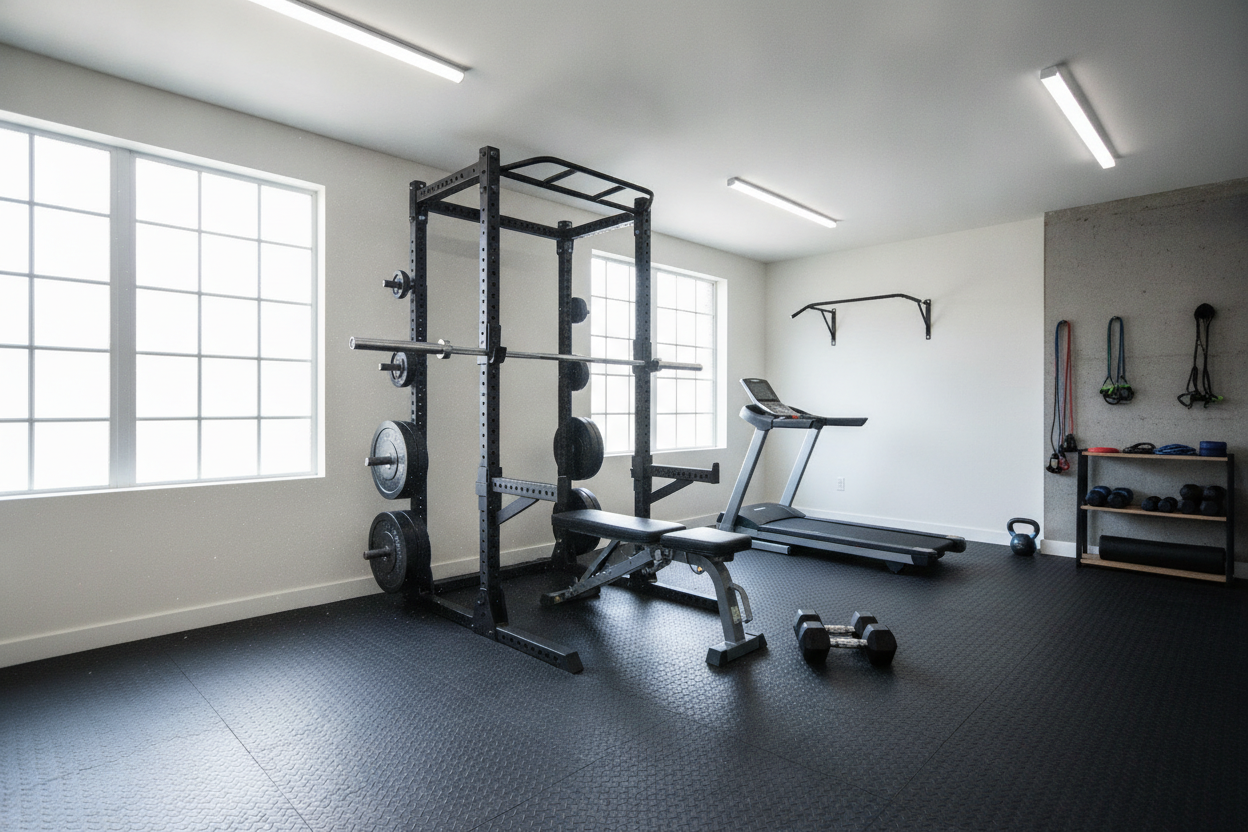
You Don't Need All Kinds of Exercise Equipment to Get Jacked
I remember the night I almost hit 'order' on a $2,500 functional trainer. I was three beers deep, frustrated with the crowds at my local big-box gym, and convinced that the only way to get a real workout at home was to replicate the entire selectorized circuit. I thought I needed all kinds of exercise equipment to see any real growth. I was wrong. I ended up starting with a used barbell and a pile of rusty plates, and honestly, I saw more progress in those first six months than I had in three years of playing around with cable attachments and pec-deck machines.
Quick Takeaways
- Quality over quantity: One heavy-duty power rack beats ten specialized machines.
- Focus on the 'Core Four': Rack, barbell, plates, and a flat bench.
- Flooring is the most underrated investment for gear longevity.
- Specialty bars should only be added to solve specific injury or mobility issues.
The Commercial Gym Trap: Why More Isn't Better
Commercial gyms are built on a specific business model: the 'Wall of Chrome.' They want you to walk in and feel like the membership price is justified by the sheer volume of machines. They stock all types of exercise equipment because it looks impressive on a tour, not because you need a different machine for every head of your triceps. When you try to bring that 'more is better' mentality into a garage or spare bedroom, you run into two immediate problems: space and quality.
Most people have about 150 to 200 square feet to work with. If you fill that with a leg press, a lat pulldown, and a dedicated bicep curl station, you've effectively killed your ability to do the big, compound movements that actually build a physique. Furthermore, the budget-grade versions of these machines are almost always garbage. They have jerky cable paths, plastic pulleys that snap under load, and frames that wobble if you sneeze on them. I've seen it happen dozens of times: most types of exercise equipment designed for the average consumer end up serving as expensive laundry hangers within six months. If it isn't commercial-grade steel, it probably isn't worth your floor space.
Analysis Paralysis and the 'Shiny Object' Syndrome
Having too many gadgets in your gym doesn't just eat your floor space; it eats your focus. When you have twenty different ways to hit chest, you spend half your workout time adjusting pins, swapping handles, and wondering if you should try that new 'optimal' angle you saw on Instagram. This is analysis paralysis in its purest form. You end up chasing 'the pump' with light weights instead of putting in the hard, boring work of adding five pounds to your bench press every week.
I see guys all the time getting lost in the weeds trying to memorize all types of exercise names and complex variations when they haven't even mastered the basic hinge. If your workout plan has more than six exercises in a session, you're probably doing a lot of fluff. A home gym should be a sanctuary of efficiency. You walk in, you hit your heavy sets, you do your accessories, and you leave. When you strip away the distractions, you're forced to work harder on the movements that matter. Complexity is often a mask for a lack of intensity.
The Core Four: What Actually Belongs in Your Garage
If you want to get strong without turning your garage into a cluttered scrap yard, you need to invest in the 'Core Four.' These are the pieces of gear that will handle 95% of your training volume for the next decade. First is a heavy-duty power rack. Don't buy the thin 2x2-inch stuff from the local sporting goods store. Look for 3x3-inch 11-gauge steel with 5/8-inch or 1-inch holes. A solid rack is your insurance policy; it’s what keeps a 400-lb bar from crushing you when you fail a rep.
Next is a quality Olympic barbell. This is where you shouldn't skimp. A cheap bar will bend, the sleeves will stop spinning, and the knurling will feel like wet soap. Look for a bar with at least 190,000 PSI tensile strength and a 28.5mm diameter. It should feel aggressive in your hands but not like a cheese grater. Third, you need plates. Cast iron is the cheapest way to get heavy, but if you're training on a second floor or have neighbors, bumper plates are the way to go. They all have a standard 450mm diameter, which means the bar sits at the correct height for deadlifts every time.
Finally, get a sturdy flat bench. A lot of guys think they need an adjustable incline/decline bench right away, but a high-quality flat bench is usually more stable and has a smaller footprint. Look for a bench with a 1,000-lb capacity and a height of around 17 inches. If the bench feels light enough to throw across the room, it's probably not stable enough to press 200 lbs off of. This setup takes up about an 8x8 foot footprint and gives you everything you need to build world-class strength.
The Boring Essential You Are Probably Ignoring
Everyone wants to talk about the rack and the bar, but nobody wants to talk about the floor. If you're lifting on bare concrete, you're asking for trouble. Concrete is unforgiving on your joints and even worse for your equipment. One bad drop with a cast iron plate can crack your foundation, and even bumper plates will wear down faster on raw stone. This is the 'boring' essential that most people skip while they're busy buying flashy cable attachments.
Before you load up your first bar, lay down a large exercise mat or, better yet, some 3/4-inch thick rubber horse stall mats. Good flooring provides a non-slip surface that's crucial for heavy squats and cleans. It also dampens the noise and vibration, which is the difference between your family supporting your hobby and them wanting to kick you out of the house. It’s the foundation of your entire gym—literally. Don't build a thousand-dollar setup on a ten-cent floor.
When to Actually Buy Specialty Gear
So, when do you actually add to the 'Core Four'? My rule is simple: only buy a new piece of gear when your current equipment literally cannot facilitate your progress or when you've hit a specific plateau that requires a different stimulus. If your elbows are constantly flared up from straight-bar squats, that's when you buy a Safety Squat Bar. If you've been deadlifting for two years and your grip is the only thing failing, that's when you buy a set of quality straps or a specialized deadlift bar.
Don't buy gear because it's on sale or because it looks cool in a montage. Every new piece of equipment adds a maintenance requirement and takes away floor space. If you can't explain exactly how a new tool will add five pounds to your total or an inch to your arms, you don't need it. Keep your gym lean, keep it mean, and focus on the effort, not the inventory.
Personal Experience: The $99 Mistake
Early in my lifting career, I bought one of those 'all-in-one' folding benches from a big-box retailer. It had a leg developer and a preacher curl attachment built-in. It felt like a steal for $99. Three months later, while I was trying to hit a PR on the bench press, the thin metal frame started to twist. I felt the whole unit shift to the left mid-rep. I barely got the bar back on the hooks. I realized then that I had traded my safety for a few cheap attachments I barely used. I sold that bench for $20 on Craigslist and bought a real, welded flat bench that I still use today. Lesson learned: buy once, cry once.
FAQ
How much space do I really need for a home gym?
You can get a full-body workout in a 4x8 foot area if you're just using a bench and dumbbells, but for a full power rack setup, aim for at least 8x10 feet to allow for plate loading and bar clearance.
Is it worth buying used equipment?
Absolutely. Iron doesn't expire. Look for used plates and racks on local marketplaces. Just be careful with barbells—if they're bent or the sleeves don't spin, they're usually not worth the 'deal.'
Should I get a multi-gym machine instead of a rack?
Usually, no. Multi-gyms have fixed motion paths that might not fit your body type, and they are notoriously difficult to repair if a cable snaps. A rack and barbell offer infinite variety and will last a lifetime.