You Don't Need a Squat Rack: How to Build Serious Lower Body Power at Home
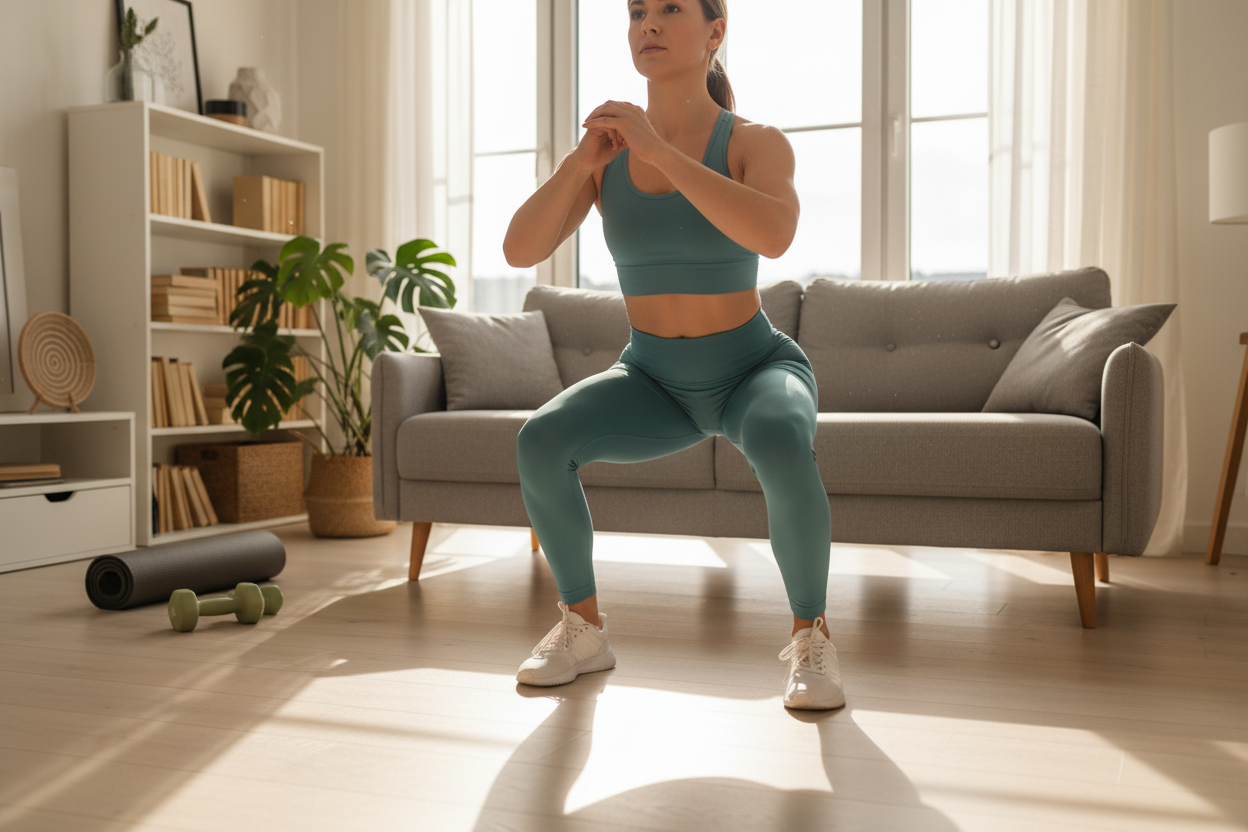
The misconception that you cannot build impressive legs without a barbell across your back is one of the most persistent myths in fitness. While heavy back squats and leg presses are fantastic tools, they are not the only mechanism for hypertrophy. Your muscles do not have eyes; they do not know if the tension they are experiencing comes from 300 pounds of iron or the mechanical disadvantage of a single-leg squat. If you can generate enough fatigue and mechanical tension, your legs will grow. The key to effective leg muscle workouts at home isn't finding heavy objects to lift, but rather manipulating leverage and tempo to make your own body weight feel impossibly heavy.
I learned this lesson the hard way a few years ago while traveling through rural areas with absolutely zero access to a gym for three months. I had spent years obsessed with my squat numbers, convinced that anything less than three plates was cardio. Forced to adapt, I switched entirely to high-intensity calisthenics. I remember waking up the morning after my first serious bodyweight leg session with a level of soreness I hadn't felt since my novice days. By the time I returned to a commercial gym, my squat strength hadn't dropped, and my quad definition was actually better. That experience shifted my entire philosophy on how to approach training when equipment is limited.
The Mechanics of Home Hypertrophy
To understand why home training works, you have to look at the physics of tension. In a gym, we usually rely on external load—adding more weight to the bar—to achieve progressive overload. When you remove the external load, you must increase the internal demand. This is the foundation of any effective home exercise for leg muscles. You achieve this primarily through unilateral training (working one leg at a time) and increasing the time under tension.
When you stand on two legs, your body weight is distributed evenly. When you lift one leg off the ground, the working leg is suddenly supporting 100% of that load, plus the demand of stabilization. This instantly doubles the intensity without adding a single pound of iron. Furthermore, by slowing down your reps—taking three to four seconds to lower yourself—you eliminate momentum. Momentum is the enemy of growth. By removing the "bounce" at the bottom of a movement, you force the muscle fibers to do all the work.
The Best Leg Home Workout Routine
If you want results, you cannot just air squat until you get bored. You need a structured plan that hits the quadriceps, hamstrings, glutes, and calves with sufficient intensity. The following routine focuses on mechanical disadvantage to maximize stimulus.
1. The Bulgarian Split Squat
This is arguably the king of lower body movements, weighted or unweighted. It places an immense stretch on the glutes and quads while demanding significant core stability. To perform this, place your rear foot on a couch, chair, or bed behind you. Step your front foot out far enough so that when you lower your hips, your front knee stays roughly aligned with your toes. Lower yourself until your rear knee hovers just an inch off the floor. Push back up through the front heel. If this feels too easy, slow the descent to five seconds. This movement alone often constitutes the best leg home workout component because it exposes strength imbalances immediately.
2. Single-Leg Romanian Deadlift (RDL)
Your posterior chain—the hamstrings and glutes—often gets neglected at home because people focus too much on squatting. The single-leg RDL fixes this. Stand on one leg with a slight bend in the knee. Hinge at the hips, sending your back leg straight out behind you like a lever. Keep your back perfectly flat. You should feel a deep stretch in the hamstring of the standing leg. Squeeze your glutes to return to standing. If you have balance issues, you can hold onto a wall lightly, but try not to rely on it. This teaches your body to hinge properly and protects your lower back.
3. Sliding Hamstring Curls
This is a humbling exercise that looks easy but burns intensely. Lie on your back on a smooth floor (hardwood or tile works best). Place your heels on a towel or a pair of thick socks. Lift your hips into a bridge position. While keeping your hips high, slide your feet away from you until your legs are nearly straight, then dig your heels into the floor and drag them back toward your glutes. This isolates the hamstrings in a way that squats cannot. If you are on a carpet, you can use paper plates or plastic sliders under your heels.
4. Pistol Squat Progressions
The pistol squat is the ultimate display of lower body mobility and strength. It involves squatting all the way down on one leg with the other leg extended forward. Most people cannot do this immediately. Start by sitting back onto a chair on one leg, then standing back up without using momentum. As you get stronger, find a lower surface. Eventually, you will be able to perform the full movement. This targets the quads heavily and builds robust knee health when done with proper control.
Structuring Your Training for Volume
Since you are not limited by how much weight you can carry on your back, you should aim for higher volume to reach muscular failure. A standard rep range of 8-12 might not be enough to trigger growth if the resistance is just body weight. Instead, aim for "reps in reserve" (RIR). You should perform each set until you feel you could only do one or two more reps with perfect form.
A solid approach is to perform this circuit 3 to 4 times. Rest for 60 to 90 seconds between rounds. Because there is less systemic fatigue compared to heavy spinal loading (like a 300lb barbell squat), you can perform this routine more frequently. Training legs three times a week with this intensity is sustainable and often yields rapid adaptations in muscular endurance and size.
Mind-Muscle Connection
One advantage of lighter loads is the ability to truly feel the muscle working. In a heavy gym lift, the goal is often just survival—getting the weight from point A to point B. With home workouts, you have the luxury of focusing on the contraction. When you squat, think about ripping the floor apart with your feet. When you lunge, focus on the glute pushing you upright. This cognitive connection increases muscle fiber recruitment, making every rep more effective.
Consistency remains the final variable. You cannot do this once a month and expect changes. The convenience of training in your living room removes the barrier of travel time to the gym. Use that to your advantage. If you commit to high-intensity, unilateral work, you will find that a lack of equipment is no longer a valid excuse for skipping leg day.
Frequently Asked Questions
How often should I do leg workouts at home?
Since bodyweight exercises generally cause less central nervous system fatigue than heavy weightlifting, you can train legs more frequently. A frequency of 2 to 3 times per week is ideal for most people, allowing for at least 48 hours of recovery between sessions to maximize muscle growth.
Can I actually build mass without weights?
Yes, hypertrophy occurs when you apply mechanical tension and metabolic stress to the muscle near failure, regardless of the tool used. By utilizing unilateral exercises like pistol squats and manipulating tempo (slowing down the movement), you can create sufficient stimulus to build significant muscle mass.
What if I have bad knees?
Home workouts can actually be safer for knees because the absolute load is lower. Focus on posterior chain exercises like glute bridges and shallow split squats to build stability. Always ensure your knee tracks in line with your toes and never work through sharp pain; stop immediately if the joint hurts.