Workout Your Glutes: Movement Vectors, Form Mechanics, and Floor Mat Staging
Understanding Glute Anatomy and Functional Vectors
To effectively workout your glutes, training must align with how the hip musculature actually operates across multiple planes of motion. The gluteal complex is comprised of three distinct muscles—the gluteus maximus, gluteus medius, and gluteus minimus—each responsible for specific movement mechanics. Treating the hips as a single-function hinge limits muscular engagement and often shifts tension toward the quadriceps or lower back.
The gluteus maximus represents the primary mover for hip extension, external rotation, and transverse abduction. It powers horizontal force generation, such as pushing the hips forward during a bridge, as well as vertical drive out of deep hip flexion. Positioned along the lateral pelvis, the gluteus medius and gluteus minimus control hip abduction and stabilize the pelvis during single-leg stance. When planning how to work your glutes, structuring movements across horizontal, vertical, and lateral force vectors ensures balanced development and joint stability.
Core Movement Patterns: What Exercises Work the Glutes?
Determining what exercises work the glutes requires evaluating how resistance is applied relative to the hips. A complete lower-body session balances three foundational movement categories rather than relying on a single repetitive exercise:
- Horizontal Hip Extension: Patterns where peak tension occurs near full hip lockout, such as barbell hip thrusts and floor glute bridges.
- Vertical and Axial Hinges: Movements where tension peaks in a lengthened or stretched position, including Romanian deadlifts, goblet squats, and split squats.
- Lateral and Rotational Abduction: Targeted drills that challenge the outer hip stabilizers to prevent inward knee collapse and maintain pelvic levelness.
By blending these patterns, you can target the entire complex without overloading individual joints or accumulating unnecessary lower-back fatigue.
Horizontal Force Movements: Hip Thrusts and Bridge Progressions
Horizontal hip extension exercises are widely recognized as some of the top booty exercises because they place maximum mechanical tension on the gluteus maximus at full contraction. Unlike standard squats, which place the highest demand on the hips at the bottom of the movement, bridges and thrusts keep the resistance curve aligned with full hip extension.
When performing barbell or dumbbell hip thrusts, positioning your upper back across a stable bench while planting your feet firmly on the floor creates a rigid pivot point. Driving through the heels while tucking the chin keeps the pelvis in a neutral to slightly posterior tilt, preventing the lumbar spine from arching at the top. For home sessions, reviewing a structured glutes booty exercise guide can help you refine elevation heights and foot angles to maximize recruitment.
Floor bridges provide a versatile bodyweight or banded alternative. Maintaining a firm grip against the floor prevents the feet from sliding forward, which keeps mechanical tension directly on the glutes rather than migrating into the hamstrings.
Vertical and Diagonal Patterns: Squats, Hinges, and Split Stances
Vertical loading patterns challenge the glutes through deep ranges of motion, emphasizing strength in the lengthened position. Romanian deadlifts (RDLs), Bulgarian split squats, and reverse lunges are foundational exercises that work your glutes by demanding intense eccentric control.
In a Romanian deadlift, initiating the movement by pushing the hips straight backward creates an active stretch across the gluteus maximus. Maintaining a soft knee bend without allowing the shins to travel forward ensures that the hips, rather than the quadriceps, handle the load. Unilateral variations, such as Bulgarian split squats, introduce a diagonal stabilization challenge where the lead glute must actively produce upward force while stabilizing the pelvis.
Executing split stances requires steady footing to avoid balance loss. Setting up your training zone on equipment from a dedicated exercise collection provides the dense, non-slip base required to plant the front foot securely and maintain alignment throughout the descent.
Lateral and Rotational Work: Clamshells and Banded Walks
A comprehensive routine must include dedicated lateral work to engage the gluteus medius and minimus. These stabilizers are essential for proper knee tracking during heavy squats and lunges. Incorporating focused gluteus muscle exercise variations ensures the outer hip complex receives direct stimulus.
Key lateral exercises include:
- Side-Lying Clamshells: Performed with or without resistance bands to isolate hip external rotation while keeping the pelvis stacked vertically.
- Banded Lateral Monster Walks: Done in a quarter-squat posture with an elastic band around the forefeet or above the knees, stepping sideways to challenge abduction under continuous tension.
- Side Plank Hip Abductions: Combining core stability with active leg raises to engage both the supporting and working glute medius simultaneously.
Because these drills often involve direct contact with the floor on the hips or knees, performing them on supportive padding reduces pressure points, allowing you to focus on clean muscle activation.
Form Corrections: Overcoming Common Glute Workout Pitfalls
Many lifters struggle to feel their hips working because surrounding muscle groups take over the movement. Identifying and correcting subtle biomechanical flaws is critical when learning how to work your glutes effectively.
One frequent mistake is excessive lumbar hyperextension during hip thrusts and deadlifts. When the lower back arches to complete a repetition, tension leaves the hips and compresses the spinal extensors. Cueing a slight rib-cage tuck and focusing on moving solely through the hip joint keeps tension where it belongs. Another common issue is quadriceps dominance in squats and lunges, often caused by allowing the knees to shoot forward without adequate hip setback. For a detailed breakdown on balancing mechanics, consult an evidence-informed glutes that exercise guide to diagnose movement compensations.
Foot positioning also dictates muscular recruitment. Placing feet too close to the hips in a bridge shifts loading into the quadriceps, while placing them too far away shifts demand onto the hamstrings. Finding a mid-range foot placement—where the shins remain roughly vertical at full extension—delivers the cleanest glute contraction.
Optimizing Your Training Surface: Home Gym Floor Mat Setup
Training the hips dynamically requires substantial friction, impact absorption, and floor protection. Whether driving heavy weight through your heels during a thrust or absorbing landing force in plyometric split jumps, your training surface directly impacts exercise execution.
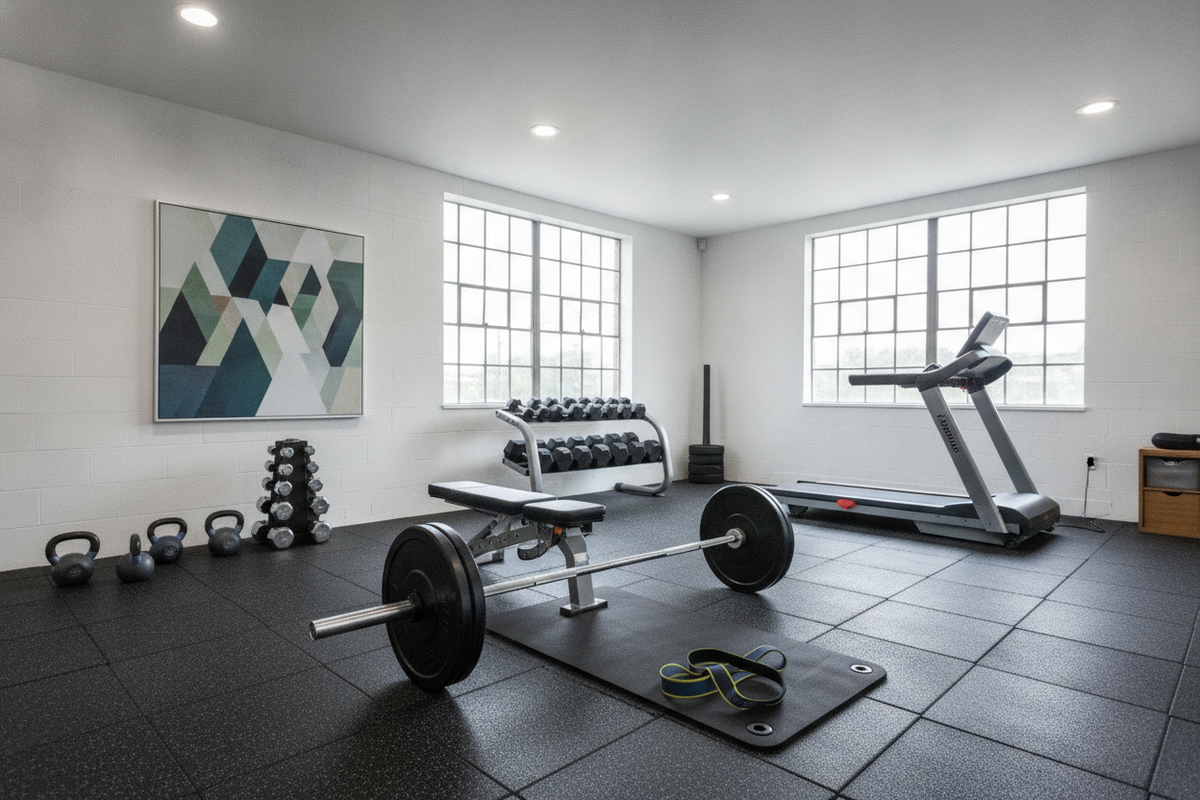
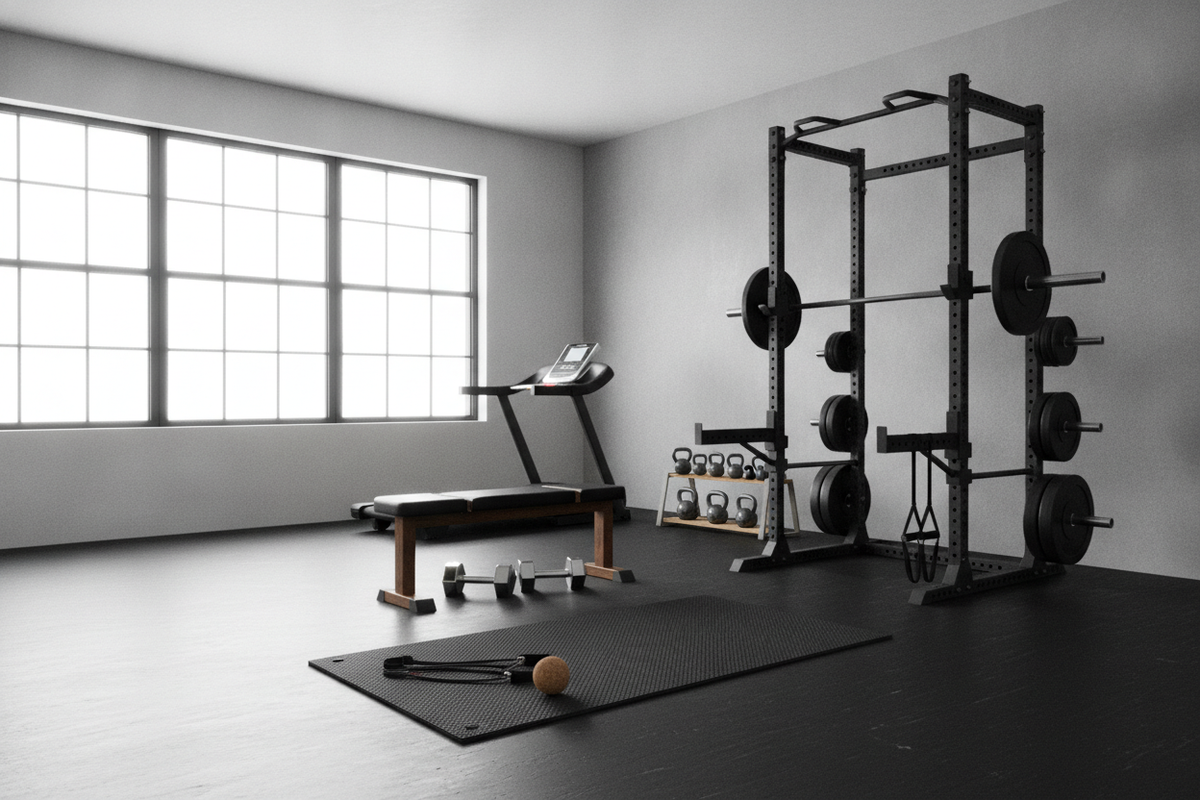
Deploying a large-format exercise workout product creates an expansive, high-friction zone that supports multiple movement vectors without the constraints of a narrow mat. A dense rubberized surface prevents thrust benches from shifting backward under load, anchors your heels during heavy bridges, and cushions the knees during lunges or kneeling hip thrusts.
Furthermore, a dedicated floor mat protects underlying hardwood or tile from dropped dumbbells, kettlebells, and barbell plates. It also creates a clearly defined home training space that allows seamless transitions between standing hinges, floor-based abduction drills, and bench work without resetting equipment.
Sample Weekly Glute Workout Split and Progression Framework
Structuring your weekly training around movement vectors ensures adequate stimulus and balanced recovery. Below is a conceptual framework for organizing exercises to work your glutes across a multi-day training week:
-
Day 1: Horizontal and Lengthened Focus
- Primary lift: Barbell or heavy dumbbell hip thrust
- Secondary lift: Romanian deadlift (hinge pattern)
- Accessory: Reverse lunges or step-ups
- Finisher: Banded floor glute bridges
-
Day 2: Unilateral and Lateral Stability Focus
- Primary lift: Bulgarian split squat or deficit lunge
- Secondary lift: Cable or banded kickbacks
- Accessory: Lateral monster walks
- Finisher: Side-lying clamshells and side plank holds
Progressive overload can be applied by gradually increasing resistance, refining movement tempo, pausing at peak contraction, or adding controlled volume. By combining biomechanically sound exercises with a stable, supportive floor setup, you can build a resilient, balanced glute training program at home or in the gym.