Workout Tool Buying Guide: Elevate Your Home Gym
Building a home gym often starts with grand visions of massive power racks and endless rows of dumbbells, but reality—usually in the form of limited basement space or a strict budget—quickly sets in. You do not need a commercial facility to get results; you just need the right equipment. Finding a versatile workout tool can be the difference between a consistent training routine and an expensive clothes hanger.
In this guide, we break down exactly how to evaluate your next equipment purchase, ensuring it fits your space, matches your training style, and delivers true value without the gimmicks.
Key Takeaways
- Prioritize versatility: Choose equipment that allows for multi-planar movements and targets various muscle groups.
- Measure your space dynamically: Account for the equipment footprint plus your body range of motion.
- Invest in durability: Look for solid steel construction, high-density plastics, and reliable warranties over flashy tech.
- Calculate cost-per-use: A higher upfront cost on a daily-use item is better than a cheap gimmick you use once a month.
Space Planning: Will It Fit Your Setup?
One of the biggest mistakes home gym owners make is buying gear based purely on its static dimensions. A compact piece of equipment might look great on a website, but once you start moving, the spatial requirements change drastically.
Dynamic Clearance Matters
When selecting a new tool for exercise, you must account for dynamic clearance. For example, if you are swinging a kettlebell or extending a suspension trainer, a compact footprint suddenly requires a larger operational zone. Always measure your garage or spare bedroom with your full wingspan and vertical reach in mind.
Training Application: Function Over Flash
The best equipment adapts to your body, not the other way around. Whether you are chasing hypertrophy, strength, or endurance, your gear needs to support progressive overload.
Targeting Multiple Energy Systems
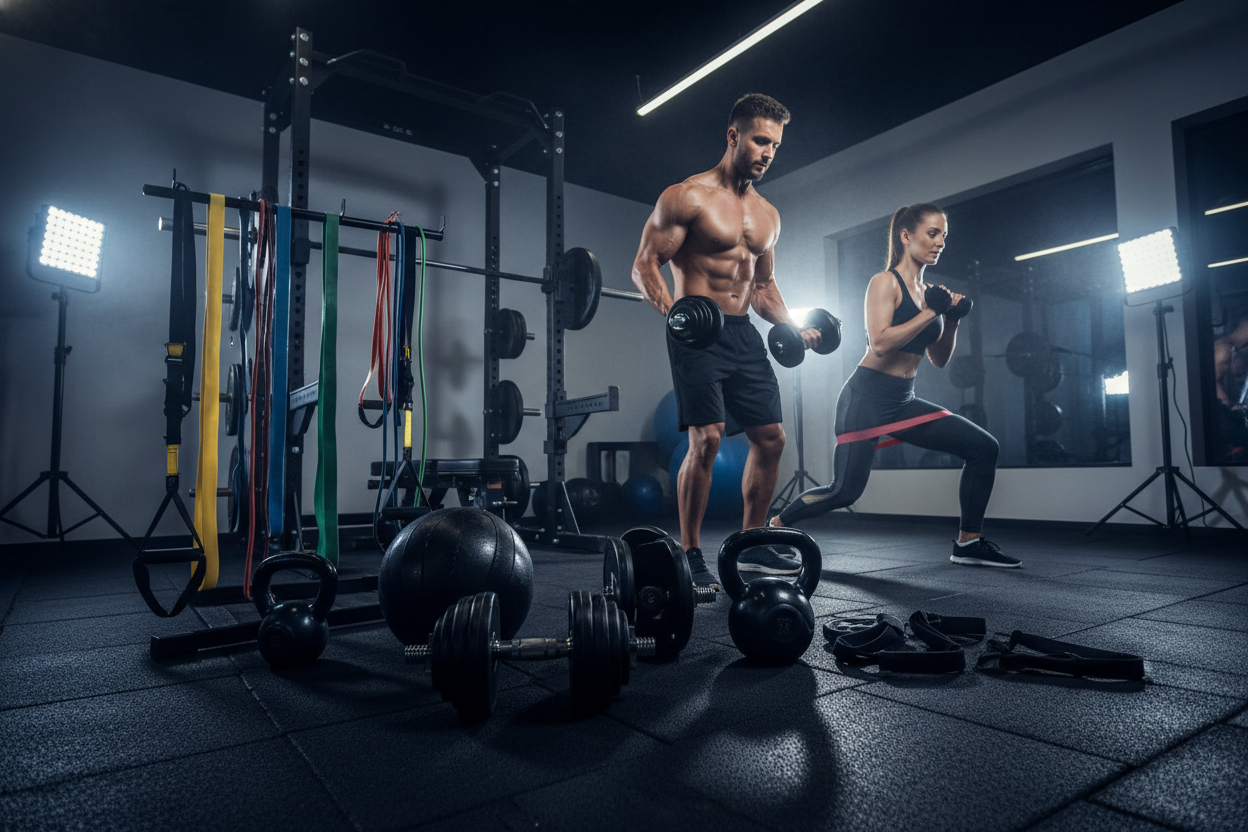
An effective piece of gear should bridge the gap between heavy resistance and metabolic conditioning. Items like adjustable dumbbells or sandbags allow you to seamlessly transition from heavy goblet squats to high-rep lunges without missing a beat, keeping your heart rate up and maximizing your training time.
Value & Budget: When to Invest More
It is tempting to hunt for the cheapest option on a marketplace, but fitness equipment is an area where you truly get what you pay for. Cheap materials can lead to mid-workout failures, which is a massive safety hazard.
The Cost-to-Use Ratio
We recommend evaluating purchases based on their cost-to-use ratio. A premium item you use four times a week offers vastly better value than a budget gadget that sits in the corner. Spend your budget on primary movers—things you will grip, lift, or pull every single session.
From Our Gym: Honest Take
Over the last five years of outfitting our testing garage, we have seen every trend come and go. Recently, we rigorously tested a highly-rated adjustable resistance system. While the marketing promised it could replace a full cable tower, our experience was a bit more nuanced.
The resistance curve felt incredibly smooth during slow, controlled isolation movements like tricep pushdowns. However, during explosive movements, the internal recoil mechanism struggled to keep up, resulting in a slight slack at the top of the rep. Additionally, the grip handles lacked aggressive knurling—my chalked hands slipped slightly during heavy rows. It is a fantastic, space-saving option for accessory work, but if you are looking to do heavy, explosive pulls, you might still want traditional iron.
Frequently Asked Questions
What makes a workout tool truly versatile?
Versatility comes down to the number of movement patterns an item supports. If it allows you to push, pull, hinge, squat, and carry, it is highly versatile and worth prioritizing for a home gym.
How much space do I really need for a home gym?
You can get an incredibly effective workout in an 8x8 foot space. The key is choosing equipment that stows away easily or serves multiple functions without requiring massive dedicated floor space.
Are expensive fitness brands always better?
Not always, but established brands generally use higher-quality materials and offer better warranties. For items bearing heavy loads, it is best to stick to reputable manufacturers, while accessories can often be bought on a budget.