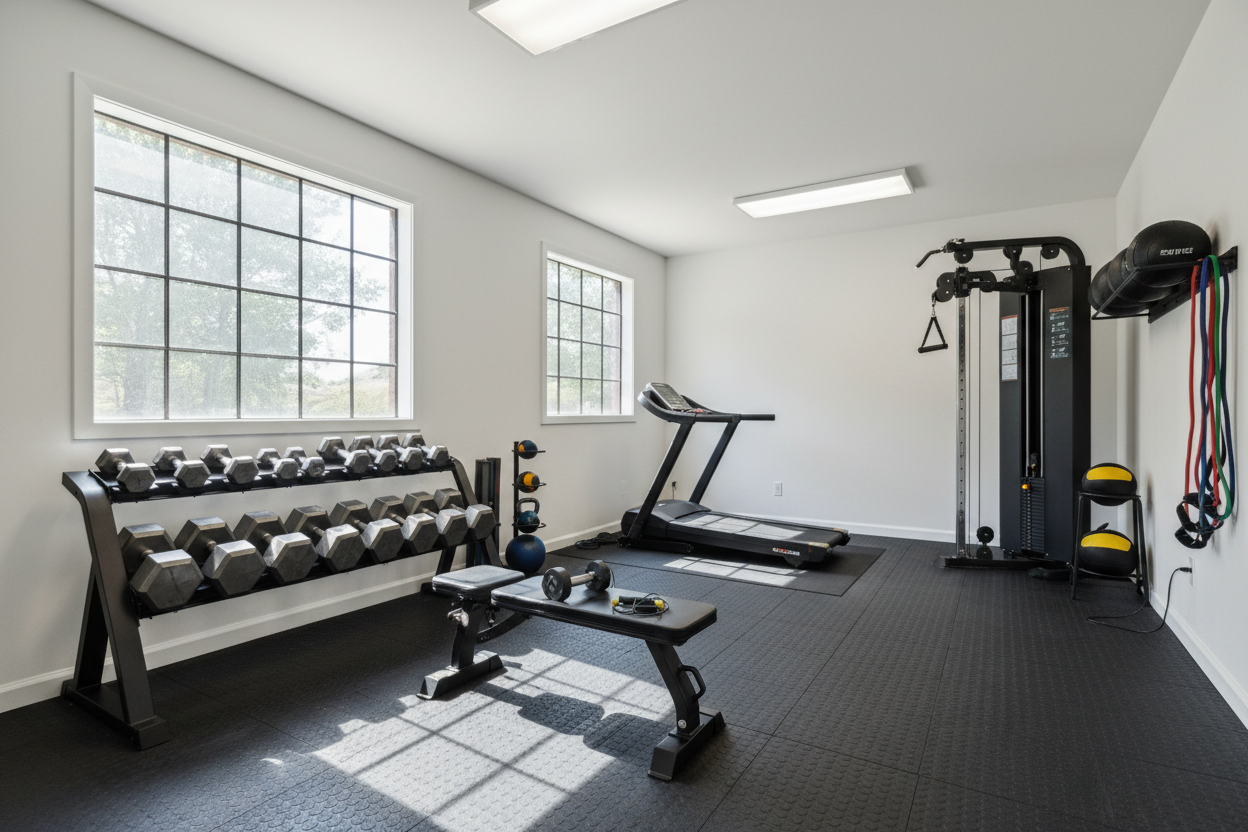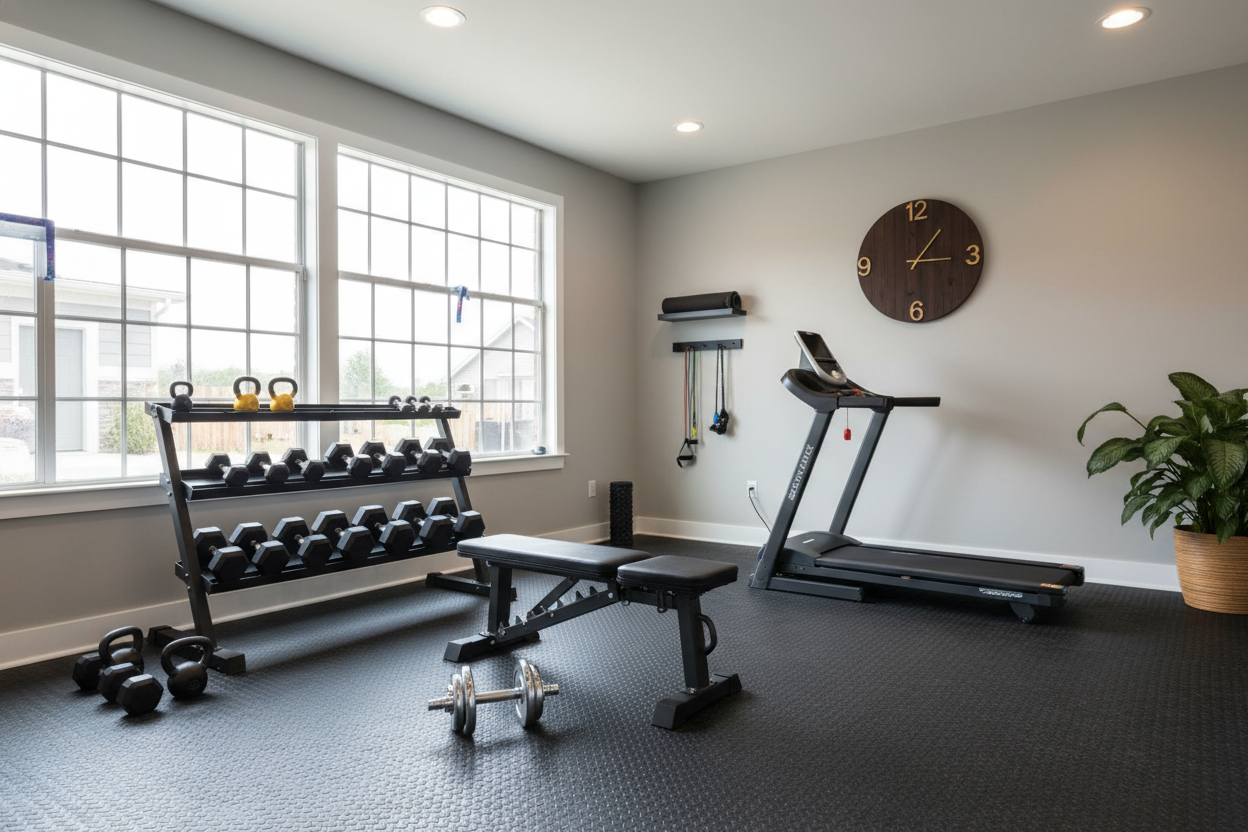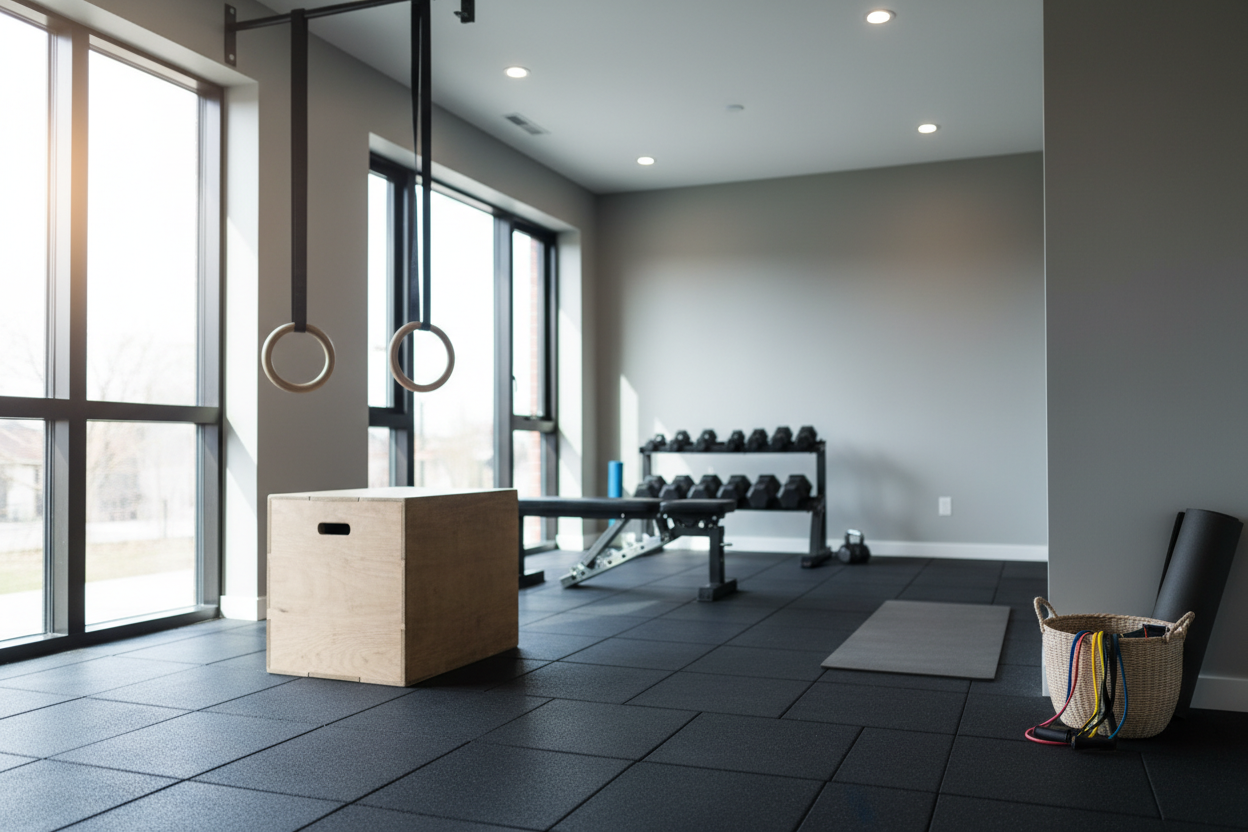
Workout Moves At-Home: Mastering Closed-Chain Leverage
I remember standing in a cramped 10x10 apartment bedroom a few years ago, staring at a pair of dusty 15-pound dumbbells. I was trying to figure out how to get a genuine, muscle-tearing pump without a squat rack or a cable machine. If you have ever tried to replicate a commercial gym routine in your living room, you know the frustration. Doing endless sets of light bicep curls and lateral raises usually just leads to joint fatigue and boredom, not serious strength gains.
That is when I shifted my entire training philosophy. Instead of trying to bring the gym to the house, I started using the house as the gym. By mastering specific workout moves at-home, you can manipulate leverage and gravity to create massive mechanical tension. The secret lies in treating your floor and your walls as your primary resistance tools.
Quick Takeaways
- Standard dumbbell routines often fail at home due to a lack of progressive overload.
- Closed-chain exercises (hands or feet anchored) recruit more muscle fibers and protect vulnerable joints.
- Your floor and blank wall space are the only machines you actually need to build foundational strength.
- Progressing to single-limb variations allows you to double the resistance without buying heavier weights.
Why Standard Dumbbell Routines Fail in Living Rooms
When clients ask me to design a living room routine, they usually hand me an inventory list: a yoga mat, a resistance band, and maybe a pair of 10- or 20-pound dumbbells. The problem is that traditional open-chain exercises—like chest flyes, tricep extensions, or leg curls—require heavy, incremental weight to force muscle adaptation. Your hand or foot is moving freely in space, meaning the resistance is entirely dependent on the iron you are holding.
If you can easily overhead press your 20-pound dumbbells for 25 reps, you are no longer building strength; you are just doing cardio with extra steps. Your central nervous system stops recruiting high-threshold motor units because the load simply is not threatening enough to demand them.
To actually trigger hypertrophy and raw strength without a rack of heavy weights, you have to change the anchor point. Instead of moving a light object around your body, you need to move your heavy body around a fixed object. This fundamental shift from open-chain to closed-chain mechanics is how gymnasts build massive upper bodies without ever touching a barbell.
The Science of Closed-Chain Workout Moves At-Home
In biomechanics, a closed-kinetic chain (CKC) exercise happens when your distal extremity—your hand or your foot—is fixed to a solid, immovable surface. Think of a push-up versus a bench press. In a bench press, your hands push the bar away from you. In a push-up, your hands are glued to the floor, and you push your body away from the earth.
Why does this matter for your living room routine? When your hands or feet are anchored, your nervous system fires differently. Closed-chain movements force co-contraction, meaning the muscles on both sides of a joint fire simultaneously to stabilize it. This creates joint compression rather than shear force, making the movement inherently safer for your shoulders and knees.
Furthermore, because your body is moving through space, you naturally engage your core and stabilizing muscles to maintain balance. You get a much higher return on investment for your time. If you want to dive deeper into the specific mechanics and why I program these for almost all my remote clients, checking out the science behind closed-chain moves for home workout routines will change how you view bodyweight training.
Floor-Anchored Power: Upper and Lower Body Staples
The floor is your most reliable training partner. To maximize it, we focus on high-yield staples that require full-body tension. For the upper body, deficit push-ups are my go-to. By placing your hands on two thick books or sturdy blocks, you allow your chest to drop below your hands, stretching the pectoral muscles under load and drastically increasing the range of motion.
For the lower body, single-leg glute bridges and sliding leg curls (using socks on a smooth floor or paper plates on carpet) isolate the hamstrings and glutes with brutal efficiency. Bear crawls are another staple. Crawling forces cross-body stabilization and torches the shoulders and quads simultaneously. I usually program these for time—try a 60-second continuous bear crawl and tell me you need heavy weights.
However, there is a catch. When I was testing heavy deficit push-ups and plyometric jumps for a client's program, I tried doing them on standard hardwood. My hands slipped, my wrists tweaked, and I lost 30% of my force production just trying to stay balanced. You absolutely need a high-traction surface to anchor yourself safely. I highly recommend investing in proper gym flooring for home workout spaces. A dense 6x8 ft mat gives you enough room to crawl and lunge without sliding around. The only honest downside is that these thick, high-density mats can weigh upwards of 30 pounds, making them a pain to roll up and store daily, so it is best to leave them unrolled in a dedicated corner.
Wall-Assisted Leverage: Turning Drywall into a Machine
If the floor is your bench press, a blank wall is your leg press and overhead rack. Most people ignore their walls, but they are incredibly useful for isometric holds and leverage manipulation. Isometrics involve contracting a muscle without changing its length, and they are phenomenal for building tendon strength and breaking through plateaus.
The classic wall sit is a perfect example. To make it harder, drop your hips slightly below your knees and hold a heavy backpack across your lap. Aim for 3 sets of 45-to-60-second holds. Your quads will be screaming.
For the upper body, handstand holds against the wall build massive shoulder stability and trap strength. If kicking up into a handstand is too advanced, start with wall walks. Start in a push-up position with your feet touching the baseboard, and slowly walk your feet up the wall while walking your hands backward until your chest touches the drywall. Hold for 10 seconds, then walk back down. This creates intense mechanical tension and spikes your heart rate in just three reps.
You can also use the wall to fix your squat mechanics. Stand facing the wall with your toes touching the baseboard and your hands behind your head. Now, perform a bodyweight squat without letting your face or knees touch the wall. This forces extreme thoracic extension and teaches you to hinge properly at the hips, turning a basic squat into an intense postural corrective exercise.
Advancing the Load: From Bilateral to Single-Limb
The main argument against equipment-free training is that you eventually run out of resistance. Once you can do 20 perfect push-ups or 30 bodyweight squats, the stimulus drops off. The solution is not to do 100 reps; the solution is to remove a point of contact. Transitioning from bilateral (two limbs) to unilateral (one limb) movements instantly doubles the load on the working muscles.
Take the push-up. Shift to archer push-ups, where one arm remains straight while the other does the pressing. Once you master that, progress to elevated one-arm push-ups by placing your working hand on a sturdy chair or couch. Over time, lower the elevation until you are performing strict one-arm push-ups on the floor.
For the lower body, the pistol squat (a single-leg squat with the non-working leg extended straight out in front) is the ultimate test of leg strength and ankle mobility. If you lack the balance, Bulgarian split squats—resting your rear foot on the couch while squatting with the front leg—will absolutely trash your quads and glutes. If you are ready to map out these progressions, I suggest setting up a workout plan using unilateral moves to ensure you are scaling the difficulty safely.
Structuring Your Closed-Chain Home Routine
Throwing random exercises together will not yield results. You need a structured weekly schedule based on movement patterns rather than isolated body parts. A highly effective framework is a three-day Full Body split, alternating between Push, Pull, Squat, Hinge, and Core movements.
For example, Monday might consist of deficit push-ups (Push), sliding leg curls (Hinge), wall-facing squats (Squat), and wall walks (Core/Shoulders). Wednesday could feature archer push-ups, Bulgarian split squats, and single-leg glute bridges. Keep your rep ranges between 8 and 15 per set, focusing on a slow, controlled eccentric (lowering) phase to maximize time under tension.
By treating your environment as the resistance and focusing strictly on closed-chain leverage, you will build dense, functional muscle without stepping foot in a commercial facility. If you need help visualizing how to put these days together, take a moment to explore our workout hub for complete routine templates.
Frequently Asked Questions
Can I really build muscle without heavy weights?
Yes, provided you apply progressive overload. Muscle fibers do not know if you are holding a 50-pound dumbbell or pushing 50 pounds of your own body weight. As long as you take the muscle near failure in the 8-to-20 rep range using leverage and unilateral variations, hypertrophy will occur.
Are closed-chain exercises safer for my joints?
Generally, yes. Because your hands or feet are fixed, closed-chain movements promote co-contraction of opposing muscle groups. This stabilizes the joint and reduces the shear forces often seen in open-chain exercises like leg extensions or heavy dumbbell flyes.
How often should I do this routine?
For most trainees, a full-body routine performed 3 to 4 days a week is optimal. This allows for adequate frequency to stimulate muscle protein synthesis while providing enough rest days for your central nervous system and joints to recover.