Why a Mini Workout At Home Beats Hour-Long Routines
I remember staring at my garage gym at 8:00 PM after a 12-hour day of training clients. The thought of a 60-minute heavy lifting session made me want to melt into the couch. That was the night I realized the traditional fitness model is broken for busy people. You do not need to destroy yourself for an hour to see results.
A mini workout at home is often the exact prescription needed to break through a plateau. It is not because it burns a thousand calories, but because it fundamentally changes your daily physiology. When you shift your focus from total muscle exhaustion to metabolic triggers, everything gets easier.
Quick Takeaways
- Micro-dosing fitness regulates blood sugar and spikes daily energy.
- Short, 5-to-10-minute bursts overcome the psychological barrier of training.
- Habit-stacking your movements to daily routines ensures consistency.
- Leaving equipment out permanently removes the setup friction that kills motivation.
The Myth of the 60-Minute Grind
For decades, the fitness industry sold us the lie that if you are not sweating for an hour, it does not count. This 'all or nothing' mentality is the exact reason so many home gym setups turn into expensive laundry racks. When you are tired, finding 60 minutes feels impossible. Finding five minutes? Anyone can do that.
A mini home workout bypasses the psychological dread of a grueling session. By committing to just a handful of exercises, you lower the barrier to entry. The magic happens when you actually start. Often, that five-minute commitment turns into ten or fifteen minutes once your blood is flowing.
Even if you stop at five minutes, the physiological benefits of frequent, short bursts of activity are profound. You keep your joints lubricated, maintain muscle protein synthesis, and keep your central nervous system primed. It is about shifting your mindset from 'working out' to simply 'moving frequently.'
The Physiology of a Mini Workout At Home
When you break your training into bite-sized pieces, you are tapping into a different energy system and metabolic response. You are no longer trying to empty the tank. Instead, you are micro-dosing a stimulus to keep your engine running hot all day.
Spiking Non-Exercise Activity Thermogenesis (NEAT)
NEAT accounts for the calories you burn doing everything outside of sleeping, eating, and formal exercise. It is a massive component of your daily energy expenditure. Sitting at a desk for eight hours plummets your NEAT, stalling your metabolism.
Injecting mini workouts at home throughout the day acts like throwing lighter fluid on a smoldering fire. A quick set of 20 kettlebell swings or two minutes of jumping jacks elevates your resting heart rate. Your body has to work harder to return to homeostasis, keeping your metabolic rate slightly elevated for hours after the movement stops.
Blood Sugar Regulation and The Post-Meal Protocol
One of my favorite strategies to use with clients is the post-meal micro-session. When you eat, especially carbohydrates, your blood glucose levels rise. If you sit on the couch immediately after dinner, your body is more likely to store that excess glucose as fat.
Deploying a quick routine within 30 minutes of eating changes the game. Fifty air squats or a brisk five-minute walk forces your muscles to act like sponges. They soak up that glucose from your bloodstream to use as immediate fuel. This blunts the insulin spike, prevents the post-meal energy crash, and improves your overall insulin sensitivity over time.
Designing Your Mini Home Workout Triggers
The secret to making these short sessions work is eliminating decision fatigue. You cannot rely on willpower to squeeze them in. You have to tie them to existing habits, a concept known as habit stacking.
The Morning Mobility Wake-Up
Your spine decompresses and stiffens overnight. Rolling out of bed and immediately sitting at a desk is a recipe for lower back pain. You need to prime your nervous system and open up your hips first thing in the morning.
I always tell my clients to start with an effective stretching workout at home before they even look at their phones. Spend five minutes doing cat-cows, deep bodyweight squats, and thoracic rotations. It lubricates the joints and sends a signal to your brain that it is time to wake up. Tie this trigger to your morning coffee brewing.
The Mid-Day Glute Activation
Prolonged sitting causes 'glute amnesia.' Your hip flexors tighten, and your glutes literally forget how to fire properly. This leads to hamstring pulls and lower back compensation when you finally do move.
To combat this, set a timer for 1:00 PM. If you have been sitting for four hours, try a quick 13 min toned butt legs workout to wake up your posterior chain. Glute bridges, reverse lunges, and lateral band walks require zero setup. You will return to your desk with better posture and a sharper focus.
Creating the Perfect Micro-Training Environment
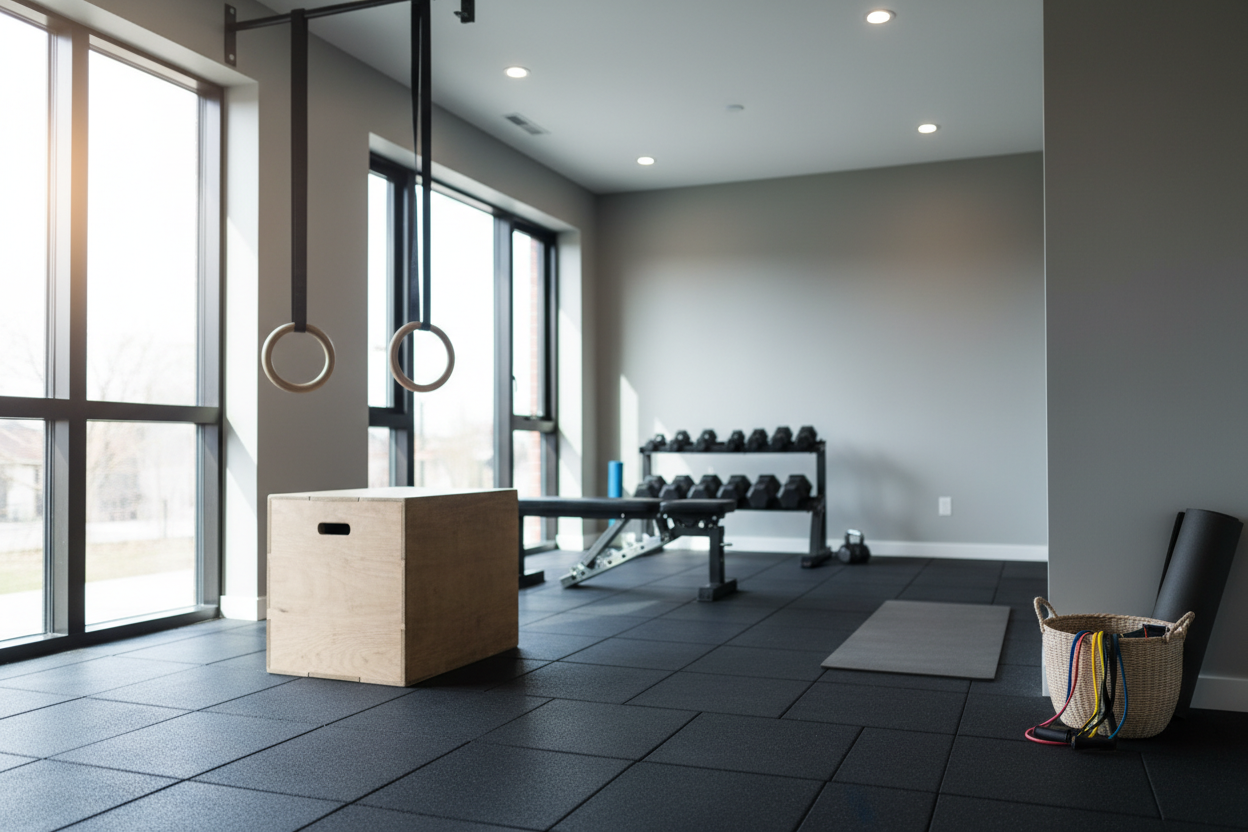
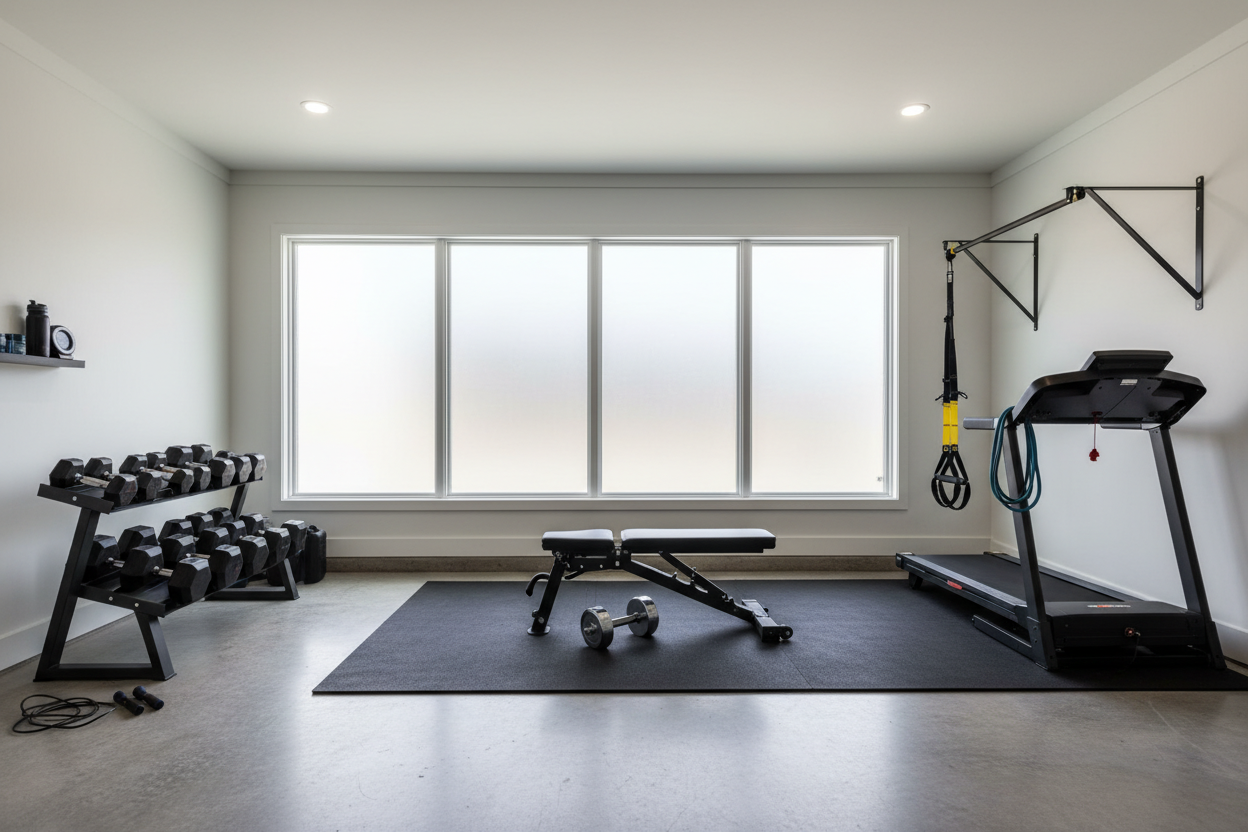
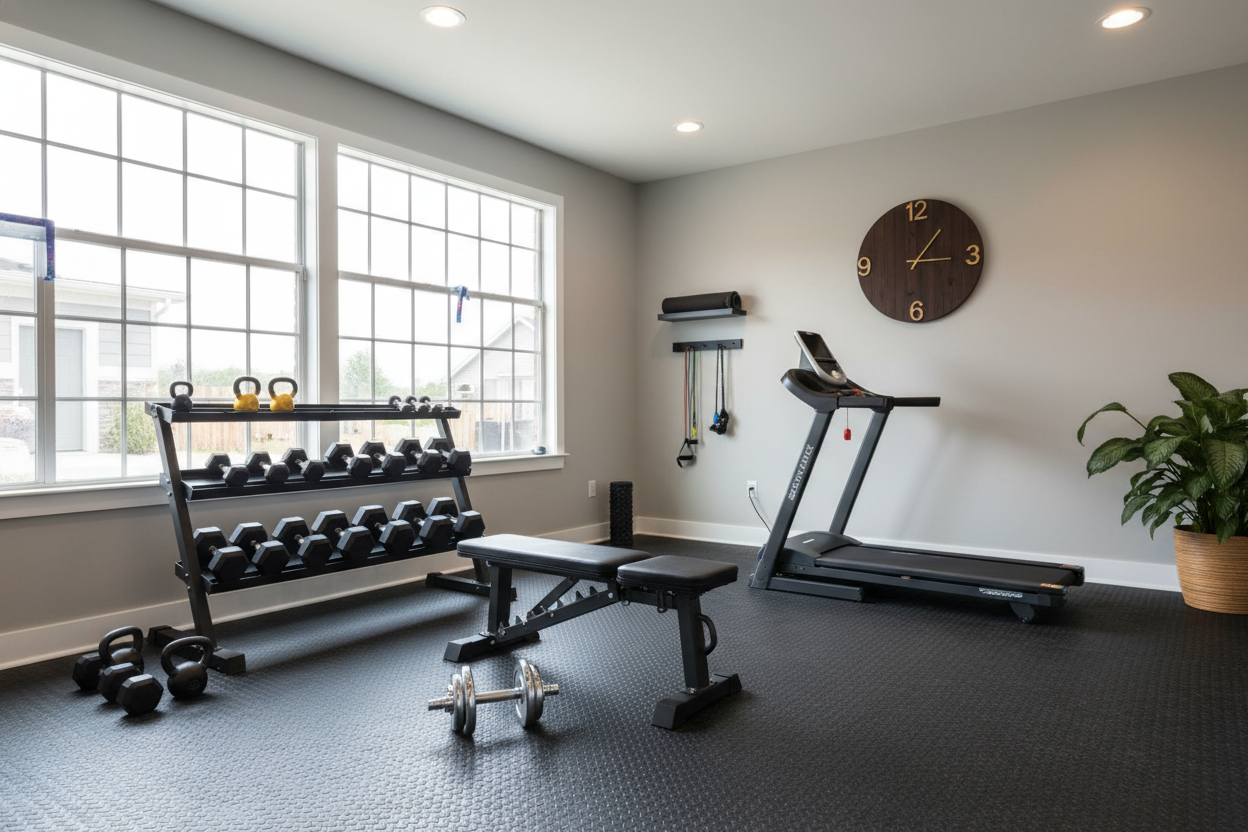
If you have to spend three minutes moving a coffee table and unrolling a flimsy mat just to do a five-minute workout, you simply will not do it. Friction is the enemy of consistency. You need a dedicated, permanent space.
Why Dedicated Flooring Matters for Quick Sessions
Having a visual cue in your home makes a massive difference. When you see your workout space ready to go, it acts as a silent reminder to move. I recommend laying down a durable 6x4ft yoga mat in the corner of your office or bedroom.
This size perfectly fits a standard 6x6 ft corner space without dominating the room. It provides enough cushioning for your knees during floor work and enough grip for barefoot squats. When the floor is already prepped, dropping down for a quick set of push-ups requires zero extra thought.
Expanding Your Space for Dynamic Movements
If your mini sessions involve lateral bounds, burpees, or kettlebell snatches, you will quickly outgrow a standard mat. Stepping off the edge mid-movement ruins your rhythm and can lead to rolled ankles.
For dynamic trainees, a large 6x8ft exercise mat gives you the necessary footprint to move freely. I tested one of these heavily last year. It easily handled dropping 50-pound dumbbells without scuffing my hardwood. The one honest downside? A mat this size is heavy, weighing around 28 lbs. It is incredibly annoying to roll up daily, so you really need to commit to leaving it unrolled as a permanent fixture in your home gym.
Structuring Mini Workouts At Home for Long-Term Success
You cannot just do random exercises forever and expect continuous improvement. Even with short sessions, you need progressive overload. The good news is that progression does not always mean adding time.
If your current trigger is 50 air squats in three minutes, your goal next month should be 60 squats in that same three-minute window. You are increasing the density of the work. Alternatively, you can slow the tempo down. A five-second eccentric descent on a push-up makes a five-minute chest routine brutally effective.
Track your mini sessions just like you would a traditional program. Keep a notebook on your desk. Jot down your reps and sets. Over a month, those five-minute blocks compound into hours of high-quality, focused training.
Conclusion: Consistency Over Intensity
At the end of the day, the best workout program is the one you actually do. Crushing yourself for an hour once a week will never yield the same results as moving with intention for ten minutes every single day.
Embrace the micro-session. Optimize your space, stack your habits, and watch how quickly your energy levels and physical health transform when you stop fighting the clock.
FAQ
How many mini workouts should I do a day?
Aim for 3 to 4 sessions, ranging from 5 to 10 minutes each. Spread them out to maximize the metabolic benefits, such as one in the morning, one mid-day, and one after dinner.
Can I actually build muscle with short workouts?
Yes, muscle growth requires mechanical tension and proximity to failure. If you take a set of push-ups or Bulgarian split squats close to failure within a 5-minute window, you will stimulate muscle protein synthesis.
Do I need to warm up for a 5-minute workout?
Your warm-up should be built into the routine. Use the first minute to do the movement at a slower tempo or lighter variation before ramping up the intensity for the remaining time.