Will Heavy Indoor Gym Equipment for Home Destroy Hardwood Floors?
I spent five years training in a garage where the only floor protection was a thick layer of dust and the occasional oil leak from my old truck. Moving my iron into a finished spare bedroom felt like a promotion, but it came with a massive side of anxiety. I wasn't just worried about the noise; I was terrified of watching my 300-pound squat rack turn my oak floors into expensive firewood.
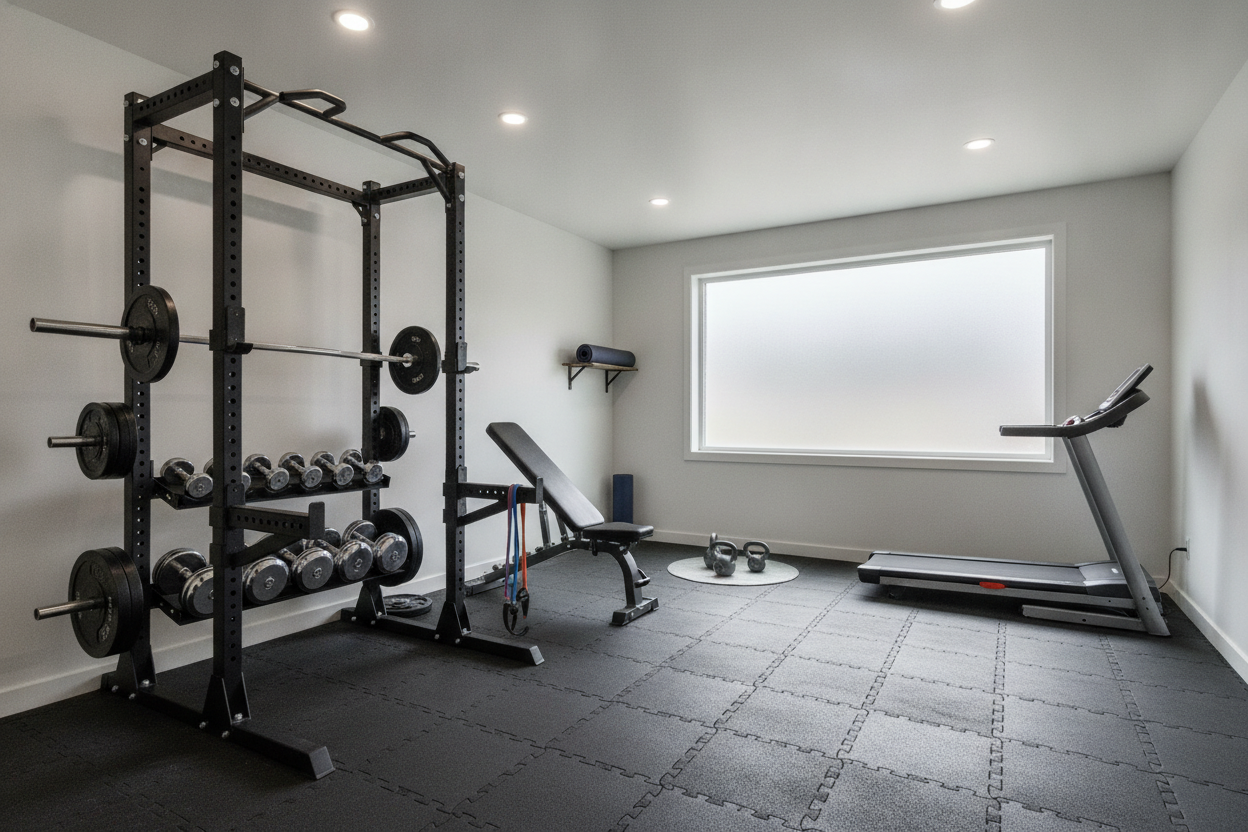
If you are currently browsing for indoor gym equipment for home, you are likely facing the same dilemma. You want the heavy stuff, but you do not want to lose your security deposit or ruin your home's resale value. The good news? You can absolutely lift heavy inside a finished room, but only if you stop treating your bedroom like a commercial warehouse.
Quick Takeaways
- Residential floors are stronger than you think, but point-loading is your enemy.
- Standard foam puzzle mats are useless for heavy lifting; they compress and slide.
- A DIY lifting platform (plywood + rubber) is the only way to truly protect hardwood.
- Compact, multi-use gear is better than trying to cram a full-size cable crossover into a 10x10 room.
The Panic of Bringing Cast Iron Into a Finished Room
The first time you wheel a barbell into a room with crown molding, something feels wrong. In the garage, a dropped plate is just a loud noise. On a second-story hardwood floor, a dropped plate feels like a structural threat. The panic is real because the stakes are higher. You aren't just worried about the concrete cracking; you are worried about the ceiling below you cracking.
Most people overcompensate by buying flimsy 'home-grade' gear that feels like a toy. Don't do that. You can still use real steel, but you have to change your mindset about placement. You are no longer just 'setting up a gym'; you are managing weight distribution. The transition from a rugged garage to a finished room requires a tactical approach to flooring and equipment selection that prioritizes the integrity of the building.
Will Your House Collapse Under a Power Rack?
Let’s talk about floor joists. Most modern residential floors are built to handle a 'live load' of about 40 pounds per square foot. That sounds low until you realize it’s an average across the entire floor. Your floor isn't going to give way because you put a 250-pound power rack in the corner. The real danger isn't the static weight; it’s the dynamic load—the force of you and the weight moving together, or worse, a failed lift hitting the floor.
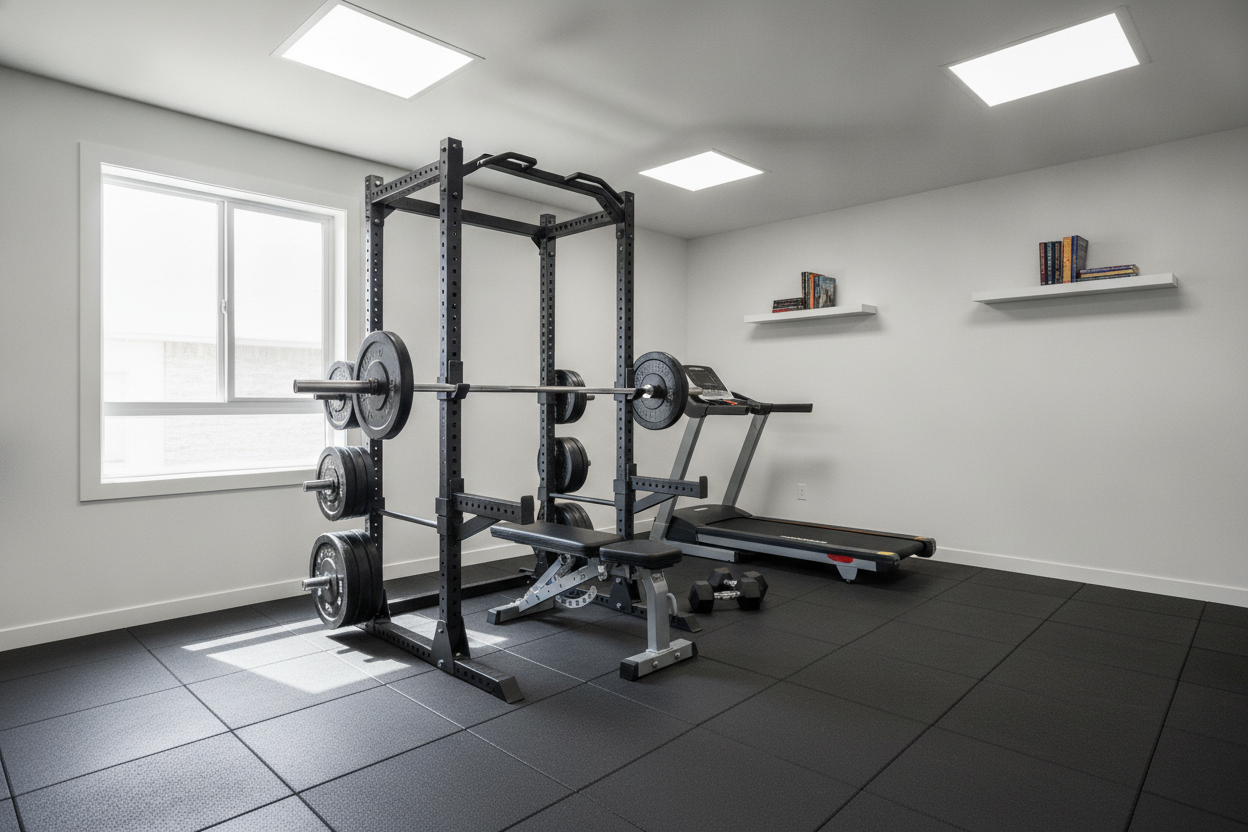
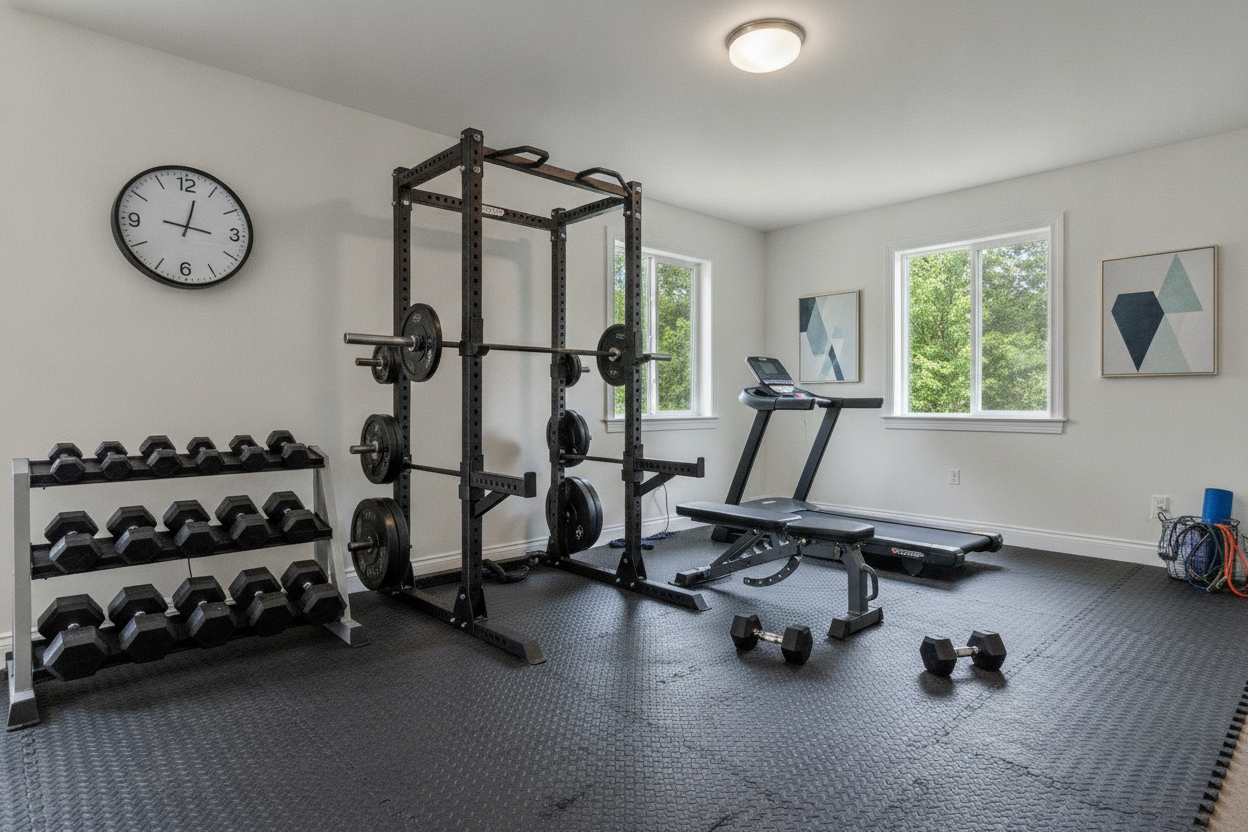
A power rack actually helps because it spreads the weight across four or six different points. If you place that rack against a load-bearing wall or, better yet, perpendicular to the floor joists, you are golden. I’ve had 600+ pounds of rack and plates sitting in a spare bedroom for three years without a single floorboard creaking. The house won't collapse, but without the right padding, those points of contact will leave permanent indentations in your wood or carpet.
Smart Indoor Home Gym Equipment Swaps for Tight Spaces
The biggest mistake I see is people trying to recreate a Gold's Gym in a 120-square-foot bedroom. If you keep buying weight training equipment for home like a commercial gym, you will run out of floor space and structural confidence very quickly. Instead of a massive 7-foot Olympic bar that will inevitably punch holes in your drywall, look at 6-foot 'shorty' bars. They have the same sleeve diameter but a shorter overall profile.
Swap the dedicated leg press for a high-quality squat stand or a folding rack. Folding racks are the ultimate indoor home gym equipment hack—they offer the stability of a four-post rack but tuck away so you can actually walk through the room when you aren't training. Also, ditch the 10-pair dumbbell rack. A single pair of heavy adjustables (like Ironmasters or PowerBlocks) saves you about 15 square feet of floor space and roughly 400 pounds of static load sitting in one spot.
Silencing the Iron: How to Keep the Noise Down
Noise is the fastest way to get your home gym shut down by a spouse or a neighbor. Metal plates clanking at 6:00 AM sounds like a construction site in a finished house. I've tested the best weight equipment for home gym setups, and the biggest failure point is always the noise floor. If you're lifting inside, you need urethane or rubber-coated plates. They don't just protect the floor; they deaden the high-pitched 'clang' that travels through walls.
Another essential? Crash pads. If you plan on deadlifting, you cannot pull directly off the floor, even with mats. A pair of 6-inch thick foam drop pads will absorb the impact and the sound, making a 405-pound pull sound like a pillow hitting the floor. It changes the game for apartment dwellers or anyone with a bedroom gym located above a living room.
The Only Flooring Solution That Actually Works
Ignore the 1/2-inch foam puzzle mats you see at big-box retailers. They are meant for yoga and toddlers, not 45-pound plates. When you put a heavy rack on foam, it squishes to nothing, and the rack becomes unstable. For a real indoor setup, you need the 'Horse Stall Mat' standard. These are 3/4-inch thick recycled rubber mats that weigh about 100 pounds each. They don't move, and they don't compress.
If you are on hardwood, do not put rubber directly on the wood; the sulfur in the rubber can sometimes react with the finish. Layer it: put down a thin breathable rug or a layer of 1/4-inch plywood first, then your horse stall mats on top. If you’re deadlifting heavy, build a 'sandwich' of two layers of 3/4-inch plywood topped with the rubber mat. This creates a structural 'deck' that distributes the weight across the floor joists so effectively that your floor won't even know you're there.
Personal Experience: My $1,200 Mistake
When I first moved my gym inside, I thought I could get away with just a single layer of 'heavy duty' gym flooring I bought online. I was doing kettlebell swings with a 70-pounder, lost my grip, and it dented the laminate so deeply I could see the subfloor. That one mistake cost me more in floor repairs than a proper DIY platform would have cost three times over. Now, I never lift on anything less than a dual-layer plywood and rubber base. It’s non-negotiable.
FAQ
Can I put a treadmill on the second floor?
Yes, but the vibration is the issue, not the weight. Use a thick rubber treadmill mat to decouple the machine from the floor, or the 'thump-thump-thump' will vibrate through the entire frame of the house.
Will gym mats smell up my bedroom?
Cheap horse stall mats from farm supply stores smell like a tire fire for about two weeks. If you're using them indoors, let them off-gas in the sun for a few days before bringing them inside, or buy 'low-odor' vulcanized rubber mats specifically made for indoor use.
Do I need to bolt my rack to the floor?
In a garage, yes. In a spare bedroom, absolutely not. Use a flat-foot rack design. These have a wide base that stays stable without bolts. Bolting into your bedroom floor is a permanent decision you'll regret the day you decide to move the furniture.