Why Your Weight Lifting Programming Makes You Tired, Not Strong
I spent three years grinding in my garage, finishing every session in a puddle of sweat, yet my bench press stayed stuck at 185 lbs. I was exhausted, irritable, and honestly, I looked exactly the same as when I started. The problem wasn't my effort; it was my weight lifting programming. I was chasing the 'burn' instead of the bar speed, and my garage floor was seeing more action from my sweat than my rack was seeing from heavy plates.
Quick Takeaways
- Fatigue is a side effect of training, not the primary goal.
- Effective programs prioritize intensity over sheer volume.
- Garage gym lifters must focus on big compound movements to maximize limited space.
- Autoregulation prevents injury and accounts for real-life stress.
The 'Sweat Equals Success' Trap
We’ve been sold a lie by the fitness industry. We are told that if we aren't crawling out of our gym at the end of a session, we didn't work hard enough. This mindset is toxic, especially for those of us training in solitude. You see those guys on social media doing 30 sets of chest until they can't lift their arms? They aren't getting stronger; they are just getting better at being tired. Chasing soreness is a fool's errand. Muscle soreness (DOMS) is just an inflammatory response, not a badge of honor that guarantees growth.
When you focus on 'the pump' or 'the sweat' in your garage, you’re usually accumulating junk volume. These are sets that are too light to stimulate real strength but heavy enough to drain your recovery capacity. If you’re doing ten sets of curls but your squat hasn't moved in six months, your priorities are upside down. Real adaptation happens when you force the body to handle a load it isn't used to, then give it the space to recover. If you’re always tired, you’re never performing at the intensity required to actually signal the body to build more muscle. You’re just digging a hole you can’t climb out of.
Anatomy of Good Weight Lifting Programs
A solid routine isn't a random collection of exercises you saw on TikTok. It’s a calculated progression. The first non-negotiable is progressive overload. This doesn't just mean adding 5 lbs every week until you hit a wall. It means increasing the total work capacity over time, whether through more weight, better technique, or shorter rest periods. However, most people mess this up by adding too much too fast. You can't outrun biology; your tendons and central nervous system (CNS) take longer to adapt than your ego thinks they should.
Recovery is the second pillar. In a commercial gym, people often get distracted by the social aspect, which accidentally builds in rest. In a garage gym, we tend to hammer through sets to get back to the family or dinner. This systemic fatigue builds up. I see a lot of weight lifting training programs for beginners that try to mimic professional powerlifter splits. Beginners don't need five days of specialized accessory work; they need three days of heavy compounds and a lot of sleep. Good weight lifting programs understand that 'more' is rarely 'better.' They manage your 'fatigue debt' so you show up to the bar fresh enough to actually move the needle.
Stop Treating Every Set Like a Max Effort Test
If you are grinding out every single set of squats until your face turns purple and your form looks like a folding lawn chair, you are failing. This is where Reps in Reserve (RIR) comes in. For 90% of your training, you should finish a set feeling like you could have done two or three more reps with perfect form. This sounds counter-intuitive to the 'hustle' culture, but it’s the secret to long-term gains.
Grinding to absolute failure on compound lifts fries your CNS. Once that’s fried, your power output drops across every other exercise in your plan. If you blow your wad on your first set of deadlifts, the rest of your session is just going through the motions. Leave the ego at the door. Use that RIR to ensure every rep is high quality. Speed and technique drive strength; struggle and grind drive injury.
Why Standard Lifting Plans Fail in a Garage Gym
Most popular weight lifting training programs are designed for people with access to 40,000 square feet of equipment. They call for three different types of cable flyes, a leg press, and a specific row machine that your garage definitely doesn't have. When home gym owners try to follow these 'pro' plans, they end up doing poor substitutions that don't provide the same stimulus. You don't have a row of Weight Lifting Machines to isolate every tiny muscle fiber, and honestly, you don't need them.
In a garage setting, you have to be a generalist. You have to learn how to create tension using free weights and body positioning. Instead of a leg press, you do Bulgarian split squats. Instead of a cable crossover, you use bands or floor flyes. The failure of standard plans in a home gym is usually a failure of adaptation. You shouldn't be trying to replicate a commercial gym experience; you should be leaning into the strengths of the barbell. You have the ultimate tool for strength—don't dilute your program with 'fluff' exercises that were designed for machines you don't own.
How to Write a Lift Workout Program That Actually Works
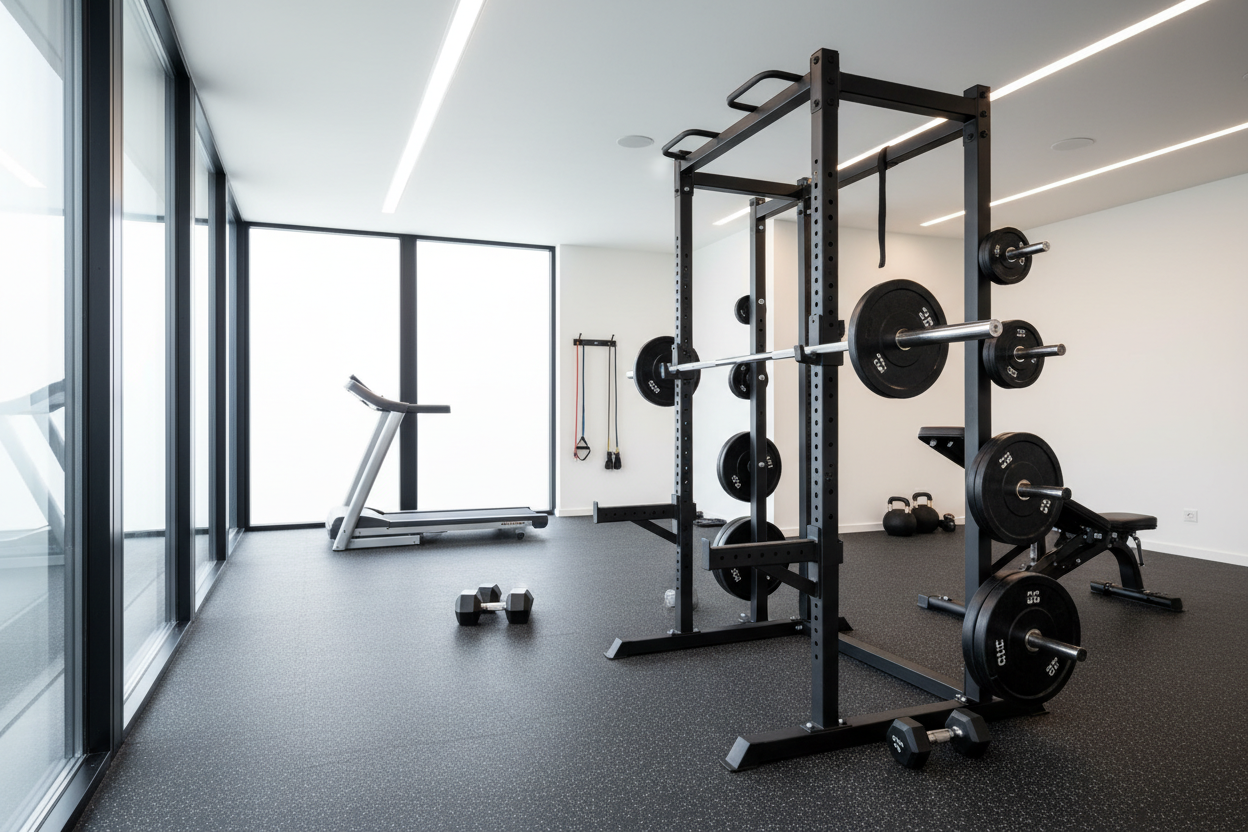
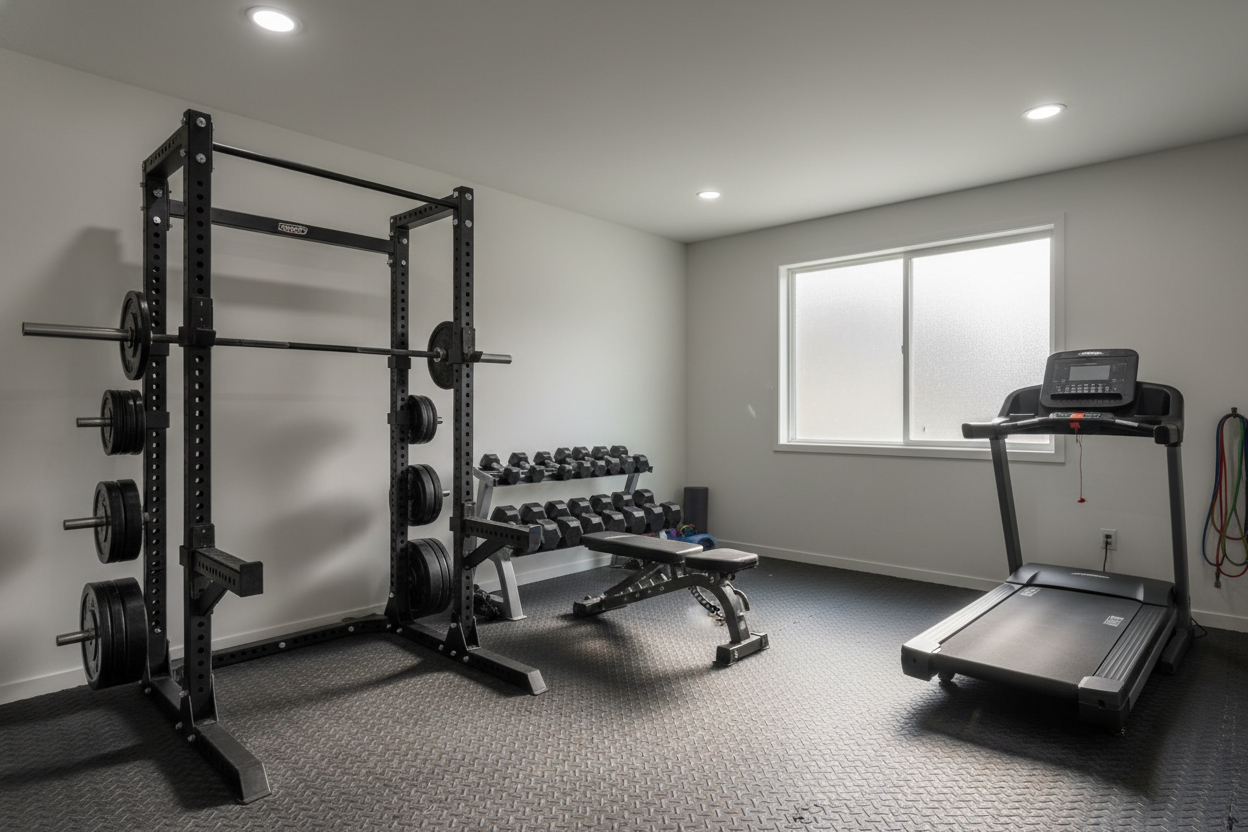
If you want a lift workout program that actually delivers, start with the 'Big Four': Squat, Bench, Deadlift, and Overhead Press. These are your bread and butter. Everything else is just seasoning. A simple, effective framework for a garage gym is a 4-day upper/lower split. This allows you to hit each muscle group twice a week while giving your joints a break in between. You need a rock-solid foundation for this, like the Gxmmat X6 Power Rack Weight Bench Package. You need a rack you trust when you’re going for a heavy double without a spotter.
Step one: Pick one main lift per day. Step two: Follow a proven progression model (like 5/3/1 or a simple 5x5). Step three: Add two or three accessory movements that address your weaknesses. If your bench stalls at the midpoint, add some close-grip work. If your squat feels shaky, add lunges. Keep it simple. You don't need 12 exercises. You need five done with violent intentionality. Most of the good weight lifting programs I’ve ever used fit on a single index card. If your spreadsheet looks like a NASA launch sequence, you're overthinking it.
Ditching Rigid Spreadsheets for Autoregulation
Life happens. Maybe your kid didn't sleep, or work was a nightmare, or you're just feeling like a sack of hammers. A rigid lifting plan tells you to hit 90% of your max today regardless of how you feel. That is how you get hurt. Autoregulation—specifically using the RPE (Rate of Perceived Exertion) scale—is the key to surviving years of training in your garage. It allows you to adjust the weight based on your performance in the moment.
If the program says '80%,' but that 80% feels like a 10/10 effort during your warm-ups, you back off. If it feels like air, you might push a little more. This isn't an excuse to be lazy; it's a tool to be smart. By listening to your body’s signals, you avoid the 'red zone' of overtraining. In a garage gym, you are the athlete, the coach, and the equipment manager. You have to be objective. Some days the goal is to break records; other days, the goal is just to punch the clock and live to fight another day. That’s the difference between a six-week 'transformation' and a decade of strength.
My Biggest Programming Mistake
I once tried to run a high-intensity Bulgarian-style squat program in an unheated garage during a midwest winter. I was squatting to a daily max every single day. I thought I was being 'hardcore.' Within three weeks, my knees felt like they were filled with broken glass and my morning caffeine wouldn't even touch the fatigue. I ignored the signs because 'the program said so.' I ended up taking two months off just to be able to walk without a limp. Now, I never train without checking my RPE, and I prioritize my warm-ups more than the top sets. Consistency beats intensity every single time.
FAQ
How many days a week should I lift?
For most people, 3 to 4 days is the sweet spot. This provides enough frequency to trigger growth but leaves plenty of time for recovery and life outside the garage. Quality over quantity.
Can I build muscle without machines?
Absolutely. Barbells and dumbbells allow for a more natural range of motion and engage more stabilizer muscles. You can replicate almost any machine movement with a bit of creativity and some resistance bands.
How long should a workout take?
If you’re training with high intensity and focusing on compound lifts, you should be done in 45 to 75 minutes. If you’re in there for two hours, you’re either resting too long or doing too much junk volume.