Why Your Squats Aren't Building Your Butt: The Heavy Lifting Guide to Glute Growth
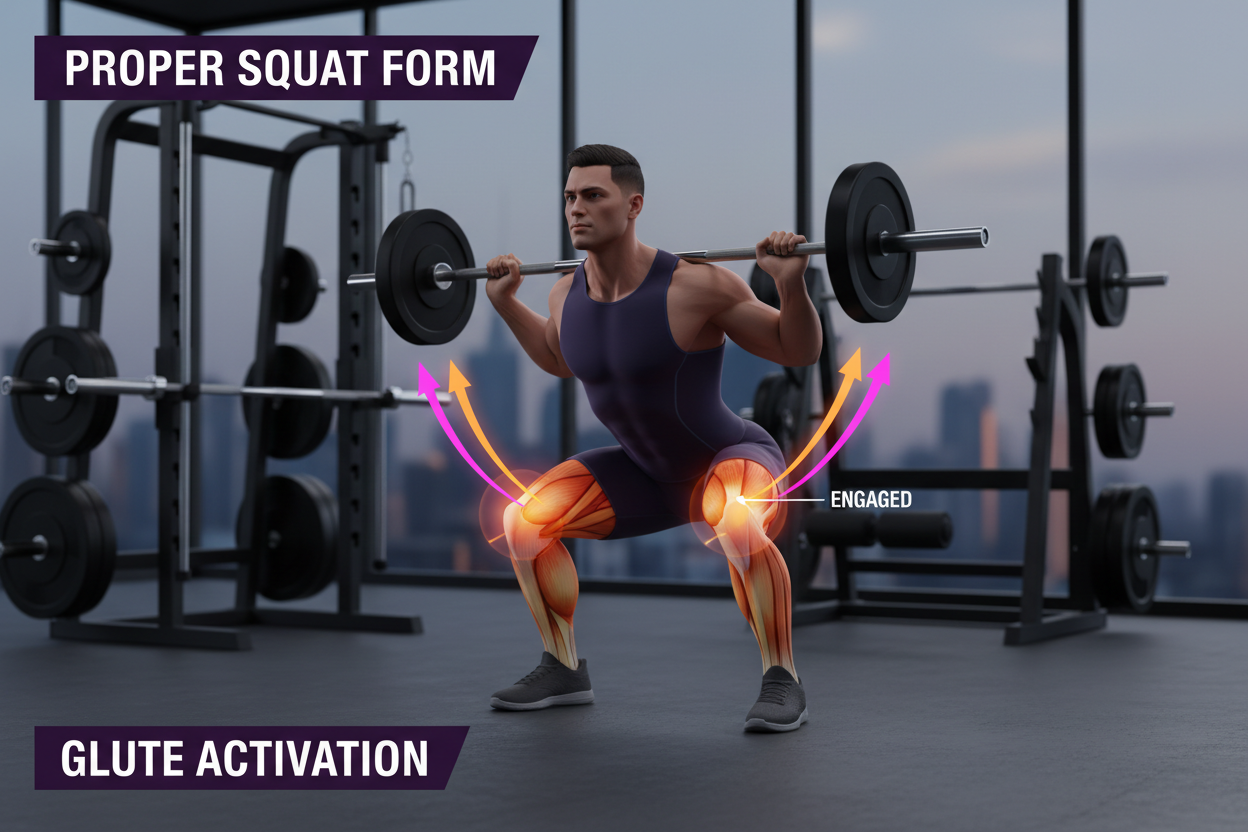
For years, I fell into the classic trap of thinking that the squat rack was the only place to build a backside. I would load up the bar, grind out reps until my legs shook, and wake up the next day with quads so sore I couldn't walk down stairs. Yet, despite all that effort, my glutes remained stubbornly flat. It wasn't until I stopped treating my glutes as an accessory to my legs and started training them as the primary movers that I saw actual changes. If you are tired of growing your thighs while your jeans fit the same around the hips, you have to change your mechanics.
Building the posterior chain requires a shift in focus from knee flexion (bending your knees) to hip extension (thrusting your hips forward). Most people are naturally quad-dominant, meaning their body will recruit the thigh muscles to take over a movement whenever possible. To fix this, you need to understand how to target your glutes specifically by altering your foot placement, your torso angle, and the equipment you choose. This guide cuts through the fluff and focuses on the biomechanics of hypertrophy for the largest muscle in your body.
The Physiology of Engagement
Before grabbing the heaviest dumbbell in the gym, you need to establish a mind-muscle connection. If you cannot squeeze your glute muscle while standing still, you won't be able to engage it under a 200-pound load. The gluteus maximus functions primarily to extend the hip. Think of the motion of standing up from a chair or pushing your hips forward at the top of a deadlift.
Many lifters fail to see results because they rely on momentum or their lower back to move the weight. When you perform any of the movements listed below, the initiation must come from the glute squeeze, not a back arch. If you feel tension in your lumbar spine, you have likely lost pelvic alignment. Tuck your chin, keep your ribs down, and drive through your heels.
Heavy Hitters: Gluteus Maximus Exercises with Equipment
To add significant mass, you need mechanical tension. This means moving heavy loads with control. While bodyweight kickbacks are fine for a warm-up, they won't build the density most people are looking for. Here are the most effective gluteus maximus exercises with equipment found in standard gyms.
The Barbell Hip Thrust
This is the non-negotiable movement. Unlike a squat, where tension on the glutes is lowest at the top of the movement, the hip thrust places maximum tension on the glutes at full contraction. Set up a bench against a wall so it doesn't slide. Sit on the floor with your upper back against the bench and roll a padded barbell over your hips.
Drive your hips toward the ceiling until your torso and thighs are parallel to the floor. Your shins should be vertical. If your feet are too far forward, you will feel it in your hamstrings; too close, and your quads take over. Pause at the top for a distinct second before lowering. This exercise allows for heavy loading, so don't be afraid to add plates once your form is solid.
Glute-Biased Leg Press
The leg press is often seen as a quad machine, but a simple adjustment turns it into a glute builder. Place your feet high and wide on the platform. By reducing the degree of knee bend and increasing the degree of hip flexion, you shift the load to the posterior chain. As you lower the weight, think about pushing your knees outward rather than letting them cave in. Drive the weight back up through your heels, not your toes.
The 45-Degree Hyperextension
Most people use the back extension machine to train their spinal erectors, but with a technique tweak, it destroys the glutes. Instead of keeping a flat back, round your upper back slightly (chin to chest). Turn your feet out 45 degrees. As you lower yourself, you get a deep stretch. When you come up, focus entirely on driving your hips into the pad rather than lifting your torso with your back muscles. Stop before you hyperextend your spine; you only need to come up until your glutes are fully contracted.
Isolation Work: Exercises That Only Target Glutes
True isolation is difficult because the body works in kinetic chains, but we can choose movements where the hamstrings and quads are rendered almost useless, forcing the glutes to do the work. These are often referred to as exercises that only target glutes, though technically stabilizers are always involved. These should be done with higher reps near the end of your workout to fully exhaust the muscle fibers.
Cable Glute Kickbacks
The cable machine provides constant tension that dumbbells cannot match. Attach an ankle strap to the low pulley. Lean your torso forward slightly, holding the machine for stability. Kick your leg back and slightly out to the side (about 30 degrees). The key here is range of motion; you don't need to swing your leg to the sky. Stop when your glute is squeezed. If you swing too high, your lower back will arch, stealing tension from the target muscle. Keep the movement small, controlled, and focused.
Seated Abduction Machine
This machine targets the gluteus medius and minimus (the upper/side glutes), which give the hips their round shape. To make this more effective, don't just sit back and chat. Lean forward and hold the handles of the machine. This puts the glutes in a stretched position, allowing for greater activation. Perform high-rep sets here, aiming for a deep burn. Drop sets work exceptionally well on this machine—do 15 reps, lower the weight, and immediately do 15 more.
Smith Machine Reverse Donkey Kicks
If your gym lacks a specific glute kickback machine, the Smith machine is a great substitute. Set the bar to a low height. Get on your hands and knees, placing the arch of one foot against the center of the bar. Drive the bar straight up toward the ceiling. Because the Smith machine moves on a fixed track, you don't have to worry about stabilizing the weight, allowing you to focus purely on the downward force and the upward contraction.
Structuring the Routine
You don't need to do every exercise listed above in a single session. A solid glute-focused leg day should start with a heavy compound lift like the hip thrust or a sumo deadlift. Follow this with a secondary compound movement like the glute-biased leg press or Bulgarian split squats. Finish with two isolation movements to pump blood into the muscle and induce metabolic stress.
Consistency beats intensity in the long run. Training glutes twice a week allows for sufficient volume while giving the muscles time to recover and grow. Remember, muscle growth happens during rest, not during the workout. If you are hitting these exercises with proper intensity, you will need those rest days.
Frequently Asked Questions
How often should I train my glutes for maximum growth?
For most lifters, training glutes 2 to 3 times per week is the sweet spot. This frequency allows for high-volume training while providing the 48-hour recovery window necessary for muscle hypertrophy. If you train them only once a week, ensure the volume is high enough to stimulate growth.
Why do I feel hip thrusts in my lower back instead of my glutes?
Lower back pain during thrusts usually indicates you are hyperextending your spine at the top of the movement. Keep your chin tucked to your chest and your ribs down throughout the entire rep. Focus on scooping the hips forward rather than arching the back upward.
Can I build glutes without heavy weights?
You can improve shape and endurance with bodyweight or light weights, but significant muscle growth (hypertrophy) generally requires progressive overload. To change the actual size of the muscle, you need to challenge it with increasing resistance over time, which usually involves adding weight.