Why Your Shoes Are Ruining Your Leg and Workout Routine
I spent years thinking my shaky knees during squats were just a sign of 'bad mobility.' I bought expensive sleeves, messed with my stance, and even considered a new rack. Then I took my shoes off. It turns out I was trying to build a house on a foundation of marshmallows. If you are serious about your leg and workout routine, you need to stop letting your footwear dictate your force production.
Quick Takeaways
- Running shoes are designed to absorb impact, which is the exact opposite of what you want when lifting heavy.
- Barefoot training allows your toes to 'splay' and grip the floor for better balance.
- Training without shoes improves ankle stability and proprioception.
- Proper flooring is essential to prevent slipping when you lose the rubber soles.
The Sneaker Squeeze: Why Cushioned Soles Kill Leg Drive
When you step into a squat rack wearing cushioned sneakers, you are basically trying to lift on a Bosu ball. Every time you drive upward, that squishy EVA foam compresses unevenly. This forces your ankles to wobble and often causes your knees to cave inward as the arch of your foot collapses into the foam.
You lose a massive amount of energy transfer this way. Instead of the force going from your legs directly into the floor, it gets swallowed by the shoe. If you have ever used a leg machine, you know that feeling of being locked in and stable. That is exactly the sensation you should be aiming for with free weights, but your running shoes are actively fighting against it.
What Leg Exercises Should I Do Barefoot?
Not every leg training workout requires you to be shoeless, but the big hitters certainly benefit from it. Romanian deadlifts, Bulgarian split squats, and heavy goblet squats are 'ground-up' movements. When your feet are flat on the floor, you can actually feel your posterior chain engage. You can drive through your heels without the shoe tilting you forward onto your toes.
I have found that this grounding principle is the missing link for most people struggling with their balance. This applies to everyone in the gym. These leg workout exercises for women highlight how much more effective a movement becomes when you focus on stability over just moving the weight from point A to point B. If you can't feel the floor, you can't own the movement.
Your Floor Matters Just As Much As Your Feet
Before you go tossing your Nikes across the garage, we need to talk about safety. Do not train barefoot on raw concrete or dusty hardwood. I have made that mistake, and nearly ended up in a forced split with a loaded barbell on my back because my sweaty feet lost traction. It was terrifying and completely avoidable.
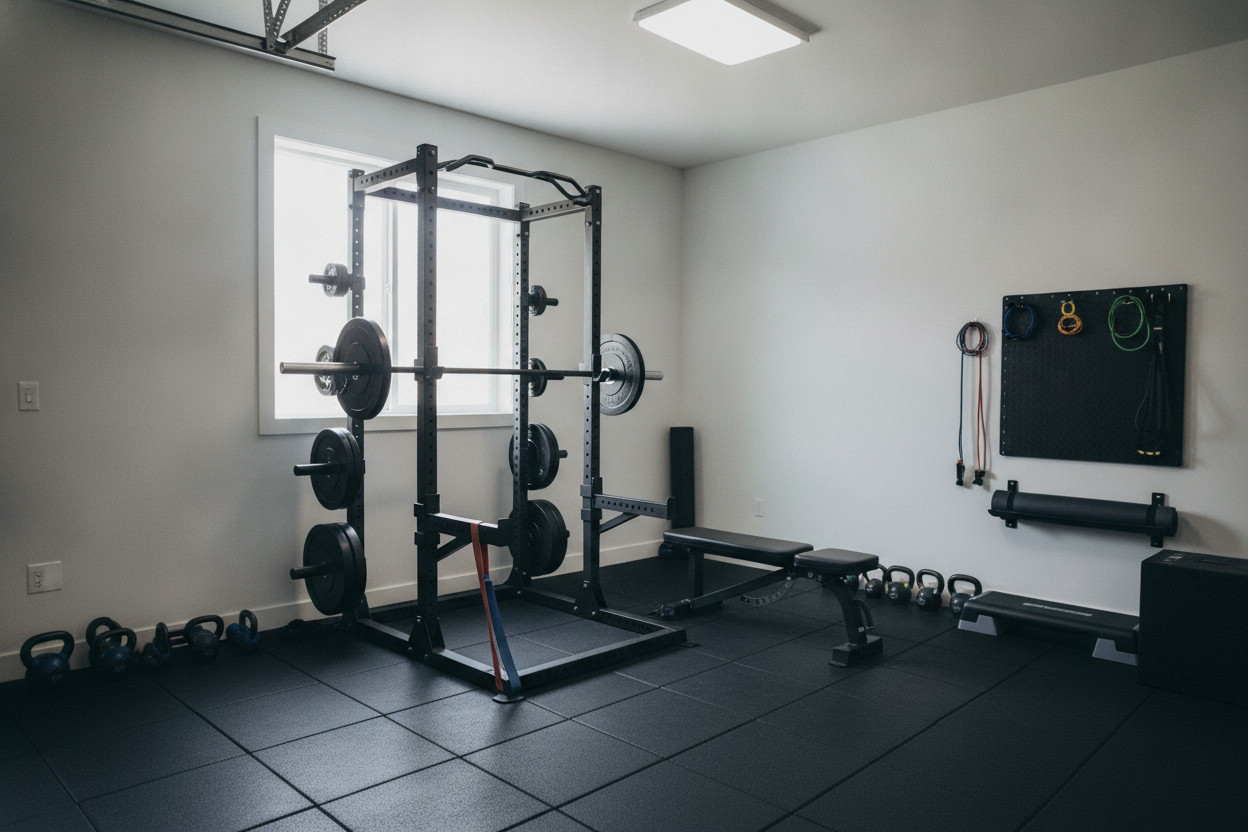
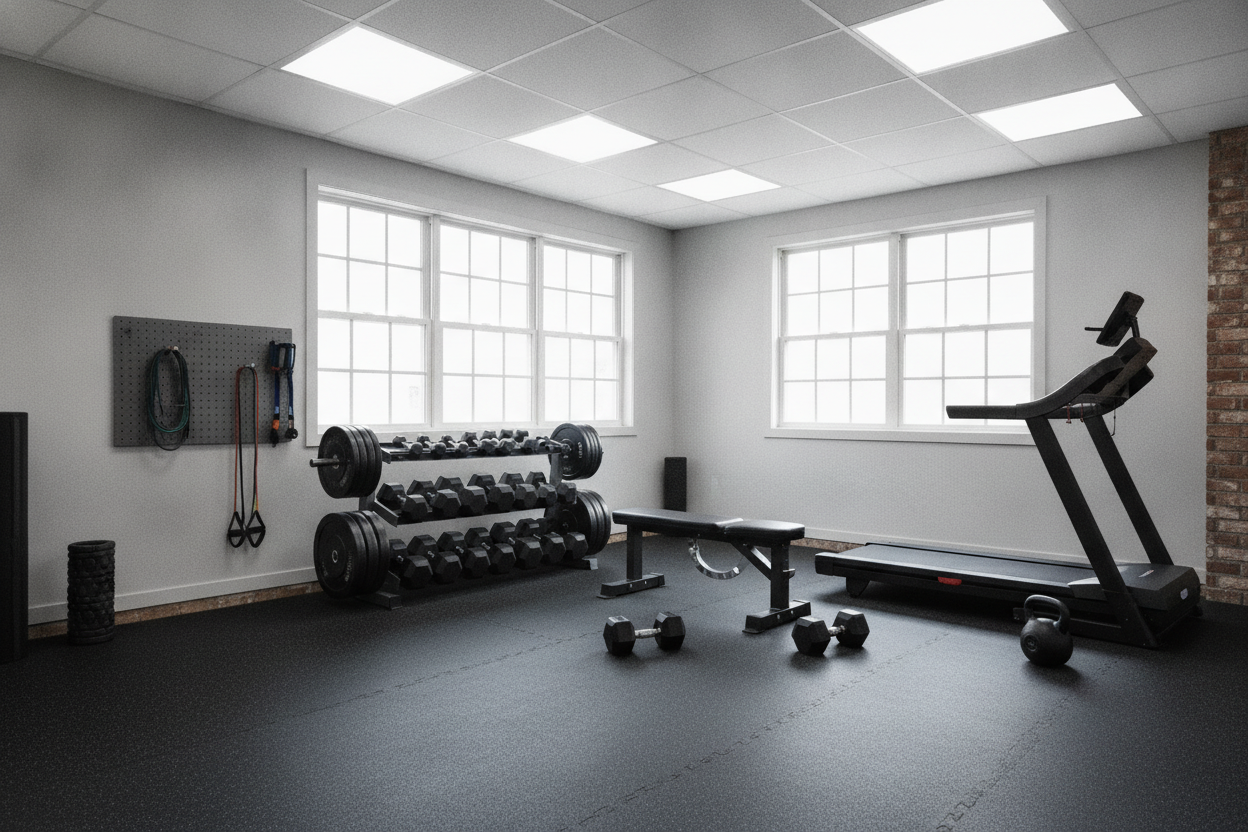
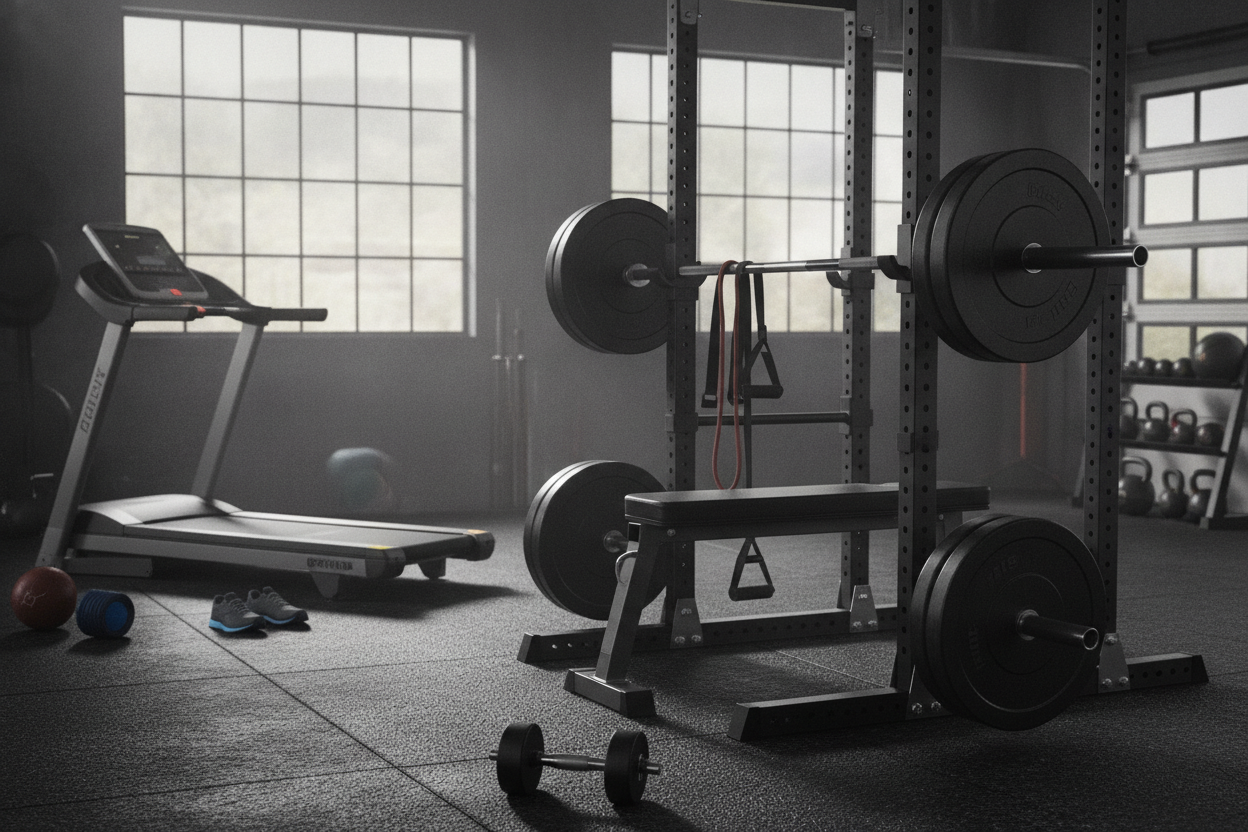
You need a dense, high-traction surface to execute the best workout for your legs. Investing in proper gym flooring for home workout setups is non-negotiable. You want something with enough 'bite' that your skin stays put, but enough density that it doesn't compress like the shoes you just took off. It protects your joints and your slab at the same time.
Building a Better Barefoot Lower Body Routine
If you are new to this, do not jump into a 1-rep max squat immediately. Your feet have tiny muscles that have been 'asleep' inside shoes for decades. Start with bodyweight movements to wake them up. Focus on 'tri-pod' foot positioning: keep your big toe, pinky toe, and heel all screwed into the mat.
A solid barefoot routine might look like this: 3 sets of heavy Kettlebell Swings, followed by 4 sets of Rear-Foot Elevated Split Squats, and finishing with some high-rep calf raises. If you want to scale this into a serious hypertrophy program, check out the ultimate leg workout for massive legs. The mechanics don't change, but your ability to move heavy loads will skyrocket once your feet are actually functional.
My Personal Experience: The Slip That Taught Me Everything
I used to be the guy who wore 'all-purpose' cross-trainers for everything. I thought they were fine until I tried a set of 315-lb squats barefoot on a dusty garage floor. My left foot slid about three inches outward mid-rep. I saved it, but my lower back was shot for two weeks. That was the day I realized two things: I needed better mats and I was never going back to lifting in squishy shoes. The stability I feel now on a high-density rubber mat is night and day compared to those old sneakers.
FAQ
Is it okay to lift in socks?
Only if your floor has a lot of grip. On most home gym mats, socks are too slippery. Go barefoot or get some dedicated 'deadlift slippers' if you don't like the feeling of rubber on your skin.
Will barefoot lifting hurt my arches?
Actually, it usually strengthens them. By forcing the muscles in your feet to work rather than leaning on a shoe's arch support, you are building a more resilient foot. Just start slow to avoid overtaxing the fascia.
What if my gym doesn't allow barefoot lifting?
Look for 'zero-drop' shoes or minimalist footwear. They provide the thin, flat sole you need for stability while keeping the gym management happy. Avoid anything with a 'cloud' or 'air' sole at all costs.