Why That 20-Minute Circuit Doesn't Actually Exercise Your Glutes
I remember scrolling through social media at 11 PM, watching a 'fitness influencer' do a 20-minute bodyweight circuit on a rug, claiming it was the secret to a massive posterior. I tried it the next morning. My heart rate was through the roof, I was sweating like a radiator, and my hamstrings felt like they’d been hit with a blowtorch. But six months later? Nothing had changed. If you actually want to exercise your glutes, you have to stop confusing 'getting tired' with 'getting better.'
- Tension over Burn: A burning sensation is just metabolic stress; mechanical tension (heavy weight) is what actually builds muscle.
- Stop the Jumping: High-rep jump squats are cardio, not a hypertrophy tool for the posterior chain.
- Load is King: You cannot build significant muscle without progressive overload.
- Stability Matters: If your feet are sliding or your bench is moving, your brain will down-regulate your power output.
What Is a Glute Workout Supposed to Actually Feel Like?
Most people think a workout is working because they feel a deep, acidic burn in their muscles. They spend forty minutes doing endless fire hydrants and donkey kicks on a large exercise mat, assuming that because it hurts, the muscle is growing. In reality, that burn is just the buildup of hydrogen ions and metabolic waste. It’s uncomfortable, but it’s not the primary driver of growth.
A real hypertrophy session feels heavy. It feels like your muscles are physically being stretched under a load they aren't quite used to. When you work your glutes correctly, you should feel a sense of mechanical fatigue—where the last two reps of a set are significantly slower than the first two, despite your best efforts to move the bar fast. That is mechanical tension. If you can do 50 reps of something without your form breaking down, you aren't training for size; you're training for endurance.
The Hard Truth About Working Out Your Glutes vs. Doing Cardio
The industry has sold us a lie that lower-body circuits are the best way to work your glutes. They pack these classes with jump lunges, burpees, and air squats to keep your heart rate high. While that’s great for your cardiovascular health, it’s a terrible way to build tissue. This is exactly why your 30 day workout plan to gain muscle is just cardio in disguise.
When you are breathless, your central nervous system is the bottleneck, not your muscle fibers. To grow the gluteus maximus—the largest muscle in your body—you need to give it a reason to adapt. That reason is load. Jumping around with zero resistance doesn't provide enough mechanical stress to force the body to build new muscle protein. You’re just getting better at being tired.
Wait, So What Is Glute Exercises' Real Purpose?
If we strip away the fluff, what is glute exercises' actual mechanical goal? It’s hip extension. Your glutes are designed to move your thigh bone backward relative to your pelvis. To do this effectively for growth, you need to challenge that extension through a full range of motion under load.
This means your routine needs to include a mix of 'stretch-mediated' movements (like RDLs where the muscle is longest at the bottom) and 'shortened-position' movements (like hip thrusts where the weight is heaviest at the top). If your plan doesn't involve adding weight to the bar or the dumbbell every few weeks, you aren't doing a glute workout—you're just exercising.
How to Gain Glute Muscles When You Train at Home
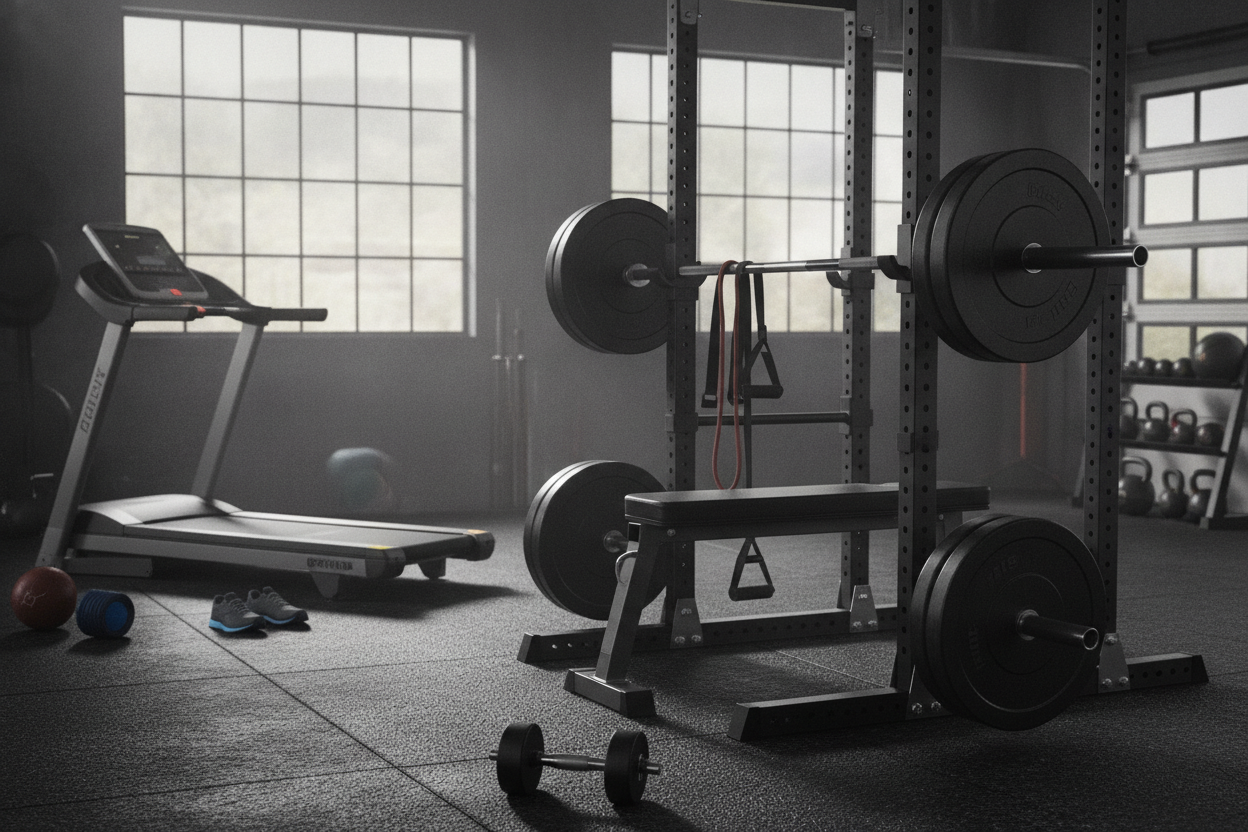
People ask me all the time how to gain glute muscles without a $5,000 cable crossover machine. The answer is simple: buy some heavy stuff and move it. You don't need a commercial gym, but you do need resistance. A pair of 50-lb dumbbells or a single 24kg kettlebell will do more for your physique than a thousand bodyweight pulses.
At home, progressive overload is your only path. If you did 10 reps of a Bulgarian split squat with a 30-lb dumbbell last week, you need to do 11 reps this week or grab the 35-lb bell. You have to force the adaptation. I’ve seen more progress from people using a basic barbell in a garage than from people using every fancy machine at a big-box gym because the garage lifters are focused on the numbers, not the 'vibes' of the workout.
Three Heavy Lifts to Actually Work Your Glutes
If you want to stop wasting time, build your routine around these three movements. First, the Romanian Deadlift (RDL). Keep the bar close to your shins and push your hips back as far as they can go. Second, the Bulgarian Split Squat. It sucks, everyone hates them, but they are the single best unilateral movement for the posterior chain. Keep a slight forward lean to keep the tension on the hips rather than the quads.
Third, the Hip Thrust. This is the gold standard, but do hip thrusts work glutes if your setup is trash? Usually, no. Most people use a bench that’s too high or they don't tuck their chin, which leads to lower back arching. When done right—driving through the heels and locking out the hips at the top—nothing hits the glutes harder. Working out your glutes without a horizontal loading movement like the thrust is leaving half your gains on the table.
Why Your Floor Setup Dictates How Much Weight You Can Push
I once tried to hit a PR on hip thrusts on a dusty hardwood floor. As soon as I drove upward, the bench slid six inches backward and the barbell nearly rolled onto my stomach. It was a disaster. Your brain has a built-in safety mechanism: if it senses you are unstable, it will not let your muscles fire at 100% capacity.
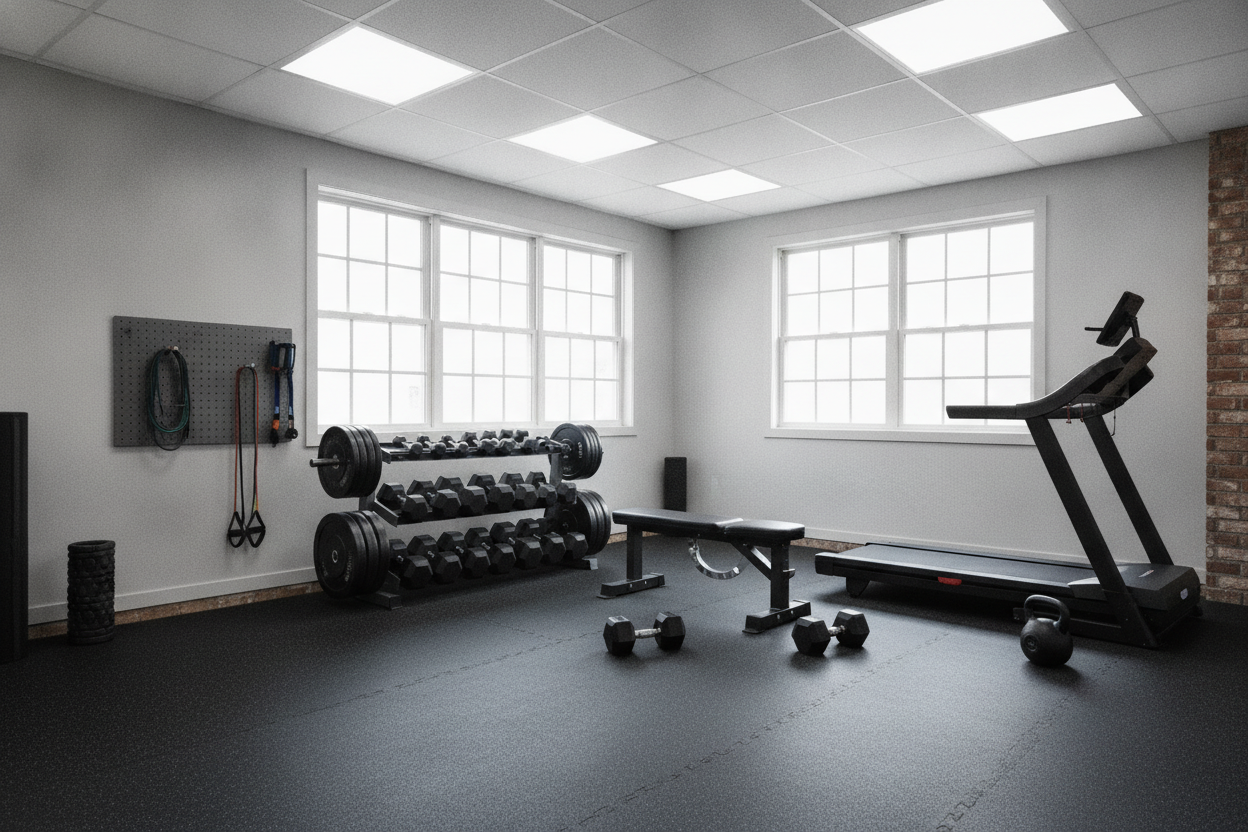
This is why gym flooring isn't just about protecting your house; it's about performance. I eventually invested in a solid 6x8ft exercise mat that actually grips the floor. Having that stable, non-slip surface allowed me to brace my feet and keep my bench anchored. When you aren't worried about sliding, you can actually focus on the mind-muscle connection and move the weight that’s required to see real growth.
FAQ
What is a glute workout frequency that actually works?
For most people, 2 to 3 times per week is the sweet spot. You need enough volume to trigger growth, but enough recovery time for the tissue to actually repair. If you're hitting them every single day, you're likely not training with enough intensity to require rest.
Can I gain glute muscle with just bands?
Bands are great for 'priming' or warming up the hips, but they are rarely enough to build significant mass on their own. The resistance profile of a band is lightest at the bottom and heaviest at the top, which doesn't provide the consistent mechanical tension that a heavy weight does.
Why do I only feel my quads when I squat?
Squats are quad-dominant by nature. If you want to target the glutes specifically, you need to increase the 'hip hinge' component. Try widening your stance and focusing on pushing your butt back rather than just dropping your knees forward.