Why Your Press Hurts (And 4 Alternative Shoulder Exercises)
I remember the morning I couldn't reach for the coffee mug without a sharp jab in my right delt. Years of chasing a 225-lb overhead press on a stiff barbell finally caught up to me. It wasn't that I was weak; it was that I was stubborn. I thought if it wasn't a straight bar over my head, it didn't count as real training.
If you're currently icing your AC joint after every push day, you're not alone. Most of us in the garage gym community eventually realize that alternative shoulder exercises aren't just 'regressions'—they are often the only way to keep training heavy into your 40s and 50s. Swapping the rigid barbell for tools that allow your joints to breathe can actually spark more growth than grinding out painful reps.
- Standard barbell presses lock your joints into a fixed, often unnatural path.
- Unilateral movements allow your scapula to move freely, reducing impingement.
- Stability-focused lifts like bottoms-up presses recruit more muscle fibers than heavy seated presses.
- High-volume carries build 'yoke' traps and shoulder health simultaneously.
Why Standard Presses Might Be Trashing Your Shoulders
The barbell overhead press is often hailed as the king of upper body lifts, but for many of us, it's a slow-motion wrecking ball for the rotator cuff. When you grab a straight bar, your wrists, elbows, and shoulders are locked into a fixed plane of motion. Your body has to conform to the bar, rather than the movement conforming to your specific anatomy.
Most people lack the thoracic mobility to press perfectly vertical without arching their lower back. This creates a 'pinch' in the subacromial space—that spot where your tendons and bursa get squeezed between bone. After hundreds of reps, that 'pinch' becomes chronic inflammation. I spent years thinking my 'clicking' shoulder was just a badge of honor. In reality, it was my body telling me that forcing a straight-bar path was a losing battle against my own skeletal structure.
The Alternative Shoulder Workout That Saved My Joints
The pivot that saved my lifting career was moving toward 'scapular plane' pressing. This means pressing at a slight 30-to-45-degree angle in front of your body, rather than directly out to the sides. It allows the shoulder blade to rotate upward naturally, which is exactly how the human body is designed to move heavy objects.
By adopting an alternative shoulder workout, you stop fighting your own biomechanics. You can browse our workout hub for more programming ideas, but the general philosophy is simple: prioritize movements that allow for independent arm movement and variable angles. Your delts don't know if you're holding a barbell or a landmine handle; they only know tension and load.
1. The Half-Kneeling Landmine Press
The landmine press is the ultimate 'cheat code' for beat-up shoulders. Because the bar moves in an arc rather than a straight vertical line, it naturally guides you into that scapular plane I mentioned earlier. The diagonal trajectory takes the sheer stress off the top of the joint while still letting you load up significant weight.
I prefer the half-kneeling version because it forces you to stay honest. You can't use a leg drive or lean back excessively. It turns into a total-body stability exercise that torches the front and side delts. If you have a landmine attachment or just an old tennis ball on the end of a bar in the corner, this should be your new primary mover.
2. The Kettlebell Bottoms-Up Press
This is the most humbling exercise in existence. You take a kettlebell, flip it upside down so the heavy globe is balanced precariously above the handle, and try to press it. You won't be using your 50-lb bells here; most guys start shaking with a 15 or 20-lb bell.
The magic is in the instability. Your brain won't let you press the weight if your rotator cuff isn't firing perfectly to stabilize the joint. It's a self-correcting movement. If your form is off, the bell flops over. It forces a 'tight' shoulder and reflexive stability that carries over to every other lift you do. It's the ultimate 'prehab' that actually builds muscle.
3. Heavy Farmer's Carries for Isometric Growth
We often forget that shoulders can grow without ever pressing a weight overhead. Heavy carries are a brutal, underrated builder of the entire shoulder girdle. When you're lugging 100-lb handles in each hand, your traps and lateral delts are working overtime just to keep your arms from being pulled out of their sockets.
This isometric tension creates massive density in the upper back and shoulders. It’s one of those smart alternative shoulder exercises that provides a massive stimulus with zero impact on the internal shoulder joints. Plus, your grip strength will thank you. I usually finish my sessions with three rounds of 40-yard carries until my traps feel like they're on fire.
Prepping Your Garage Floor for Unconventional Lifts
Transitioning to landmines and kettlebells means you're going to be dropping things from different angles. A standard 1/2-inch stall mat is okay, but if you're serious about protecting your concrete—and your expensive kettlebells—you need a dedicated landing zone. Dropping a 24kg kettlebell from shoulder height on bare concrete is a recipe for a cracked floor and a broken bell.
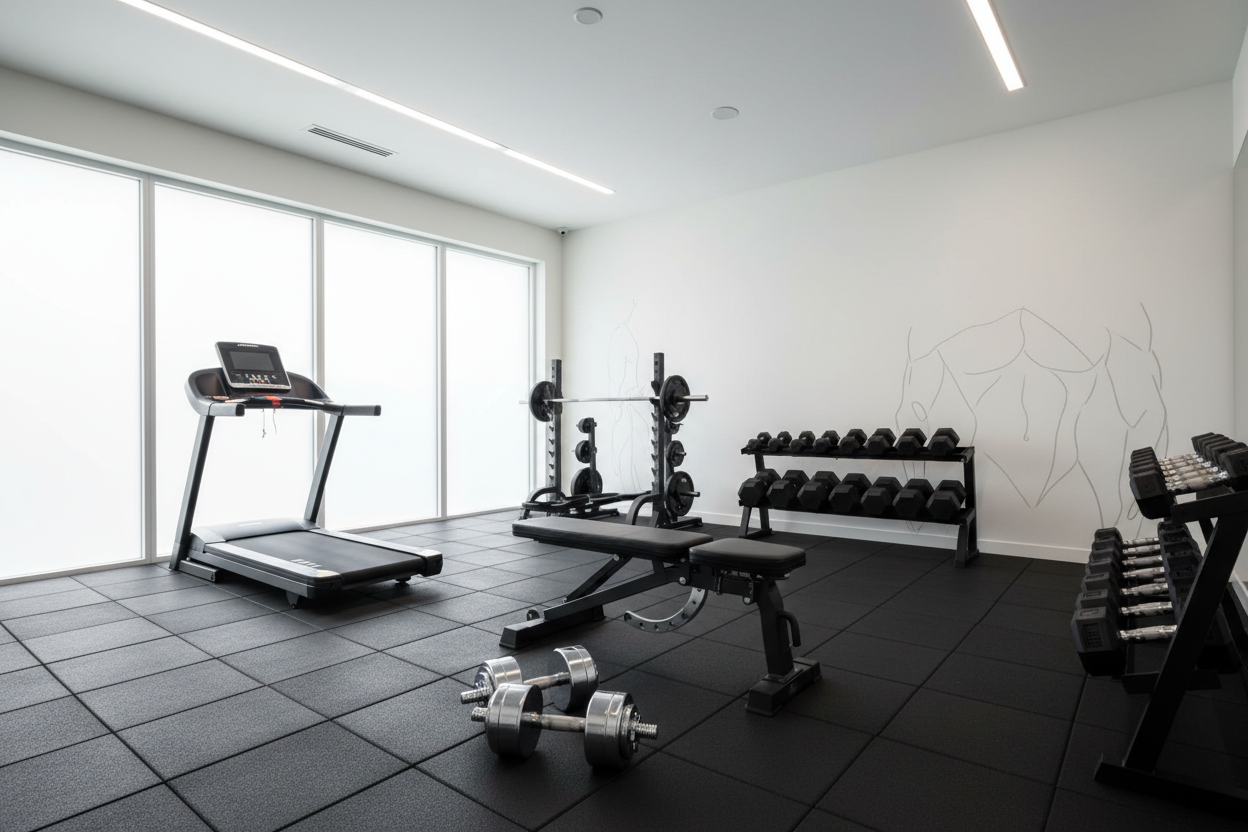
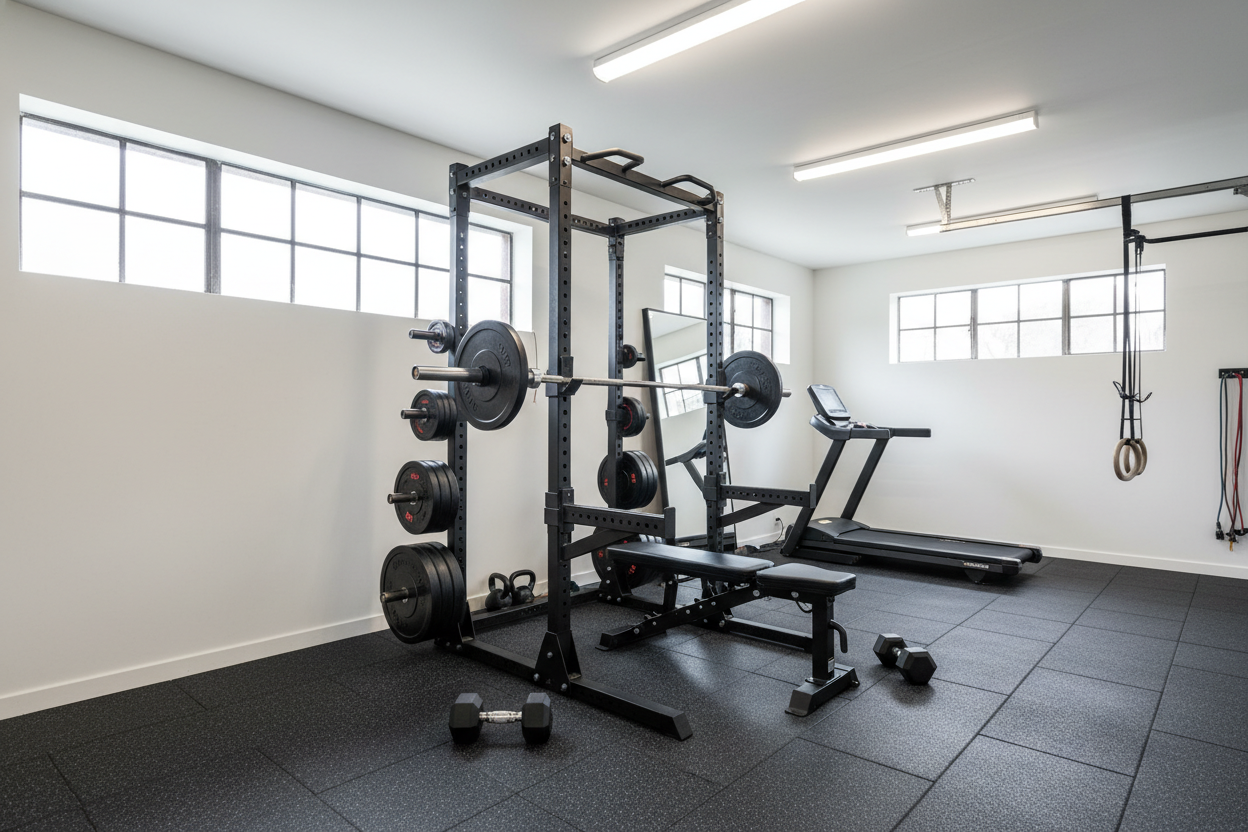
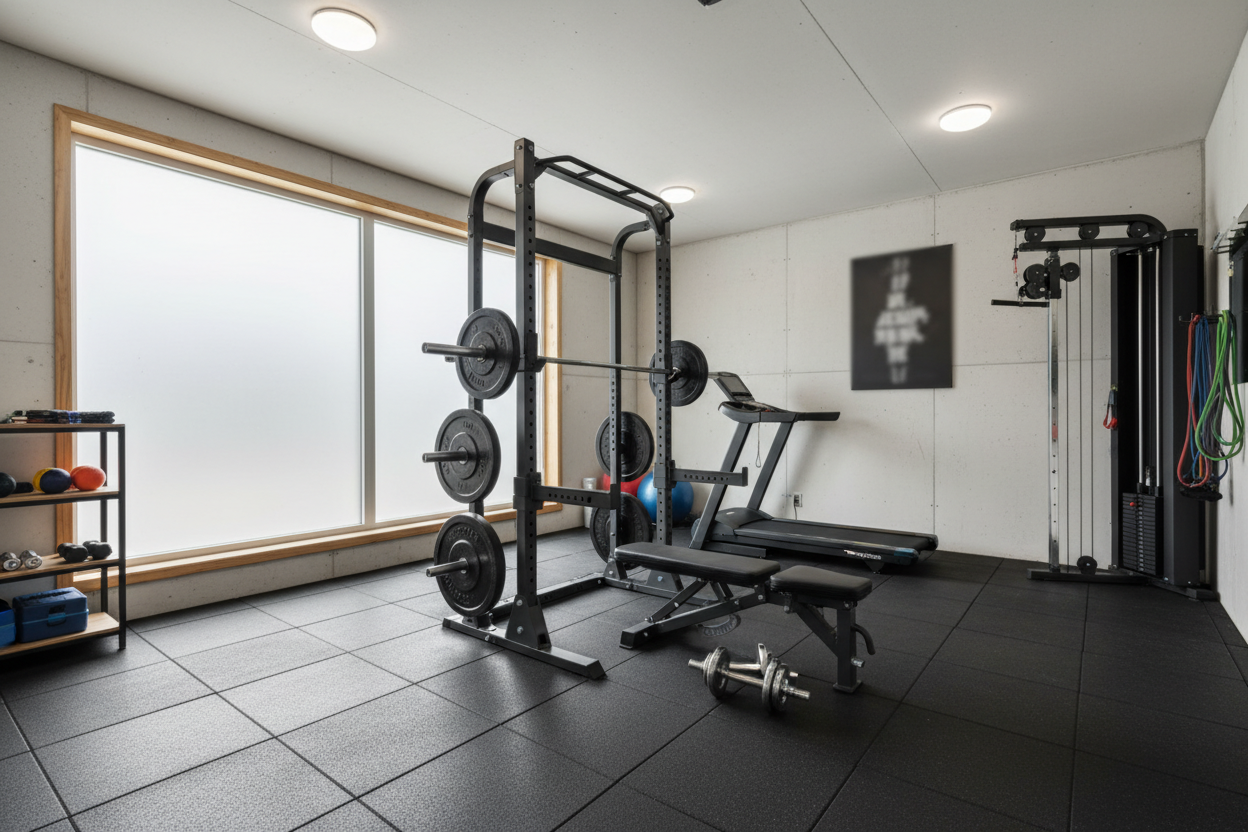
I've found that having a high-quality gym flooring for home workout setup is essential when you start doing more dynamic movements. You want something that absorbs the shock of a landmine bar or a bottomed-out kettlebell without it bouncing back into your shins. It also provides the necessary traction for the half-kneeling work where a slipping knee can ruin your set.
How to Phase These Into Your Current Split
You don't have to delete your overhead press entirely if you're not ready to let go, but try this: replace your main barbell lift with the landmine press for six weeks. Use the kettlebell bottoms-up press as your first accessory movement for 3 sets of 8-10 reps. Finish with heavy carries.
What you'll likely find is that the nagging 'ache' starts to dissipate within the first two weeks. By the end of the month, your shoulders will look fuller because you're actually able to train them with high intensity without the pain-induced governor holding you back. Training through pain isn't 'hardcore'—it's just a fast track to surgery. Train smart, use the right tools, and keep your joints in the game.
FAQ
Can I build big shoulders without overhead pressing?
Absolutely. Lateral raises, landmine presses, and heavy carries provide more than enough stimulus for hypertrophy. Your muscles respond to tension, not specific pieces of equipment.
Will landmine presses help my bench press?
Yes. By improving your scapular stability and strengthening the front delts without the joint wear and tear, you'll find you have a much more stable 'base' when you get back under a flat bench.
How heavy should I go on bottoms-up presses?
Start light. The goal isn't the weight; it's the control. If the bell is wobbling or you're using momentum, it's too heavy. Once you can do 10 clean reps, move up by 2kg or 5lb increments.