Why Your Pre-Workout Shoulder Rotations Are Doing Nothing
I see it every single time I walk into a commercial gym. Someone grabs a pair of 5-lb dumbbells, stands tall in front of the mirror, and starts flapping their forearms out to the sides like they are trying to take flight. They think they are performing shoulder rotations to bulletproof their joints, but they are actually just giving their biceps a mediocre isometric workout.
- Standing dumbbell rotations are useless because gravity pulls vertically.
- Cables and bands provide the horizontal tension the rotator cuff requires.
- Side-lying movements are the only way to make dumbbells effective for the cuff.
- High reps (15-20) and low weight are the keys to activation.
The Dumbbell Mistake Everyone Makes in the Mirror
Physics doesn't care about your intentions. When you stand up and hold a dumbbell with your elbow tucked at 90 degrees, gravity is pulling that weight straight down toward your toes. To keep that weight from falling, your bicep has to stay contracted. When you rotate your arm outward, you aren't moving against the resistance; you are just moving the weight through space while your bicep does the heavy lifting.
It is a classic case of feeling like you are working because your arm is moving, but the tension is in the wrong place. You need to stop doing external rotation for shoulder like this if you want to actually prep your joints for a heavy bench session. Unless you can change the direction of gravity, that standing dumbbell flick is a waste of your pre-workout energy.
Why You Actually Need a Shoulder Rotation Workout
Your rotator cuff is a group of four small muscles—the supraspinatus, infraspinatus, teres minor, and subscapularis. Their primary job isn't to move massive weight; it's to keep the head of your humerus centered in the shallow socket of your shoulder. When you ignore a dedicated shoulder rotation workout, you're asking for impingement and labrum tears once you start chasing a 315-lb bench.
Properly loaded shoulder rotation movements wake up these stabilizers. When they fire correctly, they create space in the joint, preventing the pinching feeling many lifters get during overhead presses. It's about joint integrity, not just vanity. If the cuff is weak, the big movers like your pecs and delts will eventually pull the joint out of alignment.
The Right Way to Load the Joint (Cables and Bands)
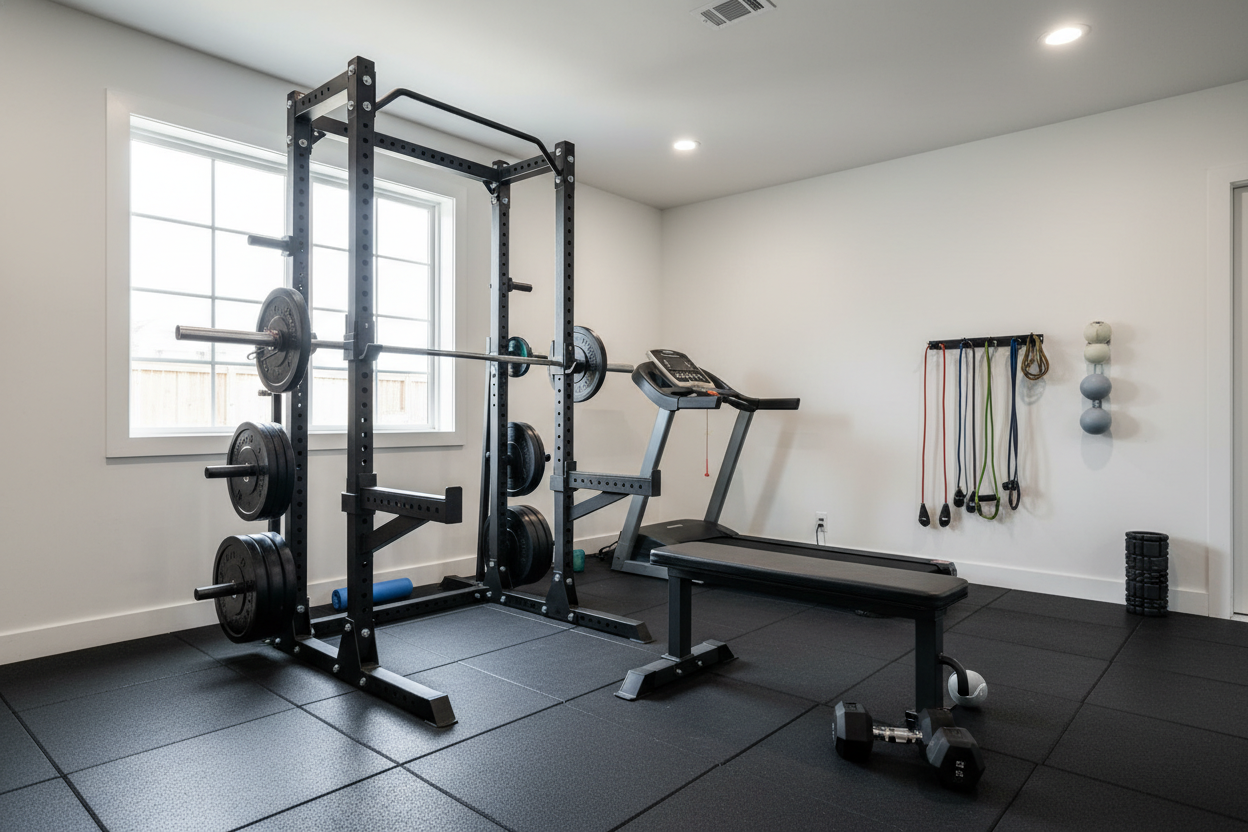
To fix the gravity problem, you need resistance that pulls horizontally. This is where the cable machine or a light resistance band comes into play. Attach a band to your power rack at elbow height. Stand sideways to the anchor point, grab the band, and rotate your arm away from your body. Now, the resistance is actually fighting your shoulder rotation exercise.
I prefer cables because the tension is constant throughout the entire range of motion. Bands get harder as you stretch them, which can sometimes lead to cheating with your traps at the end of the rep. Once your stabilizers are warm and the joint feels greased, you can safely move on to the heavy stuff, like learning how to build 3D delts with the right shoulder workout exercise.
Building a Proper Shoulder Rotation Exercise Routine
If you don't have access to cables, don't panic. You just have to change your relationship with gravity. Grab a large exercise mat and lie on your side on the floor. Hold a light dumbbell (seriously, start with 2 or 3 lbs) in your top hand, keep your elbow pinned to your ribcage, and rotate toward the ceiling. Now, gravity is finally working in your favor.
For a solid warm-up, I recommend 2 sets of 15-20 reps for both internal and external rotation. The goal isn't failure; it's a mild pump and increased temperature in the joint. Keep the tempo slow—two seconds out, two seconds back. If you start swinging your torso to get the weight up, you've already lost the battle.
Check Your Ego at the Door
I once tried to max out my external rotation using a 25-lb dumbbell because I thought I was a tough guy. All I got for my trouble was a week of sharp pain and a reminder that these are stabilizing muscles, not prime movers. If you are using more than 10 lbs for your rotations, you are almost certainly using your lats, traps, or momentum to move the weight.
Keep the movement strict. Keep the weight humbling. Your goal is to be the guy who's still benching in his 50s, not the guy who had to quit because his shoulders are trashed. Focus on the squeeze and the health of the joint.
FAQ
Can I just use a heavy band for more resistance?
No. Heavy bands usually cause your larger muscles to take over. Stick to the lightest band you have; the goal is activation, not hypertrophy.
How often should I do these movements?
I do them before every upper-body session. On active recovery days, a few sets can also help with blood flow and joint stiffness.
Should I do internal rotation too?
Most people are internally rotated from sitting at desks, so focus more on external rotation. A 2:1 ratio of external to internal is a good rule of thumb for most lifters.