Why Your Old Workouts to Gain Muscle Mass Suddenly Stopped Working
I remember sitting in my garage two years ago, staring at a barbell that felt twice as heavy as it did the week before. I had been following a standard 5x5 program for months, and for a while, it felt like magic. But then, the progress hit a wall so hard I thought I’d forgotten how to lift. If you are grinding through workouts to gain muscle mass and the needle hasn't moved in weeks, you aren't lazy—you’re just outgrowing your programming.
- Linear progression is a tool for beginners, not a lifetime sentence.
- Central Nervous System (CNS) fatigue is the silent killer of intermediate gains.
- Wave loading allows for volume accumulation without the 'grind' that leads to injury.
- Your floor might be stealing your power if it’s too soft or unstable.
The 'Newbie Gains' Honeymoon Phase is Over
When you first start hitting the iron, your brain is just learning how to talk to your muscles. Almost any workouts to gain muscles will work because your body is becoming 'neurologically efficient.' You aren't necessarily building massive amounts of tissue in those first three weeks; you're just getting better at using what you already have. But eventually, that efficiency peaks.
Once you can effectively recruit your muscle fibers, the game changes. You can’t just show up and expect a PR every Monday. This is the intermediate plateau where the scale stops moving and the weights feel like they’re glued to the floor. To keep growing, you have to stop treating every gym exercise to gain muscle as a test of your max strength and start treating it as a stimulus for hypertrophy.
Why Adding Five Pounds Every Week Becomes a Dead End
The 'add five pounds every session' mantra is great until it isn't. If you force a build muscle gym workout to be heavier every single time, you eventually stop training your muscles and start training your ego. You begin using momentum, cutting depth on squats, or arching your back like a bridge on the bench press just to hit the number. This doesn't build mass; it just fries your central nervous system.
I’ve seen guys spend six months trying to break a 225-lb bench press plateau by just trying 230-lb over and over. They end up with cranky shoulders and zero new chest meat. Sometimes, the best gym workout to gain muscle starts with the lightest weights. Backing off the intensity to 70% of your max and focusing on explosive concentric movements can actually prime your body for the next wave of growth.
The Intermediate Shift: Wave Loading and Volume Manipulation
Good workouts to build muscle for intermediates rely on undulating periodization. Instead of trying to smash a new record every day, you cycle your intensity. I like a three-week wave: Week 1 is high volume (3 sets of 12), Week 2 is moderate (4 sets of 8), and Week 3 is heavy (5 sets of 5). This prevents the dreaded 'plateau burnout' because your body never quite adapts to one specific stressor.
By alternating heavy days with high-volume days, you're hitting both the mechanical tension and metabolic stress needed for workouts for muscle gain. You’ll find that when you return to the heavy weights in Week 3, you’re actually stronger because you spent the previous two weeks building the actual tissue required to move the weight, rather than just redlining your nervous system.
Stop Leaking Your Driving Power Into the Floor
As you move into more advanced gym exercises for muscle building, the small details start to matter. If you are squatting 315 lbs on top of a squishy yoga mat or a piece of old carpet, you are losing force. Think of it like trying to jump off a mattress versus jumping off concrete. You want a surface that doesn't compress under load.
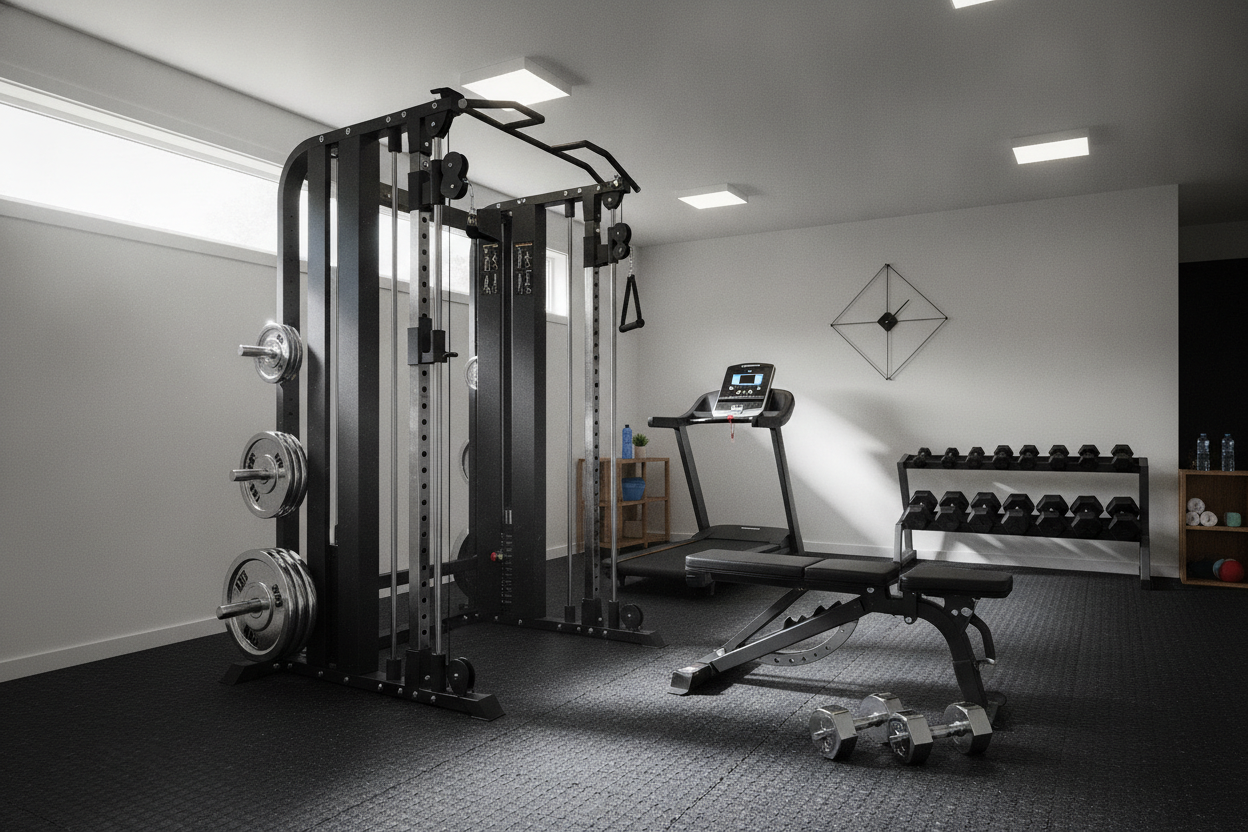
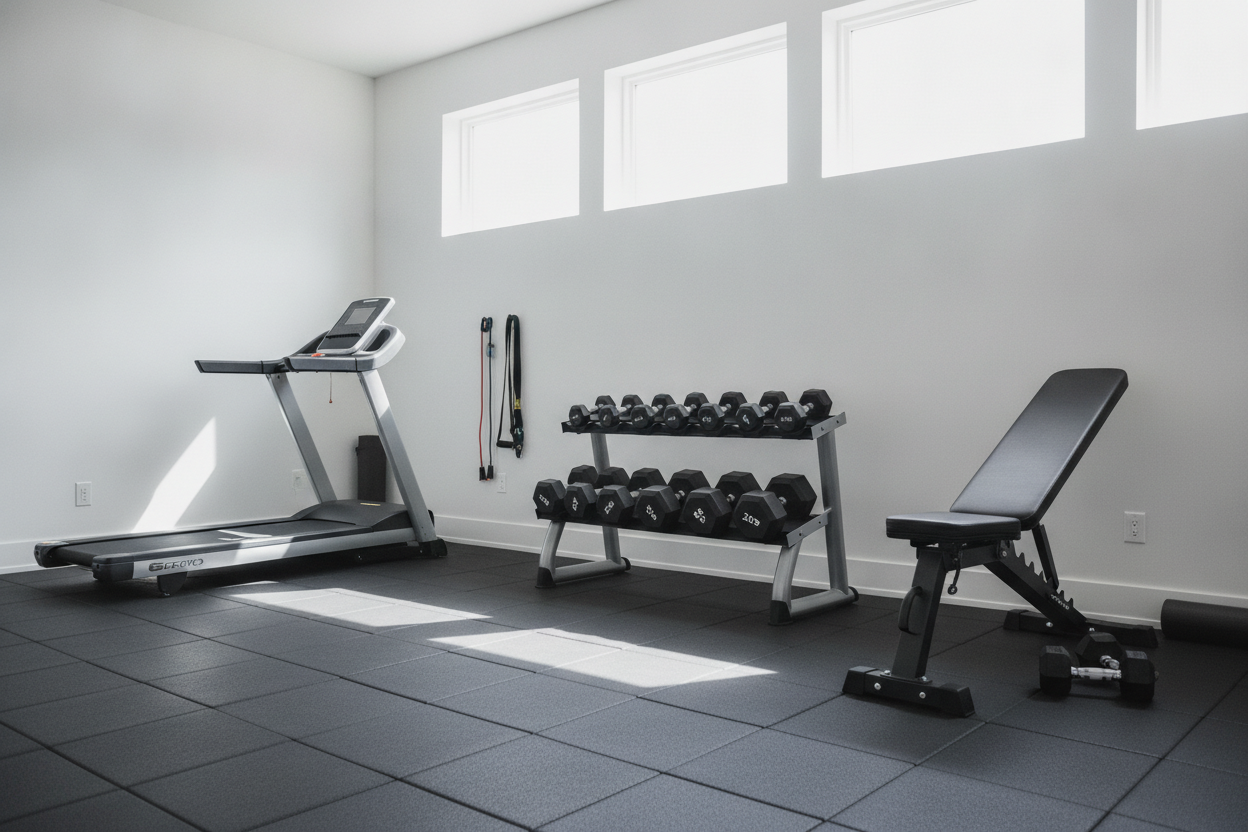
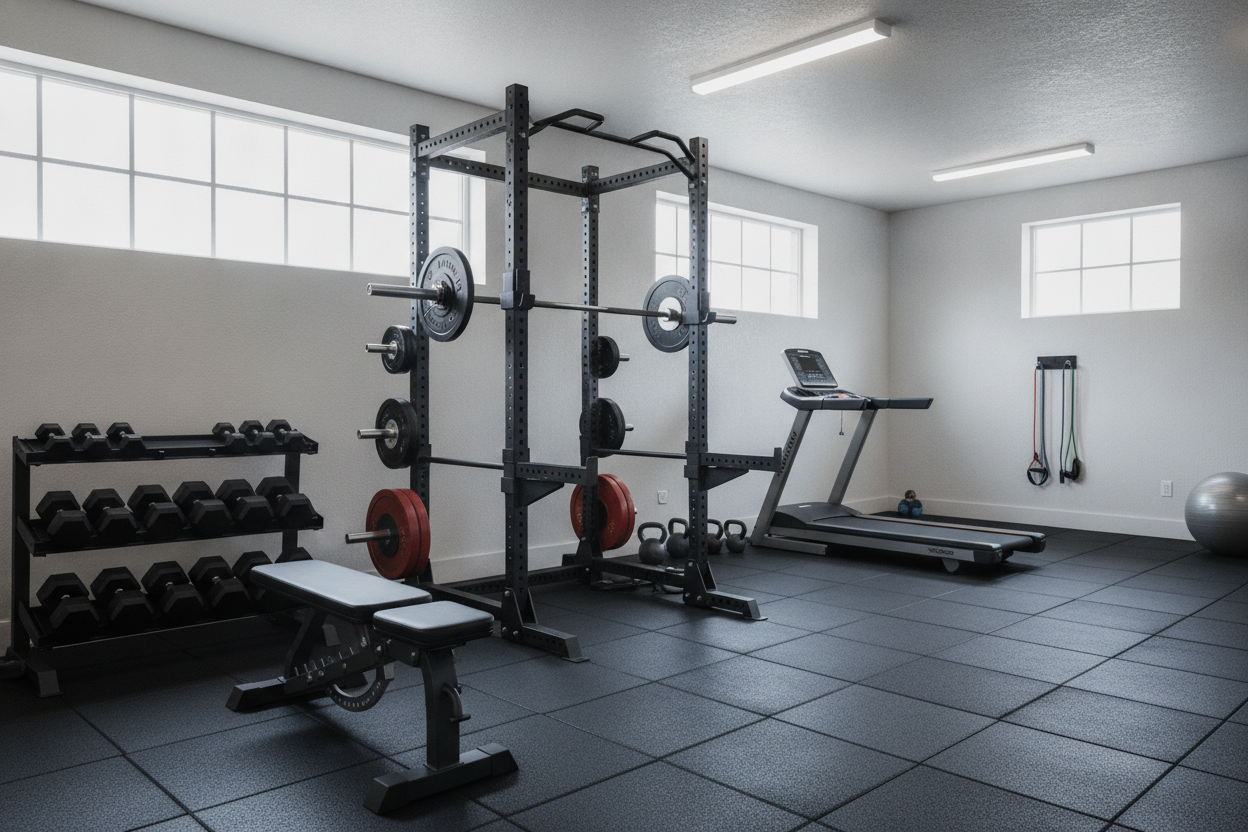
I personally wasted a year lifting on cheap foam tiles that shifted every time I tried to set my feet for a deadlift. Upgrading to a large exercise mat for home gym use—specifically one made of high-density recycled rubber—changed my stability instantly. When your feet are locked into a grippy, firm surface, every ounce of leg drive goes into the bar instead of being absorbed by the floor.
Rotating Your Main Lifts (Without Program Hopping)
There is a massive difference between 'program hopping' and strategic variation. You don't need to change your entire routine every week, but rotating your mass building exercises every 6 to 8 weeks can bypass sticking points. If your back squat has stalled, swap it for a safety bar squat or a front squat. These variations target the same muscle groups but from slightly different angles, forcing new adaptations.
This is also why you should stop buying more plates for your workouts to gain muscle mass and start looking at different implements. A thick grip bar or a set of bands can make 200 lbs feel like 300 lbs. These tools are essential for workouts to gain muscle and weight because they provide a novel stimulus without requiring you to constantly increase the absolute load on your joints and spine. A mass gaining exercise is only effective if you can actually recover from it.
I’ll be honest: I once tried to run a high-intensity Bulgarian-style program for 12 weeks straight. I thought I was being 'hardcore.' By week eight, I couldn't even sleep because my joints ached so bad, and I actually lost muscle because my cortisol was through the roof. The biggest mistake I ever made was thinking that more pain always equaled more gain. It doesn't. Smart programming and a solid foundation beat raw effort every single time.
How often should I change my muscle building routine?
Don't change the whole thing. Every 6-12 weeks, rotate your primary movements (like swapping flat bench for incline) and adjust your rep ranges. Keep the core principles the same, but change the stimulus.
Is volume or intensity better for mass?
You need both. High intensity (heavy weight) builds the tension, while high volume (more reps) creates metabolic stress. The best workouts for building mass use a mix of both throughout the week.
What is the most important gym exercises for muscle gain?
Stick to the big four: Squat, Bench, Deadlift, and Overhead Press. They allow for the most weight to be moved and involve the most muscle groups. Everything else is just 'accessory' work to support these lifts.