Why Your New Combo Exercise Machine Feels So Awkward
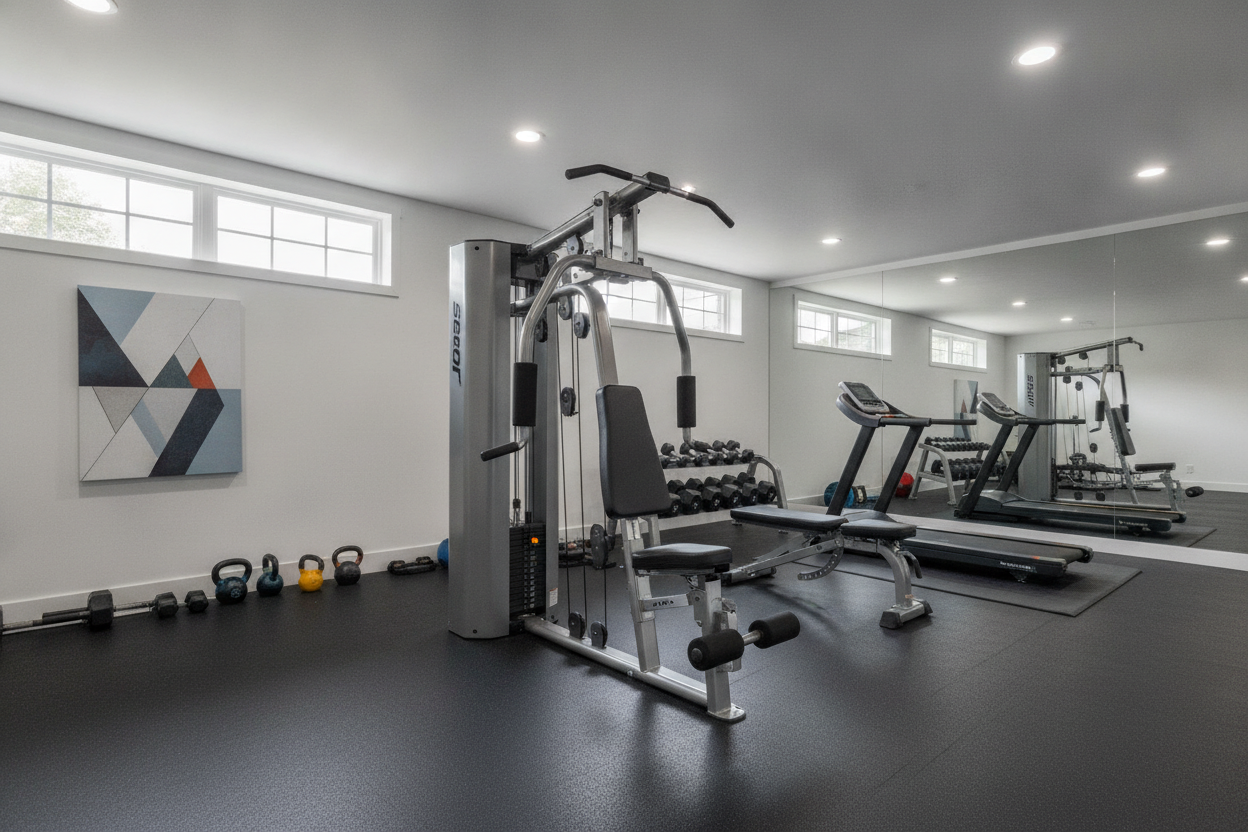
I was scrolling through a marketplace at 2 AM last month, looking at those massive, chrome-plated rigs that promise to replace an entire commercial gym. You know the ones—the units that claim to be a power rack, a Smith machine, a functional trainer, and a leg press all in a 4x6-foot footprint. It sounds like the ultimate win for a garage gym owner who is tired of paying $80 a month for a membership they barely use because the squat rack is always taken.
But here is the truth I’ve learned after assembling, testing, and eventually selling three of these units: a combo exercise machine is often a masterpiece of compromise. When you try to make one piece of steel do everything, it usually ends up doing nothing perfectly. You might save floor space, but you often pay for it with awkward lift angles and cable drag that makes a 20-pound fly feel like a 50-pound struggle.
Quick Takeaways
- Pulley friction is the silent killer of gains on cheap multi-station units.
- The width of the uprights often dictates whether you can actually use a standard Olympic barbell.
- 2:1 pulley ratios are great for functional movements but can feel too light for heavy lat pulldowns.
- Look for linear bearings on Smith machines; anything else will feel like sandpaper.
- Most attachments are proprietary, meaning you can't easily upgrade later.
The 'All-in-One' Trap: Jack of All Trades, Master of None
The marketing for combo workout machines is seductive. They show a guy doing a perfect chest press, followed by a cable crossover, followed by a heavy squat. In reality, the engineering required to cram those movements into one frame is a nightmare. Manufacturers have to decide which function takes priority. Usually, the Smith machine wins because it requires fixed guide rods, which then dictates where the pulleys can go and how wide the rack can be.
When you buy a dedicated power rack, the geometry is simple: four posts, plenty of interior space, and standard hole spacing. When you buy a combo unit, those four posts are now cluttered with cable trolleys, Smith bar tracks, and weight stacks. I’ve tested units where the cable trolley literally blocks the J-cups. You end up spending ten minutes adjusting the machine between every set just to clear a path for your next lift. It kills your momentum and makes a 45-minute workout take two hours.
Most of these units use 2-inch by 2-inch or 2-inch by 3-inch steel. While that sounds sturdy, the sheer number of holes drilled into the frame for all those 'stations' can actually compromise the structural integrity if it isn't 11-gauge steel. If the rack wobbles when you're doing pull-ups, imagine how it feels when you're trying to re-rack a 300-pound squat.
Where the Biomechanics Usually Fall Apart
The biggest issue with these rigs is the 'fixed-width' problem. A standard Olympic bar has a sleeve-to-sleeve distance designed for a 47-inch wide rack. However, many combo units are built narrower to save space or wider to accommodate the Smith machine carriage. This means your grip width on a bench press might be dictated by the machine's frame rather than your own shoulder width. It is a recipe for rotator cuff issues.
Just like how I realized that trying to mash together too many combo exercise moves with weights usually results in doing two things poorly rather than one thing well, these machines often fail by trying to be everything at once. The cable crossovers on a combo unit are frequently too close together. If the pulleys are only 40 inches apart, you lose the stretch at the start of a chest fly. You’re essentially doing a narrow-grip press with cables, which defeats the purpose of having a functional trainer in the first place.
Then there is the 'working depth.' In a real power rack, you have 24 to 40 inches of space inside the cage. In many combo units, the Smith machine bar sits right in the middle of that space. If you want to do free-weight squats, you’re forced to lift outside the rack or awkwardly dance around the Smith bar. It’s not just annoying; it’s a safety hazard if you need to bail on a heavy lift.
The Functional Trainer Compromise
Let’s talk about the pulleys. A standalone functional trainer usually uses a 2:1 ratio, meaning 100 pounds on the stack feels like 50 pounds of resistance. This allows for more cable travel—perfect for lunges or shadow boxing. Combo units often use a 1:1 ratio because it's cheaper to engineer for a single weight stack. This makes the movement feel 'chunky' and limits how far you can pull the handle before the weight stack hits the top.
I’ve also found that the pulleys themselves are often plastic rather than aluminum. Plastic pulleys with cheap bushings create massive amounts of friction. You’ll notice the weight 'sticks' on the way down, ruining the eccentric portion of the lift. If you’re paying two grand for a machine, you shouldn’t feel like you’re fighting the machine more than the gravity.
When Does a Multi-Station Unit Actually Make Sense?
I’m not saying you should never buy one. If you are living in a city apartment or have a tiny 10x10 shed, these are the only way to get a full-body workout without a gym membership. If you have a 10x10 spare room and that is it, building a routine around one workout exercise machine is a legitimate way to stay consistent without tripping over dumbbells.
These machines shine for high-volume accessory work. If you do your heavy compounds (squats, deadlifts, overhead press) at a local black-iron gym once a week, but want to do your lat pulldowns, rows, and tricep work at home, a combo unit is perfect. You don't need perfect biomechanics for a cable curl. You just need resistance. In a compact environment, the convenience of having 15 stations within arm's reach outweighs the slight awkwardness of the angles.
The key is managing expectations. Don't expect a $1,500 all-in-one to feel like a $5,000 Life Fitness unit. It won't. But if it gets you to train on a Tuesday night when you’d otherwise be on the couch, it’s a win.
How to Spot a Rig That Won't Wreck Your Form
If you're ready to pull the trigger, look at the specs—not the flashy photos. First, check the steel gauge. If it doesn't say 11-gauge or 12-gauge, it's probably thin-walled 14-gauge 'toy' steel. You want a machine that weighs at least 400 pounds before you even add plates. Mass equals stability.
Second, look at the Smith machine bearings. If it uses plastic bushings, run. You want linear ball bearings. They should glide silently. If you see a video of the Smith bar and it looks like it's stuttering as it moves, that friction will drive you crazy during a shoulder press. Also, check the hole spacing on the uprights. 'Westside' spacing (1-inch gaps through the bench zone) is the gold standard for finding the perfect height for your safety bars.
Finally, look at the pulley height adjustments. Can the pulleys go all the way to the floor and all the way to the top? Some combo units have a 'dead zone' in the middle where you can't set the pulley, which makes movements like cable lateral raises or waist-height rows impossible. Check the warranty too—a company that only offers 90 days on cables doesn't trust their own hardware.
Personal Experience: My First Big Mistake
I once bought a budget 'monster rack' because it had a built-in leg press attachment. I spent six hours putting it together, only to realize the leg press plate was so small I couldn't even put my feet in a shoulder-width stance. On top of that, the cable for the lat pulldown was about three inches too long, meaning I reached the end of the range of motion before my lats were fully contracted. I ended up having to buy extra chains and carabiners just to make the machine functional. It was a mess. Now, I always look for adjustable cable tensioners and oversized footplates.
FAQ
Are combo machines good for bodybuilding?
Yes, for hypertrophy and accessory work, they are excellent. The constant tension of cables is great for muscle growth. However, for pure strength or powerlifting, a dedicated rack is always better.
Can I use my own barbell with a combo unit?
Usually, yes, but check the exterior width of the rack. If the rack is 50 inches wide, some standard barbells might not fit properly between the collars. You want a rack width around 47-48 inches for a standard bar.
Do these machines require a lot of maintenance?
More than a standard rack. You’ll need to lubricate the guide rods for the Smith machine and the weight stacks with silicone spray every few months to keep them smooth. You also need to regularly check cables for fraying.