I Built a Beginner Workout Program for Women That Doesn't Suck
I’ve spent the last decade testing racks that shake if you look at them too hard and dumbbells with handles so thick they feel like soda cans. I’ve seen every 'toning' routine on the internet, and frankly, most of them are garbage. They focus on making you sweat and breathe hard without actually making you stronger.
If you are looking for a beginner workout program for women, you probably want results you can actually see in the mirror and feel when you’re carrying groceries. That doesn't happen with 3-pound pink weights and 50-rep sets of jumping jacks. It happens when you stop chasing fatigue and start chasing progress.
- Stop doing endless cardio circuits and start lifting for tension.
- Prioritize compound movements like squats and deadlifts over isolation moves.
- Protect your floors and your joints with high-density padding.
- Consistency beats intensity every single time.
Why Most 'Female Workouts' Are a Massive Waste of Time
The fitness industry treats women like they’re made of glass. Most programs marketed toward beginners are just 'cardio in disguise.' They pile on high reps with light weights to keep your heart rate up, which burns a few calories but does absolutely nothing for your bone density or muscle tone.
Muscles don't 'tone'; they grow or they shrink. To get that athletic look most people want, you have to apply enough mechanical tension to force your body to adapt. Doing 30 reps of a bicep curl with a soup can won't do that. You need to pick up something that actually feels heavy by the eighth or tenth rep.
Setting Up Your Living Room for Heavy Lifting
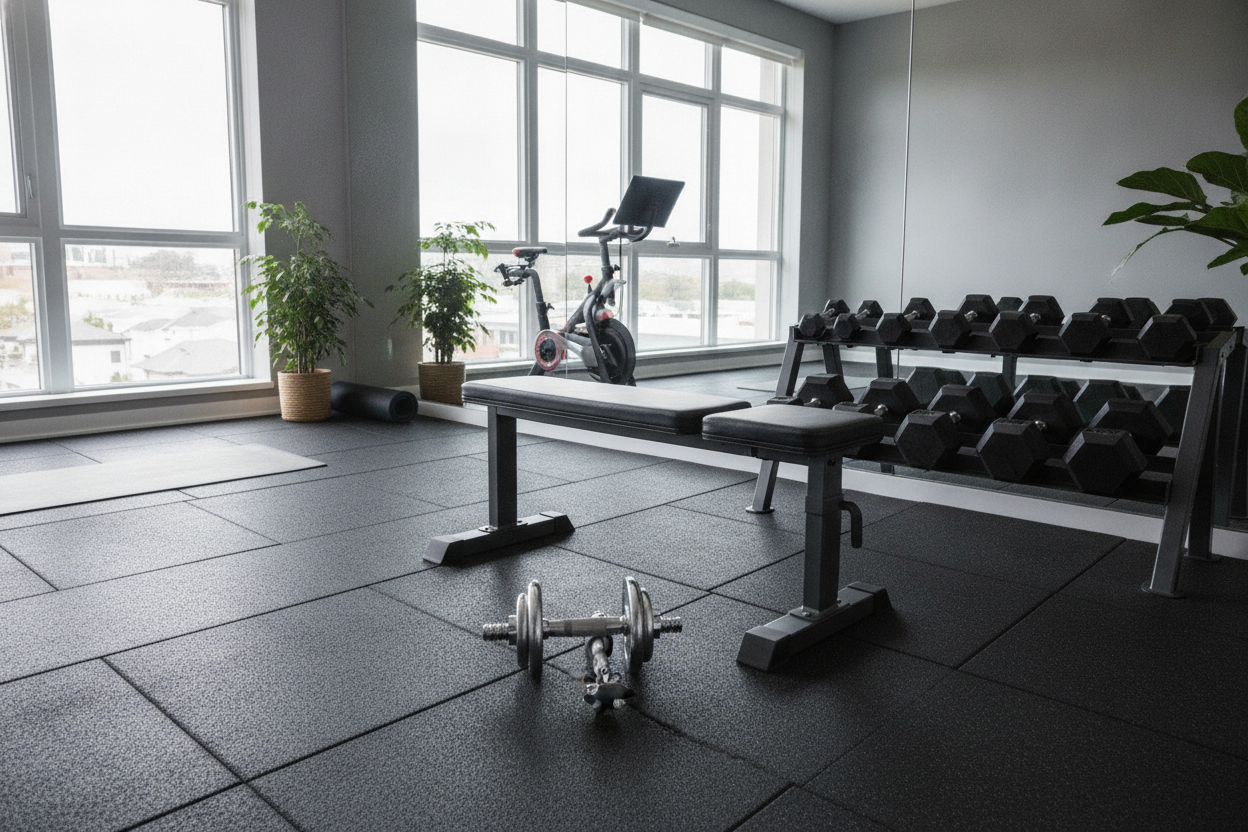
You don't need a 5,000-square-foot commercial space to get strong, but you do need to stop lifting on your bare hardwood or a thin rug. I’ve seen too many people crack tiles or slip during a set of lunges. A solid foundation is the first piece of 'equipment' you actually need.
I recommend laying down a 6X8Ft Exercise Mat Yoga Mat Gym Flooring For Home Workout before you even buy your first set of weights. It gives you enough space to move without resetting your position every five seconds, and it absorbs the impact when you set a heavy dumbbell down a little too fast. It’s a one-time investment that saves your floor and your knees.
The Core Problem: Sweating Isn't Building Strength
We’ve been conditioned to think that if we aren't dripping sweat and gasping for air, the workout didn't count. That’s a lie. Cardiovascular fatigue is not the same thing as muscular failure. If you're too out of breath to maintain good form on your squats, you aren't training your legs—you're just doing bad cardio.
In a real strength session, you should be resting 60 to 90 seconds between sets. This feels 'lazy' to beginners, but it's mandatory. Your central nervous system needs that break so you can put maximum effort into the next set. If you're rushing, you're leaving gains on the table.
The Actual Beginner Workout Program for Women
This is a 3-day full-body split. You’ll do Workout A, rest a day, do Workout B, rest a day, and so on. We focus on the big five: Squat, Hinge, Push, Pull, and Carry. If you aren't sure what these look like, I usually point people toward a solid Workout Hub where you can see the mechanics of a proper hinge versus a squat.
- Goblet Squats: 3 sets of 8-10 reps. Hold one dumbbell at your chest like a trophy.
- Dumbbell Deadlifts (Hinge): 3 sets of 10 reps. Focus on pushing your hips back, not just bending over.
- Overhead Press (Push): 3 sets of 8 reps. Keep your core tight so you don't arch your back.
- One-Arm Rows (Pull): 3 sets of 10 reps per side. Pull your elbow toward your hip.
- Farmer’s Carries: 3 sets of 40 steps. Hold the heaviest weights you can manage and walk tall.
Nailing Your Women's Workout Schedule for Beginners
Life is messy. Between work, kids, or just the general chaos of a Tuesday, a 6-day-a-week 'hardcore' schedule is a recipe for failure. Your women's workout schedule for beginners should be sustainable. Three days a week is the sweet spot for most people starting out.
If you find yourself skipping sessions because you 'don't have an hour,' try the At Home Workout Schedule For Beginners: The Add-A-Day Method. It’s a framework that helps you build the habit without the guilt of a rigid calendar. The goal is to make the gym fit your life, not the other way around. Recovery is when the muscle actually grows, so don't feel bad about those off days.
What to Do When the Weights Finally Feel Too Light
The biggest mistake beginners make is staying with the same weight for six months. This is called 'plateauing.' If you can easily finish all your reps with perfect form, the weight is too light. You need to increase the load by 2.5 to 5 pounds, or add another rep to every set.
Eventually, those adjustable dumbbells or light kettlebells won't be enough. That's a good thing. It means you’re stronger than you were on Day 1. When that happens, it’s time to look at a barbell or a heavier set of plates. Don't fear the heavy stuff; it’s the only thing that actually moves the needle.
My Personal Lesson in Cheap Gear
When I first started out, I tried to save money by using a cheap, slippery yoga mat on top of a carpet. I was doing a set of weighted lunges, my front foot slid forward, and I ended up in a partial split I definitely wasn't flexible enough for. I couldn't train for two weeks. I learned the hard way that grip and floor stability aren't 'extras'—they are safety requirements. Buy the right mat first.
FAQ
How heavy should I start?
Pick a weight where the last two reps of a set are difficult but your form doesn't break. If you're shaking uncontrollably, go lighter. If you could hold a conversation while doing it, go heavier.
Do I need to do cardio too?
You can, but don't do it right before you lift. It will sap your energy. Save the walks or bike rides for your off days or do them after your strength work.
What if I don't have a bench?
Most of these moves can be done standing or lying on the floor. A floor press is a great alternative to a bench press and actually protects your shoulders from over-extending.