Why Your List of Muscular Strength Exercises Is Way Too Long
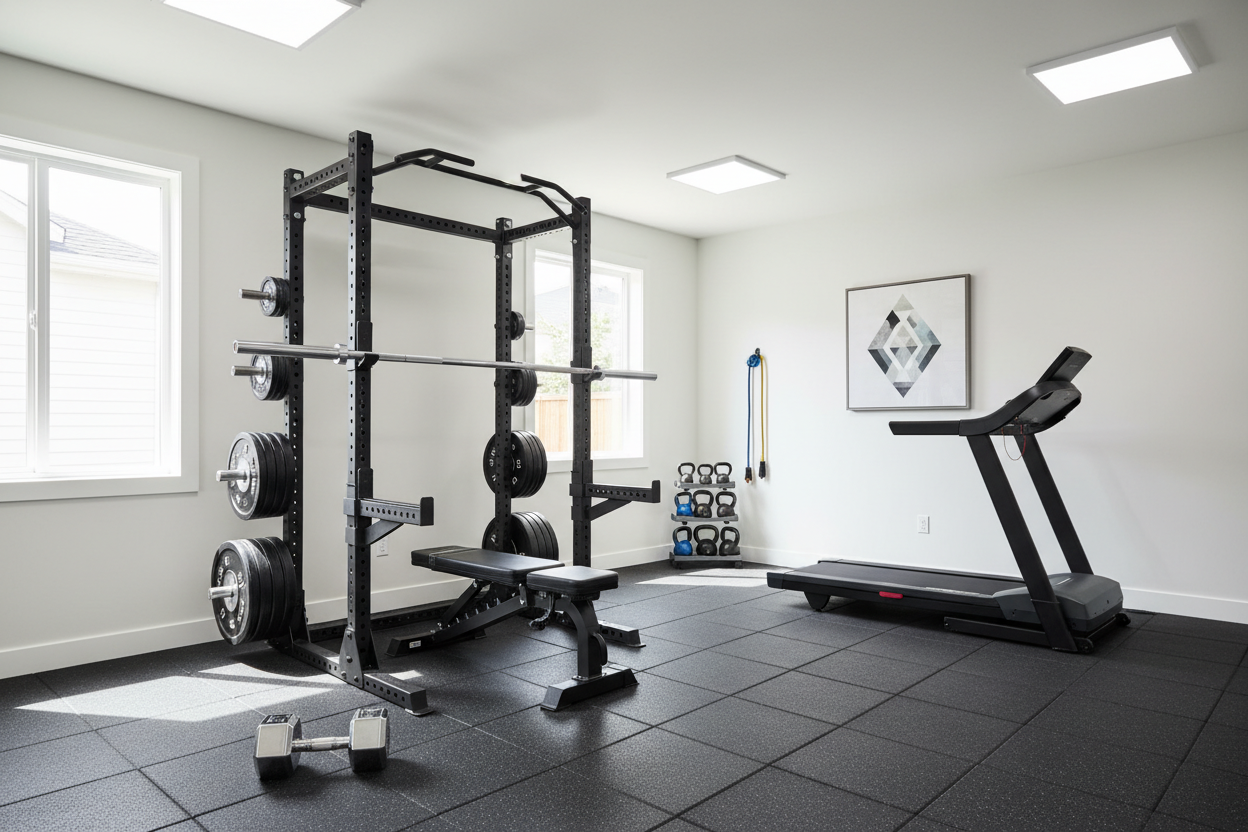
I remember the night I finally broke. I was three weeks into a high-volume bodybuilding program I’d found online, staring at a spreadsheet that required fourteen different movements just for 'Leg Day.' My garage was a mess of adjustable dumbbells, resistance bands, and a shaky squat stand that felt like it was held together by hope and cheap zinc bolts. I was exhausted, my joints felt like they’d been through a rock tumbler, and my actual strength hadn't budged in months. Most people think they need a massive list of muscular strength exercises to see results, but the reality is much simpler—and much heavier.
- Focus on Levers: Stop thinking about muscles and start thinking about movement patterns.
- Load is King: If you can't add weight to it over time, it's a accessory, not a cornerstone.
- Protect the Floor: Heavy lifting requires a stable, high-traction surface to prevent injury and home damage.
- Quality Over Quantity: Three brutal sets of five beats fifteen sets of fluff every single time.
The Trap of the 'Mega-Routine'
The biggest mistake I see home gym owners make is trying to replicate a commercial gym experience in a 200-square-foot garage. You see a guy on YouTube with a $50,000 setup doing twenty different isolation moves, and you think that’s the secret. It’s not. When you try to run a 'mega-routine,' you dilute your mechanical tension. Instead of putting 100% of your nervous system into a few big lifts, you’re spreading 5% across a dozen 'burnout' sets that don't actually build power.
Hoarding exercises is just procrastinating on the hard work. It’s easier to do three sets of cable flyes than it is to grind out a heavy set of five on the bench. But if you want real, transferable strength that lets you move a couch or deadlift a tractor tire, you need to prune the fat. A shorter, more brutal list allows you to track your progress with surgical precision. If you’re not getting stronger on the big lifts, you’re just exercising; you’re not training.
My Stripped-Down List of Muscular Strength Exercises
You don't need a sea of machines to get strong. In fact, most of the best muscular strength exercises are the ones that require the most stabilization from your core and secondary muscles. I’ve found that you only need a few pieces of basic home strength equipment—a solid bar, some plates, and maybe a heavy kettlebell or two—to build a world-class physique. This muscle strength exercises list focuses on the highest ROI movements possible.
1. The Heavy Hinge (Deadlifts and RDLs)
If you aren't pulling something heavy off the floor, you aren't training for strength. The hinge is the ultimate expression of posterior chain power. I prefer the conventional deadlift for raw output, but if you're working with limited weight, the Romanian Deadlift (RDL) is the best exercise for muscular strength in the hamstrings and glutes. You can even load this with a heavy sandbag if you don't have a barbell yet. The key is the 'click' of the bar against your shins and the tension in your lats. Don't let your back round like a fishing pole; keep that spine neutral and drive through the floor.
2. The Squat Pattern (Front, Back, or Goblet)
Squatting is a full-body event. When you've got 300 lbs on your back, every muscle from your traps down to your arches is screaming. These are undeniably best muscular strength exercises because they force your body to stabilize under significant load. If you’re tight on space or don't have a rack, the Goblet Squat with a 100-lb dumbbell is a brutal alternative. I’ve found that front squats actually carry over better to 'real world' strength, as they force a more upright torso and massive core engagement. Just make sure your heels stay glued to the ground.
3. The Horizontal and Vertical Pull (Rows and Pull-Ups)
A strong back is the foundation for everything else. You can't press heavy if your upper back is as soft as a marshmallow. I’m a huge fan of the Pendlay Row—strict, dead-stop reps from the floor. It eliminates momentum and builds explosive power. For vertical pulling, nothing beats the weighted pull-up. These are good exercises for muscular strength because they protect your shoulders and balance out all the pressing most lifters overdo. If you can't do a pull-up yet, get some heavy-duty resistance bands to assist, but make it your mission to ditch them as fast as possible.
4. The Multi-Angle Press
To build upper body density, you need to push heavy things away from you. This means overhead pressing and some form of horizontal press. If you're training alone in a garage without a spotter, I highly recommend the floor press. It limits the range of motion slightly but keeps you from getting pinned under a bar if you hit failure. Pressing movements are universal for anyone looking to build strength and tone across the chest, shoulders, and triceps. These are good muscular strength exercises that respond best to lower rep ranges and heavy iron.
How to Actually Execute These in a Garage Gym
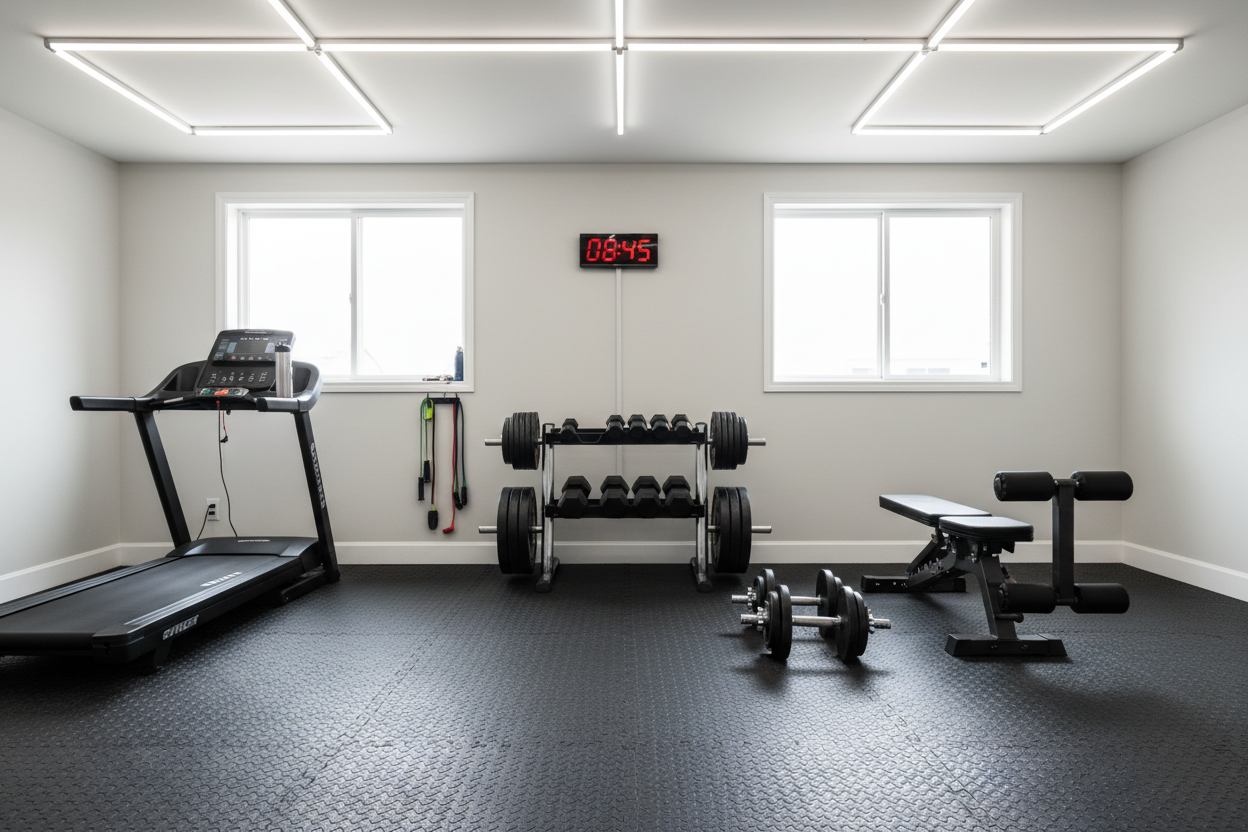
Lifting heavy at home isn't the same as lifting in a commercial box. You have to worry about your foundation—both yours and the house's. I once tried to max out my deadlift on bare concrete and nearly cracked the slab when I dropped the bar. Beyond the damage, concrete is slippery when you sweat. You need a dedicated gym flooring for home workout to provide the traction required for heavy squats and cleans. If your feet are sliding, your form is breaking.
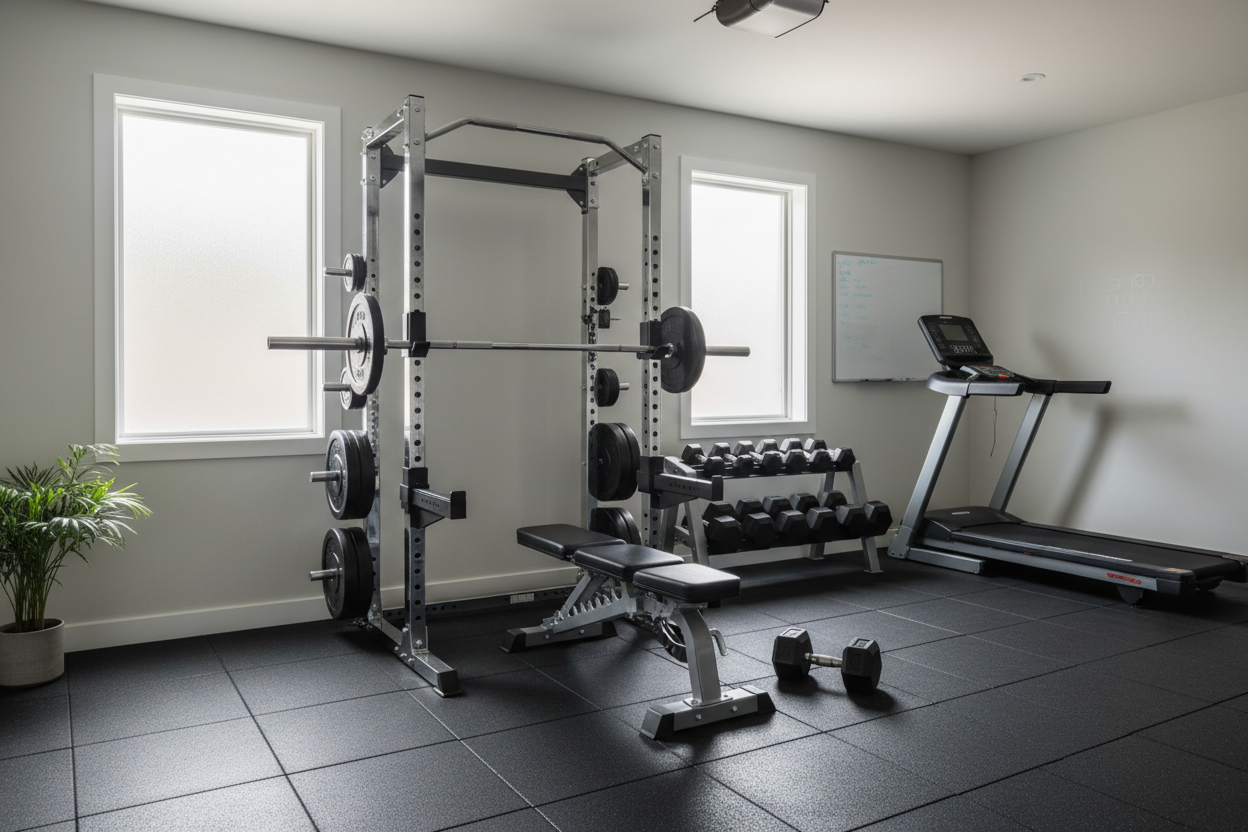
When asking what are exercises for muscular strength, you also have to consider safety. If you're using a barbell, get a rack with safety pins or spotter arms. If you're using dumbbells, make sure they have a solid grip that won't get slick with sweat. Don't let equipment limitations become an excuse for bad form. I’d rather see you do a perfect goblet squat with a 50-lb weight than a shaky back squat with 200 lbs on a rack that looks like it's made of toothpicks.
Programming Your New Bare-Bones Routine
Now that you have your exercises to build muscular strength, don't try to do them all every day. A simple 3-day full-body split or a 4-day upper/lower split is plenty. Focus on the 3-to-5 rep range for your primary lifts and 8-to-12 for your accessories. Recovery is where the actual strength happens. If you're hitting the hinge, the squat, the pull, and the press twice a week with progressive overload, you will get stronger than 90% of the people at your local big-box gym. For more ideas on structuring these, check out these best exercises for a full body workout.
Personal Experience: The 'More is Better' Mistake
A few years back, I bought into the hype of a 'high-frequency' program that had me squatting and pressing five days a week. I was using a cheap bar with no center knurling and a pair of adjustable dumbbells that rattled every time I moved. Within a month, my elbows felt like they were on fire and I was actually getting weaker. I was doing too much with gear that couldn't handle the intensity. I stripped everything back to just four movements, invested in a decent bar and a high-traction mat, and my numbers shot up 40 lbs in two months. Lesson learned: intensity beats variety.
FAQ
How many exercises do I really need?
Four to six core movements are all you need for a solid strength foundation. Anything more is usually just 'filler' that eats into your recovery time.
Can I build strength with just dumbbells?
Absolutely, but you'll eventually run into a weight ceiling. Heavy lunges, goblet squats, and floor presses with dumbbells are incredibly effective until you can graduate to a barbell.
How often should I change my routine?
Stop 'confusing' your muscles. Stick to the same big lifts for at least 8-12 weeks. The only thing that should change is the weight on the bar or the reps performed.