Why Your Legs Look Small: The Ultimate Guide to Building Massive Hamstrings
If you have ever looked in the mirror and felt that your legs look impressive from the front but disappear entirely from the side, you are likely suffering from a lack of posterior chain development. Most lifters obsess over their quads, pushing heavy weight on squats and leg presses, while treating the back of their legs as an afterthought. To truly fill out your jeans and build an imposing lower body, you need to prioritize the hamstrings with the same intensity usually reserved for the bench press.
Building size in this area requires a specific approach. You cannot simply throw in a few sets of light leg curls at the end of a grueling workout and expect growth. The hamstrings are a fast-twitch dominant muscle group for many people, meaning they respond best to heavy loads and explosive movements, alongside high-tension isolation work. To see real changes, you must train both primary functions of the muscle: bending the knee (knee flexion) and extending the hips (hip extension).
The Mistake of Ignoring the Posterior Chain
I learned this lesson the hard way. Early in my lifting career, I was obsessed with having a big squat. I hammered my quads three times a week. My numbers went up, but I started developing nagging knee pain, and my physique looked unbalanced. During a heavy deadlift session, I felt a sharp pop in the back of my thigh. It wasn't a catastrophic tear, but it was a severe strain that sidelined me for weeks.
My physical therapist was blunt: my quads were overpowering my hamstrings, creating a dangerous imbalance. That injury forced me to completely overhaul my training. I stopped treating hamstring work as accessory fluff and started making it a main event. The result wasn't just pain-free knees; within six months, my legs looked significantly thicker, and my deadlift added 40 pounds. That experience taught me that structural balance isn't just about aesthetics; it is about longevity.
Mastering the Hip Hinge
The biggest chunk of your hamstring muscle belly is built through heavy hip extension. This is where you load the muscle while it is in a stretched position. If you are looking for the most effective hamstring exercises for mass, you have to start with the Romanian Deadlift (RDL).
The Romanian Deadlift (RDL)
The RDL differs from a standard deadlift because the focus is entirely on the eccentric (lowering) portion of the movement. You start from the top, holding the bar against your thighs. As you lower the weight, you shove your hips back as far as possible while keeping a slight bend in the knee. The movement stops when your hips stop moving back. Going lower than that usually just rounds your lower back.
Control is everything here. You should feel a deep, painful stretch in the belly of the muscle. Fight the urge to bounce the weight off the floor. Keep the tension constant. This exercise creates significant muscle damage (the good kind), which is a primary driver for hypertrophy.
The Good Morning
While the RDL allows for the heaviest loading, the Good Morning places the load on your back, increasing the lever arm and the challenge to the posterior chain. This move requires strict form. Keep your core braced and push your hips back just like the RDL. It is often better to use slightly higher reps here to protect the lower back while still frying the hamstrings.
Isolation and Knee Flexion
Compound movements are great, but to fully develop the short head of the biceps femoris (which only crosses the knee joint), you need to curl. This is where many people get lazy, but strict isolation is necessary for a complete hamstring mass workout.
Seated vs. Lying Leg Curls
For years, the lying leg curl was considered the gold standard. However, recent biomechanical understanding suggests the seated leg curl might actually be superior for growth. When you are seated, your hips are in a flexed position, which puts the hamstrings in a more lengthened state to begin with. Training a muscle at long muscle lengths creates more tension and generally leads to better growth.
That does not mean you should abandon the lying leg curl. It offers a different stimulus and a peak contraction that is hard to replicate. A well-rounded program often rotates between the two.
Nordic Hamstring Curls
If you want to talk about humbling exercises, the Nordic curl is at the top of the list. This bodyweight movement involves kneeling and lowering your torso toward the ground while your ankles are anchored. It places an immense eccentric load on the hamstrings. Most people cannot perform a full rep unassisted, and that is fine. Controlling the descent as slowly as possible is one of the most potent stimuli for adding density to the back of the legs.
Structuring Your Training
Knowing the moves is half the battle; programming them is where the magic happens. A common error is placing these exercises after heavy squats. By the time you get to your hamstrings, your central nervous system is fried, and you cannot generate the force output required for growth.
If your hamstrings are a weak point, try prioritizing them. Start your leg day with leg curls. This technique, known as pre-exhaustion, warms up the knees and ensures you hit the hamstrings with full energy. Alternatively, dedicate a separate training day to the posterior chain. A dedicated hamstring mass workout might look like this:
- Seated Leg Curls: 3 sets of 12-15 reps (warm-up and pre-fatigue).
- Romanian Deadlifts: 4 sets of 8-10 reps (heavy compound focus).
- Glute-Ham Raises or Nordics: 3 sets to failure (focus on the negative).
- Walking Lunges: 3 sets of 20 steps (metabolic finish).
Intensity and Tempo
Muscle growth comes from tension. Swinging the weight on a leg curl machine does nothing for you. You need to control the tempo. Try a 3-second negative on every rep of your hamstring mass exercises. Pause for a second at the point of maximum stretch on your RDLs. This mind-muscle connection turns a mediocre set into a growth-inducing one.
The hamstrings are stubborn. They are used to carrying your body weight around all day. To shock them into growing, you need to apply progressive overload. Add weight to the bar, do more reps, or increase the time under tension every single week. If your workout feels easy, you aren't training hard enough to force adaptation.
Recovery and Patience
Because the hamstrings have a high proportion of fast-twitch fibers and undergo significant stretch under load, they get sore. Very sore. It is not uncommon to have trouble walking for two days after a proper session. This delayed onset muscle soreness (DOMS) is normal when you introduce new stimuli.
Ensure you are eating enough protein to support repair and getting enough sleep. You cannot build mass in a deficit if you are already lean; you need fuel. Be patient. Leg growth is a slow process, but if you stay consistent with heavy hinges and strict curls, you will eventually build a set of legs that look powerful from every angle.
Frequently Asked Questions
How often should I train my hamstrings for maximum growth?
For most lifters, training hamstrings twice a week is the sweet spot. This allows you to hit them with high intensity while giving them the 48 to 72 hours of recovery time they typically need. You might do a heavy hip-hinge focus on one day and a higher-repetition isolation focus on the second day.
Can I build big hamstrings with just bodyweight exercises?
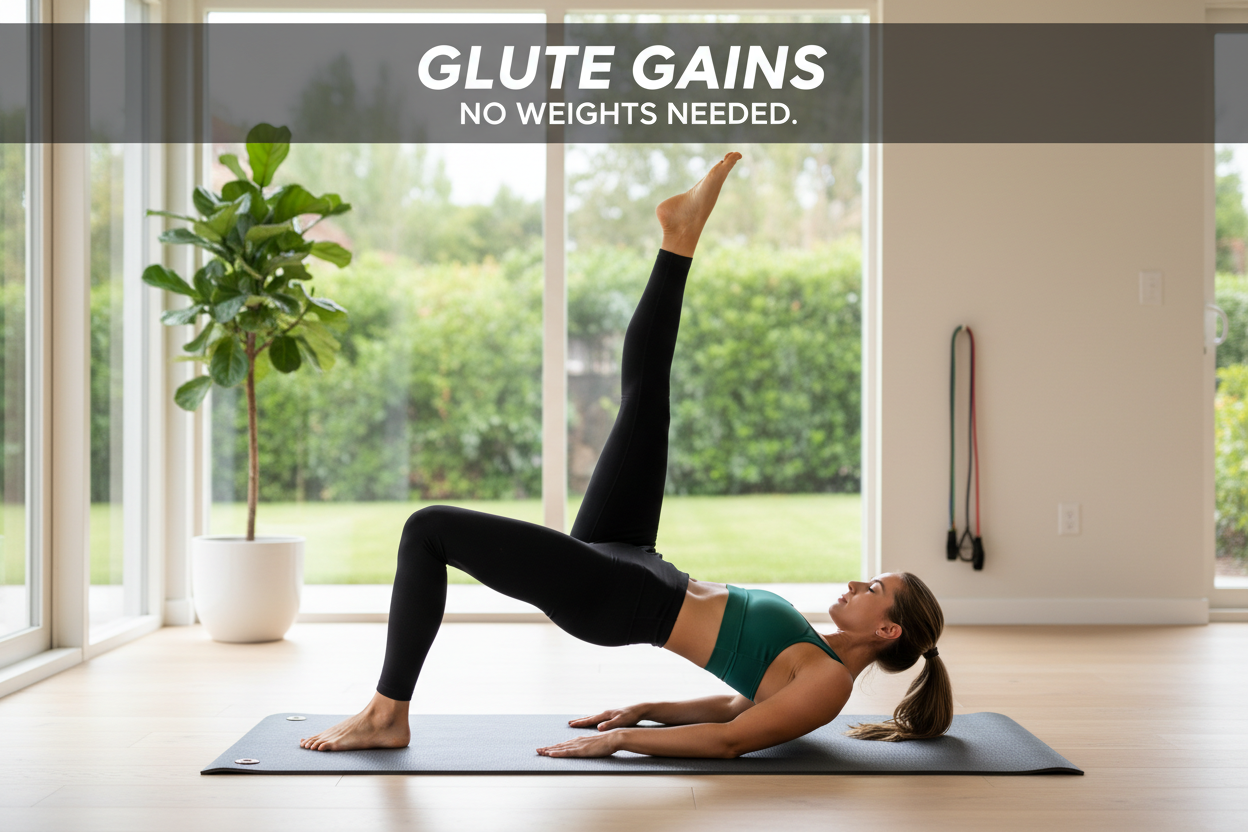
It is difficult but possible if you utilize high-intensity variations like the Nordic Hamstring Curl. While standard bodyweight squats won't do much for the back of your legs, Nordics provide an intense eccentric load that rivals heavy weight training. However, adding external resistance (weights) is generally faster and more efficient for pure mass.
Why do I feel my lower back taking over during RDLs?
This usually happens when you run out of hamstring flexibility but keep trying to lower the bar. Once your hips stop moving backward, the range of motion is over. If you go lower, your spine has to round, shifting the tension to your lower back. Stop the movement the moment your hamstrings are fully stretched.