Why Your 'Increase Weight' Exercise Routine Is Keeping You Skinny
I remember standing in my freezing garage five years ago, staring at a pair of 25-pound dumbbells and wondering why my collarbones were still sticking out like shelf brackets. I was following a generic increase weight exercise plan I found on a random forum, doing three sets of ten for every muscle I could name. I was sweating, sure, but I wasn't growing. I looked exactly the same after three months of 'hard' work.
The problem wasn't my effort; it was my strategy. Most people trying to bulk up treat the gym like a buffet—a little bit of this machine, a few sets of that curl. If you want to actually move the needle on the scale, you have to stop exercising and start training. You need a plan that forces your central nervous system to panic and build armor.
Quick Takeaways
- Compound movements (Squat, Deadlift, Press) are the only way to trigger massive hormonal responses.
- Frequency is king—hit every muscle group three times a week rather than once.
- Progression must be measurable; if you aren't adding 5 pounds to the bar, you aren't growing.
- Ditch the 'pump' and focus on mechanical tension with heavy loads.
The Hardgainer Trap: Why You're Lifting But Not Growing
Most 'hardgainers' aren't actually cursed with bad genetics. They're just stuck in a loop of chasing a muscle pump with light weights. Doing 15 reps of a cable fly might make your chest feel tight for twenty minutes, but it does almost nothing to convince your body it needs to weigh 10 pounds more. A generic fitness program for weight gain often fails because it lacks the intensity required to disrupt homeostasis.
Your body is a survival machine. It doesn't want to carry extra muscle because muscle is metabolically expensive. To force it to grow, you have to give it a reason. That reason is heavy, compound resistance. If you’re just doing high-rep 'toning' moves, you’re essentially telling your body to get better at endurance, not size. You need to shift your focus to a gym weight gain workout that prioritizes the big lifts over the small ones.
Stop Doing 'Arm Day' (And Ditch the Bro Splits)
If you're only hitting your chest on Mondays and your back on Tuesdays, you're leaving gains on the table. Natural lifters need frequent stimulation to keep protein synthesis elevated. When you do a 'bro split,' that muscle group spends 48 hours recovering and the next five days doing nothing. It’s an inefficient way to manage a weight gain exercise routine.
Instead, I’ve found that a full body workout weight gain strategy works significantly better for packing on mass. By hitting your legs, back, and chest in every session, you’re triggering growth signals across your entire frame three times a week. It’s the difference between sending one loud message to your muscles and sending three. You’ll find that your overall strength sky-rockets because your technique on the big lifts improves with the extra frequency.
The 'Big Four' Lifts That Actually Trigger Mass
Forget the fancy machines for a second. If you want to get big, you need to master the Squat, Deadlift, Bench Press, and Overhead Press. These are the 'Big Four.' They use the most muscle mass, allow for the heaviest loading, and cause the greatest systemic fatigue. When you put 200+ pounds on your back and squat, your body doesn't just grow bigger legs—it releases a cocktail of growth hormones that helps your whole body expand.
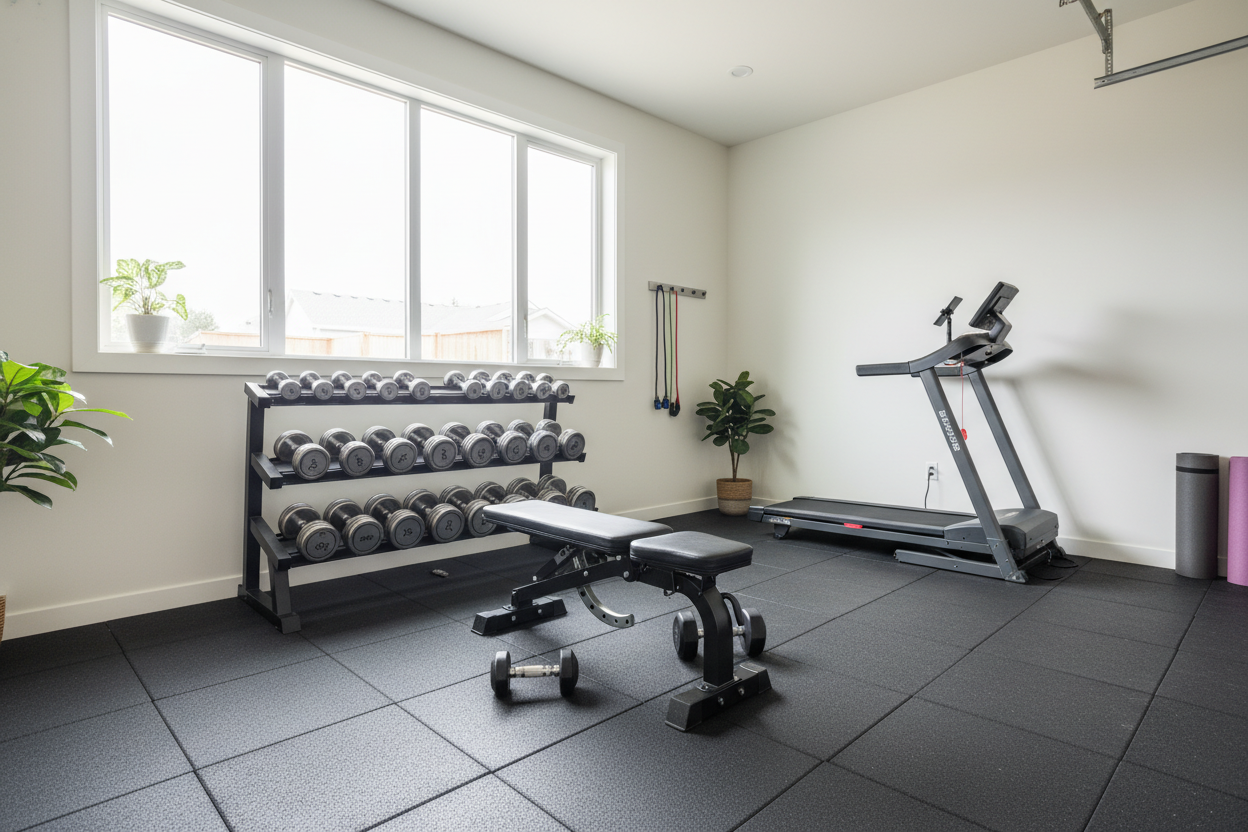
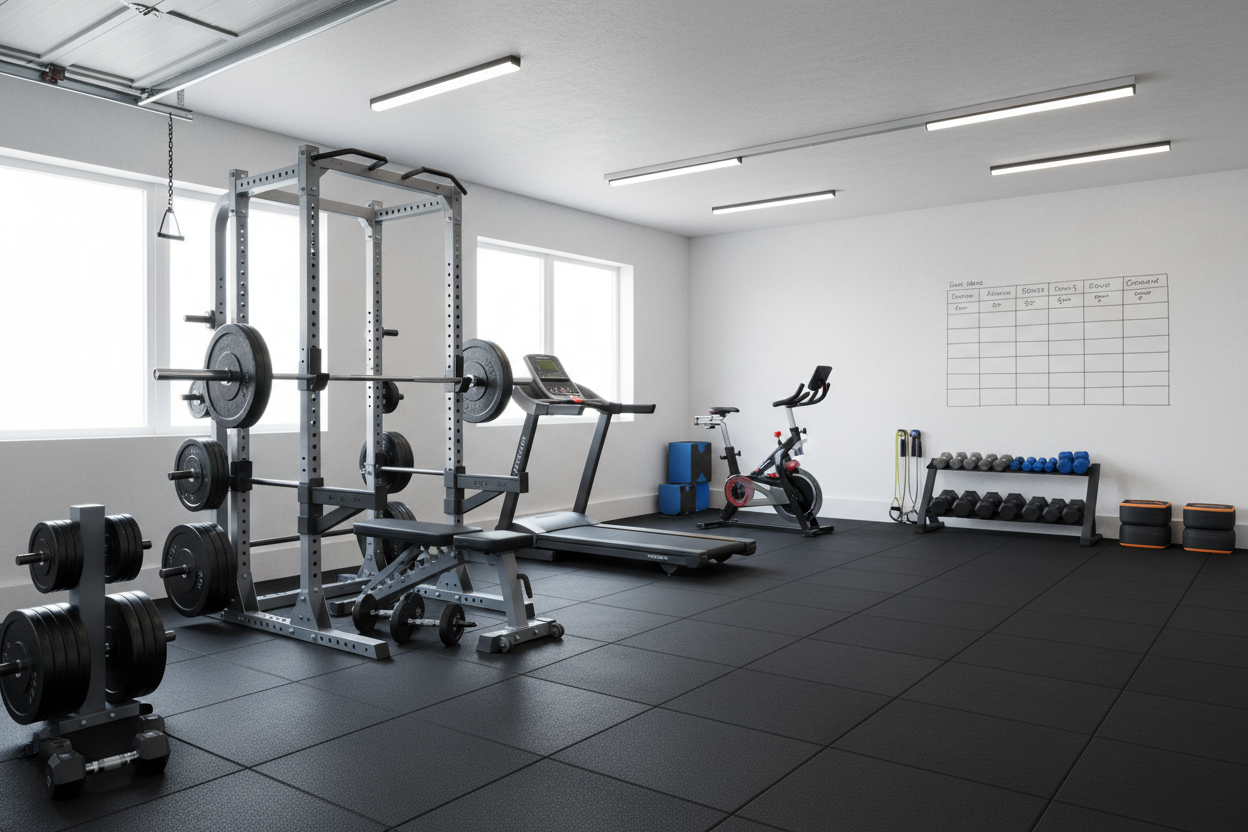
To do this right in a home setting, you can't cut corners on safety. I’ve tried squatting out of makeshift wooden stands, and it’s a recipe for a trip to the ER. You really need a dedicated power rack weight bench package if you’re going to push your limits. Having those safety spotter arms means you can actually go to failure on a bench press or squat without worrying about the bar pinning you to the floor. That confidence allows you to lift heavier, which is the entire point of a weight gain exercise at gym or at home.
Accessory Work: Intelligently Adding Volume
Once you’ve finished your heavy barbell work, your central nervous system is going to be fried. This is where you can start adding 'flavor' to your physique. You don’t need to do another five sets of heavy squats; your legs are already cooked. This is the time to transition to higher-rep work to build metabolic stress.
I like using weight training machines or dumbbells for this phase. Machines are great here because they stabilize the weight for you, allowing you to push the muscle to absolute failure without your form breaking down dangerously. Think leg presses, lat pulldowns, or seated rows. It’s about adding volume without adding the same level of joint stress that the heavy barbells carry.
The 3-Day Gaining Weight Workout Routine
This is the exact template I used to finally break my plateau. It’s a Monday/Wednesday/Friday split that focuses on heavy compounds followed by targeted accessories. It’s simple, brutal, and effective.
- Monday: Squat (3x5), Bench Press (3x5), Rows (3x8), Incline Dumbbell Press (2x12).
- Wednesday: Deadlift (1x5), Overhead Press (3x5), Pull-ups (3xMax), Lateral Raises (3x15).
- Friday: Squat (3x5), Bench Press (3x5), Romanian Deadlift (3x10), Bicep Curls (3x12).
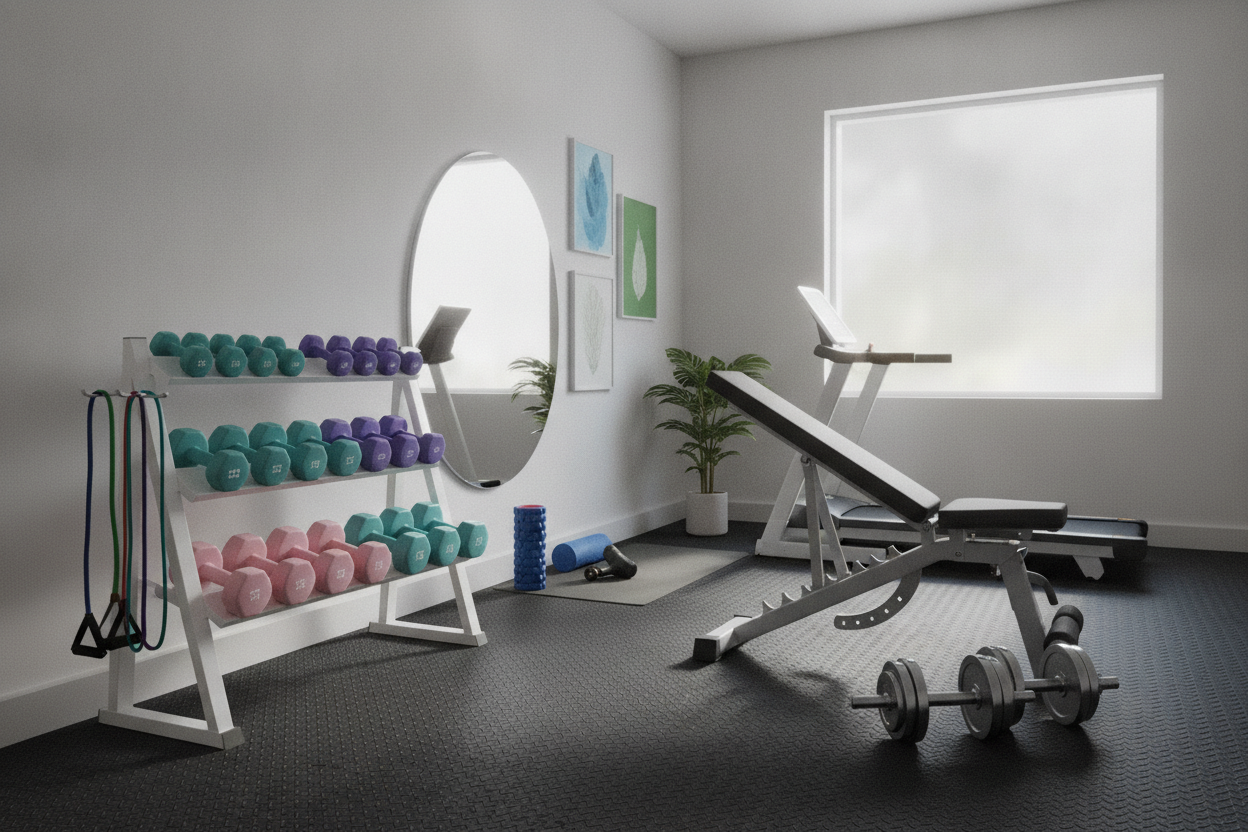
For the incline work on Mondays, having a sturdy adjustable weight bench is vital. You want to set it to about a 30-degree angle to hit the upper pecs without involving too much front delt. If your bench wobbles when you're holding 60-pound dumbbells, you're going to lose focus on the muscle contraction. Get something that feels like a tank.
My Personal Lesson in Mass Building
The biggest mistake I ever made was thinking I could out-supplement a bad diet and a weak routine. I spent hundreds on 'mass gainer' shakes that were basically just maltodextrin and cheap whey. They made me bloated, not big. It wasn't until I started tracking my lifts in a notebook and making sure I added 2.5 to 5 pounds every single week that I saw real changes. I also learned the hard way that cheap bars bend. I once bought a '300-lb capacity' bar that stayed permanently U-shaped after one heavy deadlift session. Buy once, cry once—get a bar with a high tensile strength.
FAQ
How much weight should I add to the bar each week?
Aim for 5 pounds on lower body lifts (Squat, Deadlift) and 2.5 pounds on upper body lifts (Bench, Press). If your gym doesn't have 'micro-plates,' buy a pair of 1.25-lb plates to bring with you. Small jumps are the only way to sustain long-term growth.
Can I do cardio while trying to gain weight?
Yes, but keep it low-impact. A 20-minute walk is fine. Avoid high-intensity interval training (HIIT) or long-distance running, as these can interfere with your recovery and burn the calories your body needs to build new muscle tissue.
How many calories do I actually need?
Start by eating 250-500 calories above your maintenance level. If the scale doesn't move for two weeks, add another 200 calories. If you're gaining more than a pound a week, you're likely putting on too much fat, so dial it back slightly.