Why Your Home Gym Isn't Working (And How Proper Storage Changed Everything)
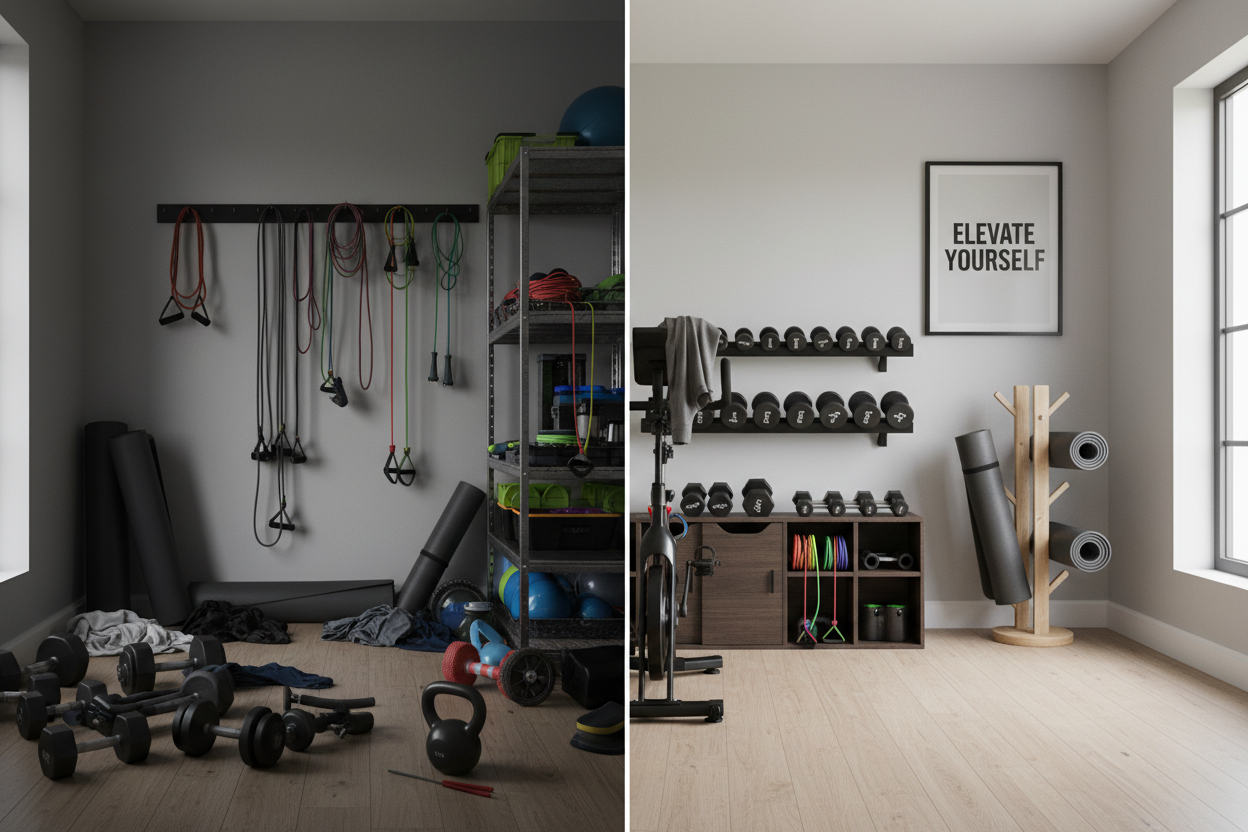
I'll be honest with you – for the first year of having a home gym, I was that person. You know the one. Dumbbells scattered across the floor, resistance bands tangled in a drawer, and my yoga mat permanently rolled out because I couldn't be bothered to find a place for it. My spare room looked less like a fitness space and more like a sporting goods store after a clearance sale. It wasn't until I properly organized everything with dedicated storage solutions that I realized how much my messy setup was actually sabotaging my workouts.
The Hidden Cost of Gym Clutter
When your equipment is disorganized, something interesting happens to your brain. Research in environmental psychology shows that cluttered spaces increase cortisol levels and reduce our ability to focus. Think about it – when you walk into your workout space and see chaos, you're already starting from a place of stress rather than motivation. I found myself skipping exercises simply because I couldn't find the right weight or didn't want to dig through a pile to grab my kettlebell.
Beyond the mental aspect, there's a real safety issue. The American Academy of Orthopaedic Surgeons reports that thousands of people injure themselves annually on home exercise equipment, and many of these incidents involve tripping over improperly stored items. I nearly twisted my ankle more than once stepping over dumbbells during a circuit workout.
Creating a Functional Fitness Space
The turning point for me came when I invested in proper accessory racks for my training area. I'm not talking about anything fancy or expensive – just simple, sturdy storage that gave everything a home. The difference was immediate and dramatic. Suddenly, I could see what I had, access it quickly, and my workouts became more efficient.
Here's what I learned: organization isn't about being neat for the sake of it. It's about removing barriers between you and your workout. When your resistance bands have a designated spot on accessory racks, when your dumbbells are lined up by weight, when your foam roller isn't buried under three yoga blocks – you eliminate decision fatigue. You just grab and go.
What Actually Needs Storage
Let's talk about the reality of home fitness equipment. Most of us accumulate more than we realize. You might have started with just a mat and some bands, but before you know it, you've got:
Resistance bands in various tensions, dumbbells in multiple weights, kettlebells, a foam roller, massage balls, a jump rope, ankle weights, wrist wraps, lifting straps, and maybe some specialty items like a TRX system or ab wheel. That's a lot of gear, and without proper storage, it becomes overwhelming.
The key is matching storage to your actual workout style. I do a lot of strength training and mobility work, so I needed something that could handle heavier items while keeping smaller accessories visible and accessible. Wall-mounted accessory racks became my best friend because they maximized vertical space and kept the floor clear for actual training.
The Psychology of an Organized Workout Space
There's something powerful about walking into a well-organized fitness area. It signals to your brain that this is a serious space dedicated to a serious purpose. Studies on habit formation show that environmental cues play a massive role in maintaining consistent behavior. When your workout space looks professional and inviting, you're more likely to use it regularly.
I noticed this shift in myself. Before organizing my space, I'd sometimes talk myself out of workouts because the room felt chaotic and uninviting. After installing proper storage and getting everything sorted, I actually looked forward to going in there. The space felt calm, purposeful, and ready for action.
Practical Storage Solutions That Work
You don't need to spend a fortune to get organized. I started with basic wall-mounted accessory racks that I found at a sporting goods store. These simple solutions held my resistance bands, jump ropes, and other smaller items. For dumbbells, I used a horizontal rack that kept them organized by weight – no more hunting for the matching pair.
The beauty of accessory racks is their versatility. You can configure them to hold everything from yoga blocks to weight plates. I use hooks for my resistance bands and TRX straps, shelves for my foam roller and massage tools, and dedicated spots for items I use daily versus weekly.
One game-changer was creating zones. I have a stretching zone with my mat, blocks, and bands all within reach. My strength training zone has dumbbells, kettlebells, and lifting accessories organized by the type of workout. This zoning approach, recommended by professional organizers and fitness facility designers, makes workouts flow naturally from one exercise to the next.
Maintaining Your Organized Space
Here's the truth – organization only works if you maintain it. I made a rule for myself: everything goes back to its designated spot immediately after my workout. No exceptions. It takes maybe two minutes, and it means my space is always ready for the next session.
This habit has had unexpected benefits. Because I'm handling my equipment mindfully, I notice when things need cleaning or maintenance. I've extended the life of my resistance bands by storing them properly instead of leaving them stretched out. My dumbbells stay in better condition because they're not clanging against each other on the floor.
The Ripple Effect on Your Fitness Journey
What surprised me most about organizing my workout space was how it affected my overall approach to fitness. When I removed the friction of disorganization, I became more consistent. When I became more consistent, I saw better results. When I saw better results, I felt more motivated. It created a positive cycle that started with something as simple as installing accessory racks and committing to organization.
My workout frequency increased by about 40% in the first month after organizing my space. That's not a small change – that's the difference between mediocre progress and real, visible improvements. And it wasn't because I suddenly had more time or willpower. I just removed a barrier that I didn't even realize was holding me back.
If you're struggling with consistency in your home workouts, take a hard look at your space. Is it inviting? Is it organized? Can you start a workout within 30 seconds of walking in, or do you need to move things around first? The answers to these questions might reveal why your fitness goals have been harder to reach than they should be. Sometimes the solution isn't a new program or more motivation – it's simply creating an environment that supports your success.