The Science of Glute Growth: How to Build Strength and Mass Effectively
Building a powerful posterior chain goes far beyond aesthetics. While a well-developed backside looks great, the gluteal muscles are the powerhouse of the human body, responsible for propulsion, stabilization, and preventing lower back pain. Many trainees spend years grinding away at the gym, squatting until their knees ache, yet see minimal changes in their hip development. The reality is that training for glute mass requires specific biomechanical intent. You cannot simply go through the motions; you must understand which movements recruit the maximum number of muscle fibers.
I learned this the hard way. Early in my lifting journey, I was convinced that heavy back squats were the only tool I needed. I spent two years focusing solely on increasing my squat max. While my quads grew significantly, my glutes remained stagnant, and I developed nagging lower back pain because my glutes weren't firing correctly to support the load. It wasn't until I set my ego aside and incorporated targeted hip extension movements—specifically hip thrusts and unilateral work—that I saw actual growth and felt significantly stronger in my other lifts. That shift in perspective is what separates spinning your wheels from making tangible progress.
Understanding the Anatomy of Glute Builders
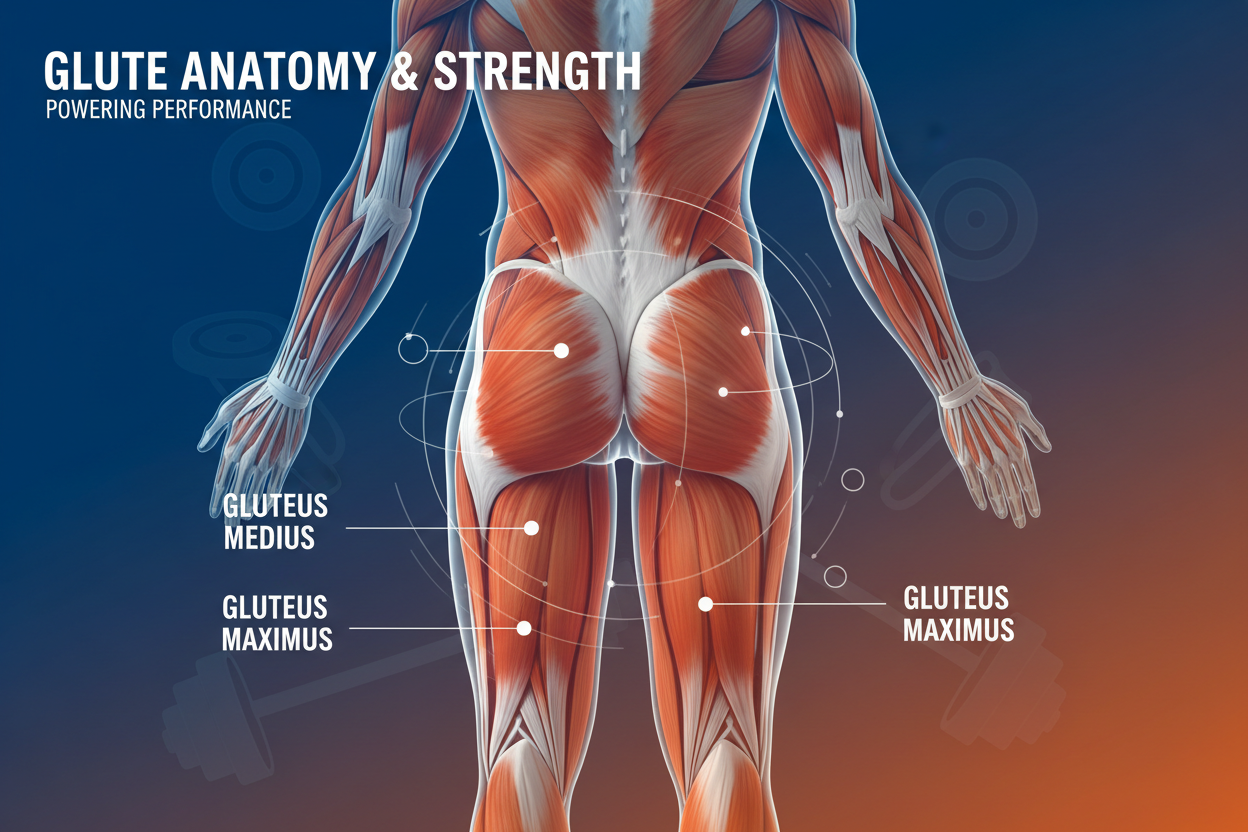
To select the glutes best exercises, you have to look at the three main muscles: the gluteus maximus, medius, and minimus. The maximus is the primary driver of hip extension (moving your leg behind you) and creates the bulk of the size. The medius and minimus are responsible for abduction (moving the leg away from the centerline) and pelvic stability. A complete program needs to hit all three.
Most general leg movements involve the glutes, but they often allow the quadriceps or hamstrings to take over. To truly trigger hypertrophy, you need exercises that place the highest tension on the glutes when they are fully shortened (contracted) and fully lengthened (stretched).
The 5 Best Glute Exercises for Mass and Strength
If you were stranded on a desert island with a barbell and could only pick a handful of movements, these are the 5 best glute exercises based on EMG activity and mechanical tension.
1. The Barbell Hip Thrust
This is widely considered the king of glute targeted exercises. Unlike a squat, where tension decreases at the top of the movement, the hip thrust places maximum tension on the glutes at full contraction. This creates a massive pump and high metabolic stress, which are key drivers for growth.
2. Romanian Deadlift (RDL)
The RDL is a superior leg and glute muscle exercise because it loads the glutes in the lengthened position. The soreness you feel the next day (DOMS) usually comes from the deep stretch achieved here. Keep a slight bend in the knees and push your hips back as far as possible.
3. Bulgarian Split Squats
While often dreaded, these are arguably the best glute builders for fixing imbalances. By taking one leg out of the equation, you force the working glute to stabilize and drive the weight, recruiting the glute medius heavily.
4. 45-Degree Hyperextension
When performed with a rounded upper back and toes flared out, this moves the focus from the lower back directly to the glutes. It is an excellent accessory movement for high reps.
5. Cable Kickbacks
For isolation, kickbacks allow you to target the upper shelf of the glutes without taxing the central nervous system too heavily. They are perfect for finishing a workout.
Weightlifting Glutes: Strength vs. Hypertrophy
When discussing weightlifting glutes, the approach changes depending on your goal. For pure strength, you want to work in the 3-6 rep range with compound movements like conventional deadlifts and low-bar squats. These are the best glute exercises for strength because they allow for maximum mechanical loading. However, strength does not always equal size.
For hypertrophy (muscle growth), you generally want to operate in the 8-15 rep range, focusing on the mind-muscle connection. You might find that a leg and glute muscle exercise example like the walking lunge is more effective for size when done for 20 steps than a heavy single-rep squat, simply because the time under tension is higher.
Effective Glute Workouts at Home
A common misconception is that you need heavy iron to build a backside. While heavy weights help, you can absolutely achieve results in your living room. The best glute building exercises at home rely on increasing volume, decreasing rest times, and using unilateral (single-leg) variations to increase intensity.
To structure effective glute workouts at home, you must push close to failure. A standard bodyweight squat might be too easy, but a single-leg box squat or a single-leg hip thrust with a pause at the top is humbling for almost anyone. The best glute exercises for mass at home include:
- Single-leg Glute Bridges (high rep)
- Deficit Reverse Lunges (standing on a book or step)
- Side-lying Hip Abductions
- Frog Pumps
Structuring Your Glute Builder Workout
If you want to build legs and glutes concurrently, you need a routine that balances knee-dominant and hip-dominant movements. Many people search for the top 10 glute exercises, but trying to cram ten movements into one session is counterproductive. You only need 3 to 4 high-quality movements performed with intensity.
Here is a sample glute builder workout designed for hypertrophy:
1. Heavy Compound (The Driver): Barbell Hip Thrusts – 4 sets of 8-10 reps. Focus on a hard contraction at the top. This is the foundation of glute mass.
2. The Stretch: Dumbbell Romanian Deadlifts – 3 sets of 10-12 reps. Focus on pushing the hips back until you feel a deep stretch in the hamstrings and glutes.
3. Unilateral Work: Deficit Reverse Lunges – 3 sets of 12 reps per leg. Standing on a small plate allows for a deeper range of motion, making these effective workouts to build glute muscles.
4. Metabolic Stress (The Burnout): Seated Band Abductions or Cable Kickbacks – 2 sets of 20-25 reps. This flushes blood into the muscle to finish the session.
Consistency and Progressive Overload
No list of workouts to build glute muscles will work if you do not apply progressive overload. This means doing more over time—whether that is adding weight, doing more reps, or slowing down the tempo. The glutes are resilient muscles; they can handle high volume and frequency. Depending on your recovery capacity, training them 2 to 3 times a week is usually optimal for most natural lifters.
Whether you are using the best glute exercises for mass at home or loading up a barbell at the gym, the principles remain the same: full range of motion, control the eccentric (lowering) phase, and squeeze at the peak of the contraction. Results take time, but with the right selection of exercises and consistent effort, the changes will come.
Frequently Asked Questions
How often should I train my glutes for maximum growth?
For most people, training glutes 2 to 3 times per week is ideal. This frequency allows you to stimulate the muscle fibers frequently while providing enough recovery time (48 hours) between sessions to allow for repair and growth.
Can I build glutes without heavy weights?
Yes, you can build glutes without heavy weights by utilizing high volume, shorter rest periods, and single-leg variations. Exercises like single-leg hip thrusts and deficit lunges can create sufficient mechanical tension for growth using just body weight or household items.
Why do I feel squats in my legs but not my glutes?
Squats are naturally quad-dominant for many people due to leverage and anatomy. To engage the glutes more, try widening your stance and focusing on sitting back into the squat, or pre-exhaust your glutes with isolation exercises like clam shells before you start squatting.