Why Your Home Gym Isn't Complete Without a Quality Power Rack
If you've been training at home for any length of time, you'll know that feeling when you're about to attempt a heavy squat or bench press and there's that little voice in your head asking, "What happens if I can't get this up?" That's exactly why investing in a proper power rack is one of the smartest decisions you can make for your home gym setup. It's not just about safety—though that's absolutely crucial—it's about giving yourself the freedom to push your limits without fear.
I remember when I first started training seriously at home, I was using a basic barbell setup without any safety equipment. One day during a particularly ambitious squat session, I got stuck at the bottom of a rep. The panic that set in was real, and I ended up having to bail awkwardly, nearly injuring myself in the process. That was my wake-up call. A power rack isn't a luxury; it's an essential piece of kit that allows you to train with confidence and intensity.
What Makes a Power Rack Essential for Serious Training
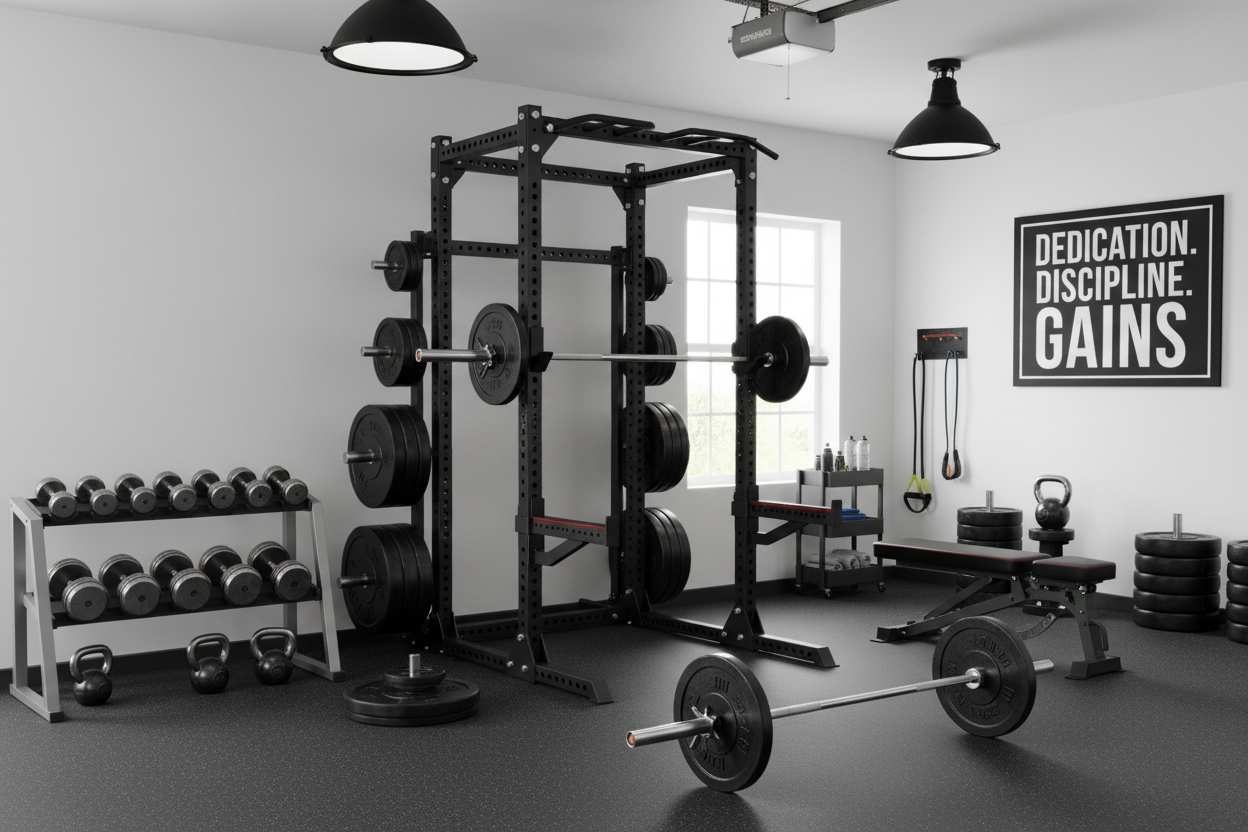
A power rack, also called a power cage, is essentially a four-posted steel frame with adjustable safety bars and J-hooks. This simple but brilliant design creates a safe training environment where you can perform exercises like squats, bench presses, overhead presses, and rack pulls without needing a spotter. The safety bars catch the barbell if you fail a rep, which means you can truly push yourself to your limits.
The beauty of a quality power cage is its versatility. Beyond the basic barbell movements, you can add pull-up bars, dip attachments, landmine attachments, and even cable systems. It becomes the central hub of your entire home gym, allowing you to perform dozens of different exercises all within one footprint. For anyone serious about building strength and muscle at home, it's the foundation everything else builds upon.
Why Rep Fitness Power Racks Stand Out
When researching power racks for home gyms, Rep Fitness consistently comes up as a top choice, and for good reason. The company has built its reputation on providing commercial-grade equipment at prices that won't make your wallet weep. Their power rack options are designed with real lifters in mind—people who actually use their equipment hard and need it to last.
The Rep Fitness power cage lineup offers something for everyone, from compact models perfect for garage gyms with limited space to full-sized rigs that rival what you'd find in professional training facilities. What I particularly appreciate about their approach is the attention to detail: laser-cut numbering on the uprights so you can quickly adjust heights, westside hole spacing in the bench press zone for precise safety bar placement, and powder-coated finishes that can handle the inevitable bumps and scrapes of serious training.
Build Quality That Actually Matters
The power rack Rep Fitness produces uses 3x3-inch steel tubing with 11-gauge thickness as standard across most models. This isn't just marketing speak—it's the difference between a rack that wobbles under heavy loads and one that feels rock-solid even when you're unracking 400 pounds for squats. The weight capacity on these racks typically exceeds 1,000 pounds, which is more than sufficient for even advanced lifters.
The welds are clean and strong, the holes are precisely drilled and numbered, and the safety mechanisms work exactly as they should. These aren't the kind of details you think about until you're in the middle of a heavy training session, but they make all the difference between equipment you trust and equipment that makes you nervous.
Choosing the Right Power Rack for Your Space
Not all home gyms are created equal, and your space constraints will largely dictate which power rack makes sense for you. If you're working with a standard garage gym, you'll need to consider ceiling height, floor space, and how the rack will fit alongside your other equipment. Most power racks require at least an 8-foot ceiling for comfortable use, though some shorter models are available for basements with lower clearances.
The footprint is another crucial consideration. A full-sized power rack typically measures about 4 feet wide by 4 feet deep, though this can vary. You'll also need to account for space around the rack—you want enough room to load and unload plates comfortably and to move around safely. I'd recommend allowing at least 2 feet of clearance on all sides if possible.
Features Worth Prioritizing
When evaluating different power rack options, certain features provide genuine value while others are nice-to-haves. Adjustable safety bars are non-negotiable—these are what catch the barbell if you fail a rep. Look for strap safeties or pin-and-pipe safeties rather than basic pins alone, as they're more forgiving and less likely to damage your barbell.
Pull-up bars are standard on most racks, but check whether they offer multiple grip positions. Being able to vary your grip width makes a real difference for back and arm development. J-hooks should have protective coating to prevent barbell damage, and they should adjust easily without requiring tools.
Consider whether you want the ability to add attachments later. Many quality racks use standardized hole patterns that allow you to add things like dip bars, landmine attachments, or even full cable systems down the line. This expandability means your rack can grow with your training needs rather than becoming limiting.
Getting the Most From Your Investment
Once you've got your power rack set up, the real work begins. The key to maximizing this investment is actually using it consistently and progressively. Start with the fundamental movements: squats, bench press, overhead press, and barbell rows. These compound exercises form the backbone of any solid strength program and are exactly what a power rack excels at facilitating.
Don't be afraid to train to failure occasionally—that's the whole point of having those safety bars. Some of my best progress has come from sessions where I pushed to the point of missing a rep, knowing the safeties would catch me. That psychological freedom to truly max out is invaluable and something you simply can't replicate without proper safety equipment.
Keep your rack well-maintained by occasionally checking bolt tightness, cleaning the uprights to ensure smooth J-hook adjustment, and inspecting safety mechanisms for wear. A well-cared-for power rack should last decades, making it one of the best long-term investments you can make in your fitness journey.
The Bottom Line on Power Racks
Building a home gym is an investment in yourself, and the power rack is the cornerstone of that investment. It provides safety, versatility, and the confidence to push your training forward without limitations. Whether you're a beginner just starting your strength journey or an experienced lifter looking to train seriously at home, a quality power cage creates the foundation for years of productive training.
The market offers plenty of options, but focusing on reputable manufacturers with proven track records ensures you're getting equipment that will support your goals rather than hinder them. Look for solid construction, thoughtful design features, and the ability to expand functionality as your needs evolve. Your future self—stronger, fitter, and more confident—will thank you for making this investment.