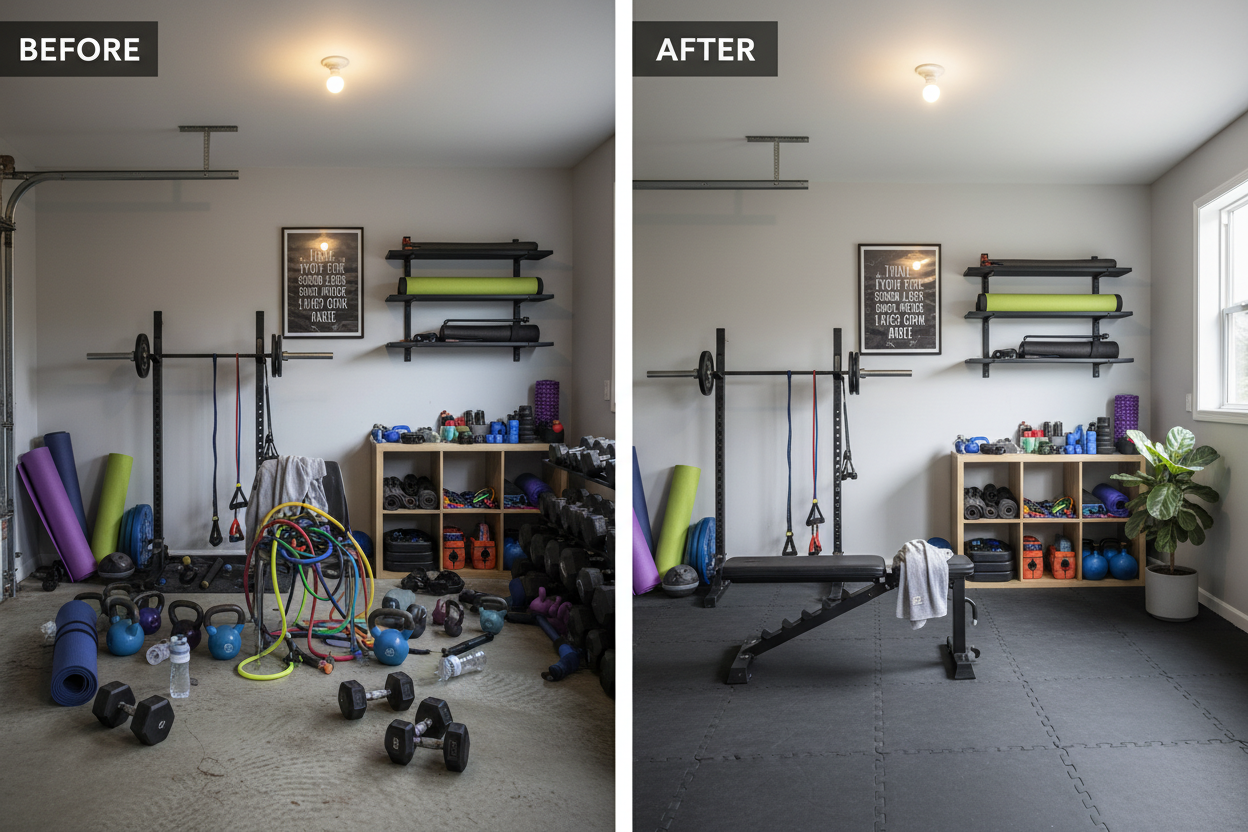
Why Your Home Gym is a Mess (And How to Fix It with the Right Storage)
There is a specific kind of frustration reserved for tripping over a five-pound dumbbell in the middle of the night. If you have built a collection of neoprene-coated weights, you know exactly what I mean. These colorful, comfortable weights are excellent for high-repetition workouts, barre classes, and general toning, but they have a distinct disadvantage: they tend to migrate. Unlike heavy iron plates that stay where you drop them, neoprene dumbbells often end up scattered across the living room floor, hiding under sofas, or creating obstacle courses in your garage.
Getting your equipment off the floor isn't just about aesthetics; it is about safety and preserving the longevity of your gear. Neoprene is a durable material, but it is soft. When left in piles, the coating can indent, crack, or accumulate grime that compromises the grip. The solution seems simple enough, yet many fitness enthusiasts buy the wrong storage because they don't realize that neoprene weights have unique dimensions compared to standard cast iron or rubber hex dumbbells.
The Real Cost of Clutter on Your Progress
I learned this lesson the hard way a few years ago. I had accumulated a decent range of weights, from 2lbs up to 15lbs, mostly for circuit training. I didn't think I needed a rack. I figured lining them up against the wall was fine. That worked until I started skipping workouts because the "setup" felt like a chore. Having to hunt for the matching 8lb weight under a pile of laundry became a mental barrier. Once I finally organized the space, my consistency shot up. Visual cues are powerful triggers for habits. Seeing a neat row of weights invites you to pick them up, whereas seeing a pile of clutter invites you to walk away.
Why Neoprene Weights Need Specific Storage
You cannot just buy any generic shelf and expect it to work perfectly. Neoprene dumbbells usually have shorter handles and a thicker coating than standard steel weights. A rack designed for massive 50lb rubber hex dumbbells might have gaps that are too wide, causing your smaller neoprene weights to fall right through. Conversely, some racks have slots that are too narrow for the thick, dipped coating of the handle.
When shopping for a dumbbell rack for neoprene weights, you are looking for specific ergonomics. These racks are typically designed with smaller gaps between the rails or specific vertical slots that accommodate the hex or bone shape common to these weights. The coating on the rack itself matters too. You want a storage solution with smooth or padded edges to ensure the rack doesn't slice into the soft neoprene covering of your weights when you rack and unrack them.
Vertical vs. Horizontal: Maximizing Your Floor Plan
Space is usually the biggest constraint in a home gym. If you are working out in a small apartment or a multi-purpose room, a vertical A-frame is likely your best bet. These stands take up roughly the same footprint as a single large plant pot. A vertical weight rack for neoprene weights usually holds pairs on opposite sides. This design is incredibly space-efficient and makes it easy to grab the weights without bending over too far.
However, vertical racks have limits. They can become unstable if you load them unevenly, although most quality designs mitigate this with a wide base. If you have a larger collection—say, pairs ranging from 1lb all the way to 20lbs—you might run out of slots on a standard A-frame.
Horizontal shelves offer more versatility. If you have the wall space, a horizontal neoprene dumbbell storage rack allows you to line up your weights in ascending order. This layout is visually satisfying and makes transitions during drop sets much faster. You can see exactly what you need and grab it instantly. Horizontal racks also tend to be more stable and can often hold other items, like kettlebells or medicine balls, on the flat trays, provided the weight capacity allows for it.
Protecting Your Investment
Neoprene is porous. It absorbs sweat and oils from your hands, and if left on a carpet, it attracts dust and pet hair like a magnet. Elevating your weights is the single best way to keep them clean. When weights sit on the floor, they pick up debris that eventually gets ground into the coating, making them feel gritty and unpleasant to hold.
A proper rack also prevents the "flat spots" that can occur when heavy items are stacked on top of neoprene weights for long periods. While the iron core won't deform, the coating can. Keeping them racked ensures the coating stays smooth and comfortable, which is the whole point of buying neoprene in the first place.
What to Look for in Construction Quality
Do not let the lighter weight of neoprene dumbbells fool you into buying flimsy storage. Even light weights add up quickly. A set of pairs from 2lbs to 12lbs totals over 80 pounds. You need steel construction. Plastic connectors or thin aluminum might buckle under the load over time. Look for powder-coated steel which resists scratches and rust. This is particularly important if your gym is in a garage or basement where humidity levels fluctuate.
Check the spacing specifications carefully. A dedicated dumbbell rack for neoprene weights will often list the handle length compatibility. If your weights have particularly short handles (common with 1lb to 3lb micro-weights), ensure the rack rails aren't spaced so far apart that the weights rest on the bells rather than the handles, which can be unstable.
Safety Considerations for Home Environments
If you have children or pets, a secure storage solution is non-negotiable. Colorful weights look like toys to toddlers. A secure weight rack for neoprene weights keeps them organized and, more importantly, can help keep them out of easy reach or at least stable so they don't roll onto small toes. Vertical racks should be placed in a corner or against a wall to minimize the risk of being knocked over during vigorous activity.
Organizing your fitness space is a psychological hack as much as a physical cleanup. When your environment is orderly, your mind is clearer, and your workout becomes the focus rather than the mess. Whether you choose a vertical tree or a horizontal shelf, the right neoprene dumbbell storage rack transforms a pile of equipment into a professional-looking home gym.
Frequently Asked Questions
Can I store cast iron weights on a rack designed for neoprene dumbbells?
You generally can, provided the weight capacity of the rack isn't exceeded and the handle dimensions fit. However, be careful with the finish; rough cast iron can sometimes scratch the finish of a rack designed for softer neoprene weights.
How do I clean my neoprene weights once they are racked?
Mix a few drops of mild dish soap with warm water and wipe them down with a soft cloth. Avoid harsh chemicals or bleach, as these can degrade the neoprene coating and cause it to crack or peel over time.
Do vertical racks damage the weights at the bottom?
No, a well-designed vertical rack spaces the holders so that the weights do not touch each other. The larger weights at the bottom should hang freely without resting on the floor or being crushed by the weights above them.