Why Your Hips Hurt (And How the Gluteus Medius Fixes It)
Most people in the gym obsess over the gluteus maximus because it creates that desired shape and drives heavy lifts like the squat and deadlift. However, ignoring the smaller muscles on the side of the hip is often the root cause of knee pain, lower back tightness, and stalled progress. If you notice your knees caving inward during a heavy lift or your hips shifting side-to-side while running, you likely have a weakness in the side hip. Addressing this requires specific exercises for gluteus medius to stabilize the pelvis and ensure your lower body mechanics work efficiently.
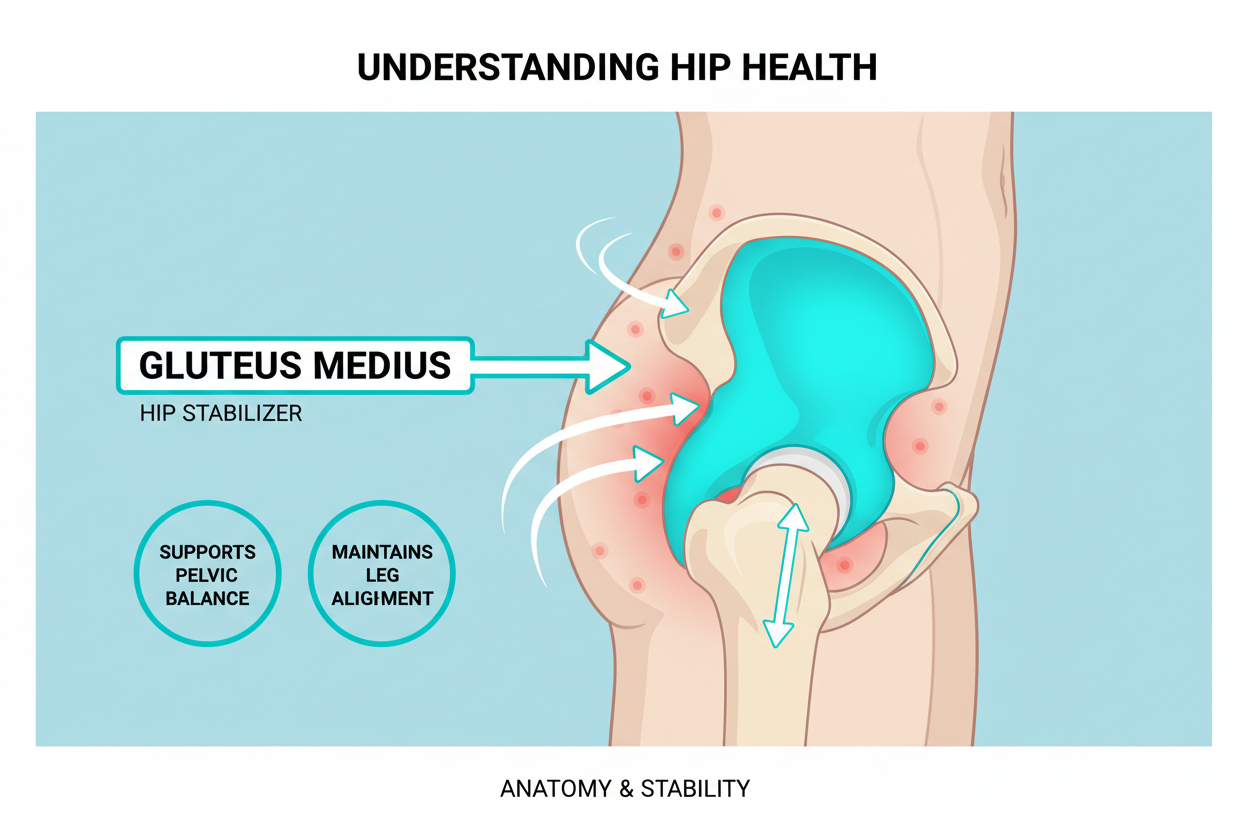
The gluteus medius sits under the gluteus maximus on the outer surface of the pelvis. Its primary jobs are hip abduction (moving the leg away from the body) and stabilizing the hip joint during single-leg movements. When this muscle is weak, other muscles like the TFL (tensor fasciae latae) or the lower back have to compensate, leading to overuse injuries. A dedicated gluteus medius muscle workout isn't just about aesthetics or filling out the "hip dip"; it is essential for functional movement and injury prevention.
My Battle With Runner’s Knee and the Glute Connection
I learned the importance of gluteus medius muscle strengthening the hard way. A few years ago, while increasing my mileage for a half-marathon, I developed a sharp, nagging pain on the outside of my knee. I assumed it was a knee problem, so I iced it and stretched my quads, but nothing changed. After visiting a physical therapist, the diagnosis was surprising: my knees were fine, but my hips were weak. Specifically, my glute med was failing to keep my pelvis level every time my foot hit the pavement. This caused my femur to rotate internally, putting torque on the knee. Once I incorporated a specific workout for gluteus medius involving lateral movements and single-leg stability work, the knee pain vanished within weeks. It was a humbling lesson that the site of the pain is rarely the source of the problem.
Top Activation Movements for the Glute Med
Before loading up a barbell, you need to wake the muscle up. Many people suffer from "glute amnesia" where the muscle doesn't fire correctly because we sit on it all day. Glute med activation exercises are perfect warm-ups to establish a mind-muscle connection.
The Clamshell
This is perhaps the most recognized glute med exercise. Lie on your side with legs stacked and knees bent at a 45-degree angle. Keep your feet touching as you open your top knee like a clam. The trick here is to ensure your hips do not roll backward. If you roll, you aren't targeting the right area. This is one of the best exercises gluteus medius beginners can use to feel the burn in the side pocket of the hip.
Side-Lying Leg Raises
While still on the floor, straighten your top leg. Lift it toward the ceiling, but keep your heel slightly behind your toes. Leading with the heel ensures you are performing a medial glute exercise rather than using your hip flexors. Perform high repetitions here; you want to feel fatigue setting in to ensure the muscle is fully active.
Building Strength: The Core Routine
Once activated, you need to apply resistance. To truly change the structure and capacity of the muscle, you must move beyond bodyweight and incorporate exercises to strengthen the gluteus medius with progressive overload.
Banded Monster Walks
Place a mini-band around your ankles or just above your knees. Drop into a quarter-squat position—athletic and ready. Step laterally, maintaining tension on the band the entire time. Do not let your feet come together; keep them shoulder-width apart even during the transition. This constant tension makes it a superior gluteus medius exercise for building endurance. You can walk side-to-side or forward and backward in a "monster" style.
Single-Leg Romanian Deadlift (RDL)
This movement is fantastic because it serves as both a gluteus maximus and medius exercises combo. The max works to extend the hip, while the medius fights to keep your pelvis from tipping over. Stand on one leg, keeping a slight bend in the knee. Hinge at the hips, sending your back leg straight behind you while lowering your torso. If you feel your hip opening up to the side, correct it by pointing your back toes toward the floor. This forces the standing glute med to work overtime.
Curtsy Lunges
Standard lunges are great, but altering the angle creates a more effective workout gluteus medius stimulus. Start standing, then step one leg back and across behind the other leg, resembling a curtsy. Drop the back knee toward the floor. This line of pull stretches the glute med under load and requires significant force to return to standing. It is one of the good exercises for gluteus medius that also hits the quads and glute max.
Advanced Strengthening and Integration
To develop a truly strong gluteus medius, you eventually need to integrate these muscles into heavier compound lifts. You might not think of a heavy squat as a gluteus medius strength exercise, but if you actively push your knees outward against a band during a goblet squat, you drastically increase recruitment.
Another advanced variation is the cable hip abduction. Stand sideways to a cable machine with the cuff on the far ankle. Sweep the leg out to the side. This provides constant tension throughout the range of motion, unlike dumbbells where gravity might assist you at certain points. This is one of the most effective exercises to build gluteus medius mass because of the consistent resistance curve.
Programming Your Glute Med Work
You do not need a separate day just for your side glutes. Instead, sprinkle these movements into your existing leg days. Start your session with activation work like clamshells to ensure the muscle is ready to fire. Use the banded walks as a finisher to burn out the muscle at the end of the session. If you are specifically looking for exercises to strengthen the gluteus medius muscle to correct an injury or imbalance, perform these movements 3 to 4 times a week.
Tracking your gluteus medius before and after progress isn't just about taking photos. You will feel the difference in your stability. Your knees will stop tracking inward during squats, your lower back pain may subside, and you will feel more powerful during runs or sprints. Prioritizing gluteus medius strength is the missing link for many lifters who have hit a plateau.
Remember that consistency trumps intensity when rehabbing or building stabilizers. You are better off doing a quick gluteus medius muscle exercise routine every other day than destroying your hips once a month. Strengthening of gluteus medius tissue takes time, but the payoff in biomechanics and pain-free movement is undeniable. Whether you choose the banded walk, the side plank with leg lift, or the single-leg deadlift, the goal remains the same: strengthen glute med capacity to support the rest of your body.
Frequently Asked Questions
How often should I train my gluteus medius?
Because the gluteus medius is a postural stabilizer with high endurance, it recovers relatively quickly. You can perform activation exercises daily if you are rehabbing an injury, but for general strengthening, incorporating 2 to 3 dedicated exercises into your routine 3 times per week is effective.
Can walking strengthen the gluteus medius?
Standard walking provides minimal stimulation for this muscle. However, hiking on uneven terrain or walking uphill requires significantly more stabilization, which engages the muscle more. To truly strengthen it, you need lateral movements or resistance, such as banded walks or side-lying leg lifts.
Why do I feel my TFL instead of my glute med?
If you feel the burn in the front of your hip (TFL) rather than the side/back during leg raises, your form may be off. Try rolling your top hip slightly forward and leading the movement with your heel rather than your toes to disengage the hip flexors and target the glute med properly.